 Bellingham Exterior
 Asphalt Shingle Roofing Built for York's Weather, Not a Generic Climate
York is one of Bellingham's older residential pockets, with a mix of early-1900s homes and mid-century infill, many with roof lines that have been re-covered at least once since they were built. Whatcom County's marine climate is not gentle on any roofing material, but asphalt shingles in particular need the right combination of product, ventilation, and installation detail to hold up here. Salt-laden air off Bellingham Bay accelerates the breakdown of metal flashing and fasteners, driving rain finds its way through any gap in underlayment or flashing, and a long, wet moss season quietly lifts and degrades shingle mat if the roof isn't detailed to shed water and dry out between storms.
A shingle roof that would perform fine in a drier inland climate can underperform in York if it's installed the same way. This page covers what a correct asphalt shingle job looks like for this specific neighborhood, what our process involves, and why local experience on this exact housing stock matters more than it might seem.
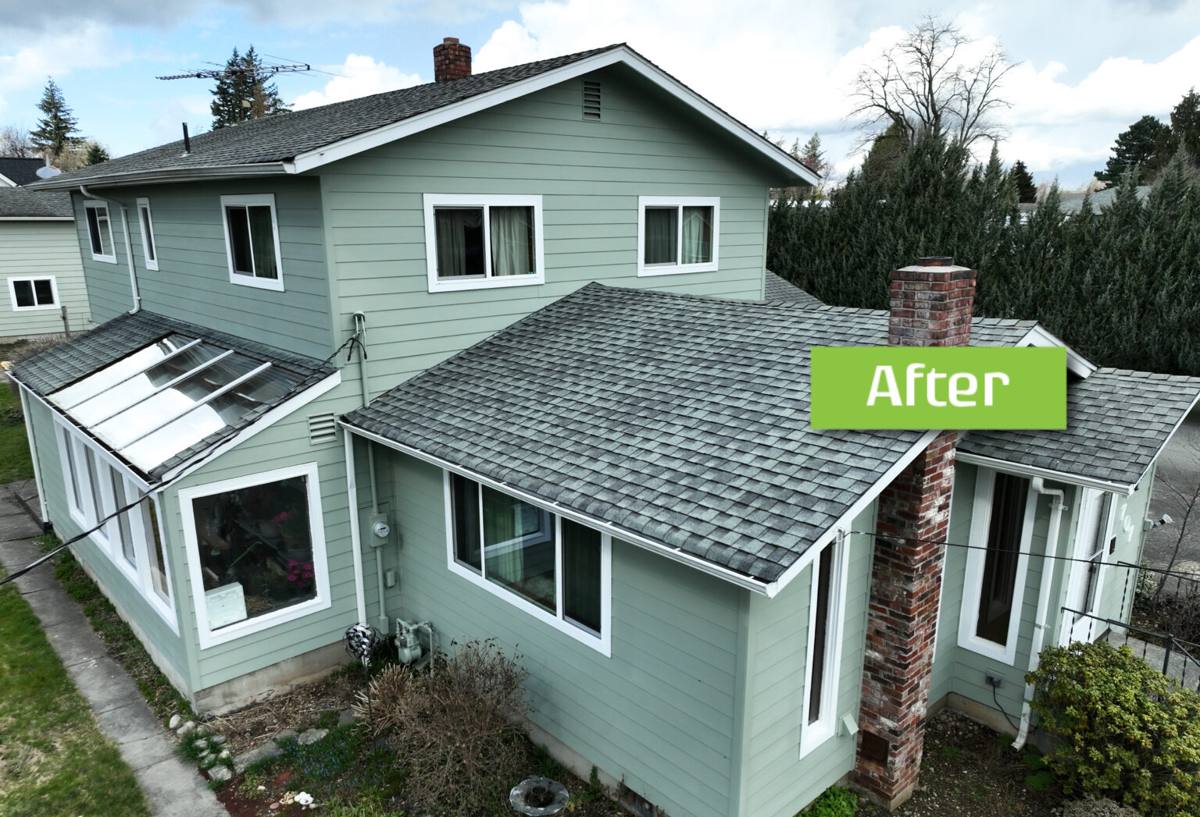
What Local Homes Actually Need From a Shingle Roof
Ventilation That Matches the Attic, Not a Textbook
Older York homes often have shallower attic spaces, additions with mismatched roof planes, or knob-and-tube-era construction that was never designed with modern insulation in mind. Balanced intake and exhaust ventilation matters everywhere, but in a home with limited attic depth it's the difference between a shingle roof that dries out after every rain event and one that stays damp long enough for moss and algae to take hold underneath the tab lines.
Underlayment and Flashing Details That Assume Rain, Not Just Rare Storms
Bellingham doesn't get hurricane-force wind-driven rain often, but it does get long stretches of steady, sideways drizzle that tests every seam, valley, and penetration on a roof. Self-adhered underlayment at eaves, valleys, and around penetrations (not just felt paper) and step flashing that's actually woven into the shingle courses rather than caulked on top are the details that separate a roof that lasts from one that leaks quietly for years before anyone notices the damage.
Fastener and Flashing Materials That Resist Salt Air
Being close to the water means metal components corrode faster than they would further inland. Galvanized or coated fasteners and flashing rated for coastal exposure cost a little more up front but avoid the rust streaks and premature flashing failure that show up within a handful of years when standard-grade materials are used near the bay.
Signs a York Roof Needs Attention
- Granules collecting in gutters or at downspout outlets — a sign the shingle surface is wearing thin
- Dark streaking or green-black patches, especially on north-facing slopes that stay shaded and damp longer
- Moss growth at butt joints and valleys, which holds moisture against the shingle mat even after the surface looks dry
- Curling or cupping shingle tabs, often starting on the slopes that get the most direct weather exposure
- Soft spots in the decking felt through foot traffic, usually a sign water has already gotten past the shingles
- Rust staining below flashing at chimneys, walls, or plumbing vents
- Daylight visible through the roof deck from inside an unfinished attic
Any one of these on its own isn't necessarily an emergency, but on an older York roof they're often signs that several issues are developing together, since these homes tend to have been re-roofed with whatever standard was common at the time rather than upgraded for the site's actual exposure.
Our Process for a York Asphalt Shingle Project
- On-site assessment. We walk the roof (or inspect from a lift or drone where pitch or access makes that safer), check the attic for ventilation and moisture signs, and look at the specific exposure of each slope — a shaded, moss-prone north face gets treated differently than a south slope that dries out fast.
- Written scope and estimate. You get a clear breakdown of tear-off, decking repair (if needed), underlayment, flashing, shingle product, and ventilation upgrades — no vague allowances.
- Tear-off and deck inspection. We remove the old roofing down to the deck and inspect the sheathing for rot or soft spots before anything new goes down, since covering over a compromised deck just hides a bigger problem.
- Underlayment and flashing installation. Self-adhered membrane at vulnerable areas, properly lapped synthetic underlayment across the field, and new step and counter-flashing at all walls, chimneys, and penetrations.
- Shingle installation to manufacturer spec. Correct nailing pattern, exposure, and starter course detail — the small installation details that determine whether a shingle roof reaches its rated lifespan or falls short of it.
- Ventilation correction. Intake and exhaust balanced to the attic's actual size and insulation, not just whatever vents were already there.
- Final walkthrough. We go over what was done, where the warranty coverage applies, and what maintenance (if any) we'd recommend given the specific slopes and shade pattern on your property.
Shingle Options and What Actually Drives Cost
Asphalt shingles come in a range of grades, and the right choice for a York home depends more on exposure and roof complexity than on picking the most expensive option available.
| Factor | What It Affects | Why It Matters in York |
|---|---|---|
| Shingle grade (3-tab vs. architectural vs. premium impact-rated) | Material cost, wind rating, expected lifespan | Architectural shingles generally shed moss and hold up to wind-driven rain better than basic 3-tab; premium lines add impact resistance |
| Roof complexity (valleys, dormers, multiple planes) | Labor time, flashing detail | Older York homes with additions often have more valleys and transitions, each one a potential leak point needing careful flashing |
| Deck condition | Whether repair or full re-sheathing is needed | Homes with a history of slow leaks or moss retention sometimes have hidden deck damage found only at tear-off |
| Ventilation upgrades | Added vents, baffles, or ridge vent installation | Under-ventilated attics accelerate moss growth and shorten shingle life regardless of product quality |
| Access and pitch | Staging, lift or rope-and-harness needs | Steeper or hard-to-access roofs common in the older streets add labor time and safety equipment costs |
Without a site visit, published price ranges for shingle roofing are only a rough starting point — the honest answer depends on your roof's specific size, pitch, and condition, which is why we walk every roof before quoting.
Living With a Shingle Roof Through Moss Season
Even a correctly installed shingle roof will collect some moss and organic growth over time in this climate — it's a maintenance issue, not necessarily a sign of failure. Zinc or copper strips near the ridge, gentle low-pressure cleaning rather than aggressive pressure washing (which strips granules and shortens shingle life), and keeping gutters and valleys clear of debris go a long way toward extending the life of the roof between full re-roofs. We're happy to talk through a maintenance approach that fits your specific roof rather than a one-size answer, since a heavily shaded slope and a sun-exposed one age very differently even on the same house.
Why a Crew That Already Works in York Matters
York's roofs aren't uniform — there's a real mix of original framing, later additions, and prior re-roofing work layered on top of each other, and that history affects what a correct repair or replacement actually requires. A crew that has worked on this specific stock of homes recognizes common issues on sight: where ventilation tends to fall short, which valley configurations are prone to leaks, and how much moss buildup is normal versus a sign of an underlying moisture problem. That familiarity shows up in a more accurate estimate and fewer surprises once tear-off starts, rather than guesswork that only gets resolved once the old roofing is already off.
Choosing a Contractor for Shingle Work Here
- Ask for a written scope that specifies underlayment type, flashing approach, and ventilation plan — not just "shingle replacement"
- Confirm they inspect and address deck condition rather than covering over existing damage
- Check that fastener and flashing materials are appropriate for coastal exposure, not just whatever's standard stock
- Ask how they handle valleys and wall flashing specifically, since these are the most common leak points on older, more complex roofs
- Get manufacturer warranty terms in writing, and understand what's covered by the installer versus the shingle maker
If your York home's roof is showing wear, nearing the end of its expected life, or you just want an honest read on its current condition, we're glad to take a look. Reach out for a free, no-pressure estimate using the form below.