 Bellingham Exterior
 Why Roofs in Sudden Valley Wear Differently
Sudden Valley sits back in the trees along Lake Whatcom, and that setting is a big part of what makes the community feel the way it does — quiet, wooded, and close to the water. It's also exactly the kind of setting that's hard on a roof. Tree cover holds humidity close to the shingles long after a storm has passed. Needles, cones, and leaf litter collect in valleys and against chimneys and skylights, trapping moisture against the roof deck instead of letting it shed and dry. Add Whatcom County's marine climate — steady winter rain, damp shoulder seasons, and salt-carrying air drifting in off the Puget Sound — and you get a roof that rarely gets a real chance to dry out for months at a stretch.
That combination is why moss and algae take hold so readily on roofs throughout the Bellingham area, and why it tends to show up faster and thicker on shaded, tree-covered lots like the ones common throughout Sudden Valley. A roofing system that would comfortably last two-plus decades in a drier, more open part of the state can start showing granule loss, soft decking, and moss-driven shingle lift well ahead of that here — especially on north-facing slopes that rarely see direct sun.
None of this means a roof in Sudden Valley is doomed to a short life. It means the installation has to be detailed for the environment it's actually going into. A correct new roof installation here isn't just about which shingle color goes on top — it's about the underlayment, flashing, ventilation, and edge protection being sized and sequenced for a wet, shaded, salt-air climate rather than a generic install.
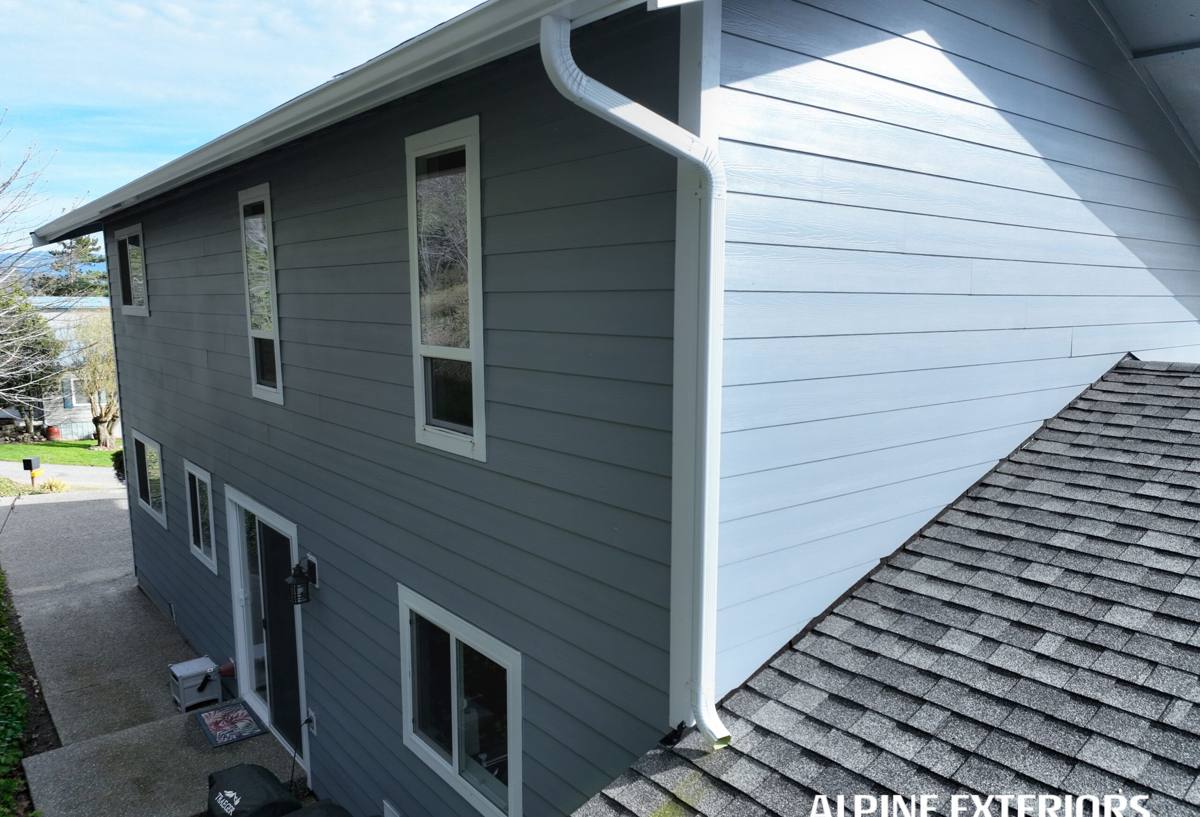
What a Correct New Roof Installation Involves
Tear-Off and Deck Inspection
A proper replacement starts with a full tear-off down to the roof deck, not a layover on top of old material. That's the only way to actually see what's underneath — and on older Sudden Valley homes, especially those with a history of moss or slow leaks, it's common to find sections of sheathing that have gone soft from long-term moisture exposure. Any damaged decking gets identified and replaced before anything new goes on. Skipping this step is how a new roof ends up failing early from the inside out.
Underlayment and Ice/Water Protection
Underlayment is the roof's backup layer, and in a climate like ours it does real work, not just paperwork for the warranty. Self-adhered ice-and-water membrane belongs at eaves, valleys, chimneys, skylights, and other transition points where wind-driven rain and standing moisture are most likely to find a way in. A synthetic underlayment across the rest of the field holds up far better than old-style felt when a roof sits exposed to weather during the install, which happens more often than homeowners expect once a job stretches over a rainy week.
Flashing
Flashing failure — not shingle failure — is the most common reason roofs leak. Every chimney, sidewall, valley, and vent penetration needs new, properly lapped flashing as part of the job, not a reuse of whatever was there before. On tree-shaded lots this matters even more, because debris and moss tend to collect right at these transition points, accelerating corrosion on old metal that's already past its service life.
Ventilation
Balanced intake and exhaust ventilation keeps the attic close to outdoor temperature and lets moisture escape instead of condensing on the underside of the deck. Poor ventilation is a major, often invisible contributor to premature roof aging, and it's an easy thing to get wrong on additions or older homes where the original venting was never sized correctly to begin with.
Choosing a Roofing System for a Sudden Valley Home
There's no single "best" roofing material — the right call depends on the home's exposure, roof pitch, tree cover, and budget. Here's how the common options compare for a wooded, moisture-heavy lot like the kind typical in Sudden Valley:
| System | How It Handles Moss & Moisture | Typical Lifespan Here | Trade-Offs |
|---|---|---|---|
| Standard asphalt composition shingle | Moderate — benefits from algae-resistant granules on shaded roofs | 18-25 years | Most affordable upfront; needs periodic moss removal on shaded slopes |
| Architectural (dimensional) shingle | Good — heavier mat sheds water and resists granule loss better | 25-30 years | Higher material cost; still benefits from algae-resistant treatment in shade |
| Standing seam metal | Excellent — smooth surface sheds moss and debris, minimal moisture retention | 40-50+ years | Highest upfront cost; requires an installer experienced with metal detailing |
| Synthetic/composite shake | Good — engineered to resist rot and moisture that real wood shake can't | 30-40 years | Mid-to-high cost; appearance-driven choice for homes wanting a shake look |
We don't install traditional cedar shake roofing as a standard offering. It's a beautiful, historic material, but on a shaded, moisture-heavy lot it requires an ongoing maintenance commitment — regular treatment, moss control, and eventual replacement of individual shakes — that most homeowners underestimate at the time of install. If a home's design calls for that look, a synthetic or composite shake product gets you the appearance with far less long-term upkeep, which is why it's what we recommend instead.
Ventilation, Moss, and Long-Term Moisture Control
A new roof is the best possible time to correct ventilation and moisture problems, because the whole system is open and accessible. On shaded Sudden Valley lots, we pay particular attention to:
- Balanced intake at the eaves paired with proper exhaust at the ridge, sized to the actual attic square footage
- Algae-resistant shingle granules on any slope that stays shaded most of the day
- Wider, better-sealed valley flashing where debris tends to accumulate
- Gutter and downspout condition, since a roof can only shed water as well as the drainage system lets it
- Overhanging limbs trimmed back from the roofline where practical, to cut down on debris load and moss seeding
Moss removal on an existing roof is a maintenance task, not a repair — and it's one we're honest about. Zinc or copper strips near the ridge can slow regrowth over time, but no roof in a shaded, high-moisture setting is going to be maintenance-free. The goal of a correct installation is to minimize how much moisture the roof retains in the first place, so moss becomes a periodic cleaning issue instead of a structural one.
Our Installation Process
- On-site inspection and estimate. We walk the roof, check attic ventilation, and look at flashing, decking condition where visible, and drainage before quoting anything.
- Material selection. We go over system options, colors, and any relevant guidelines for the property, and put everything in writing.
- Scheduling around the weather. Bellingham's rain patterns mean timing matters. We plan tear-off in stages so the deck is never left exposed longer than necessary.
- Tear-off and deck repair. Old material comes off, the deck is inspected, and any soft or damaged sheathing is replaced before underlayment goes down.
- Underlayment, flashing, and ventilation install. The moisture-management layers go in first and get inspected before the finish material is installed.
- Finish roofing installation. Shingles, metal panels, or composite material are installed to manufacturer specification, including proper nailing patterns and exposure.
- Cleanup and final walkthrough. Job site debris and nails are cleared with a magnetic sweep, and we walk the finished roof with the homeowner.
Permits, Codes, and Neighborhood Guidelines
Roof replacements in unincorporated Whatcom County require a building permit, and we handle that as part of the job rather than leaving it to the homeowner. Sudden Valley, like many established private communities, also has its own architectural or design review process that can cover approved roofing colors and materials — if a property is subject to that kind of review, we build the timeline for approval into the project schedule so it doesn't hold up the work once we're ready to start. We'd rather confirm requirements upfront than have a homeowner deal with a surprise after material is already ordered.
Signs Your Sudden Valley Roof May Need Replacing
Not every roof problem means a full replacement — some are repairable. But a few signs, especially in combination, usually point toward a system that's reached the end of its useful life rather than a spot repair:
- Shingles that are curling, cupping, or losing granules in large patches, not just a few spots
- Moss that returns quickly after cleaning, or moss growing under the shingle edges rather than just on the surface
- Soft or spongy spots when walking the roof, or visible sagging from the ground
- Daylight visible through the roof deck from inside the attic
- Water stains on ceilings or in the attic that reappear after every heavy rain
- A roof approaching or past 20-25 years old, especially with heavy tree cover overhead
If a roof is showing one or two of these in isolation, a repair may still make sense. When several show up together, replacement is usually the more honest recommendation, and we'll say so directly rather than stringing out repairs on a roof that's past its service life.
What Drives the Cost of a New Roof
Every roof is priced based on its own specifics, but the same handful of factors drive most of the variation between jobs:
| Factor | Why It Matters |
|---|---|
| Roof size and number of planes | More square footage and more valleys/hips mean more material and labor time |
| Pitch and accessibility | Steep roofs and lots with limited equipment access take longer and require more safety setup |
| Deck condition underneath the old roofing | Rotted or soft sheathing found during tear-off adds material and labor beyond the base quote |
| Material choice | Standard asphalt, architectural shingle, metal, and composite carry different material and install costs |
| Tree cover and debris removal | Heavier limb trimming or debris hauling on wooded lots adds prep time |
| Ventilation and flashing scope | Correcting undersized or outdated ventilation and flashing adds a modest amount versus a like-for-like swap |
We put all of this in writing before work starts, including what happens if we find deck damage during tear-off, so there are no surprise line items mid-project.
Why a Crew That Already Works Sudden Valley Matters
A roofing crew that's worked regularly in Sudden Valley already knows what tends to show up under old shingles on a shaded, lakeside lot — where moisture typically hides, which slopes need extra attention to moss, and how to sequence a tear-off around Bellingham's rain rather than getting caught mid-project with an open deck. That familiarity shows up in the details: flashing that's sized for the debris load these lots actually see, ventilation that accounts for the tree canopy overhead, and a schedule that respects the neighborhood's access and any review process rather than treating it like every other job.
It also matters for accountability. A local crew is easy to reach for a warranty question five years down the road, and has a reputation in the area worth protecting — which is a better guarantee of follow-through than a traveling crew with no ongoing presence in Whatcom County.
If your roof is showing its age or you're planning ahead for a replacement, we're happy to take a look and give you a straight, no-pressure estimate. There's no obligation — just an honest read on the condition of your roof and what a correct installation would involve for your specific home. Use the form below to get started.