 Bellingham Exterior
 Siding Replacement for South Hill's Older Hillside Homes
South Hill is one of Bellingham's older neighborhoods, and it looks the part — a mix of early-1900s houses and mid-century construction climbing the hill above downtown, many of them on elevated lots that catch wind straight off the bay. That combination of age and exposure means siding replacement here is rarely a simple like-for-like swap. The original siding on a lot of these homes was never built for the volume of wind-driven rain and salt-tinged air these walls actually see, and decades of moss, shade, and moisture cycling have usually taken a toll on whatever's underneath the visible surface.
We install James Hardie fiber cement siding exclusively, and on South Hill specifically, that choice matters more than it might on a newer, more sheltered lot elsewhere in Whatcom County. Older wall assemblies, mature tree cover, and hillside exposure all raise the stakes on getting a replacement done correctly the first time.
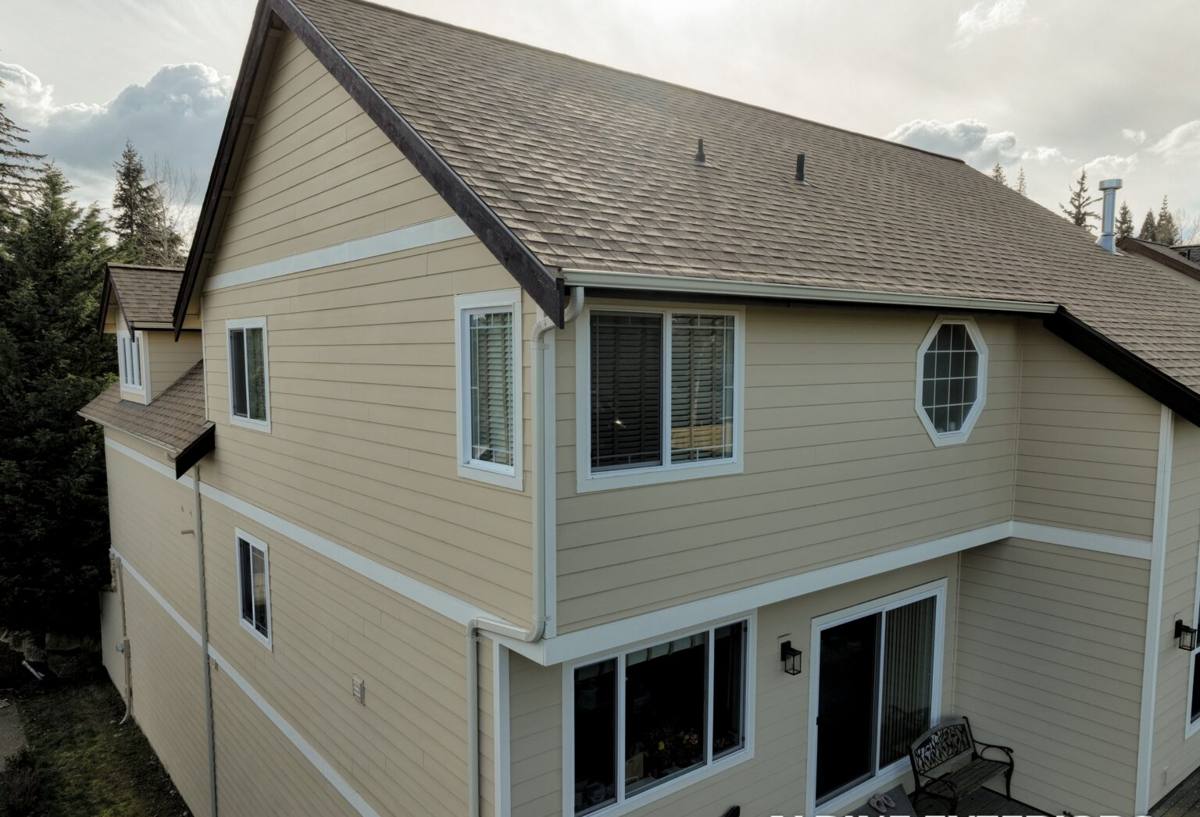
What South Hill's Climate Does to a Wall Over Time
Salt Air and Marine Exposure
Homes with any elevation or bay-facing exposure on South Hill sit in a steady stream of salt-tinged marine air. That air is hard on exposed fasteners, on paint film, and on any siding material that depends on a surface coating to keep moisture out. Over enough years, it's part of why older painted wood siding on this hill tends to show chalking, fading, and fastener staining well before homeowners expect it.
Wind-Driven Rain on Elevated Lots
Rain in Bellingham rarely falls straight down, and that's especially true on South Hill's higher, more exposed lots. Wind pushes rain sideways and up under laps, trim, and corner boards, which means the flashing and drainage details behind the siding matter as much as the siding material itself. A wall that looks fine from the street can still be taking on moisture at every horizontal joint if those details were never built in correctly.
Moss, Shade, and Slow-Drying Walls
Mature tree canopy is one of South Hill's defining features, and it's also why so many walls here stay damp longer than walls on more open lots. Shaded, north-facing siding can go days without direct sun in the wet months, and that extended dampness is exactly what moss and mildew need to take hold. On older siding, moss growth isn't just cosmetic — it holds water against the surface and accelerates whatever decay process has already started underneath.
Signs Your South Hill Home May Need Siding Replacement
Because so much of the damage on an older wall happens behind the surface, it's worth knowing what to actually look for during a walk around the house:
- Paint that's peeling, bubbling, or chalking faster than a normal repaint cycle would explain
- Soft or spongy spots when you press on the siding, especially near the bottom courses and around window sills
- Persistent moss or dark staining that comes back within a season or two of cleaning
- Visible gaps, warping, or cupping in individual boards, particularly on shaded or wind-exposed walls
- Rising heating bills without an obvious cause, which can point to moisture-compromised insulation behind the siding
- Cracking or separation at corner boards, trim, and window casings
Any one of these on its own might just need a repair. Several of them together, especially on a home built before modern house wrap and flashing standards were common, usually means the wall assembly itself needs attention, not just the visible siding.
Why We Only Replace Siding With James Hardie Fiber Cement
We don't offer LP SmartSide, vinyl, Cemplank, Allura, primed spruce, or cedar as siding replacement options. Those are legitimate products, and other contractors install them competently. We made a professional decision that on homes exposed to Bellingham's combination of salt air, driving rain, and a moss season that runs most of the year, one material system we trust completely serves our customers better than offering several options with different long-term risk profiles.
| Material | Moisture Behavior | Maintenance in This Climate | Realistic Lifespan |
|---|---|---|---|
| James Hardie fiber cement | Dimensionally stable; doesn't swell, rot, or support moss growth the way wood-based products can | Low; factory finish resists fading and staining | 30+ years with proper installation |
| LP SmartSide (engineered wood) | More sensitive to moisture at cut edges, fastener holes, and unpainted surfaces | Moderate; edge sealing and paint upkeep matter | 15-25 years, climate-dependent |
| Vinyl | Can warp in temperature swings; hides moisture problems behind it rather than preventing them | Low visible upkeep, but issues underneath go unnoticed longer | 20-30 years, variable |
| Cedar | Absorbs moisture readily without regular sealing or repainting | High; recurring maintenance cycle required | 15-25 years with consistent upkeep |
James Hardie's fiber cement core is engineered specifically for climates like this one — the HZ5 product line is formulated for regions with significant moisture exposure, and it doesn't expand, contract, or absorb water the way wood-based sidings do. The factory-applied ColorPlus finish is also baked on rather than field-applied, which means the paint layer isn't depending on a crew's brushwork and weather conditions on install day to hold up for the next fifteen years.
What a Correct Siding Replacement Actually Involves
Replacing siding on an older South Hill home is not just removing old boards and nailing up new ones. A correct job addresses the wall assembly underneath, which is usually where the real problems are hiding:
- Full tear-off and inspection of the sheathing, not a re-side over existing siding, so hidden rot or moisture damage doesn't get sealed in behind new material
- House wrap or weather-resistive barrier installed and lapped correctly, replacing whatever moisture barrier (or lack of one) the home originally had
- A drainage gap or rainscreen behind the siding on wind-exposed and shaded walls, so any moisture that gets past the surface has somewhere to dry out
- Corrosion-resistant fasteners at Hardie's specified spacing, sized correctly for this climate's exposure
- Properly lapped and flashed transitions at windows, doors, corners, and the base of the wall — the places where most water intrusion actually starts
- Field-cut edges primed before installation so the factory finish's protection isn't compromised at every cut
Skipping any of these steps can leave a wall that looks correct on day one but repeats the same failure pattern the old siding had, just with a newer face on it.
Our Process for a South Hill Siding Replacement
Walkthrough and Assessment
We start by walking the specific walls involved — which face the prevailing wind and rain, which stay shaded most of the year, and whether there are early signs the sheathing or framing underneath has already been affected. On an older home, this step often tells us more about the scope of the project than the visible siding condition does.
Planning Before Tear-Off
We plan flashing details, corner treatments, and how the new siding will meet existing trim, windows, and rooflines before any material comes off the house. Working this out ahead of time avoids field improvisation once the wall is open, which is where corners tend to get cut on a rushed job.
Installation to Manufacturer Spec
Every fastener, gap, and flashing detail follows James Hardie's published installation requirements for this climate zone. That's what keeps the manufacturer's warranty valid, and it's also simply what makes the wall perform the way it's supposed to for decades rather than years.
Final Walkthrough
We walk the finished project with you, explain what little ongoing maintenance the material actually needs, and make sure you know what a properly installed wall looks like so you can check it yourself down the road.
Why Hiring a Crew That Already Works South Hill Matters
A neighborhood with this much elevation change, tree cover, and older housing stock rewards experience that's specific to it. A crew that's replaced siding across South Hill through multiple wet seasons already knows which walls need extra drainage detail because of shade, how much clearance actually holds up in Bellingham's marine exposure versus what a generic installation guide assumes, and what to expect when they open up a wall on a house of this age. That judgment doesn't show up on an estimate — it shows up in whether the new siding is still performing the same way in twenty years.
Cost Factors for Siding Replacement on South Hill
Every home is different, but a few factors consistently move the price on South Hill projects specifically:
| Factor | Why It Matters |
|---|---|
| Age and condition of the existing wall assembly | Older homes more often need sheathing repair or replacement once the old siding comes off |
| Hillside access and site conditions | Steep lots, retaining walls, and limited staging space can add labor and equipment time |
| Wall height and architectural complexity | Dormers, multiple stories, and varied rooflines mean more cuts and flashing details |
| Number of windows, doors, and trim transitions | Each opening needs its own flashing and finish work |
| Amount of shaded or wind-exposed wall area | Some walls may warrant additional drainage detailing given South Hill's tree cover and exposure |
We'll walk your specific property and give you real numbers based on what we actually find, rather than a rough estimate based on square footage alone. Two similarly sized South Hill homes can have very different scopes of work depending on their age and how their walls have held up.
Timing a Project Around the Wet Season
Siding replacement can happen most of the year here, but scheduling around Bellingham's wettest stretches makes a real difference on a project that involves opening up the wall for any length of time. We plan tear-off and sheathing work in stages so exposed sections don't sit uncovered longer than necessary, and we adjust timelines around forecasted weather rather than pushing through conditions that put the open wall at risk. On an older South Hill home where the wall assembly may already need repair, this kind of sequencing matters more than it would on a straightforward re-side.
If you're considering siding replacement for a home on South Hill, we're glad to walk the property, look at what your specific walls are dealing with, and give you a straightforward, no-pressure estimate. There's a form below — reach out and we'll set up a time to take a look.