 Bellingham Exterior
 Metal Roofing Built for Silver Beach's Climate
Silver Beach sits within Bellingham's marine climate belt, and that comes with a specific set of demands on any roof covering it. Salt-tinged air moving in off Bellingham Bay, long stretches of driving rain through fall and winter, and a moss season that can run eight months or longer all combine to shorten the life of roofing materials that aren't matched to the conditions. A roof that performs well in a drier, inland climate can fail early here if it's not detailed correctly for wind-driven rain and constant moisture exposure.
Metal roofing, when specified and installed correctly for this environment, holds up well against all three of those pressures. But "metal roofing" isn't one product — panel type, coating, fastening method, and underlayment all matter, and getting any of them wrong is exactly how a metal roof underperforms in a coastal Whatcom County climate. This page covers what Silver Beach homes actually need from a metal roof, what correct installation looks like, and how we approach the job.
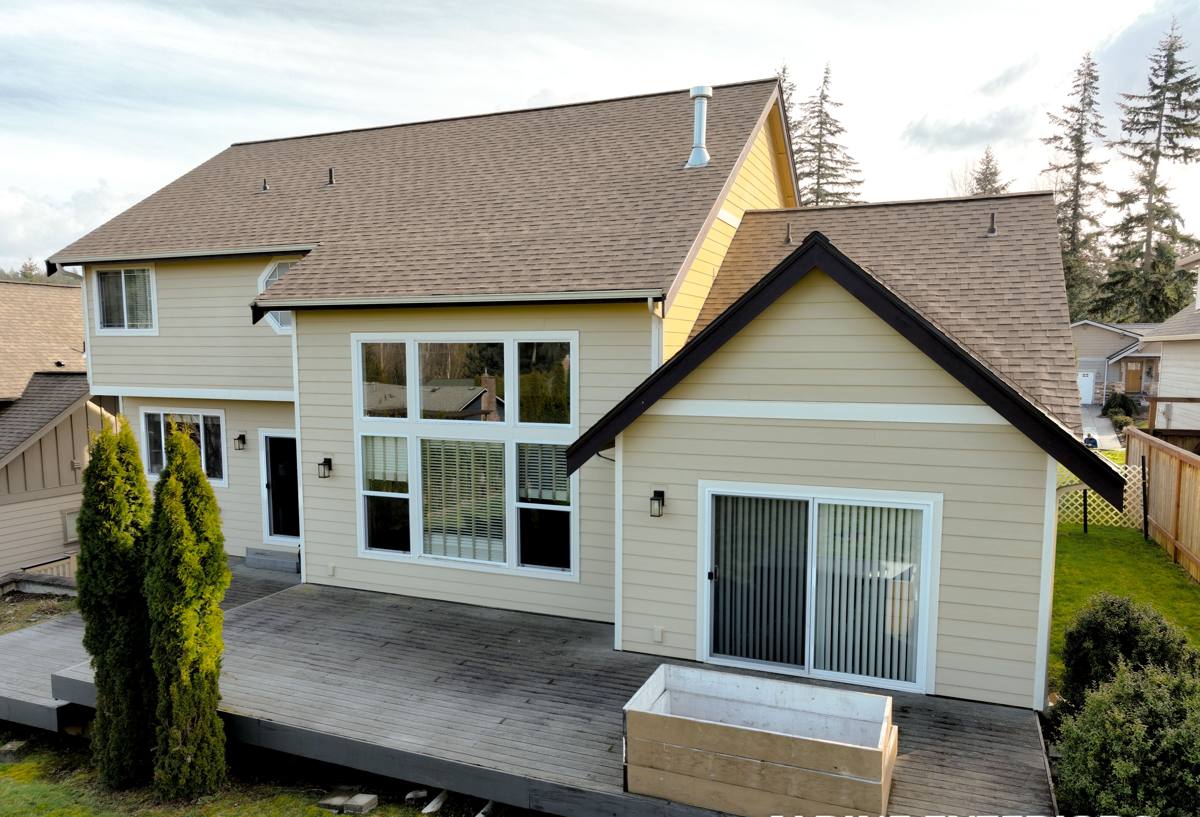
Why Metal Roofing Suits This Neighborhood
Homeowners in Silver Beach considering metal roofing are usually weighing it against asphalt shingles, and the comparison generally favors metal for a few specific reasons tied to local conditions:
- Moss and moisture resistance: Metal doesn't give algae and moss the same organic surface to grip that shingle granules do, which matters in a region where roofs stay damp for months at a stretch.
- Wind-driven rain performance: A properly seamed metal roof sheds water fast and resists the wind-driven rain that pushes moisture under lesser roofing at panel edges and penetrations.
- Longevity against salt exposure: Coated steel and aluminum panels, specified correctly, resist the slow corrosion that salt-laden coastal air can accelerate on unprotected metal.
- Snow and debris shedding: Bellingham doesn't see heavy snow often, but when wet snow or heavy needle drop from surrounding trees does happen, metal sheds it rather than holding it against the surface.
None of that means metal is automatically the right call for every home or budget — asphalt and other coverings still have a place. It means that where a homeowner wants a longer-life, lower-maintenance roof and is willing to pay more up front for it, metal is a genuinely strong fit for this specific climate.
What a Correct Metal Roof Installation Actually Involves
Underlayment and Moisture Barrier
The panels get the attention, but the underlayment underneath them does most of the work protecting the structure. In a climate with this much sustained moisture, we use a synthetic or high-temp ice-and-water-shield-style underlayment at eaves, valleys, and penetrations — not the minimum felt some installers rely on to save cost. This is the layer that keeps a home dry if wind ever drives rain up under a panel seam.
Fastening and Panel Movement
Metal panels expand and contract with temperature swings, and fasteners that don't account for that movement eventually work loose or split the panel around the screw hole. Concealed-fastener panel systems handle this better than exposed-fastener panels because the clips allow the panel to move independently of the structure. We match fastener spacing and panel attachment to the specific product and roof pitch rather than using a single generic pattern on every job.
Flashing at Valleys, Walls, and Penetrations
Almost every metal roof leak we're called to diagnose traces back to flashing, not the panels themselves. Valleys, chimney and vent penetrations, and wall-to-roof transitions all need custom-formed flashing detailed for the specific panel profile — not a generic trim piece caulked into place. Caulk is a backup, never the primary seal.
Ventilation
A metal roof over an under-ventilated attic can trap moisture that has nowhere to go, which defeats the purpose of choosing a moisture-resistant covering in the first place. We check ridge, soffit, and gable ventilation as part of any metal roofing scope and address gaps before panels go on, not after.
Comparing Common Metal Roofing Options
Not every metal roofing product is built the same way, and the differences matter more in a wet, salt-influenced climate than they would somewhere drier. Here's how the common options compare for a Silver Beach home:
| Panel Type | Fastening | Best For | Climate Notes |
|---|---|---|---|
| Standing seam (concealed fastener) | Hidden clips, no exposed screws | Homeowners prioritizing longevity and leak resistance | Best performer against wind-driven rain and thermal movement; higher upfront cost |
| Exposed-fastener panel (screw-down) | Screws through the panel face | Budget-conscious projects, outbuildings, some roof styles | Fastener gaskets wear over time and need periodic inspection in a wet climate |
| Steel with quality factory coating | Varies by profile | Most residential applications | Coating quality determines corrosion resistance in salt-influenced air |
| Aluminum | Varies by profile | Homes closer to salt water or with corrosion concerns | Naturally corrosion-resistant, doesn't rely on coating integrity the way steel does |
We'll walk through which of these fits your roof, your budget, and how close your home sits to salt air exposure during the estimate — there's rarely one universally "best" answer.
What Drives the Cost
Metal roofing costs more upfront than asphalt shingles, and the range varies more than people expect based on a handful of factors specific to the home:
| Cost Factor | Why It Matters |
|---|---|
| Panel type and material | Standing seam and aluminum typically cost more than exposed-fastener steel |
| Roof complexity | Valleys, dormers, and multiple penetrations increase flashing and labor time |
| Tear-off vs. overlay | Removing an old roof adds cost but is usually the right call over overlaying |
| Underlayment spec | Full ice-and-water coverage costs more than minimum felt but performs far better here |
| Roof pitch and access | Steep or hard-to-access roofs take longer and carry higher labor cost |
We give homeowners a real number for their specific roof rather than a generic per-square-foot figure that doesn't hold up once the estimator sees the actual conditions.
Our Process for Silver Beach Metal Roofing Projects
1. On-Site Assessment
We walk the roof, check the decking condition, look at existing ventilation, and note anything — tree cover, roof complexity, current moss or moisture damage — that affects the scope.
2. Straight Options and Pricing
We explain the panel and coating options that make sense for the home and budget, without steering toward the most expensive option by default.
3. Correct Installation
Underlayment, fastening, and flashing done to the standards above — not shortcuts that show up as problems two or three winters later.
4. Final Walkthrough
We go over the finished roof with the homeowner before calling the job done, including care and maintenance expectations specific to this climate.
Living With a Metal Roof in a Moss-Prone Climate
Metal roofing resists moss far better than shingles, but "resists" isn't "immune." Overhanging tree limbs, north-facing slopes that stay shaded, and debris that collects in valleys can still let moss and algae get a foothold on any roof, including metal. A few habits keep a metal roof performing the way it should through Whatcom County's long wet season:
- Keep overhanging branches trimmed back so panels get sunlight and airflow.
- Clear needles and leaf debris from valleys and gutter lines before fall rains set in.
- Have gutters checked for proper flow — a metal roof sheds water fast, and undersized or clogged gutters can't keep up with it.
- Watch for any scratched or chipped coating after storms and have it touched up promptly, since bare metal is where corrosion starts.
- Schedule a periodic check of fastener and flashing condition, especially on exposed-fastener panel systems.
Why Local Experience on This Neighborhood Matters
A roof detailed for a dry-climate installation manual doesn't automatically perform in a Pacific Northwest marine climate, and Silver Beach's mix of tree cover, moisture, and proximity to salt-influenced air is its own specific set of conditions. A crew that already works this part of Bellingham knows which details — underlayment coverage, flashing at valleys, ventilation balance — actually matter here versus what's optional in a milder climate. That experience shows up in fewer callbacks and a roof that's still performing correctly a decade or two out, not just on installation day.
It also means a straightforward conversation about what your specific roof needs, without upselling products that don't fit the home or downplaying the maintenance a metal roof still requires even in the best case.
If you're weighing metal roofing for a home in Silver Beach, we're glad to take a look and give you a straight answer on what it would take — no pressure, no obligation. Use the form below to request a free estimate.