 Bellingham Exterior
 New-Construction Windows Built for Blaine's Coastline Climate
Building a new home in Blaine means building for a specific piece of geography: the far northwest corner of Whatcom County, tucked against Semiahmo Bay, Drayton Harbor, and the open water of the Salish Sea. That location is a big part of why the home is worth building here — and it's exactly why the windows going into it need to be selected and installed with more care than a standard inland build. New-construction windows are installed during framing, before siding and trim go on, which means there's only one real chance to get the flashing, sealing, and fastening right. Get it right at this stage and the windows perform for decades. Get it wrong, and the problems don't show up until they're already inside the wall.
This page is specifically about new-construction window installation for homes being built in the Blaine area — not window replacement on an existing house. The process, the sequencing with other trades, and the climate risks are different enough that they deserve their own explanation.
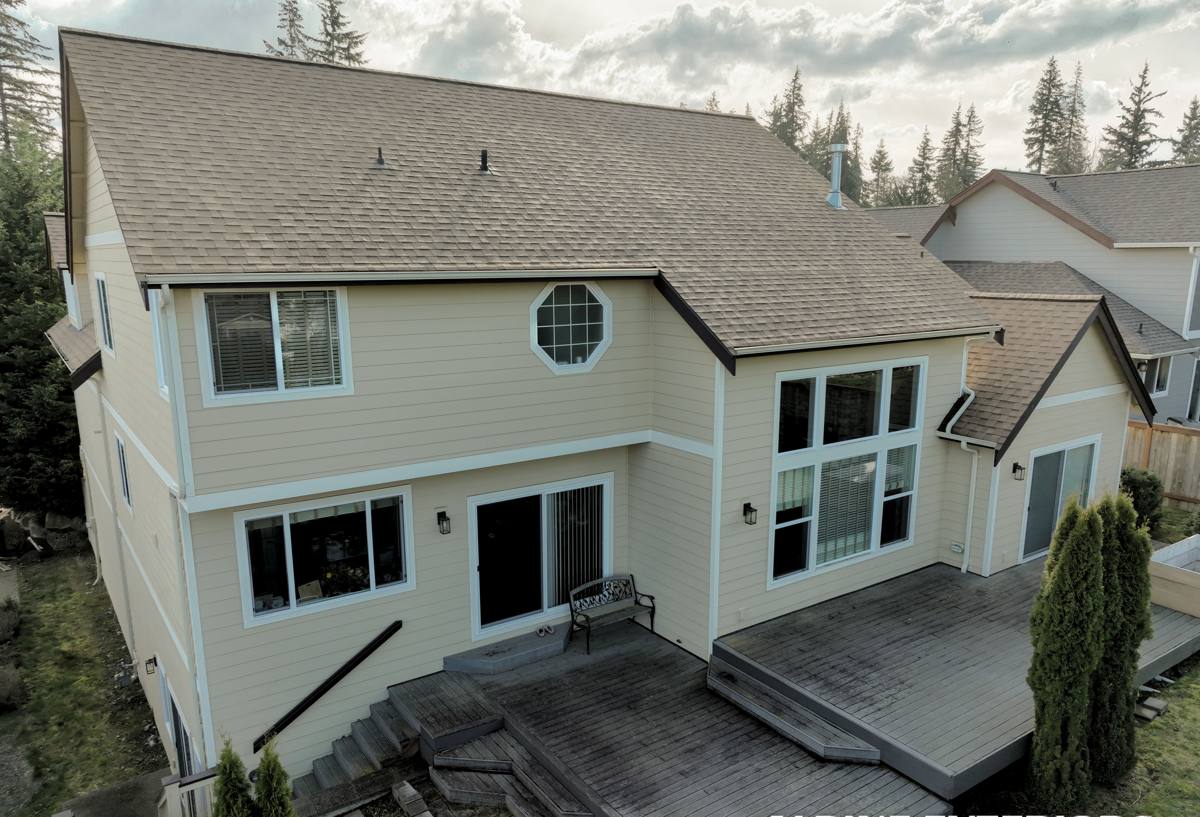
Why Blaine's Climate Demands More From a Window Install
Salt Air and Corrosion
Homes near Semiahmo Bay and Drayton Harbor sit close enough to saltwater that airborne salt reaches siding, hardware, and window components well before it reaches homes further inland. Salt-laden air accelerates corrosion on unprotected metal fasteners, cheaper hinge and lock hardware, and aluminum components that aren't rated for coastal exposure. On a new build, this is a selection issue as much as an installation issue — the wrong hardware finish or fastener grade can start showing pitting and staining within a few years.
Wind-Driven Rain
Whatcom County's exposure to weather systems moving in off the water means Blaine gets more sustained, wind-driven rain than a lot of people expect for the Pacific Northwest. Rain that's being pushed sideways by wind finds any gap in a window's flashing or sealant line and drives it directly into the wall cavity. A window that would perform fine in a calmer climate can leak here if the sill pan, flashing tape, and weather-resistant barrier integration aren't sequenced correctly.
Moss, Mildew, and Prolonged Moisture
The long wet season that supports Whatcom County's moss growth on roofs and siding also keeps window sills, tracks, and exterior trim damp for extended stretches of the year. Wood components that aren't properly primed and sealed on all sides, or drainage paths that get blocked, stay wet longer than they should — and that's when rot, mildew staining, and finish failure start.
What a Correct New-Construction Window Install Actually Involves
A window installed correctly during framing isn't just set into the rough opening and nailed off. On every Blaine project, we treat the installation as a sequence, not a single step:
- Rough opening prep: checking that the opening is square, level, and sized to the manufacturer's tolerance before the window ever goes in.
- Sill pan flashing: creating a sloped, sealed pan at the base of the opening so any water that gets past the window has a way out instead of sitting against the framing.
- Weather-resistant barrier integration: lapping the house wrap and flashing tape in the correct shingle-style order — bottom, sides, then top — so water is always directed outward and down, never trapped behind a layer.
- Correct fastening method: nailing-fin windows and block-frame windows attach differently, and using the wrong fastening schedule or fastener type voids manufacturer warranties and compromises wind resistance.
- Sealant compatibility: using sealants and tapes that are actually compatible with the window frame material and the WRB — mismatched products can fail to bond or break down early in a wet climate.
- Interior air sealing: sealing and insulating the gap between the frame and rough opening so the window performs for energy efficiency, not just water resistance.
Skipping or rushing any one of these steps is how a brand-new window ends up with a moisture problem inside a wall that no one sees until siding or drywall comes off years later.
Choosing the Right Frame Material for a Blaine New Build
Frame material matters more here than in a drier, inland climate because of the combined exposure to salt air and sustained moisture. There's no single "best" answer for every home — it depends on your budget, the home's design, and how much long-term maintenance you want to take on.
| Frame Material | Salt Air / Coastal Performance | Maintenance | Typical Cost Position |
|---|---|---|---|
| Vinyl | Resists corrosion well; quality varies by manufacturer and hardware grade | Low — no painting, occasional cleaning | Lower to mid-range |
| Fiberglass | Very stable in salt air and temperature swings; dimensionally strong | Low | Mid to upper range |
| Aluminum-clad wood | Good exterior protection if cladding and seals are intact; interior wood still needs care | Moderate — depends on seal integrity over time | Upper range |
| Bare wood | Requires diligent finishing and upkeep to resist coastal moisture and mildew | High — regular painting/sealing | Varies widely |
Our professional standard on Blaine builds is to steer homeowners toward frame and hardware combinations with proven coastal durability, and to be upfront when a product choice will mean more maintenance down the road — that's a trade-off you should make with full information, not find out about after move-in.
Meeting Washington's Energy Code From Day One
New construction in Whatcom County has to meet the Washington State Energy Code, and windows are one of the bigger factors in whether a new home passes. Two ratings matter most:
- U-factor — measures how well the window resists heat loss. Lower is better, and code sets a maximum allowable U-factor for the whole-home energy path.
- SHGC (Solar Heat Gain Coefficient) — measures how much solar heat passes through the glass, which affects both winter warmth and summer comfort.
Bedrooms and other habitable rooms also have egress requirements — minimum opening size and sill height — that have to be accounted for at the window schedule stage, not discovered during framing inspection. We review the window schedule against current code requirements before ordering, so there are no surprises when the building inspector walks the site.
Our New-Construction Window Process
- Plan and window schedule review — we go through the architectural window schedule with you and the builder to confirm sizes, egress compliance, and energy ratings before anything is ordered.
- Product selection and ordering — matching frame material, glazing package, and hardware to Blaine's climate and your budget, with realistic lead times built into the schedule.
- Coordinated installation — windows go in once the weather-resistant barrier is up and ready, following the flashing and fastening sequence outlined above.
- Documentation — we photograph flashing and sill pan work before it's covered by siding, so there's a record of how each opening was built.
- Final walkthrough — checking operation, seals, and finish on every window before we consider the job complete.
Working With Your Builder or General Contractor
Window installation on a new build doesn't happen in isolation — it has to slot into the framer's, siding crew's, and inspector's timelines. We coordinate directly with your general contractor so windows go in at the right point in the sequence: after the weather-resistant barrier is installed and inspected, but before siding closes everything up. Showing up too early or too late in that sequence is one of the most common causes of delay and rework on new builds, and it's avoidable with clear communication between trades from the start.
A Homeowner's Checklist Before Windows Go In
- Confirm the final window schedule matches the approved plans, including egress-required sizes
- Verify U-factor and SHGC ratings meet current Washington State Energy Code minimums
- Ask what hardware finish is specified and whether it's rated for coastal/salt-air exposure
- Confirm who is responsible for sill pan flashing and WRB integration — this should never be assumed between trades
- Get lead times in writing so window delivery doesn't stall the framing-to-siding timeline
- Ask for photos of flashing work before siding covers it
Why Hire a Crew That Already Works in Blaine
Building codes, inspection expectations, and weather exposure all shift depending on where you are in Whatcom County, and Blaine's proximity to the water puts it on the more demanding end of that range. A crew that already works new-construction windows in this area knows which flashing details local inspectors look for, which hardware holds up against salt air over the long run, and how to sequence work around the rain patterns that roll in off the Salish Sea. That local experience shows up as fewer callbacks, fewer surprises during inspection, and windows that are still performing well long after the newer homes further inland start needing attention.
If you're building in Blaine and want a straight answer on what your new-construction windows need for this climate, we're happy to take a look at your plans and walk the site. Reach out for a free, no-pressure estimate using the form below.