 Bellingham Exterior
 Sudden Valley's Windows Work Harder Than Most
Sudden Valley sits back in the trees along Lake Whatcom, a few miles outside downtown Bellingham, and that setting is part of what makes it a great place to live and part of what wears out windows faster than homes in more open parts of Whatcom County. Heavy tree canopy means constant shade on large sections of most roofs and walls, which means slower drying after every rain. And in this part of Washington, rain isn't occasional — it's a season that runs most of the year, often arriving sideways off the lake and hills rather than falling straight down.
Add in the broader marine-influenced climate that touches all of Whatcom County, including a fair amount of salt-laden air moving in off the Sound on windy days, and you've got a combination that's tough on window seals, frames, and hardware. Old aluminum-frame windows corrode. Wood frames that aren't well-sealed take on moisture and start to swell or rot at the corners. Single-pane or early double-pane glass fogs up between the panes once the seal fails. None of this is unique to any one house — it's just what happens to windows that sit in a shaded, damp, lake-adjacent microclimate for fifteen or twenty years without attention.
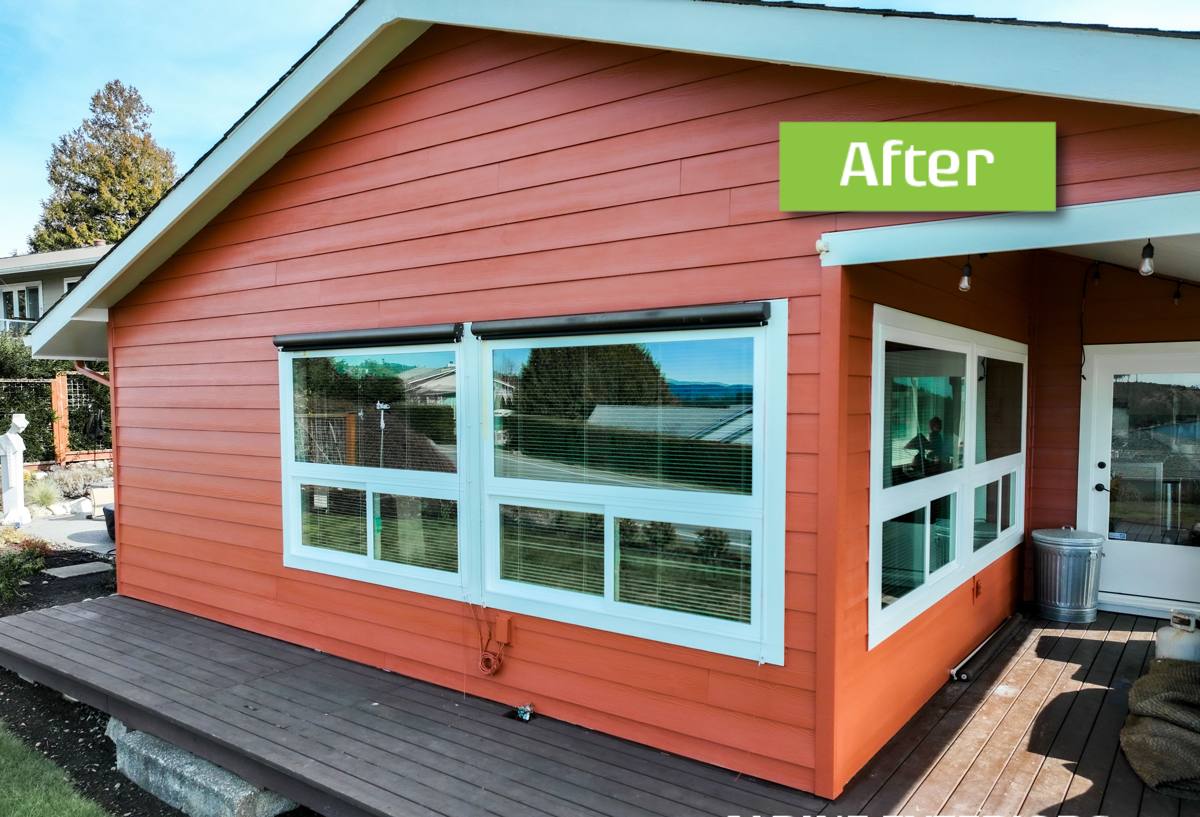
What "Energy-Efficient" Actually Means Here
Energy-efficient windows get marketed with a lot of numbers — U-factor, SHGC, R-value — and homeowners are often told to just "pick the best rating." For a Sudden Valley home, the more useful question is what those numbers actually do for you given your specific site conditions.
- U-factor measures how much heat escapes through the window. Lower is better for keeping the woodstove or heat pump from working overtime through a damp Bellingham winter.
- Solar Heat Gain Coefficient (SHGC) matters less for heavily shaded lots (you're not fighting summer sun the way an open, south-facing lot would) and matters more on the few Sudden Valley properties that do get direct lake-reflected light for part of the day.
- Air infiltration rating is arguably the most important number for this area — a window that seals tight against wind-driven rain is doing double duty, keeping both heat in and moisture out.
In practice, a correctly specified window for this neighborhood balances all three rather than chasing the single best number on the spec sheet.
Signs Your Current Windows Are Costing You
Most homeowners don't replace windows because of one dramatic failure — they replace them because a slow accumulation of small problems finally adds up. Watch for:
- Visible fogging or a milky haze between panes (the seal has failed and the gas fill or dead-air space is gone)
- Soft, discolored, or spongy wood at the sill or lower corners of the frame
- Drafts you can feel with a hand near the frame on a windy day
- Condensation forming on the inside of the glass regularly through fall and winter
- Green or black staining creeping across the sill or lower sash — often the first visible sign of the moss and algae growth this climate is known for
- Windows that are noticeably harder to open, close, or lock than they used to be
Any one of these alone isn't an emergency. Several together usually mean the window's original seal and finish life is behind it, and repair is just delaying a replacement that's coming anyway.
Frame Material: What Actually Holds Up Here
We get asked constantly which frame material is "best." The honest answer is that it depends on how much upkeep you want to sign up for, because this climate is unforgiving of anything left unmaintained.
| Frame Material | How It Handles This Climate | Maintenance Reality |
|---|---|---|
| Vinyl | Won't rot, doesn't corrode, handles moisture well long-term | Low — occasional cleaning, no repainting ever needed |
| Fiberglass | Very stable in temperature and moisture swings, minimal expansion/contraction | Low to moderate — durable finish, longer product lifespan |
| Wood (unclad) | Warm look but vulnerable to the sustained damp and shade found on most Sudden Valley lots | High — regular painting/sealing or moisture will find a way in |
| Wood-clad | Wood interior with a protective exterior shell, better moisture defense than bare wood | Moderate — interior finish still needs periodic attention |
| Aluminum (older stock) | Prone to corrosion and poor thermal performance in this setting | High — we generally recommend replacement over repair |
We don't push one material on every job. What we won't do is install a bare wood frame on a heavily shaded, low-airflow wall and tell you it'll be low-maintenance — that's setting a homeowner up for the exact rot problem we get called out to fix on older homes. If you love the look of wood, wood-clad or a high-quality composite gets you most of the appearance with a fraction of the exposure.
Glass Packages Worth Considering
Double-pane with Low-E coating and argon gas fill is the standard baseline for this region and performs well. Triple-pane adds meaningful sound dampening and a warmer interior glass surface (less condensation risk), which is worth discussing if your home is on a slope facing prevailing wind and rain, or if you're particularly sensitive to drafts near seating areas.
What a Correct Installation Actually Involves
The window unit itself is maybe half the job. The other half — the part that determines whether that window is still performing well in fifteen years — is the installation detail work that nobody sees once the trim goes back on.
- Removing the old unit without damaging the rough opening, and inspecting what's behind it. This is often where we find the real story: soft sheathing, missing or failed flashing, insulation that's compressed or wet.
- Repairing any water damage found before the new window goes in. Installing a premium window into a compromised opening just hides the problem behind a nicer frame.
- Flashing the opening correctly — sill pan, side flashing, and head flashing layered so water sheds outward and down, never inward. Given how much wind-driven rain this area sees, flashing sequence is not optional detail work, it's the difference between a window that lasts and one that leaks in five years.
- Setting the window square, level, and properly shimmed so the sash operates smoothly and the seal isn't stressed unevenly.
- Sealing and insulating the gap between the frame and rough opening with the right materials — not just a bead of caulk around the trim.
- Finishing the exterior — trim, caulk lines, and touch-up — so the whole thing sheds water the way the original wall assembly was designed to.
Skipping or rushing any one of these steps is how a homeowner ends up with brand-new, expensive windows that still leak or draft. It's also the single biggest reason we get called to inspect other contractors' recent installs.
Our Process for Sudden Valley Jobs
1. On-Site Assessment
We walk the exterior and interior of every window being considered, checking sill condition, sheathing behind problem windows where accessible, current frame material, and how shade and drainage patterns on your specific lot are affecting different elevations of the house. A window on the shaded, tree-covered side of a Sudden Valley home often needs a different conversation than one facing open lake air.
2. Straight Recommendations
You get options at a few price and performance points, explained in plain terms — not a script designed to upsell the most expensive package. If a mid-range vinyl window is the right call for your situation, that's what we'll say.
3. Install
Crew shows up prepared to protect your landscaping and interior finishes, removes and replaces one opening at a time to limit how long any wall is open to weather, and follows the flashing and sealing sequence above on every unit.
4. Walkthrough and Cleanup
Every window gets operated and checked before we consider the job done, debris is hauled off, and you get a straight explanation of anything we found along the way — including anything we'd flag for future attention elsewhere on the house.
What Drives Cost
Window pricing varies a lot job to job, and anyone who quotes a number sight unseen is guessing. The real cost drivers are:
| Factor | Why It Matters |
|---|---|
| Number and size of openings | Larger and more numerous windows scale cost directly |
| Frame material chosen | Vinyl, fiberglass, and wood-clad sit at different price points |
| Glass package | Double-pane Low-E versus triple-pane changes both cost and performance |
| Condition behind the old window | Rot or flashing failures found during removal add repair time before the new unit goes in |
| Access and site conditions | Sloped lots, second-story openings, and tight tree-lined access around Sudden Valley properties can affect labor time |
| Retrofit vs. full-frame replacement | Full-frame replacement costs more up front but is often the right call when the existing frame is compromised |
We'd rather walk your specific windows and give you real numbers than throw out a broad range that doesn't mean much either way.
Why a Crew That Already Knows This Neighborhood Matters
Sudden Valley isn't a typical flat suburban subdivision — it's hillside lots, tree cover, lake-adjacent moisture, and in many cases, homes built across a range of decades with a range of original construction quality. A crew that's worked here before knows what tends to be hiding behind older siding and trim in this specific setting, understands which elevations on a shaded lot need extra attention to flashing and drainage, and isn't guessing at how the local moss and mildew cycle affects a fresh install's first few winters.
That local experience also means fewer surprises during the job itself — knowing typical access routes, common framing quirks in homes from certain build eras in the area, and what "normal" versus "needs attention" looks like when we open up an old window opening. It's the difference between a contractor learning your neighborhood's climate on your project and one who already has.
After Installation: Keeping New Windows Performing
Energy-efficient windows are a long-term investment, and a little seasonal attention keeps them performing the way they're rated to for years:
- Clean weep holes and tracks at least once or twice a year so moisture and debris don't back up
- Rinse pollen, dust, and moss spores off glass and frames periodically, especially on shaded elevations
- Inspect exterior caulk lines annually and touch up any cracking before winter rains set in
- Trim back tree branches or shrubs holding moisture against the exterior trim
- Operate every window at least a few times a year, even the ones you rarely open, to keep hardware and weatherstripping working properly
If you're noticing drafts, fogged glass, soft trim, or windows that are getting harder to operate, it's worth having someone take an honest look before those problems get more expensive. We offer free, no-pressure estimates for Sudden Valley homeowners — walk us through what you're seeing and we'll give you a straight read on what your windows actually need, using the form below.