 Bellingham Exterior
 Why Silver Beach Homes Take a Different Kind of Beating
Silver Beach sits close enough to the water that homes here deal with a mix of weather that inland Bellingham and Whatcom County neighborhoods don't see in the same combination: salt-tinged air moving in off the water, driving rain that hits siding sideways during winter storms, and a moss season that can stretch from fall through spring. None of those things individually is unusual for Western Washington. Together, on a home that's exposed to them year after year, they add up fast.
Salt air is corrosive to fasteners and metal trim components over time, and it accelerates the breakdown of coatings and caulks that aren't rated for coastal exposure. Driving rain doesn't just wet the surface of a wall — wind-driven moisture finds its way behind siding through gaps, poor flashing, and failed caulk joints, where it can sit against sheathing for weeks without drying. And moss and algae, which thrive in the shaded, damp conditions common on the north and west faces of Silver Beach homes, hold moisture against siding surfaces and stain lower-quality materials in ways that are hard to reverse.
Siding for this neighborhood isn't a cosmetic decision. It's a building envelope decision, and the material and installation details matter more here than they would on a home in a drier, more sheltered part of Whatcom County.
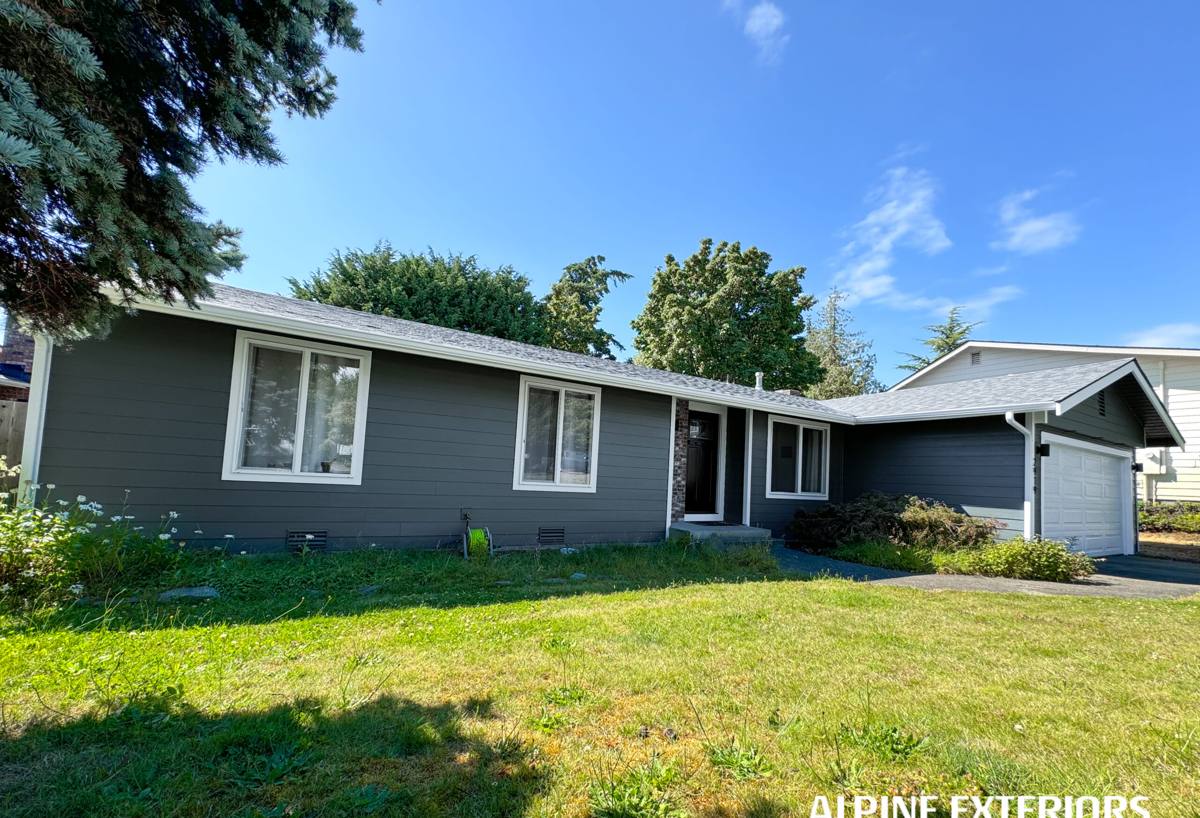
What Fiber Cement Actually Solves
Fiber cement siding is a mix of cement, sand, and cellulose fiber, pressed and cured into planks or panels. Compared to wood, vinyl, or engineered wood products, it brings a few specific advantages that matter directly for a location like Silver Beach:
- It doesn't absorb and swell the way wood-based products can when repeatedly soaked by driving rain.
- It's non-combustible, which matters for insurance considerations and peace of mind, not just wildfire-prone regions.
- It holds paint and factory finishes far longer than wood, meaning less repainting even in a moist, moss-prone environment.
- It resists pest and rot issues that plague cedar and untreated wood siding in the Pacific Northwest.
But "fiber cement" isn't one product — quality and engineering vary significantly between manufacturers, and installation quality matters just as much as the material itself. That's why we're specific about what we install and how.
Why We Install Only James Hardie — Nothing Else
We don't install LP SmartSide, vinyl, Cemplank, Allura, primed spruce, or cedar. That's not a marketing position — it's a standard we've settled on after years of doing exterior work in this climate. Each of those alternatives has real strengths, but each also carries trade-offs — moisture sensitivity, coating durability, installation forgiveness, warranty structure — that we'd rather not put on a Silver Beach home given what the weather here demands.
What Makes James Hardie Different
James Hardie engineers its siding specifically for regional climate zones through its HardieZone system. For the Pacific Northwest, that means HZ5 formulations, which are built with the freeze-thaw cycles, sustained moisture, and humidity of our climate in mind — as opposed to a one-size-fits-all product sold nationwide.
The ColorPlus factory-applied finish is baked on under controlled conditions, which produces a more consistent, UV- and moisture-resistant finish than field-applied paint. That matters in a neighborhood where the finish is fighting salt air and prolonged dampness for a living. It also means fewer repaint cycles over the life of the siding, and touch-up products that are color-matched to the factory finish rather than guessed at.
The Warranty Actually Backs the Product
James Hardie's warranty coverage, including the ColorPlus finish warranty, is transferable to a new owner if the home sells — a real factor if resale is ever part of the plan for a Silver Beach property. Warranty terms only mean something if the manufacturer stands behind the specific climate engineering they sold you, which is a big part of why we don't mix and match brands on the same house.
What a Correct Installation Actually Involves
Fiber cement siding fails prematurely almost exclusively because of installation mistakes, not the material itself. In a high-moisture, wind-exposed location like Silver Beach, the installation details are where a siding job earns its keep.
Water Management Behind the Siding
Correct installation starts with a weather-resistant barrier installed over the sheathing, with proper overlaps and integration at every window, door, and penetration. Siding is the second line of defense — the barrier system behind it is what actually keeps incidental moisture from reaching the wall assembly. Rushing or skipping details here is invisible on install day and expensive to discover later.
Flashing and Trim Details
Every window head, sill, and butt joint needs proper flashing to direct water outward and down, not behind the siding. This is especially critical on walls that take direct, wind-driven rain, which in Silver Beach usually means west- and south-facing elevations. Poorly flashed trim is one of the most common causes of hidden water damage behind otherwise good siding.
Fastening, Clearances, and Caulking
James Hardie specifies exact fastener types, spacing, and clearances from grade, roof lines, and other surfaces — deviating from those specs voids warranty coverage and creates real failure points. Ground clearance and proper gaps at trim also matter for keeping moss and organic debris from bridging moisture straight to the siding's edge. Caulk joints need to be sized and placed correctly, using products rated for the finish system, not just whatever's on the truck.
Our Process for Silver Beach Projects
Assessment First
We start by walking the exterior and looking specifically for what this neighborhood's conditions tend to cause: moss buildup and staining on shaded elevations, water staining or soft spots near trim and penetrations, and any existing moisture damage to sheathing that needs to be addressed before new siding goes up. Covering up a wet wall assembly with new siding just delays a bigger problem.
Prep and Removal
Old siding comes off, the wall assembly gets inspected, and any compromised sheathing or framing is repaired before anything new goes on. This is the stage where we catch problems that wouldn't be visible from the outside.
Weather Barrier and Flashing Installation
We install the weather-resistant barrier and flashing system to spec at every window, door, and penetration, with extra attention on elevations that take the most direct wind and rain exposure.
Hardie Installation
Siding goes up to James Hardie's fastening, clearance, and joint specifications, using the HZ5 product line engineered for this climate zone.
Final Detailing and Walkthrough
Caulking, touch-up, and trim details get finished, and we walk the finished exterior with the homeowner to review the work before calling the job done.
What Drives Cost Up or Down
Every Silver Beach home is a little different, so we don't quote sight unseen — but these are the main factors that move a fiber cement siding project's cost in either direction:
| Factor | Effect on Cost |
|---|---|
| Full tear-off vs. siding over existing material | Tear-off costs more upfront but is often necessary when moisture damage is present |
| Hidden sheathing or framing repair | Increases cost; only discoverable once old siding is removed |
| Home size and wall complexity (dormers, multiple gables, cutouts) | More cuts, corners, and trim detail increase labor time |
| Siding profile and trim style chosen | Wider reveals and detailed trim packages take more time than standard lap siding |
| Accessibility (steep grades, tight lot lines) | Common around Silver Beach's terrain; can add scaffolding or staging time |
| ColorPlus factory finish vs. field painting | Factory finish costs more initially but reduces long-term repaint costs |
Living With Fiber Cement in a Moss-Prone, Salty Environment
Fiber cement is low-maintenance compared to wood, but "low-maintenance" isn't "no-maintenance" — especially in a spot that gets this much moss pressure and salt exposure. A little seasonal attention keeps it performing the way it's designed to:
- Rinse siding periodically to clear salt residue and organic buildup, especially on shaded, north-facing walls where moss takes hold fastest.
- Keep gutters clear so overflow doesn't run down the face of the siding and feed moss growth.
- Trim back vegetation and tree branches that keep siding shaded and damp longer than it needs to be.
- Inspect caulk joints at trim and penetrations every year or two, and re-caulk any that have cracked or pulled away.
- Address any soft spots, staining, or bubbling paint promptly rather than waiting — early moisture intrusion is far cheaper to fix than a wall assembly that's been wet for months.
Why It Matters That We Already Work in This Neighborhood
Siding installation looks similar from the street on every job — the differences show up years later, in whether the flashing was actually done right, whether the fasteners were spaced to spec, and whether the weather barrier was installed properly before anything visible went up. A crew that's done this work elsewhere in Whatcom County under the same coastal-influenced conditions has already seen how driving rain finds gaps, how moss behaves on shaded elevations, and where salt air causes trouble first. That's the kind of judgment that doesn't show up on a materials list but shows up in how the siding holds up ten and twenty years out.
If you're weighing a siding replacement or repair for a Silver Beach home, we're glad to take a look and walk you through what we're seeing and what it would take to do it right. There's no pressure and no cost to get a straight answer — just fill out the form below to request a free estimate.