 Bellingham Exterior
 Metal Roofing Built for Puget's Weather, Not Just Its Looks
Puget sits close enough to the water that salt-laden air, wind-driven rain, and a moss season that seems to stretch longer every year are just part of owning a home there. A roof in this pocket of Whatcom County isn't just shedding water a few months a year — it's fighting slow, steady moisture exposure almost year-round, with the occasional windstorm off the Strait thrown in to test every fastener and flashing detail. Metal roofing, done right, handles that combination better than most other materials. Done wrong, it can trap moisture, corrode at the wrong points, or fail exactly where the workmanship was weakest. This page covers what we actually look at when we roof a home in Puget, not a generic rundown of metal roofing in general.
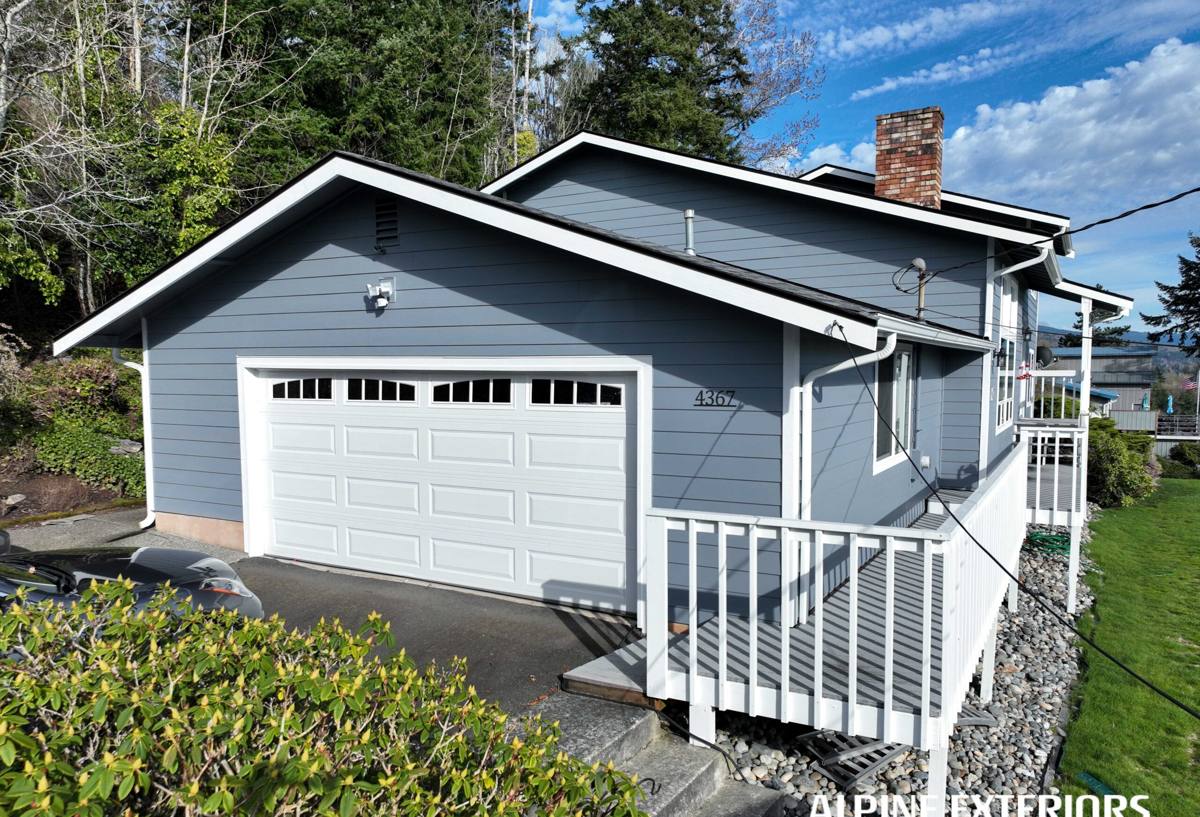
Why Metal Makes Sense for This Neighborhood
Homes in Puget tend to sit under a mix of tree cover and open exposure depending on the lot, which means roofs here deal with both shade-driven moss growth and direct wind loading from storms moving in off Bellingham Bay. Metal roofing addresses several of those pressures at once:
- A hard, smooth, non-porous surface that gives moss and algae far less to grip onto compared to shingles or wood
- Steep water-shedding performance, which matters when driving rain hits at an angle instead of falling straight down
- Strong wind uplift resistance when panels are fastened and detailed correctly — relevant for lots exposed to weather coming off the water
- Long service life that reduces how often a roof surface is disturbed and re-flashed, which is when leaks most often get introduced
None of that means metal is maintenance-free. It means the maintenance burden shifts from constant surface upkeep to getting the install right the first time, particularly at seams, penetrations, and edges.
What Salt Air and Long Moss Seasons Actually Do to a Roof
Salt air and coastal moisture
Being near Puget Sound means airborne salt content is higher than it would be further inland. Salt accelerates corrosion at cut edges, exposed fasteners, and dissimilar-metal contact points — places where two different metals touch and create a small electrical reaction that eats away at one of them over time. This is why fastener choice and flashing metal compatibility matter more here than they would on a roof twenty miles inland.
Driving rain
Rain that comes in sideways during a storm doesn't behave like rain falling straight down. It tests lap seams, ridge caps, and any place where two roof planes meet. A metal roof with correct panel overlap and sealed seams handles this well; one installed with shortcuts at those details will show it during the next windstorm, not gradually.
Moss season
Moss doesn't grow on a healthy metal panel the way it colonizes shingles, but it can still take hold in debris that collects in valleys, around chimneys, or where a roof meets a wall. Moss and trapped organic debris hold moisture against metal longer than it should sit, which is where localized corrosion starts even on an otherwise sound roof.
What a Correct Metal Roof Install Actually Involves
The panels themselves get most of the attention, but the parts that determine whether a metal roof performs in Puget's climate are mostly things you won't notice once the job is done:
- Underlayment — a synthetic, high-temp-rated underlayment gives a backup water barrier if wind ever drives moisture past a seam
- Fastener selection — matched to the panel metal to avoid galvanic corrosion, and rated for the wind exposure of the specific lot
- Flashing at every penetration — chimneys, vents, skylights, and wall intersections are where the large majority of roof leaks actually start, metal roof or not
- Panel overlap and seam sealing — correct lap direction relative to prevailing wind and rain, with sealant used as a backup, not a substitute for proper lap
- Ventilation — a metal roof deck still needs to breathe; trapped moisture underneath causes deck rot regardless of what's on top of it
- Edge and drip detailing — where wind-driven rain most often finds its way behind a roof edge if it's undersized or poorly lapped
A roof that looks correct from the ground can still be missing several of these. That's the gap between a metal roof that lasts decades in this climate and one that starts leaking within a few years.
Panel Types and How They Perform Here
| Panel Type | Coastal/Salt Air Fit | Notes for Puget Homes |
|---|---|---|
| Standing seam steel | Strong — concealed fasteners reduce corrosion points | Our default recommendation for most Puget homes given wind and moisture exposure |
| Exposed-fastener metal | Workable, needs more upkeep | Lower upfront cost, but exposed fasteners need periodic inspection near the water |
| Aluminum panels | Excellent — naturally corrosion-resistant | Good option for homes closest to the water or with heavy salt exposure |
| Galvanized steel | Fair — depends on coating quality | Coating integrity matters more here than in drier inland areas |
| Metal shingles/shakes | Good for moss and wind, more seams to maintain | Better fit for homes wanting a traditional look without traditional moss issues |
We'll walk through which of these actually fits your roof pitch, exposure, and budget rather than defaulting to one product for every job.
Our Process on a Puget Roof
1. On-site assessment
We look at the existing roof deck condition, ventilation, flashing points, and how the specific lot is exposed to wind and rain — a roof tucked among trees gets assessed differently than one with open exposure toward the water.
2. Material and system recommendation
Based on that assessment, we recommend a panel type, gauge, and finish that fits both the home and the budget — explained in plain terms, including the trade-offs, not just the upsell.
3. Tear-off and deck inspection
Once the old roofing is off, we inspect the deck itself. Any soft or rotted sheathing gets addressed before a single panel goes on — installing new roofing over a compromised deck just hides a bigger problem.
4. Underlayment, flashing, and panel installation
This is where the details covered above get executed — correct lap direction, matched fasteners, sealed and flashed penetrations, and proper edge treatment.
5. Final walk-through
We go over the completed roof with you, point out anything relevant to long-term care, and answer questions before we consider the job done.
Cost Factors for Puget Homeowners
Metal roofing costs more upfront than asphalt shingles, and the final number depends on more than just square footage. The main variables we factor in:
- Roof pitch and complexity — more valleys, dormers, and penetrations mean more flashing labor
- Panel type and metal — standing seam and aluminum generally cost more than exposed-fastener steel
- Deck condition — repair or replacement of rotted sheathing adds to the scope
- Tear-off requirements — removing existing roofing versus roofing over an approved existing layer
- Access and site conditions — steep lots or limited staging area affect labor time
We give homeowners an honest range and explain what's driving it, rather than a number with no context behind it.
Maintenance That Actually Matters Here
A well-installed metal roof in Puget doesn't need much, but a few habits extend its life meaningfully:
- Clear debris from valleys and around chimneys or vents at least once a year, especially heading into fall
- Keep an eye on caulked or sealed penetrations — sealant is a maintenance item, not a permanent fix
- Trim back overhanging branches that drop needles and leaves into valleys and hold moisture against the panel
- After major windstorms, a quick visual check for lifted panels, loose fasteners, or displaced flashing is worth the few minutes it takes
Why Local Experience with Puget Roofs Matters
A metal roof installed by a crew that hasn't worked this specific stretch of Whatcom County coastline can still look fine on installation day. The problems that show up are the ones tied to this area's particular combination of salt exposure, wind direction, and moss-friendly shade — details that don't show up on a spec sheet. Working roofs in and around Puget regularly means we already know which flashing details tend to fail here, which fastener choices hold up against the salt air, and which parts of a roof take the worst of a storm coming off the water. That's the difference between a roof that's technically installed correctly and one that's installed correctly for this specific place.
If you're weighing a metal roof for your Puget home, we're happy to take a look and walk you through what your specific roof needs — no pressure, no obligation. Use the form below to request a free estimate.