 Bellingham Exterior
 Puget's Climate Doesn't Forgive Bad Siding Work
Homes in the Puget area of Bellingham sit close enough to the water and the weather patterns coming off it that siding gets tested every season of the year. Salt-laden air works on fasteners and cut edges. Driving rain, pushed sideways by wind off the Sound, finds every gap a sloppy installation leaves behind. And the long stretch of cool, wet months each year keeps north-facing and shaded walls damp long enough for moss and algae to take hold and stay there. None of this is unique to one street or one subdivision — it's the baseline condition for exterior building materials anywhere in this part of Whatcom County. The difference between siding that looks good in year twelve and siding that's cupping, staining, or rotting at the bottom courses almost always comes down to two things: what the material is made of, and whether it was installed correctly for this specific climate.
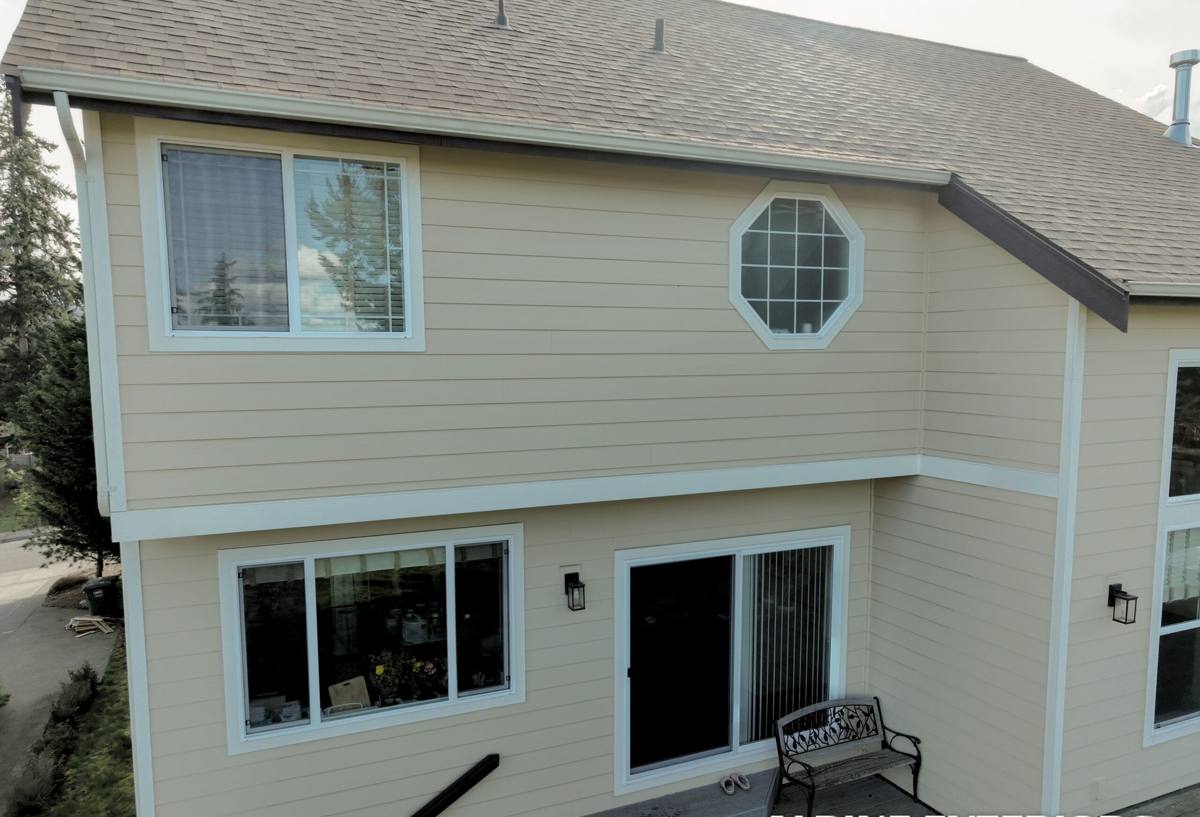
Why Fiber Cement Is the Right Category for This Area
Fiber cement is a composite of cement, sand, and cellulose fiber, pressed and cured into planks that don't behave like wood and don't behave like plastic. That matters here for a few concrete reasons:
- It doesn't expand and contract with moisture the way wood does, so it holds paint and caulk lines instead of cracking them open.
- It's dimensionally stable in freeze-thaw swings and the damp-to-dry cycling that's normal for a Pacific Northwest coastal climate.
- It's non-combustible, which matters as much for insurance conversations as it does for wildfire smoke seasons.
- It resists the kind of soft-rot and insect damage that eventually catches up with untreated or under-maintained wood siding near the water.
That's the category. Within that category, brand and product line still matter a great deal — which is why we install James Hardie exclusively and explain why below.
James Hardie HZ5 — Built for This Exact Weather Pattern
James Hardie engineers its siding by climate zone, not as a one-size-fits-all product. The HZ5 line is formulated for regions like ours — high moisture exposure, cool damp winters, and the kind of coastal humidity that never fully dries out between rain events. That engineering shows up in a few practical ways for a Puget-area home:
The factory-applied ColorPlus finish is baked on under controlled conditions, which gives it more consistent adhesion and UV resistance than field-applied paint — important when a wall gets shaded most of the day and stays damp longer than a south-facing wall would. The board itself resists moisture absorption at the core, so even where caulking or flashing eventually needs attention, the plank underneath isn't soaking it up and swelling. And because the product is engineered specifically for this moisture profile, the warranty terms assume real-world Pacific Northwest exposure rather than a drier climate zone.
What a Correct Installation Involves Here
Fiber cement siding is only as good as the details underneath and around it. In a climate that gets sustained wind-driven rain, these details aren't optional extras — they're the difference between a wall system that sheds water and one that eventually traps it.
Water Management Before the First Board Goes Up
A correct installation starts with a drainable weather-resistive barrier and a rainscreen gap where conditions call for it, so any moisture that does get past the siding has somewhere to go instead of sitting against the sheathing. Flashing at every window, door, and horizontal transition needs to be lapped correctly — upper courses over lower, never the reverse — so wind-driven rain can't work its way behind the plank.
Fastening and Clearances
James Hardie specifies exact nailing patterns, fastener types, and minimum clearances from grade, roof lines, and decks. Skipping these — using the wrong fastener, nailing too close to an edge, or leaving no gap at grade — is one of the most common causes of premature failure, and it's also the kind of shortcut that voids the manufacturer's warranty. In a climate where the siding is wet more often than it's dry, those clearances are what let water drain and wood-based trim behind the siding actually dry out between storms.
Sealant and Butt Joints
Every horizontal butt joint and every point where siding meets trim is a potential entry point for water. Correct caulking practice, paired with proper flashing so the sealant isn't doing all the work by itself, keeps those joints tight through years of thermal movement and driving rain.
Fiber Cement vs. Other Options for a Coastal Bellingham Home
| Factor | James Hardie Fiber Cement | Vinyl | Untreated/Primed Wood |
|---|---|---|---|
| Moisture behavior in constant coastal dampness | Stable core, engineered for this moisture zone | Doesn't absorb, but can trap moisture behind it if installed tight | Absorbs and releases moisture, prone to swelling and rot over time |
| Salt air / fastener corrosion resistance | Board itself is inert; correct fasteners resist corrosion | Panel resists corrosion but can become brittle over time | Wood is vulnerable at end grain and fastener penetrations |
| Moss and algae resistance on shaded walls | Factory finish resists staining better than field-applied paint | Can stain and is harder to repaint cleanly | Readily hosts moss/algae growth if not maintained |
| Fire resistance | Non-combustible | Melts/deforms under heat exposure | Combustible |
| Repaint/refinish cycle | Factory finish rated for years before repaint is needed | Doesn't repaint well; fades and becomes brittle | Needs repainting every few years to stay protected |
Our Process, Start to Finish
We start with a walk-around of the home to look at exposure — which walls take the most wind-driven rain, where moss has already established itself, where old caulk or trim is failing. That assessment shapes the estimate, because a heavily shaded, water-facing wall may need different flashing or rainscreen detailing than a sheltered wall on the same house.
From there: removal of the old siding down to the sheathing, an inspection of the sheathing and framing for any hidden moisture damage (common on older homes in this area that were sided without a proper drainage plane), correction of any water-management issues found, then installation of the weather-resistive barrier, flashing, and James Hardie planks to manufacturer spec. We don't cover up rot or skip flashing to save a day on the schedule — anything found gets flagged and addressed before the new siding goes on, because sealing moisture problems behind new siding just delays the failure and makes it more expensive.
Moss, Mildew, and What Ongoing Maintenance Actually Looks Like
No siding material is maintenance-free in a climate with this much sustained moisture, but the maintenance burden is very different depending on the product. With correctly installed Hardie siding, upkeep is mostly about keeping gutters clear so water isn't sheeting down walls, keeping vegetation trimmed back from siding so airflow can dry it out, and periodically rinsing shaded walls where moss or algae tends to accumulate. What you're not doing is repainting every few years or chasing rot at butt joints and bottom courses — that's the maintenance cycle wood siding requires in this climate, and it's a large part of why we standardized on fiber cement in the first place.
Why a Crew That Already Works This Area Matters
Manufacturer specs are written for a range of climates, but a crew that installs siding around Bellingham day in and day out knows which details matter most for this specific weather pattern — where rainscreen gaps earn their keep, which wall orientations need extra attention to flashing, and what moss and moisture damage looks like before it becomes a structural problem. That local pattern-recognition is hard to get from a crew that mostly works drier or more sheltered regions, and it's the kind of thing that shows up ten years later in whether the siding is still doing its job.
What to Ask Before You Hire
- Are you James Hardie factory-certified, and can you explain your flashing and rainscreen approach for this specific exposure?
- Will you inspect and address the sheathing underneath before installing new siding, not just cover it up?
- What fastener type and nailing pattern will you use, and how does that match Hardie's published specs?
- How do you handle butt joints and trim transitions to keep wind-driven rain out?
- What does the written warranty actually cover — material only, or labor too — and for how long?
If your siding is past its useful life, showing chronic moss staining, or you're just planning ahead for a home in an area that's hard on exterior materials, we're happy to walk the property with you and give you a straight, no-pressure estimate for James Hardie fiber cement siding done right for this climate. Use the form below to get started.