 Bellingham Exterior
 Siding That Has to Work Hard in Lynden
Lynden sits in one of the wettest corners of Washington. Homes here deal with long stretches of driving rain off the water, humid air that never fully dries out between storms, and a moss and mildew season that can run most of the year on north-facing walls and shaded siding. Add in the salt-tinged air that moves inland from the Strait of Georgia and Bellingham Bay, and you have a climate that is genuinely tough on exterior building materials. Siding in Whatcom County isn't just cosmetic — it's the first line of defense against moisture getting into wall assemblies, and it needs to hold up to cycles of wet and dry, freeze and thaw, and near-constant humidity without warping, rotting, or feeding mold growth.
That's the lens we use on every siding job in Lynden: not "what looks good on day one," but "what still looks good and still protects the house in year fifteen." That standard is why we install James Hardie fiber cement siding exclusively, and it shapes how we approach every step of a Lynden installation.
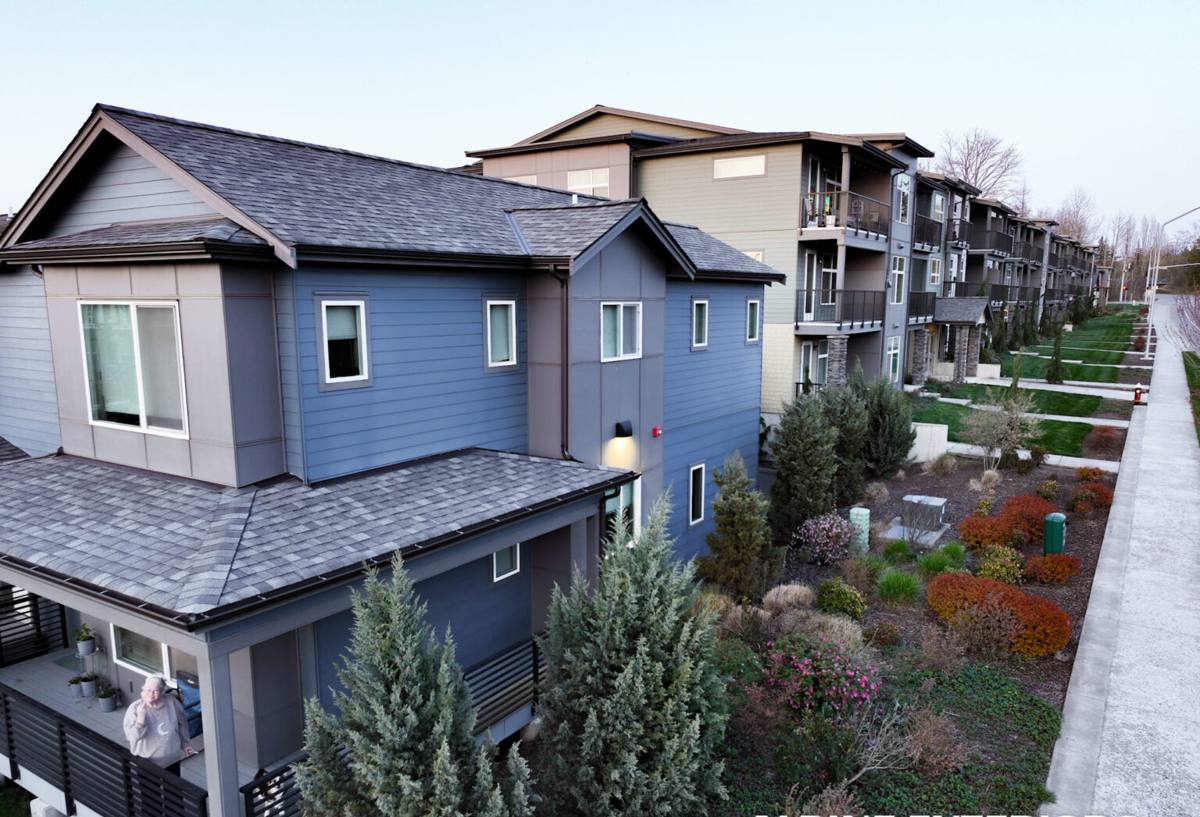
Why We Standardized on James Hardie
We used to install a wider range of siding products. Over years of callbacks, moisture inspections, and re-siding jobs on homes that were only 10-15 years old, a pattern became clear: the products that failed early in this climate almost always failed for the same reasons — they absorbed moisture, they warped or delaminated at the edges, or their factory finish broke down faster than advertised under constant damp exposure. Vinyl siding can bow, crack in cold snaps, and fade faster than it should under UV even on cloudy Pacific Northwest days. Primed wood and cedar need a maintenance commitment — recaulking, repainting, checking for rot — that most homeowners underestimate, and Lynden's humidity accelerates every one of those failure points. Engineered wood products carry their own moisture-sensitivity warnings from the manufacturer that are hard to reconcile with a climate where the siding is wet more days than it's dry.
James Hardie fiber cement is a genuinely different material: sand, cement, and cellulose fiber, engineered specifically for wet climates and factory-finished so the color coat isn't relying on a field-applied paint job to hold up. It's non-combustible, it doesn't feed moss and mildew the way wood fiber does, and it holds its shape and color far longer under sustained moisture exposure. That's a real, honest trade-off analysis — not a sales pitch — and it's why every siding job we do in Lynden is a James Hardie job.
What This Means for a Lynden Homeowner
If you're replacing damaged siding, updating an older home's exterior, or building new, choosing Hardie means you're not gambling on how the material performs in five wet winters. The product line was engineered with climates like ours specifically in mind, which matters more here than in drier parts of the state.
The HZ5 System, Built for This Exact Climate
James Hardie sells its siding in climate-specific formulations called HZ (HardieZone) products. Western Washington, including Whatcom County and Lynden, falls into the HZ5 zone — the version of the product engineered for regions with high moisture exposure and moderate freeze-thaw cycling. The HZ5 formulation is built to resist moisture intrusion and the cracking or splitting that can come from repeated wet-dry and freeze-thaw stress, which is exactly the cycle Lynden sees from fall through spring. Ordering and installing the correct zone-rated product isn't optional — it's the difference between siding that's actually engineered for this environment and siding that just happens to look the same.
What Correct Installation Actually Involves
Fiber cement siding is only as good as the installation behind it. Most of the siding failures we get called out to inspect in this region trace back to installation shortcuts, not the material itself. A correct James Hardie install in a climate like Lynden's includes:
- A weather-resistive barrier installed and lapped correctly behind the siding, with no gaps or shortcuts around penetrations
- Proper flashing at every window, door, and roofline intersection — the single most common source of hidden water damage on older homes
- Correct fastener type, spacing, and depth per Hardie's installation specifications, not generic siding nailing patterns
- Manufacturer-specified gaps and clearances at trim, corners, and the foundation line to allow for drainage and prevent wicking
- Rainscreen or drainage plane detailing where the wall assembly calls for it, so moisture that does get behind the cladding has somewhere to go
- Caulking only where Hardie's specifications call for it — over-caulking traps moisture rather than shedding it
Skipping or rushing any one of these steps can void manufacturer warranty coverage and, more importantly, sets the house up for the exact moisture problems the siding was supposed to prevent. This is detailed, unglamorous work, and it's where an installer's experience with this specific product and this specific climate actually shows up.
Our Process for a Lynden Siding Project
1. On-Site Assessment
We walk the exterior with you, looking at existing siding condition, trim and window flashing, water staining, moss patterns, and any soft or damaged sheathing that a tear-off will reveal. This tells us whether the job is a straightforward re-side or whether there's underlying moisture damage to address first.
2. Product and Color Selection
We review Hardie's plank, shingle, and panel profiles along with the ColorPlus finish palette, so you're choosing a look that fits the home and the neighborhood — not just a swatch on a card.
3. Tear-Off and Prep
Old siding comes off, the sheathing and framing get inspected and repaired as needed, and the weather-resistive barrier and flashing details go in correctly before a single piece of Hardie board is hung.
4. Installation to Manufacturer Spec
Siding, trim, and fascia go up following James Hardie's published installation guidelines, not shortcuts — because that's what keeps the manufacturer's warranty intact and keeps water out.
5. Final Walkthrough
We go around the house with you, check every detail, and answer questions about care and what to expect over the coming years.
ColorPlus Finish and Long-Term Maintenance in a Wet Climate
One of the practical advantages of James Hardie for a place like Lynden is the ColorPlus factory finish. Because the color coat is baked on at the factory under controlled conditions rather than applied on-site, it resists the fading, chipping, and peeling that field-applied paint struggles with here, especially on siding that stays damp for long stretches. That doesn't mean zero maintenance — no exterior cladding is maintenance-free in Whatcom County — but it does mean a lighter, more predictable maintenance schedule: periodic washing to keep moss and mildew from taking hold, especially on shaded or north-facing walls, and an occasional check of caulking at trim and penetrations. Compare that to wood or engineered wood siding, which typically needs repainting or resealing every few years to keep moisture out, and the difference in long-term ownership cost becomes real.
What Affects the Cost of a Lynden Siding Project
| Factor | Why It Matters |
|---|---|
| Home size and wall complexity | More square footage and more corners, gables, and dormers mean more material and labor time |
| Tear-off vs. new construction | Removing and disposing of old siding, and repairing any hidden sheathing damage, adds time compared to new-build installation |
| Siding profile chosen | Lap plank, shingle-style, and panel systems differ in material and labor cost |
| Trim and detail work | Window casings, fascia, corner boards, and architectural trim add labor beyond flat wall runs |
| Existing moisture damage | Rotted sheathing or framing found during tear-off needs repair before siding can go on correctly |
| Site access | Steep lots, tight setbacks, or multi-story walls affect staging, scaffolding, and labor time |
Every one of these factors gets discussed plainly during your estimate — we don't believe in vague ballpark numbers that change once the crew shows up.
Why Local Experience Matters for This Job
A siding crew that regularly works in Bellingham and Whatcom County communities like Lynden has already seen how this climate stresses different products and installation details over time. That experience shapes decisions in the field — where extra flashing attention is worth it, which wall orientations need more careful moss and drainage planning, how the driving rain patterns off the water affect certain elevations more than others. It's the difference between a generic installation and one that's actually calibrated to how weather behaves on homes in this part of the state.
Signs Your Current Siding May Be Due for Replacement
- Persistent moss or mildew that returns quickly after cleaning, especially on shaded walls
- Visible warping, bowing, or soft spots when you press on the siding
- Paint that's peeling, bubbling, or chalking faster than expected
- Cracked or missing caulking at trim, corners, and window edges
- Water staining or soft trim boards near the foundation or roofline
- Rising energy bills that may point to compromised wall insulation behind failing siding
If any of these sound familiar, it's worth having the siding and the wall assembly behind it looked at before small problems turn into structural repairs.
If you're weighing a siding replacement or new installation for a home in Lynden, we're glad to walk the exterior with you, talk through the James Hardie product options that fit the house, and put together a clear, no-pressure estimate. Use the form below to get started.