 Bellingham Exterior
 Ferndale's Climate Is Harder on Siding Than Most Homeowners Realize
Ferndale sits close enough to the water and open farmland that homes here take a different kind of weathering than siding fifty miles inland. Salt-laden air off the coast works into seams and fastener heads over time. Driving rain, pushed sideways by wind rather than falling straight down, finds its way behind poorly lapped panels and under-flashed trim. And the long, damp moss season that Whatcom County is known for keeps north-facing walls and anything under tree cover wet for weeks at a stretch. None of this is dramatic on its own, but stacked year after year, it's exactly the kind of slow, cumulative exposure that separates siding systems that hold up for decades from ones that start failing in five or ten years.
This is the lens we look through on every Ferndale project. It's not about scare tactics — it's about being honest with homeowners that the product and the install method both matter more here than they would in a drier, more sheltered climate.
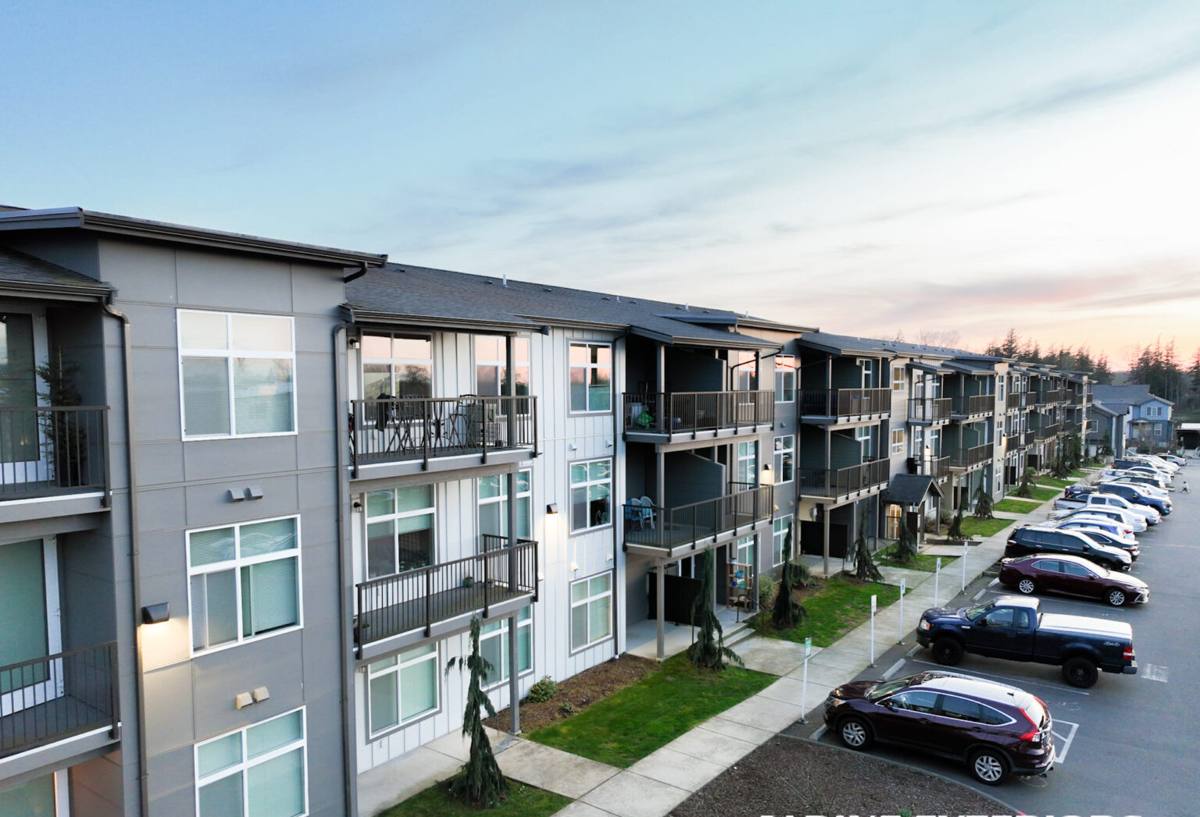
Why We Install Only James Hardie Fiber Cement
We don't install LP SmartSide, vinyl, Cemplank, Allura, primed spruce, or cedar. That's a deliberate standard, not a sales pitch. Each of those products has real strengths — vinyl is inexpensive, cedar looks great when new, engineered wood panels go up fast. But in a coastal, high-moisture, moss-prone climate like Ferndale's, we've seen where each of them tends to give homeowners trouble over the long run: wood-based products are vulnerable to moisture intrusion at cut edges and fastener points, vinyl can warp and fade and offers little real protection against wind-driven rain behind the cladding, and lower-grade fiber cement alternatives don't carry the same factory finish or engineering behind their formulation.
James Hardie is non-combustible fiber cement, engineered specifically for different climate zones, and finished at the factory with ColorPlus technology rather than field-painted. For a house that has to shrug off salt air and sideways rain for the next 30-plus years, that combination is what we're willing to put our name behind.
What "Climate-Engineered" Actually Means for a Ferndale Home
Hardie's HZ5 product line is formulated for the Pacific Northwest specifically — it accounts for the freeze-thaw cycles, high humidity, and sustained moisture exposure that define our weather. That's different from a one-size-fits-all fiber cement product. The formulation affects how the material handles moisture absorption and expansion over time, which matters most exactly where Ferndale homes are weakest: north- and west-facing walls, areas near grade, and anything shaded by trees or fencing where moss gets a foothold.
This is also why we pay close attention to which specific Hardie products go on which elevations of a house — a wall that gets hit hardest by wind-driven rain off open fields, or one that stays shaded and damp most of the year, sometimes calls for different trim and flashing detailing than a sun-exposed south wall, even on the same house.
Where Moss and Moisture Concentrate
- North-facing walls and anything shaded by mature trees, fences, or neighboring structures
- Lower courses of siding close to grade, splash zones near downspouts, and areas behind shrubs
- Inside corners and butt joints where two panels meet, especially if caulking has failed
- Under window sills and around trim where flashing was skipped or installed incorrectly
- Any section with direct wood-to-wood or wood-to-soil contact near the foundation
What a Correct James Hardie Installation Involves
Fiber cement siding is only as good as the water-management system behind it. This is the part that's invisible once the job is done, and it's also the part that determines whether a Ferndale home stays dry for thirty years or starts showing rot and staining behind the siding in eight.
The Details That Matter Most Here
- Weather-resistant barrier and rain screen: A properly lapped water-resistive barrier behind the siding, with a drainage gap where conditions call for it, gives any moisture that does get past the cladding a path to escape instead of sitting against the sheathing.
- Flashing at every penetration: Windows, doors, hose bibs, light fixtures, and vents all need correctly integrated flashing — not just caulk — because caulk is a maintenance item, not a permanent seal.
- Proper fastener placement: Hardie specifies fastener type, spacing, and placement for good reason; fastening through the wrong zone of the panel can void the warranty and create a point where water gets in.
- Correct clearances: Minimum gaps from grade, roofing, decks, and patios keep the bottom edge of the siding from sitting in standing water or snow.
- Factory-cut edges sealed: Any field cuts need to be sealed per Hardie's specifications, since a raw cut edge is the most vulnerable point on the whole panel.
Skipping any one of these doesn't usually cause an obvious problem in year one. It shows up in year six or seven, as staining, soft spots, or trim that's started to separate — often after the workmanship warranty has already expired.
How James Hardie Compares to the Alternatives
| Factor | James Hardie Fiber Cement | Vinyl Siding | Wood / Engineered Wood (cedar, LP SmartSide) |
|---|---|---|---|
| Moisture resistance | Engineered for climate zone; resists rot, doesn't absorb water like wood | Won't rot, but seams and wind-driven rain can get behind panels | Vulnerable at cut edges, fastener points, and end grain |
| Finish | Factory-applied ColorPlus, warrantied against fading/peeling | Color is baked into the material; can fade and chalk over time | Typically field-painted or stained; needs recoating on a cycle |
| Fire resistance | Non-combustible | Combustible, can soften/deform near heat | Combustible |
| Moss/algae resistance | Dense material resists surface growth better than porous wood | Can trap moisture behind panels where moss/mildew grows unseen | Porous surface is more prone to moss and mildew staining |
| Long-term maintenance | Occasional washing; caulk and touch-up as needed | Low maintenance but limited repair options if damaged | Regular repainting/restaining, edge sealing, and rot checks |
Our Process for Ferndale Projects
Every project starts the same way: an honest look at the house, not a sales script.
Step by Step
- On-site assessment: We walk the exterior, checking current siding condition, trim, flashing, and any signs of moisture damage — especially on shaded or north-facing walls, which is where problems usually show up first in this area.
- Scope and product selection: We talk through which Hardie products and profiles fit the home, and where extra attention to flashing or drainage is warranted based on the specific exposure of each elevation.
- Written estimate: A clear, itemized quote — no vague allowances, no pressure to sign on the spot.
- Tear-off and inspection of the sheathing: Once old siding is off, we check for hidden rot or moisture damage before anything new goes up. This is often the first time a homeowner sees what's actually been happening behind their old siding.
- Water-resistive barrier and flashing installation: The part that never gets seen again once siding is up, done to spec, not shortcuts.
- Hardie installation: Panels, trim, and fasteners installed to manufacturer specification, with attention to clearances and cut-edge sealing.
- Final walkthrough: We go over the finished work with the homeowner before calling the job done.
Signs a Ferndale Home's Siding Needs a Closer Look
- Persistent moss or dark streaking that comes back soon after cleaning
- Soft spots, bubbling, or visible warping, especially on north or shaded walls
- Paint that's peeling or bubbling rather than just fading evenly
- Gaps at trim, corners, or window edges where caulking has cracked or pulled away
- A musty smell or visible staining on interior walls that share an exterior wall
- Siding that feels soft or spongy when pressed near the base of the wall
Any one of these on its own isn't necessarily an emergency, but they're worth having looked at before the next wet season adds to the damage.
Why It Matters That We Already Work in Ferndale
A crew that already works this area knows which walls on a typical Ferndale house take the worst of the wind-driven rain, where moss tends to establish first, and how the freeze-thaw swings through a wet winter actually behave here versus a drier inland town. That local pattern recognition shapes real decisions on the job — where to add extra flashing attention, which elevations need closer follow-up during install, and what maintenance schedule actually makes sense for this specific climate rather than a generic one pulled from a manufacturer's manual.
It also means accountability. A contractor working the same communities repeatedly has every reason to install correctly the first time and stand behind the work, because reputation here isn't abstract — it's the neighbor down the road.
What Hardie's Warranty Covers
James Hardie backs its siding with a non-prorated limited warranty on the substrate, and ColorPlus finishes carry their own separate finish warranty covering fading, chipping, cracking, and peeling. Warranties are also transferable to a subsequent homeowner within a defined window, which is a meaningful detail for anyone who may sell the home down the line. Coverage terms vary by product line, so we go over the specifics that apply to your project rather than quoting generic numbers that may not match what's actually being installed.
Get a Free, No-Pressure Estimate
If your Ferndale home's siding is showing its age, or you're planning ahead for a replacement, we're happy to take a look and give you a straight answer about what your home actually needs. Use the form below to request a free estimate — no pressure, no obligation.