 Bellingham Exterior
 Building Decks for Happy Valley's Particular Climate
Happy Valley is one of Bellingham's established close-in neighborhoods, with a mix of older homes and newer builds, mature tree cover on many lots, and enough elevation change in places that decks often do double duty as both outdoor living space and a way to level out a sloped yard. That combination of shade, moisture, and terrain means a deck here has to work harder than a deck in a drier, flatter part of the country.
Whatcom County sits right on the water, and the salt air that comes with it accelerates corrosion on anything metal that isn't properly rated for exterior coastal exposure. Add in Bellingham's driving rain — the kind that comes in sideways during a fall or winter storm — and a long moss season that can stretch from October well into spring, and you've got a set of conditions that will find every weak point in a deck within a few wet seasons. We don't build decks assuming a mild, dry climate. We build them assuming this one.
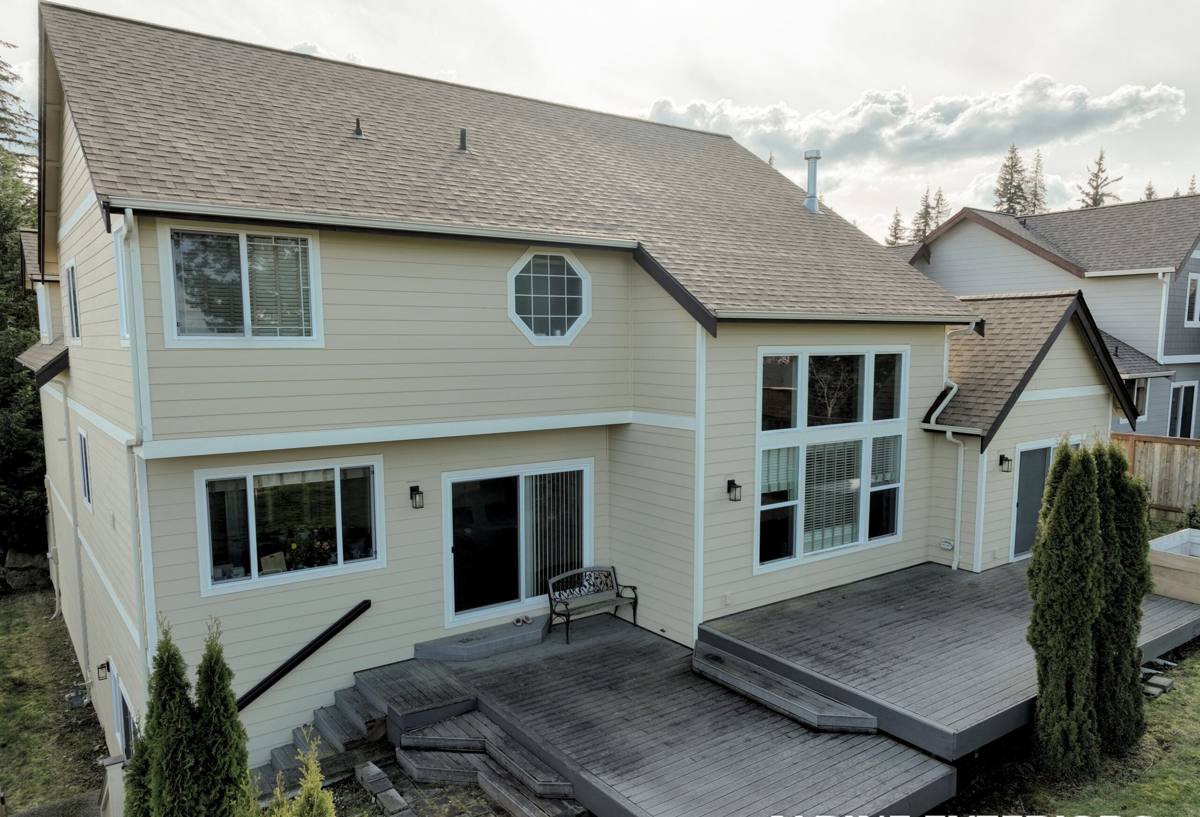
What Local Conditions Do to a Poorly Built Deck
Most deck failures we get called out to inspect aren't dramatic structural collapses — they're slow, moisture-driven problems that started small and got worse every winter. Understanding what causes them is the first step in avoiding them.
- Trapped moisture at the ledger board — where the deck attaches to the house is the single most common source of hidden rot, especially without proper flashing.
- Moss and algae buildup on shaded, north-facing, or tree-covered sections of decking, which turns walking surfaces slick and traps moisture against the wood or composite cap.
- Corroded fasteners — standard interior-rated screws and brackets breaking down faster near the coast, leaving streaking, staining, and eventually loose connections.
- Poor drainage under the deck, which keeps the framing damp long after a storm has passed and accelerates rot in joists and beams that never fully dry out.
- Undersized or poorly spaced footings on sloped Happy Valley lots, where soil saturation during the wet season puts extra load on a foundation that wasn't designed for it.
Every one of these is preventable with the right materials and the right build sequence — it's just that "the right way" here isn't always the fastest or cheapest way, and it's rarely what a generic, one-size-fits-all deck plan calls for.
Choosing a Decking Material That Fits Whatcom County
There's no single "best" decking material — there's the material that fits your budget, your maintenance appetite, and how much sun or shade your particular lot gets. In a climate with this much rain and moss pressure, that last factor matters more than most homeowners expect.
| Material | How It Handles Our Climate | Maintenance | Typical Lifespan |
|---|---|---|---|
| Pressure-treated wood | Affordable, needs sealing to resist moisture and moss | Annual cleaning and re-sealing | 10-15 years with upkeep |
| Cedar | Naturally moisture- and insect-resistant, still needs finish care | Periodic cleaning, re-staining every 2-3 years | 15-20 years with upkeep |
| Capped composite | Resists moisture absorption and moss staining well; surface texture affects slip resistance when wet | Occasional washing, no sealing/staining | 25-30+ years |
| PVC decking | Fully synthetic, handles constant moisture without rot risk | Low — occasional washing | 25-30+ years |
On shaded or tree-covered lots — common in parts of Happy Valley — we lean toward capped composite or PVC for the walking surface simply because they don't feed moss growth the way bare or lightly sealed wood does. On sunnier, more open lots, a well-maintained cedar deck can still be the right call, especially if you like the look and are willing to keep up with re-staining. We'll walk your specific lot with you and talk through the real trade-offs rather than pushing one product line.
Why We're Selective About Which Composite Products We Install
Not every composite board on the market performs the same in a wet, low-light climate. Some early-generation and uncapped composite products absorb moisture at the core over time, which can lead to swelling, splitting, or mold growth on the surface — problems that show up faster here than they would in a drier region. Our standard is to install fully-capped boards with a manufacturer warranty that specifically covers moisture and stain resistance, because that's the spec that actually holds up to a Bellingham winter, not just a showroom sample.
The Structure Underneath Matters More Than the Surface
Homeowners naturally focus on what the decking looks like, but the framing underneath is what determines whether the deck is still solid in fifteen years. This is where corners get cut on lower-end deck builds, and it's the part you won't see once the project is finished.
Ledger Board and Flashing
The ledger board — where the deck bolts to your house — needs proper metal flashing and a water-resistant barrier behind it. Skipping this, or flashing it poorly, is the number one cause of hidden rot we find in older Whatcom County decks, because water works its way behind the ledger and sits against the house's rim joist for months at a time without anyone noticing.
Joist Protection and Fasteners
We use joist tape or an equivalent moisture barrier on top of framing lumber to keep water from pooling in deck screw holes, and we spec stainless steel or coated fasteners rated for coastal exposure rather than standard exterior-grade hardware. In salt air, that difference shows up as rust streaks and weakened connections within a few years on the wrong fastener — it's a small cost difference upfront that avoids a much bigger repair bill later.
Footings on Sloped Ground
A number of Happy Valley lots have enough grade change that a deck needs stepped or engineered footings rather than a simple flat layout. We size and space footings based on your actual soil and slope conditions, not a generic footing chart, because saturated slopes during our wet season put real lateral load on a foundation that wasn't built for it.
Managing Moss, Algae, and Drainage on the Finished Deck
Even a well-built deck will get some moss and algae pressure in a climate like ours — the goal is a deck that sheds water and dries out quickly instead of holding moisture against the surface. A few design choices make a real difference:
- Proper board spacing and a slight slope away from the house so water runs off instead of pooling
- Gaps and ventilation underneath the deck so the framing can dry between storms
- Decking material and finish chosen with your lot's actual sun exposure in mind, not a one-size-fits-all default
- A drainage plan for the ground beneath the deck, especially on sloped or low-lying sections of yard
These details cost little to nothing extra at the design stage but are expensive to retrofit later, which is why we walk through drainage and sun exposure with every Happy Valley homeowner before we finalize a layout.
Permits and Code Requirements in Bellingham
Most new decks and significant deck rebuilds in the City of Bellingham require a building permit, along with compliance with setback rules, guardrail height requirements, and stair and railing spacing standards. Elevated decks in particular get scrutinized for structural attachment and guardrail compliance, since these are the areas most tied to safety. Requirements can vary depending on your specific property and whether you're in city limits or unincorporated Whatcom County, so we handle the permit research and application as part of the project rather than leaving you to figure out what applies to your lot.
Our Process for a Happy Valley Deck Project
- On-site walkthrough — we look at your slope, drainage, sun exposure, and how the deck connects to your house before recommending materials.
- Design and material selection — we go over the real trade-offs between wood, cedar, composite, and PVC for your specific lot, not a generic pitch.
- Permitting — we prepare and submit the required permit documentation and handle inspections along the way.
- Framing and structural work — footings, ledger flashing, joist protection, and coastal-rated fasteners go in first, since this is the work you won't see later.
- Decking and railing installation — surface material, railing, and any stairs are installed to code and to the drainage plan established up front.
- Final walkthrough — we go over maintenance expectations specific to your material choice before we consider the job done.
Keeping a Bellingham Deck in Good Shape Year-Round
A well-built deck in this climate is still a deck that needs some seasonal attention. Here's what we recommend to Happy Valley homeowners regardless of which material they chose:
- Clear leaves and debris from between boards and off the surface before fall rains set in
- Rinse or gently scrub moss and algae off the surface at the start of moss season rather than waiting until it's established
- Check ledger flashing and fastener condition every year or two, especially after a hard winter
- Reseal wood decking on the schedule appropriate to the product — don't wait for visible graying or cupping
- Keep gutters and downspouts near the deck clear so runoff isn't dumping extra water onto or under the structure
- Confirm under-deck drainage and ventilation aren't blocked by stored items or overgrown landscaping
Why Local Build Experience Matters Here
A deck plan that works fine in a dry climate can fail in a handful of wet seasons here if the flashing, fastener grade, or drainage details aren't adjusted for it. Working with a crew that already builds regularly in Bellingham and Whatcom County means the moss-season drainage details, the coastal-rated hardware, and the ledger flashing that actually holds up to driving rain aren't an afterthought — they're the starting spec. That local familiarity with Happy Valley's mix of sloped lots, tree cover, and salt-air exposure is what separates a deck that looks good on installation day from one that's still solid a decade later.
If you're planning a new deck or replacing one that hasn't held up to a few Bellingham winters, we're happy to walk your property and put together a straightforward estimate — no pressure, no obligation. Use the form below to get started.