 Bellingham Exterior
 Board & Batten Siding for Happy Valley Homes
Happy Valley is one of Bellingham's older, tree-shaded neighborhoods, with a housing stock that ranges from early-1900s bungalows to newer infill construction tucked into sloped, wooded lots. Board and batten siding — vertical panels with raised strips covering the seams — shows up a lot in this part of Whatcom County because it suits both the craftsman character of the older homes and the more modern farmhouse look going up on newer builds. It's a siding profile that reads as intentional, not just functional.
But board and batten is also a profile that punishes sloppy installation faster than most. The vertical seams, the batten-to-panel joints, and the exposed fastener lines all create more places for water to find a way in if the details aren't right. In a neighborhood like Happy Valley, where tree cover keeps siding damp longer after every rain and shifting Bellingham Bay air adds a steady dose of salt, those details matter more than they would in a drier climate.
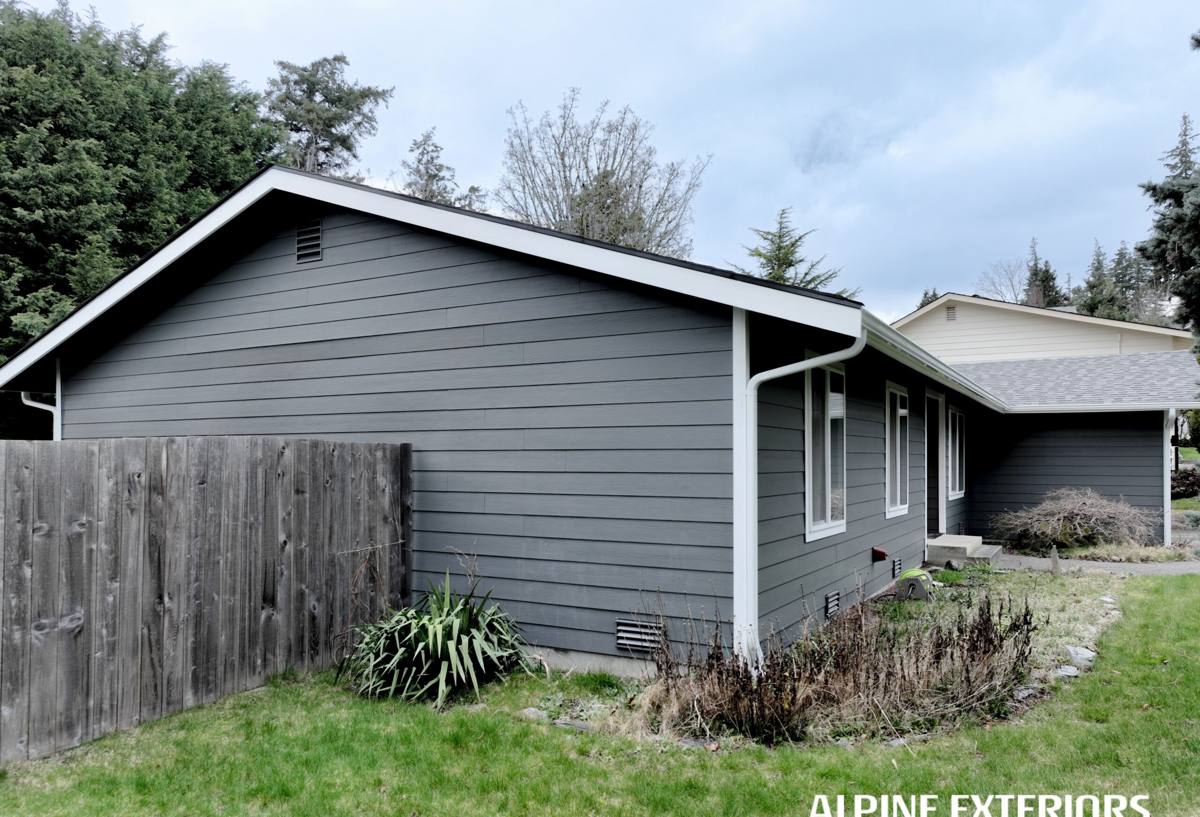
What Happy Valley's Climate Does to Vertical Siding
Three conditions define what siding has to survive here, and they're worth naming specifically because they change how board and batten should be built, not just what it's made of.
Salt Air
Bellingham sits on Bellingham Bay, and homes throughout the city — including inland neighborhoods like Happy Valley — get some exposure to salt-laden air carried in off the water. Salt accelerates corrosion on fasteners and metal flashing, and it can degrade paint and caulk faster than inland climates would. Any board and batten system here needs fastener and flashing choices that account for that, not just a coastal-sounding product name.
Driving Rain
Whatcom County doesn't get the heaviest rainfall totals in the Pacific Northwest, but it gets a lot of wind-driven rain, and vertical siding profiles catch wind-driven water differently than horizontal lap siding does. Water runs down the face of the battens and can be pushed sideways into the seams during a storm. A board and batten system that isn't detailed for driving rain will eventually show it — usually at the bottom courses and around window and door trim first.
A Long Moss Season
The combination of shade, moisture, and mild temperatures in Happy Valley's tree-covered lots means moss and algae have a long growing season on this side of the Cascades. Moss holds moisture against a siding surface for extended periods, which is hard on any exterior material and especially hard on anything with exposed seams or a finish that isn't built to resist it.
Why We Only Install James Hardie for This Application
We install James Hardie fiber cement exclusively — not vinyl, not LP SmartSide, not primed wood, not cedar. For board and batten specifically, that standard matters even more than it does on a flat lap job, because vertical siding profiles are less forgiving of moisture problems.
Vinyl board and batten is lightweight and affordable, but it's a plastic product that expands and contracts significantly with temperature swings, and it isn't structural — it relies on the wall behind it staying dry, which is a bigger ask in a neighborhood with this much shade and rainfall. Wood board and batten, whether cedar or primed spruce, looks great on day one but requires ongoing paint and caulk maintenance to keep water out of the seams, and it's a food source for the moss and mildew that thrive in Happy Valley's damp, shaded lots. LP SmartSide is an engineered wood product — better moisture resistance than raw lumber, but still wood-based, still dependent on an intact factory coating and careful field sealing at every cut edge to perform long-term.
James Hardie fiber cement is non-combustible, dimensionally stable in wet climates, and doesn't feed moss or rot the way wood-based products do. It's manufactured in formulations engineered for specific climate zones, including the wetter, freeze-thaw-prone conditions found in the northern Pacific Northwest. The factory-applied ColorPlus finish is baked on under controlled conditions and backed by its own finish warranty, which matters on a profile like board and batten where the finish is doing a lot of the work protecting exposed seams and edges.
What a Correct Board & Batten Installation Involves
Board and batten looks simple — vertical panels, strips over the seams — but the assembly behind that simple look is where a job succeeds or fails. This is what we hold every board and batten installation to:
Weather-Resistive Barrier and Drainage Plane
Every wall gets a continuous weather-resistive barrier with properly lapped and taped seams before any siding goes on. On vertical siding, a drainage gap is especially important — it gives any water that does get past the surface a way to drain out instead of sitting against the sheathing.
Panel Layout and Seams
Panel joints are planned out before installation starts, not improvised as the crew goes. Vertical seams are backed and flashed, not just butted together and covered with a batten and hoped dry.
Batten Spacing and Fastening
Battens are spaced and fastened according to the manufacturer's engineering, with fasteners set to the correct depth — overdriven fasteners crack the material and create a weak point exactly where water pressure is highest during a wind-driven storm.
Flashing at Penetrations
Windows, doors, hose bibs, vents, and any other wall penetration get proper flashing integrated with the weather-resistive barrier, not just caulked over. Caulk is a maintenance item; flashing is the actual water management.
Clearance and Terminations
Bottom edges are held at the manufacturer's minimum clearance above grade, decks, patios, and roof lines, and all cut edges get factory-recommended sealing. This is one of the most commonly skipped steps on rushed jobs, and it's one of the first places moss and rot show up when it's missed.
Board & Batten Compared to Other Siding Profiles
Homeowners in Happy Valley often ask how board and batten stacks up against the horizontal lap siding on most homes in the neighborhood, or against a flat panel look. Here's how they compare on the factors that matter most in this climate.
| Factor | Board & Batten | Horizontal Lap | Flat Panel (No Battens) |
|---|---|---|---|
| Water shedding in wind-driven rain | Good when seams are properly flashed and backed | Excellent — designed to shed water downward by nature | Depends heavily on seam detailing; more exposed joints |
| Moss and algae resistance | Good with factory finish; battens can trap debris if not detailed well | Good; fewer horizontal ledges for debris to collect | Good, similar to board and batten without the batten ledges |
| Style fit for older Happy Valley homes | Strong match for craftsman and farmhouse styles | Traditional match for most existing homes in the area | More common on modern or accent applications |
| Installation complexity | Higher — more seams, more flashing details | Lower — most crews are highly practiced with lap siding | Moderate |
Our Process on a Happy Valley Board & Batten Project
The neighborhood's mature trees, sloped lots, and older housing stock all affect how a board and batten project gets planned and run here, so our process is built around those realities.
- Site and moisture assessment. We check the existing wall assembly for hidden moisture damage, which is more common on homes with heavy tree cover and a history of moss growth against the siding.
- Layout planning. We map out panel and batten placement around windows, doors, and trim before ordering material, so seams land in sensible, well-supported locations.
- Weather barrier and flashing installation. This step gets done right regardless of what's visible in the finished product, because it's the layer actually keeping water out.
- Panel and batten installation to spec. Fastener depth, spacing, and clearances are followed to the manufacturer's requirements, not shortcuts.
- Final detailing and cleanup. Cut edges are sealed, trim is finished, and the site is cleaned — including managing the debris that mature trees and sloped Happy Valley lots tend to generate during a project.
Living With Board & Batten Siding in a Moss-Prone Neighborhood
Correctly installed James Hardie board and batten needs far less upkeep than wood alternatives, but "less" isn't "none," especially under Happy Valley's tree canopy. A simple seasonal routine keeps it performing the way it's designed to:
- Rinse siding down once or twice a year to remove moss spores, pollen, and organic debris before they take hold, especially on north-facing and shaded walls.
- Trim back tree branches and shrubs that keep siding shaded and damp longer than the rest of the house.
- Check caulking around windows, doors, and trim annually and touch up as needed — caulk is a maintenance item even on a well-flashed wall.
- Keep gutters clear so overflow isn't running down the face of the siding during heavy rain events.
- Inspect the bottom courses near grade, decks, and walkways periodically, since these areas hold moisture longest and show wear first.
Why Hiring a Crew That Already Works Happy Valley Matters
A siding crew that's worked this neighborhood before already understands its particular challenges: the tree cover that keeps walls damp, the sloped lots that complicate access and staging, the mix of older framing and newer construction, and the salt air rolling in off the bay. That's not something you can fully substitute with a spec sheet. It shows up in small decisions on-site — where extra flashing gets added, how battens get detailed around an older window opening, how the crew stages material and equipment on a lot with limited flat ground.
Board and batten in particular rewards that kind of local, hands-on judgment because so much of its long-term performance depends on decisions made during installation, not just the material specification on the order sheet.
Get a Free Estimate for Your Happy Valley Home
If you're weighing board and batten siding for a home in Happy Valley, we're happy to take a look, walk you through what we'd recommend for your specific lot and exposure, and give you a straightforward, no-pressure estimate. There's a form below — reach out and we'll get back to you.