 Bellingham Exterior
 Deck Repair Built for York's Climate, Not a Generic Checklist
The York area sits close enough to the water and the marine weather patterns that move through Bellingham that decks here take a different kind of beating than decks inland. Salt-laden air accelerates corrosion on fasteners and hardware. Driving rain off Bellingham Bay finds its way into every seam, joint, and screw hole that isn't properly flashed or sealed. And Whatcom County's long, damp moss season keeps deck surfaces wet for weeks at a stretch, even when it isn't actively raining. A deck repair that doesn't account for all three of those factors tends to fail again within a couple of seasons.
We repair decks for homeowners throughout the York neighborhood and the surrounding Bellingham area, and we've learned what actually holds up here versus what looks fine on the day it's installed. This page walks through what York-area decks typically need, what a correct repair involves, and how we approach the work.
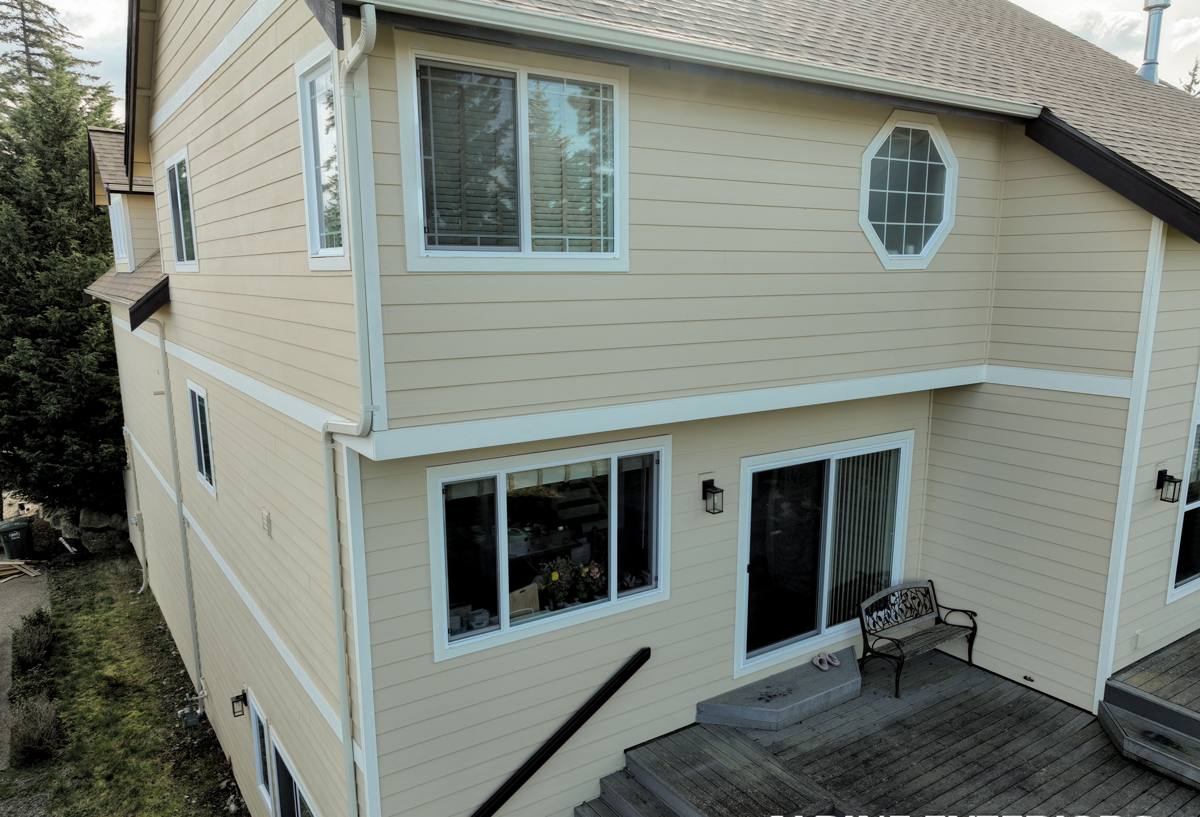
Why Decks Fail Faster Near the Water
Salt Air and Metal Hardware
Every deck depends on its hardware — joist hangers, structural screws, post bases, ledger bolts — to actually hold the structure together. In a dry inland climate, standard galvanized hardware can last decades. Close to Bellingham Bay, salt-laden moisture in the air speeds up corrosion, especially where galvanizing has been nicked or cut during original construction. We regularly find hangers and fasteners that are rusted through years before the wood around them shows obvious damage. Since the hardware fails invisibly — hidden under boards or behind rim joists — it's often the actual reason a deck feels spongy or unstable, even when the surface looks okay.
Driving Rain and Hidden Water Entry
Bellingham gets a lot of rain, and a good share of it comes in sideways during winter storms. That matters for decks because water doesn't just fall on the surface — it drives into vertical gaps, under flashing, and into the joint where a deck ledger board attaches to the house. That ledger connection is one of the most common failure points on any deck in this region. If it wasn't flashed correctly when the deck was built, water has likely been getting behind it for years, slowly rotting the ledger, the rim joist, and sometimes the framing inside the wall.
Moss, Algae, and Extended Surface Moisture
Whatcom County's moss season isn't a cosmetic issue — it's a moisture issue. Moss and algae hold water against the deck surface long after the rain has stopped, which keeps wood fibers wet and encourages rot in a way that a deck exposed to sun and wind wouldn't experience. Shaded decks, north-facing decks, and decks under trees are especially prone to this. A repair that resurfaces boards without addressing drainage and airflow underneath just resets the clock on the same problem.
Signs a York-Area Deck Needs Repair
- Boards that feel spongy, soft, or flex more than they used to underfoot
- Visible gaps, cracking, or splintering along board edges
- Rust staining around fasteners or hardware
- A railing that wiggles or feels less solid than it should when you lean on it
- Persistent moss or algae growth that keeps coming back after cleaning
- Discoloration or soft wood where the deck ledger meets the house
- Stairs that feel uneven, bouncy, or have visibly sagging stringers
- Standing water that pools on the deck surface instead of draining off
Any one of these on its own might be minor. Several together usually mean the underlying structure needs attention, not just the surface.
What a Correct Deck Repair Actually Involves
Start Below the Surface
Surface boards are the easiest part of a deck to see and the easiest to replace — which is exactly why they're often the only thing addressed in a rushed repair. But boards are just the finish layer. The framing underneath — joists, beams, posts, and the ledger connection to the house — carries the actual load. We check the structure first: probing for soft wood, checking hardware for corrosion, and confirming that posts and footings are still sound. Replacing boards over a compromised frame doesn't fix anything; it just hides the problem for another year or two.
Fix the Ledger Connection Properly
If your deck attaches to the house, the ledger board and its flashing are worth extra attention, especially given how much sideways rain this region gets. A correctly flashed ledger sheds water away from the house instead of letting it pool against the wall framing. If we find rot or corrosion at this connection, we address it directly rather than patching around it, since it's a structural connection point and not just a cosmetic one.
Match Materials, Don't Just Patch Them
When we replace boards, joists, or railing components, we match dimensional lumber and fastener type to what's already there, or upgrade to something more resistant to the local climate if that makes sense for the deck. Mixing incompatible woods or hardware grades on a repair can create galvanic corrosion between dissimilar metals or uneven weathering that makes the repair stand out and age unevenly.
Address Drainage and Airflow
A big part of preventing repeat failures is making sure water actually leaves the deck instead of sitting on it or trapped underneath it. That can mean adjusting board spacing, clearing blocked drainage paths, trimming back vegetation that's shading a chronically damp section, or improving ventilation under low-clearance decks where moisture gets trapped against the ground.
Repair vs. Replacement: How We Decide
| Factor | Repair Usually Makes Sense | Replacement Worth Considering |
|---|---|---|
| Structural framing | Sound, with isolated soft spots or corroded hardware | Widespread rot in joists, beams, or the ledger connection |
| Surface boards | Scattered damage across a minority of boards | Most boards showing rot, cupping, or splintering |
| Posts and footings | Stable, plumb, no visible movement | Settling, leaning, or footing failure |
| Age of original build | Under 15-20 years with reasonable maintenance history | Original construction quality unknown or already patched multiple times |
| Railings and stairs | Solid connections, isolated wear | Loose at multiple points, code concerns with height or spacing |
Most decks we look at in the York area fall into a middle ground — solid structure overall, with specific areas that need real attention. That's the sweet spot for repair. When the framing itself is compromised in multiple places, we'll tell you honestly if replacement is the more cost-effective path, rather than stacking repairs on a structure that's past the point of being worth saving.
Materials and Trade-Offs We're Upfront About
Pressure-treated lumber remains a solid, cost-effective choice for framing and is what most decks in this region are built on. For visible surfaces, homeowners generally choose between refinished natural wood and composite decking. Both have trade-offs worth understanding before you decide:
- Natural wood costs less upfront and is straightforward to spot-repair board by board, but it needs regular cleaning and refinishing to hold up against this area's moss and moisture, and untreated end grain is where rot tends to start first.
- Composite decking resists moss and moisture better with less ongoing maintenance, but it costs more initially, and not all composite products handle moisture at the substructure and fastening points the same way — installation quality matters more with composite than the marketing usually suggests.
We'll walk through what makes sense for your specific deck, your budget, and how much maintenance you actually want to keep up with, rather than pushing one material as universally "better."
Our Process for York-Area Deck Repairs
- On-site inspection. We walk the deck, check the framing from underneath where accessible, probe suspect boards and connections, and check the ledger and hardware condition.
- Honest assessment. We tell you what's actually wrong, what's cosmetic versus structural, and whether repair or replacement is the smarter move for your situation.
- Written scope and estimate. You'll know what's being replaced, what's being reinforced, and what materials we're using before work starts.
- Repair work. Structural fixes first, then surface and cosmetic work, with attention to drainage and flashing details that prevent repeat problems.
- Final walkthrough. We check the repair with you and point out anything worth keeping an eye on going forward, like a shaded area prone to moss regrowth.
Why Local Experience With York-Area Decks Matters
A crew that works regularly in the York area and greater Bellingham already knows which failure patterns show up here — the ledger connections that were never flashed right, the north-facing decks that stay damp for weeks, the hardware that corrodes faster this close to the water. That's not something you can fully learn from a general contracting background alone; it comes from repairing decks in this specific climate, year after year. It means fewer surprises during the work and a repair that's actually built to handle what Whatcom County weather does to it, not just what a repair looks like on paper.
We also understand that a deck repair needs to work with the rest of your home's exterior — siding, trim, and drainage all interact with how a deck performs over time. Approaching the repair with that full picture in mind, rather than treating the deck as an isolated project, tends to produce a longer-lasting result.
Get a Free, No-Pressure Estimate
If your deck in the York area is showing soft spots, a wobbly railing, stubborn moss, or just doesn't feel as solid as it used to, we're happy to take a look. Fill out the form below for a free estimate — no pressure, just a straightforward assessment of what your deck actually needs.