 Bellingham Exterior
 Decks Built for Sunnyland's Conditions, Not Just Any Backyard
Sunnyland is one of Bellingham's older, tree-covered residential neighborhoods, and that shade is both the charm of the area and the reason decks here age differently than decks built out on open, sun-exposed lots. Mature tree canopy means more standing moisture, more leaf and needle debris collecting between boards, and more shaded surface area that never fully dries out between rain events. Add in Whatcom County's long wet season, driving rain off the Puget Sound lowlands, and the salt-tinged air that reaches inland from Bellingham Bay, and you have a set of conditions that will find every weak point in a deck within a few winters if the structure wasn't built to handle it.
A deck built to a generic national spec sheet can look fine the day it's finished and still start failing within two or three seasons in a yard like this. What holds up in Sunnyland is a deck built with this specific climate in mind from the framing up, not just a nice-looking surface material laid over a standard frame.
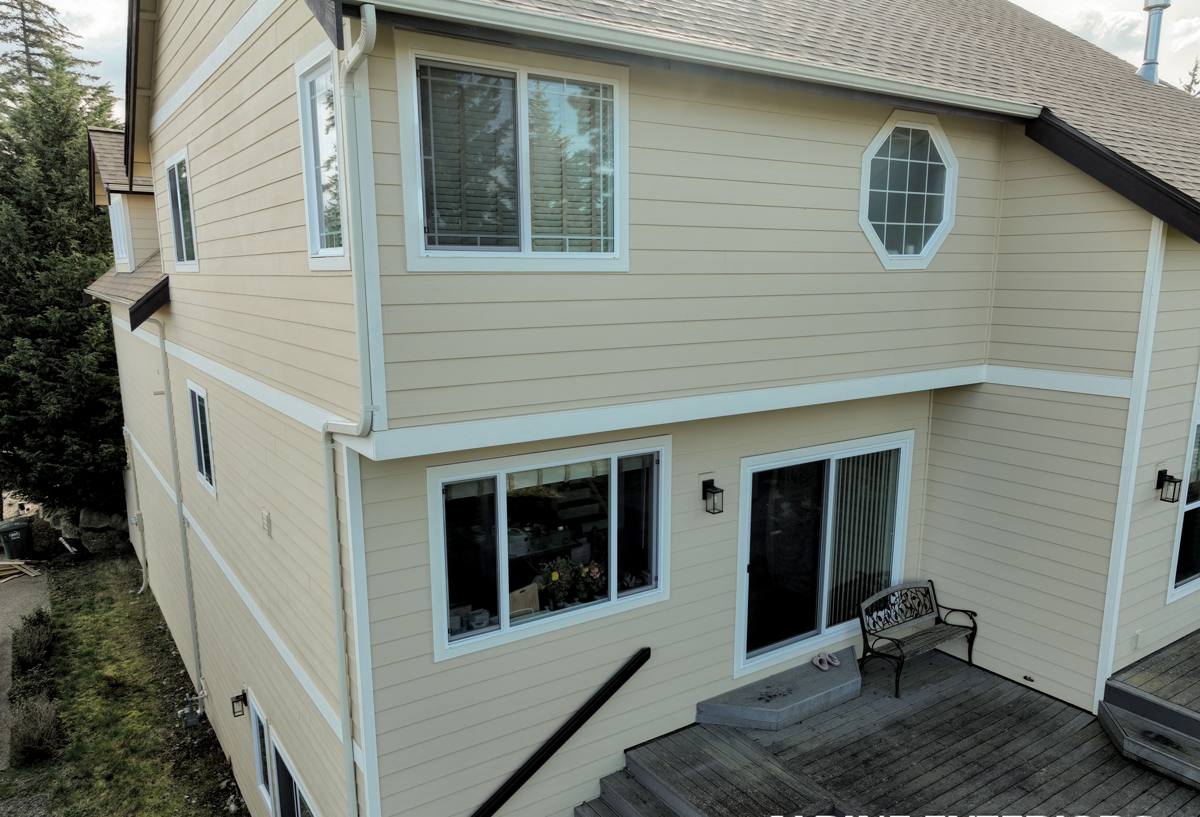
What Bellingham's Climate Actually Does to a Deck
Moss and algae take over shaded, damp surfaces
Bellingham's moss season runs long, roughly fall through spring, and any deck surface that stays damp and shaded is a candidate for moss and algae growth. Beyond looking bad, moss holds moisture against the decking material, which accelerates rot in wood and can stain or degrade the surface of some composite products over time. Board spacing, airflow underneath the deck, and how much direct light a section gets all affect how fast moss takes hold.
Driving rain finds gaps in flashing and fasteners
Wind-driven rain off the Sound doesn't just fall straight down — it gets pushed sideways into ledger connections, stair stringers, and any spot where two materials meet. If flashing and fastener details aren't done correctly at those transition points, water gets behind the decking and into the framing where it's much harder to spot until real damage has already occurred.
Salt air and moisture accelerate hardware corrosion
Homes closer to Bellingham Bay deal with a mild but persistent salt content in the air, which speeds up corrosion on lower-grade fasteners and connectors. Combined with our region's humidity, standard hardware can start rusting and staining decking within a few years, which is why fastener grade matters more here than it does in a dry inland climate.
Choosing the Right Decking Material for a Sunnyland Lot
There's no single "best" decking material — the right choice depends on how much shade and moisture a specific yard deals with, and how much upkeep a homeowner actually wants to do. Here's how the common options compare for our climate specifically:
| Material | Moss/moisture resistance | Maintenance | Typical lifespan here | Relative cost |
|---|---|---|---|---|
| Pressure-treated wood | Fair — needs sealing to resist moisture | Annual cleaning and re-sealing recommended | 10-15 years with upkeep | Lowest upfront |
| Cedar | Good natural resistance, but still absorbs moisture | Regular cleaning and periodic finish | 15-20 years with upkeep | Mid-range |
| Composite decking | Very good — doesn't absorb water or rot | Periodic washing to prevent surface algae/moss | 25-30 years | Higher upfront |
| PVC decking | Excellent — fully moisture resistant | Low — occasional washing | 25+ years | Highest upfront |
In shaded Sunnyland yards specifically, we lean toward composite or PVC decking for surfaces that get little direct sun, since wood in those spots stays damp longer and needs more frequent maintenance to avoid rot and moss buildup. Wood and cedar can still be the right call for sunnier or more open sections of a lot, or for homeowners who prefer the look and are committed to yearly upkeep. We'll walk through the honest trade-offs for your specific yard rather than pushing one product for every job.
What a Correctly Built Deck Requires in This Climate
Footings sized for our soil and frost conditions
Footings need to be dug to the correct depth and diameter for the load and local frost line, not just poured to whatever looked adequate. Undersized or shallow footings are one of the most common causes of a deck that starts to shift, sag, or separate from the house within a few years.
Ledger flashing that actually sheds water
Where a deck attaches to the house, the ledger board connection is the single most important waterproofing detail on the whole structure. Properly lapped flashing, correct fastener spacing, and a gap or drainage path behind the ledger keep wind-driven rain from tracking into the house's rim joist and framing.
Corrosion-resistant fasteners and hardware
Given the salt air and year-round moisture, we use fasteners and structural connectors rated for exterior, corrosive-prone environments rather than standard interior-grade hardware. This is a small cost difference at the time of the build and a major difference in how the structure holds up over ten or twenty years.
Board spacing and joist protection for drainage and airflow
Correct gapping between boards, joist tape or flashing on top of the framing, and adequate clearance underneath the deck all help the structure dry out between rain events instead of staying saturated. In a shaded yard, this airflow detail is often the difference between a deck that needs moss treatment twice a year and one that mostly stays clean on its own.
How We Approach a Sunnyland Deck Project
- Site visit and assessment. We look at sun exposure, tree cover, drainage patterns, and the condition of the existing structure or ledger area before recommending a plan.
- Design and material selection. We talk through layout, decking material, and railing options with the specific shade and moisture conditions of your yard in mind, not a one-size-fits-all package.
- Permitting. We handle the permit application and inspection scheduling required for the project so you don't have to navigate that process yourself.
- Framing and structural work. Footings, ledger flashing, joists, and hardware go in first, and this is the stage that determines how the deck performs in ten years, not just how it looks on day one.
- Decking, railing, and finish work. Surface material, railings, stairs, and any trim details are installed with attention to drainage and long-term maintenance access.
- Final walkthrough. We go over the finished deck with you, including basic care and what to watch for seasonally.
Permits and Local Code Considerations
Most deck projects attached to a home in the City of Bellingham require a building permit, and the requirements can vary depending on deck height, size, and proximity to property lines. Guardrail height, stair geometry, and footing depth are all subject to code review, and inspections typically occur at the framing stage and again at final completion. Because permit requirements and setback rules can change and depend on your specific lot, we handle this process as part of the job rather than leaving it to the homeowner to figure out — it's one less thing to worry about, and it ensures the deck is signed off correctly rather than becoming a problem when you go to sell the house.
Maintenance Checklist for Bellingham's Moss Season
Whatever material your deck ends up being, a little seasonal attention goes a long way toward keeping it safe and looking good through our wet months. A basic maintenance routine should include:
- Sweeping leaves, needles, and debris off the deck surface regularly through fall
- Washing down the surface a couple of times a year to remove early moss and algae growth before it takes hold
- Checking for standing water or slow-draining spots after heavy rain
- Inspecting ledger flashing and any visible fasteners for rust staining or looseness
- Clearing debris and vegetation from underneath the deck to keep airflow moving
- Re-sealing or re-staining wood and cedar decking on the manufacturer's recommended schedule
- Checking stair and railing connections for movement once a year
Why a Crew That Already Works in Sunnyland Makes a Difference
A deck builder who works regularly in this neighborhood already understands how the tree cover, shade patterns, and moisture behave here — which sides of a typical lot dry out fastest, which yards need extra drainage attention, and what kind of decking material actually holds up under the local canopy versus what just looks good in a showroom. That local familiarity means fewer surprises during the build and a design that's suited to your specific lot rather than a generic template. It also means we're a known, reachable local business if you ever have a question or issue with the deck down the road, not a crew that did one job in the area and moved on.
If you're planning a new deck or replacing an aging one in Sunnyland, we're happy to come take a look and talk through what your specific yard needs. Use the form below to request a free, no-pressure estimate.