 Bellingham Exterior
 Board & Batten Siding in Cordata: A Style Built for the Pacific Northwest
Cordata has grown into one of Bellingham's more active residential areas, with a mix of newer construction and homes that have been updated over the years. Board and batten siding fits that mix well. The wide flat panels and raised vertical battens give a home clean, strong lines — a look that reads modern on newer builds and complements the more traditional Pacific Northwest homes nearby just as easily. It's a siding profile that photographs well and ages well, but only when it's built for the weather it actually has to survive.
That's the part that gets skipped too often. Board and batten isn't just a look — it's a system of panels, seams, battens, and flashing details that either sheds water correctly for decades or starts failing at the seams within a few years. In Whatcom County, where the rain doesn't let up for months at a time, that distinction matters more than it does in drier climates.
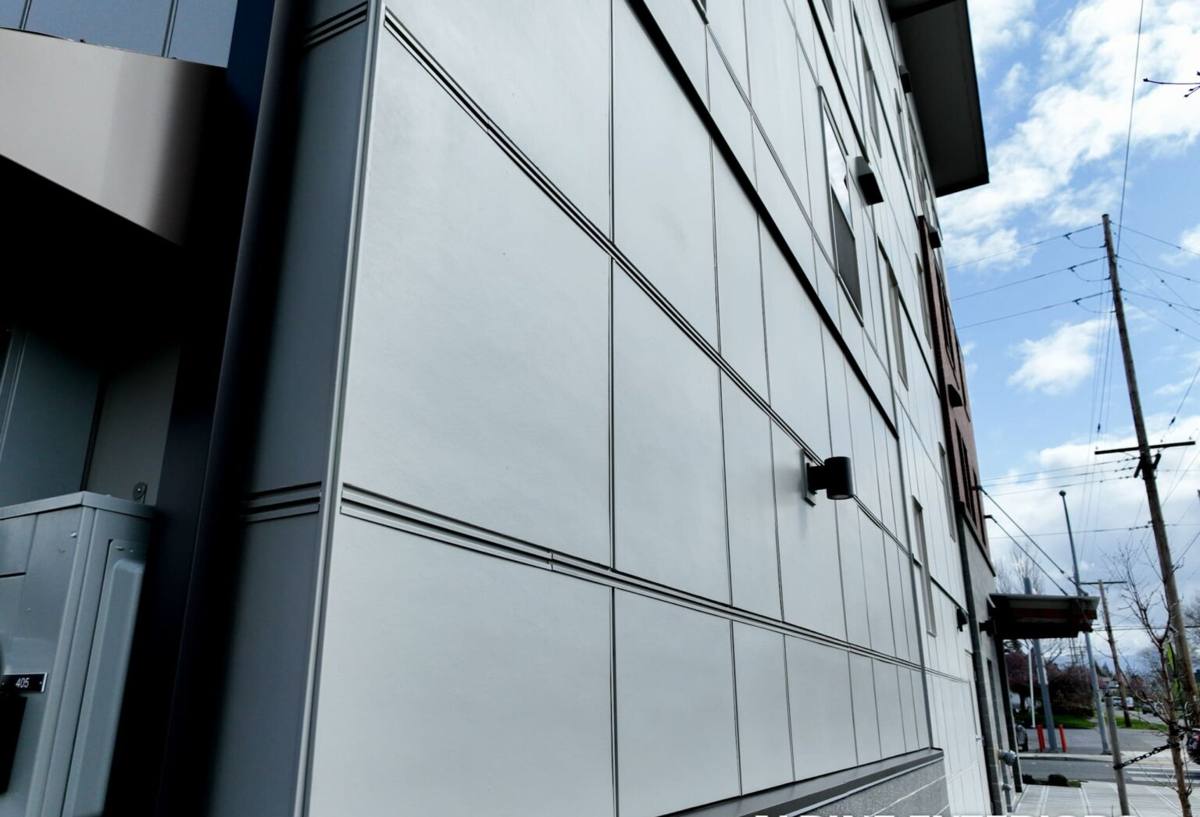
What Bellingham's Climate Does to Vertical Siding
Board and batten has more vertical seams than lap siding, and every one of those seams is a place water can get behind the cladding if the assembly isn't detailed correctly. Bellingham's climate puts that vulnerability to the test on a regular basis.
Wind-Driven Rain Finds the Seams
Storms rolling in off the water don't just drop rain straight down — they push it sideways into walls, and battens are the first thing that rain hits. If the batten spacing, fastening, and the weather-resistive barrier underneath aren't handled properly, driving rain works its way behind the boards over time, leading to trapped moisture, staining, and eventually rot in the sheathing you can't see until it's a real problem.
A Moss Season That Doesn't Really End
Whatcom County's wet season runs long, and shaded or north-facing walls in Cordata can stay damp for weeks between dry spells. Moss and algae don't just sit on the surface — they hold moisture against the siding and, on the wrong material, accelerate deterioration. Vertical battens create horizontal ledges and shadow lines where moss loves to establish, which makes material choice and installation detail even more important than on a flat wall.
Salt Air and Fasteners
Bellingham's proximity to the water means salt-laden air is part of the regional climate, not just a waterfront concern. Over years, that air is hard on lower-grade fasteners, trim, and finishes. Siding that looks fine going up can start showing streaking, corrosion at nail heads, or finish breakdown within a handful of years if the materials weren't chosen with that exposure in mind.
What a Correct Board & Batten Installation Actually Involves
A good-looking board and batten job and a correctly built one can look identical from the curb for the first year or two. The difference shows up five, ten, and twenty years later, and it comes down to what's happening behind the panels.
Weather-Resistive Barrier and Drainage Plane
Every board and batten installation needs a continuous weather-resistive barrier behind it, with a drainage plane that lets any moisture that does get past the siding run down and out rather than sitting against the sheathing. This is the single most important — and most invisible — part of the job.
Batten Layout and Fastening
Battens need consistent spacing over solid backing, fastened to actually catch framing or properly blocked sheathing rather than just the panel itself. Fastener spacing and placement affect how the panels handle expansion and contraction through Bellingham's temperature and humidity swings — get it wrong and you get cracking, popped fasteners, or panels that bow over time.
Flashing at Windows, Trim, and Penetrations
Every window, door, vent, and light fixture is a break in the drainage plane. Flashing has to be layered correctly — shingle-style, top piece over the one below — so water is always directed outward and down. This is where a lot of subpar installs fail first, because it's easy to rush and impossible to inspect once the trim is on.
Why We Install This in James Hardie Fiber Cement Only
We install board and batten siding exclusively in James Hardie fiber cement. We don't offer it in vinyl, LP SmartSide, or cedar, and that's a deliberate standard, not a limitation on style — Hardie's board and batten options (HardiePanel vertical siding with HardieTrim battens, or the Artisan collection for a higher-end look) cover the same design range those other materials do.
Here's how the materials actually compare for a vertical, seam-heavy profile in a climate like Bellingham's:
| Material | Moisture Behavior at Seams | Moss/Algae Resistance | Salt Air Durability | Typical Maintenance |
|---|---|---|---|---|
| James Hardie fiber cement | Non-combustible, dimensionally stable, engineered for wet climates | Factory ColorPlus finish resists staining and holds up to washing | Strong; not affected by salt-driven corrosion the way metal trim can be | Periodic washing; repaint only if uncoated trim is used |
| Vinyl board and batten | Panels can warp or gap at seams, letting moisture behind them | Moss takes hold in battens and grooves; harder to clean without damage | Can become brittle and discolor faster near salt air | Low, but degrades in appearance and can't be repainted easily |
| LP SmartSide (engineered wood) | Wood-based core is more sensitive to sustained moisture exposure at cut edges and seams | Vulnerable if coating is compromised or edges aren't sealed | Moderate; depends heavily on maintaining the factory finish | Requires diligent edge sealing and finish upkeep |
| Cedar | Natural material; seams and battens need consistent finish maintenance to stay watertight | Prone to moss and mildew without regular treatment | Weathers naturally but finish needs frequent renewal near salt air | Highest — refinishing on a recurring cycle |
Every one of those alternatives has legitimate strengths — vinyl is inexpensive, engineered wood can look great fresh off the truck, cedar has real character. What pushed us to standardize on Hardie is what happens to each of them after five, ten, fifteen years in a climate that stays wet for months at a stretch. Fiber cement doesn't rot, doesn't feed moss the way organic materials can, and holds its factory finish instead of relying on field-applied paint to keep water out.
Our Process for a Cordata Board & Batten Project
The process doesn't change much house to house, but the details we check are specific to the site.
- Assessment: We walk the home, note sun exposure, shaded walls, drainage patterns around the foundation, and any existing moisture or moss issues on the current siding.
- Tear-off and inspection: Old siding comes off and we inspect the sheathing underneath for hidden rot or moisture damage before anything new goes up — this step gets skipped by crews trying to move fast, and it's the one that matters most.
- Weather barrier and flashing: A continuous drainage plane goes on first, with flashing detailed at every window, door, and penetration before a single board is hung.
- Installation: HardiePanel and battens (or Artisan panels, depending on the look you want) go up to manufacturer fastening specs, not shortcuts.
- Trim and finish check: Corners, trim, and caulking are reviewed for consistency, then the job gets a final walkthrough with you before we call it done.
Living With Board & Batten Through a Whatcom County Moss Season
Even correctly installed siding benefits from basic upkeep, especially on shaded Cordata lots that stay damp longer through fall and winter. None of this is heavy work, but it's the kind of thing worth doing on a schedule rather than after you notice a problem.
- Rinse siding annually with a garden hose and soft brush — avoid pressure washers, which can force water behind seams and battens on any siding material
- Keep gutters clear so overflow isn't running down the wall face during heavy rain
- Trim back shrubs and trees so shaded sections get more airflow and sun exposure
- Check caulking around windows and trim once a year and have gaps addressed before winter
- Watch for green or black streaking on north-facing walls — early moss growth is far easier to rinse off than established growth
Why Hire a Crew That Already Works in Cordata
A crew that's already working in Cordata and around Bellingham knows what this specific area throws at a house — which walls stay shaded longest, how the wind comes off the water during a storm, and where moss tends to establish first. That's not something you get from a national installer passing through on a subcontracted job. It also means we're familiar with City of Bellingham permitting and, where a Cordata development has HOA guidelines around siding profiles or colors, we can work within them instead of learning the requirements mid-project.
Board and batten done right is a long-term investment in how your home performs against Whatcom County weather, not just how it looks the week it's finished. If you're weighing options for your Cordata home, we're happy to take a look and give you a straightforward, no-pressure estimate — just fill out the form below.