 Bellingham Exterior
 Storm Damage Roof Repair for Columbia Homes
Columbia is one of Bellingham's older, established neighborhoods, with a mix of housing ages, mature trees, and roofs that have usually been through more than one hard winter. When a windstorm rolls off the Sound or a heavy Pacific system parks over Whatcom County for a few days, the damage it leaves on a Columbia roof often isn't obvious from the ground. A few lifted shingles, a bent piece of flashing, or a soft spot in the decking can sit quietly for months before it turns into a ceiling stain or a rot problem. This page is about what storm damage actually looks like here, what a correct repair involves, and how our process works when a Columbia homeowner calls us after a storm.
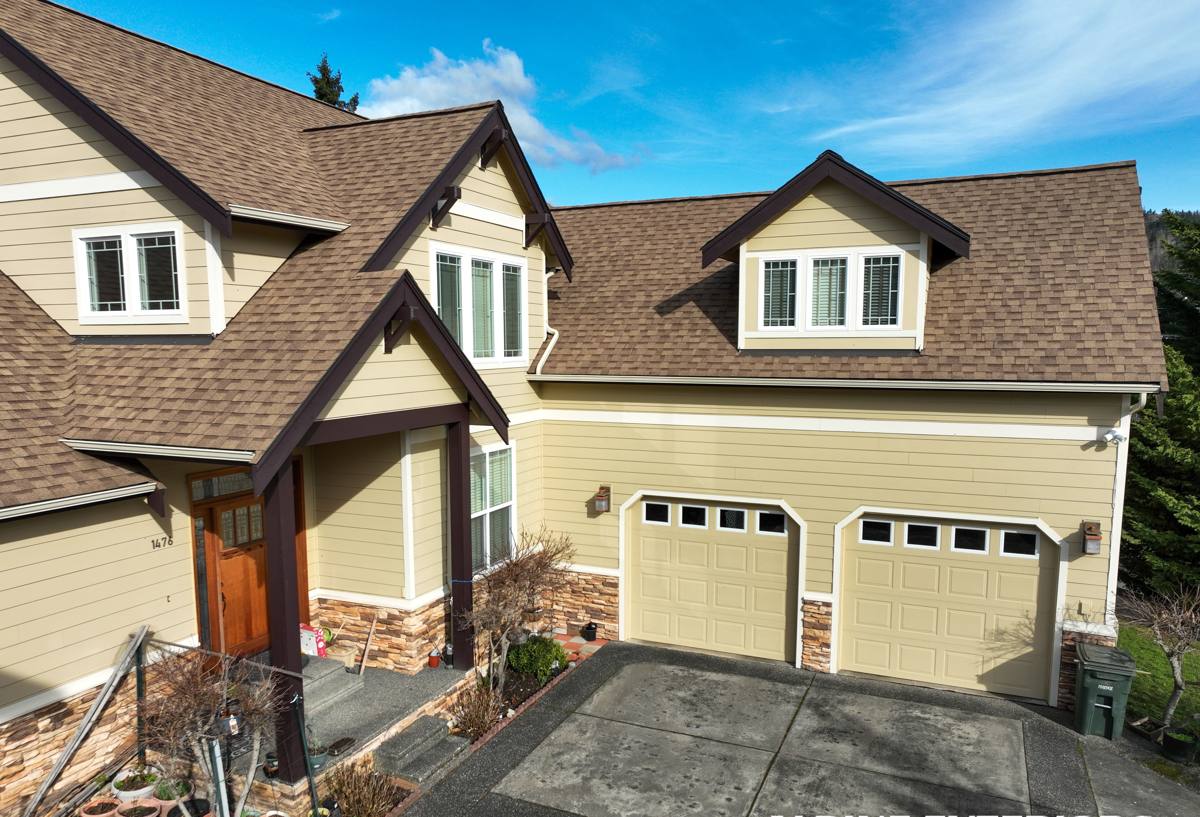
Why Columbia Roofs Take a Different Kind of Beating
Bellingham sits right on Bellingham Bay, and that proximity matters more for a roof than most homeowners realize. Salt-laden air moves inland with onshore wind, and over years it accelerates corrosion on exposed metal — flashing, fasteners, vent boots with metal collars, and gutter hardware. A fastener that's corroding from the inside out doesn't announce itself; it just gradually loses its grip, and that's often the first thing to let go in a windstorm.
Add to that the driving, wind-driven rain that comes with a lot of our winter storms. Rain that falls straight down mostly runs off a well-shingled roof without issue. Rain that's being pushed sideways by 40-50 mph gusts finds every gap — a slightly lifted shingle tab, an aging pipe boot, a valley where the underlayment has started to fail. It gets pushed uphill, under laps, and into places a roof was never designed to shed water from.
Then there's moss. Whatcom County's wet season runs long, and Columbia's tree cover means a lot of roofs stay shaded and damp well after a storm has passed. Moss and algae don't just look bad — moss holds moisture against the shingle surface, works its way under tab edges as it grows, and can lift shingles just enough for wind to get a grip on them during the next storm. A roof with heavy moss going into a windstorm is at meaningfully higher risk of shingle loss than a clean one.
What Actually Counts as Storm Damage
Not every roof problem after a storm is storm damage, and not every storm produces damage that's visible from the driveway. Here's what we're actually looking for on a Columbia roof after wind or heavy rain:
- Wind-lifted or missing shingles — tabs that have been peeled back or torn off, usually starting at ridges, edges, and any spot where moss had already loosened the seal.
- Impact damage — punctures or cracked shingles from falling branches or debris, common on roofs under mature trees.
- Flashing failures — bent, lifted, or corroded flashing around chimneys, skylights, and roof-to-wall transitions, which is one of the most common sources of a "mystery leak."
- Granule loss — heavy rain and wind can strip protective granules from shingles that were already aging, shortening their remaining life even without a visible hole.
- Underlayment and decking exposure — once shingles are gone or lifted, the layer underneath is exposed to the next rain event, and repeated exposure can lead to soft, rotted decking.
The tricky part is that the first three are visible; the last two often aren't, which is why we don't just replace what's obviously missing and call it done.
What a Correct Storm Repair Actually Involves
A quick patch job — a few shingles nailed back down, a bead of sealant over a gap — can stop a leak for a season. It doesn't tell you what's happening underneath, and it doesn't match the repair to the rest of the roof's condition. A proper storm repair on a Columbia home involves a few things a patch job skips:
Matching the repair to the roof's age and material
Shingles fade and weather over time, so a repair on a roof that's 12 years old won't blend the same way it would on a roof that's 2 years old. We're upfront about that — sometimes the honest answer is that a full slope replacement makes more sense than a visible patch, especially if the surrounding shingles are already brittle.
Checking the deck, not just the surface
Any time shingles have been missing for more than a short window, or where there's evidence of a slow leak, we check the decking underneath for soft spots or moisture damage before re-covering it. Nailing new shingles over compromised decking doesn't hold, and it hides a problem that gets more expensive the longer it sits.
Flashing and fastener condition
Given the salt-air corrosion issue specific to this area, we look at flashing and exposed fasteners as part of any storm repair, not as an afterthought. Corroded flashing that's still technically "in place" is often the next thing to fail in the following storm.
Our Storm Damage Repair Process
- Inspection and documentation. We walk the roof (or use a pole camera where a section isn't safely walkable) and photograph the damage — this documentation is also what your insurance adjuster will want to see.
- Temporary protection if needed. If there's active exposure — a torn-off section, an open valley — we get a tarp or temporary cover on it the same visit so the interior stays protected while repairs are scheduled.
- Written scope and honest options. We explain what we found in plain terms: what's a straightforward repair, what's a judgment call, and where a full slope or full roof replacement is the more sensible long-term option.
- Repair using matched materials. We source shingles and flashing that match the existing roof as closely as possible, and we don't reuse compromised fasteners or flashing just to save a step.
- Final check and cleanup. We confirm the repair sheds water correctly, clear debris and old material from the property, and leave you with a summary of what was done.
Repair, Partial Replacement, or Full Replacement — How We Decide
Storm damage doesn't always call for the same fix, and the right call depends on the roof's age, how widespread the damage is, and what we find once we're up there. Here's roughly how we think through it:
| Situation | Typical Approach | What Drives the Decision |
|---|---|---|
| Isolated wind damage, roof under 10 years old | Targeted shingle and flashing repair | Surrounding shingles are still flexible and will match closely |
| Damage concentrated on one slope, roof mid-life | Full slope replacement | Avoids a visibly mismatched patch and resets that slope's clock |
| Widespread granule loss, moss damage, or roof near end of service life | Full roof replacement | Repair cost approaches replacement cost without extending overall roof life much |
| Hidden decking rot found during repair | Decking replacement plus re-roofing of that section | New shingles over soft decking won't hold or perform correctly |
We'll never push a full replacement when a repair is genuinely the right call, and we'll tell you plainly when a repair is just delaying a bigger expense.
Signs a Columbia Homeowner Should Get a Post-Storm Inspection
Most storm damage isn't dramatic. It's usually small and easy to miss unless you know what to look for. After any significant wind or rain event, it's worth checking for:
- Shingle granules collecting in gutters or at downspout outlets
- Shingles that look curled, lifted, or visibly out of line with the rest of the roof
- New or worsening water stains on ceilings or upper walls
- Daylight visible through the roof deck from inside the attic
- Bent, lifted, or missing flashing around chimneys, vents, or skylights
- Fresh moss growth or debris buildup in valleys, where water tends to pool
- Sagging or soft-feeling spots on the roof surface
None of these alone means you need a new roof — but any of them is a reason to get a real inspection rather than waiting to see if it gets worse.
Insurance and Timing Considerations
If a storm has caused clear, identifiable damage — a tree limb through a section of roof, shingles stripped off in a wind event — that's often a straightforward insurance claim. Gradual damage from years of moss growth or slow granule loss usually isn't something a homeowner's policy will cover, since insurers generally distinguish between sudden storm events and long-term wear. That's part of why documentation matters: photos and a written assessment taken close to the time of the storm are far more useful to an adjuster than damage that gets discovered months later with no clear connection to a specific event. We provide that documentation as a standard part of our inspection, whether or not you end up filing a claim.
Why a Crew That Already Works in Columbia Matters
Roofing crews that mainly work outside this region don't always account for the combination of salt air, sustained moisture, and heavy tree cover that Columbia and the rest of Bellingham deal with. That shows up in small but real ways — using fasteners or flashing that aren't suited to a marine climate, or not recognizing early moss damage for what it is. A crew that regularly works this neighborhood knows what the housing stock looks like, what tends to fail first on roofs of a given age, and how to size a repair honestly instead of over-selling or under-scoping it.
Get an Honest Look at Your Roof
If a recent storm has you wondering whether your Columbia home took any damage, it's worth having someone take a real look before the next system rolls through. We offer free, no-pressure estimates and inspections — no obligation, just a straight answer about what we find and what it would take to fix it. Use the form below to get in touch and we'll get a visit scheduled.