 Bellingham Exterior
 Roof Replacement in Columbia: What Bellingham's Climate Demands
Columbia is one of Bellingham's older, established neighborhoods, sitting close to the water and under a lot of mature tree canopy — a combination that's easy on the eyes and hard on a roof. Homes here deal with the same three things that wear down roofs across the rest of Whatcom County, but often with more intensity: salt-laden air drifting in off Bellingham Bay, driving rain that doesn't fall straight down so much as get pushed sideways, and a moss season that, thanks to the shade and moisture, tends to run longer than it does in more open parts of town.
A roof replacement in Columbia isn't just a matter of picking a shingle color and tearing off the old layer. It's a job where the underlayment, flashing, and ventilation details matter as much as the material on top, because those are the parts that determine whether the new roof handles this specific climate for its full expected life or starts showing problems years early. This page covers what a Columbia home actually needs from a roof replacement, what a correct job looks like, and how our process works for this part of Bellingham.
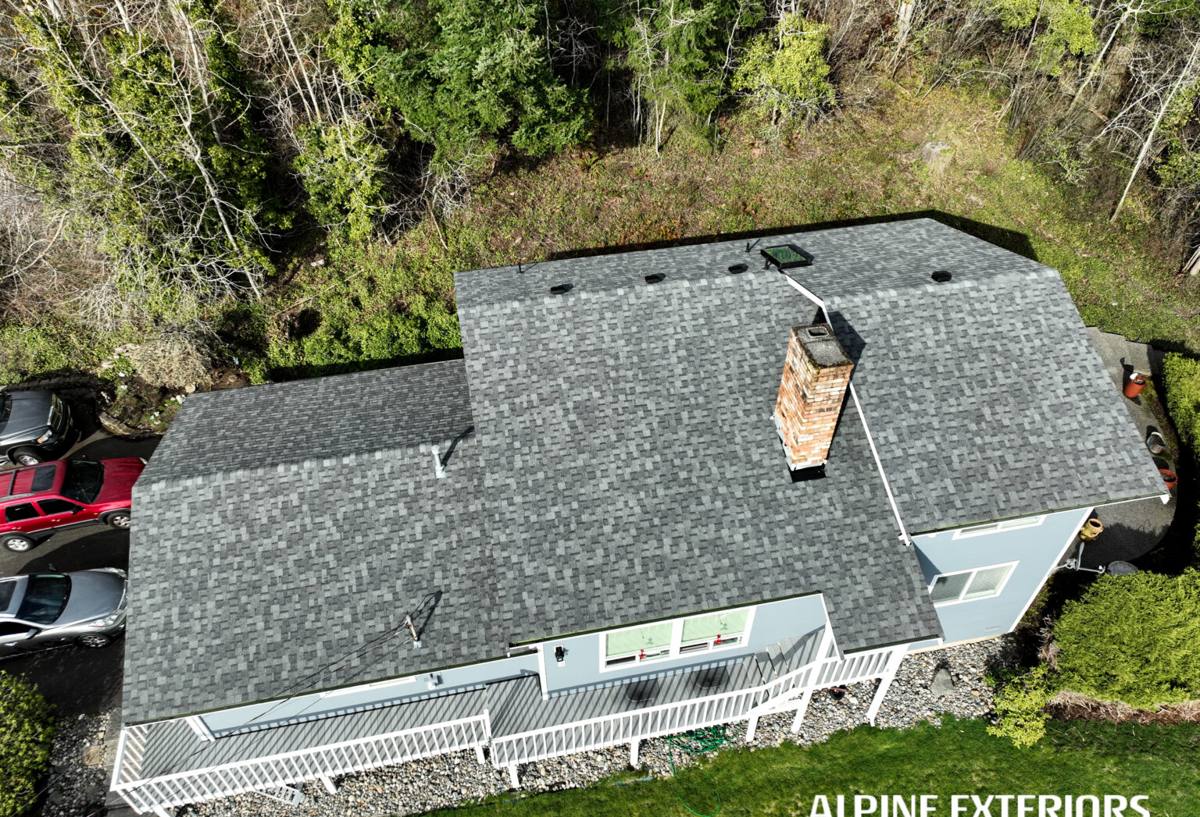
What Bellingham's Climate Does to a Columbia Roof
Salt Air Off Bellingham Bay
Columbia's proximity to the water means roofs here take a steadier dose of salt-laden air than neighborhoods set further inland in Whatcom County. Salt accelerates corrosion in exposed metal — flashing, fasteners, vent caps, gutter hardware — and corroded metal on a roof doesn't just look bad, it fails at the exact points that are supposed to keep water out. A rusted flashing seam or a corroding nail head is often the first place a roof leak actually starts.
Driving Rain and Wind-Driven Moisture
Storms moving through Bellingham don't always drop rain straight down. Wind pushes it sideways, driving water up under shingle tabs, into valley flashing, and around chimney and vent penetrations that a calm, straight-down rain would never reach. A roof that's fine in a light drizzle can still take on water the moment wind gets involved, and that wind-driven pattern is a normal part of a Whatcom County winter, not an unusual event.
A Moss Season That Runs Most of the Year
Mature trees are part of what gives Columbia its character, but they also mean more shade, more falling debris, and more moisture held against the roof surface for longer stretches than a home on an open, sun-exposed lot. Moss and algae get a long growing season out of that combination. North-facing slopes and shaded valleys are usually first to show it, and once moss takes hold, it lifts shingle edges and holds water against the roof deck exactly where you don't want standing moisture.
Signs a Columbia Roof Needs Replacement, Not Just a Repair
Not every roof problem calls for a full replacement, but in this climate, certain signs mean patching is just delaying a bigger job. Worth checking for:
- Shingles that are curling, cupping, or losing granules in patches rather than just at the edges
- Moss or algae covering large sections of the roof rather than a few isolated spots
- Soft spots or sagging when walked on, which usually means the deck underneath has taken on moisture
- Daylight visible through the roof deck from inside the attic
- Flashing around chimneys, vents, or valleys that's cracked, rusted, or pulling away
- Leaks that keep returning to the same spot after repair, suggesting an underlying issue rather than an isolated failure
- A roof that's approaching or past the expected lifespan of its material, especially if it was installed without a moisture-resistant underlayment
Any one of these on its own might still be repairable. Several at once, especially combined with an older roof, usually points to replacement being the more honest recommendation.
Choosing the Right Roofing Material for Columbia's Climate
Material choice matters more here than it would on a drier, more open lot, because the gap in performance between a well-suited product and a poorly-suited one shows up faster under this much shade and moisture.
| Material | Handling Salt Air & Rain | Moss Resistance | Upkeep |
|---|---|---|---|
| Asphalt composition shingle (algae-resistant) | Good with correct flashing and underlayment | Improved with copper or zinc granule blends | Periodic cleaning, moss treatment as needed |
| Standing seam metal | Excellent — sheds water fast, minimal seams | Strong; moss struggles to grip smooth metal | Low; occasional debris clearing |
| Cedar shake | Moderate — needs correct ventilation to avoid trapped moisture | Weak without regular treatment; a common maintenance burden on shaded lots | Regular treatment and inspection |
| Synthetic/composite shingle | Good — engineered for moisture resistance | Good on most product lines | Low to moderate |
We don't install cedar shake as a default recommendation for heavily shaded Columbia lots. It can look excellent and plenty of homeowners love it, but under sustained shade and moisture it demands a level of ongoing treatment and ventilation attention that most other materials simply don't require to perform the same job. That's a maintenance-burden tradeoff we lay out plainly rather than skip past.
What a Correct Roof Replacement Involves Here
Tear-Off and Deck Inspection
A full tear-off lets us actually see the roof deck underneath, which is the only way to catch soft or water-damaged sheathing before it's covered back up. On an older Columbia home, this step matters more than usual — deck condition on a house that's been standing for decades can vary a lot even under a roof that looked fine from the ground.
Underlayment and Ice-and-Water Barrier
A synthetic underlayment rated for sustained moisture exposure goes down first, with self-adhering ice-and-water barrier at eaves, valleys, and other vulnerable spots. This layer is the backup system — it's what keeps water out if wind-driven rain gets past the shingles themselves, which in this climate it eventually will on some part of the roof.
Flashing Details
Every point where the roof meets something else — chimney, vent pipe, wall, skylight — needs flashing sized and installed correctly for that specific penetration. We use corrosion-resistant flashing material given how much salt-laden air this neighborhood sees, rather than standard-grade metal that starts corroding within a handful of seasons.
Ventilation
Correct intake and exhaust ventilation keeps the attic space at a stable temperature and humidity, which does two things: it extends shingle life by reducing heat buildup, and it reduces the moisture buildup that feeds mold and rot in the deck and framing below. A shaded, moisture-heavy lot like a typical Columbia property needs this dialed in correctly, not approximated.
Moss-Resistant Details
Where the material allows, we install copper or zinc strip flashing near the ridge, which releases trace metal ions that inhibit moss and algae growth as rain washes over the roof. It's not a permanent fix on its own, but combined with the right shingle line and periodic maintenance, it meaningfully slows regrowth on shaded slopes.
Working Around Columbia's Older Homes and Mature Trees
Roof Structure and Age
Many homes in Columbia were built well before current ventilation and underlayment standards were common practice, which means a roof replacement here sometimes turns up framing or decking details that need attention beyond a like-for-like swap. We flag those honestly as part of the estimate rather than as a surprise mid-job.
Tree Canopy and Access
Mature trees mean more falling debris landing on the roof year-round, and they also affect how a crew stages material and equipment on a smaller, tree-lined lot. We plan around that ahead of time — protecting landscaping, managing debris removal, and working efficiently on lots where access is tighter than a wide-open suburban site.
How Our Process Works
We start with a site visit to look at the current roof's condition, the amount of shade and tree exposure the home actually gets, and how close the property sits to prevailing wind and rain patterns off the bay. From there we go over material options honestly, including the tradeoffs above, so the decision fits the budget and the home rather than a one-size-fits-all recommendation.
Once a material is chosen and permitting is handled, the job follows the sequence above — tear-off and deck inspection first, then underlayment, flashing, ventilation, and the roofing material itself, with moss-resistant details added where the product supports them. We finish with a full cleanup, including a magnetic sweep for stray fasteners, and a walkthrough covering what your specific roof needs going forward.
Keeping Your New Roof Performing in This Climate
Even a correctly installed roof benefits from some routine attention in a shaded, coastal-influenced neighborhood like Columbia. Worth keeping on a yearly checklist:
- Clear leaves, needles, and debris from valleys and gutters before they trap moisture against the roof surface
- Have moss or algae growth treated early, before it lifts shingle edges or spreads across a larger section
- Check that attic ventilation isn't blocked by insulation or debris, since blocked vents undercut the whole moisture-management system
- Inspect flashing around chimneys, vents, and valleys once a year for early corrosion or separation
- Trim back tree limbs that overhang the roof, both to reduce debris and to cut down on the shade that feeds moss growth
Why It Matters That We Already Work Columbia
A crew that mostly works drier, more open parts of Whatcom County can still install a competent roof, but a Columbia job has variables that don't come up as often elsewhere — heavier tree canopy, tighter lot access, older framing that needs an honest look before assuming it's fine, and moss pressure that runs longer here than in more sun-exposed neighborhoods. Working this neighborhood regularly means we're not guessing at those details on your project. We've seen which shingle lines and flashing grades actually hold up under Columbia's specific mix of salt air, driving rain, and shade, and we're straightforward about what a roof here genuinely needs versus what's just an upsell.
Whether your roof is showing its age, you're dealing with recurring leaks, or you just want a straight answer about what a replacement would take on your Columbia property, we're glad to walk the roof with you and lay out the options plainly. Reach out below for a free, no-pressure estimate.
```