 Bellingham Exterior
 Building Decks for Columbia Homes
Columbia is one of Bellingham's older, established neighborhoods, with a mix of homes ranging from early-1900s craftsman-style houses to mid-century builds and newer infill construction. That age range matters when it comes to deck work. Many of the original decks and porches in this part of town were built decades ago, often without the ledger flashing, joist protection, or drainage details that are now standard practice. When we build or replace a deck in Columbia, we're usually working around an older house, an established yard, and a structure that's had years to show us exactly how Whatcom County weather treats untreated or poorly detailed wood.
A deck in this neighborhood isn't just an outdoor living space — it's a structure that has to survive a genuinely tough combination of conditions. Bellingham sits close enough to the water that salt-laden air reaches inland neighborhoods like Columbia, and the region's long, wet fall-through-spring stretch means any deck here spends a good chunk of the year damp, shaded, or both.
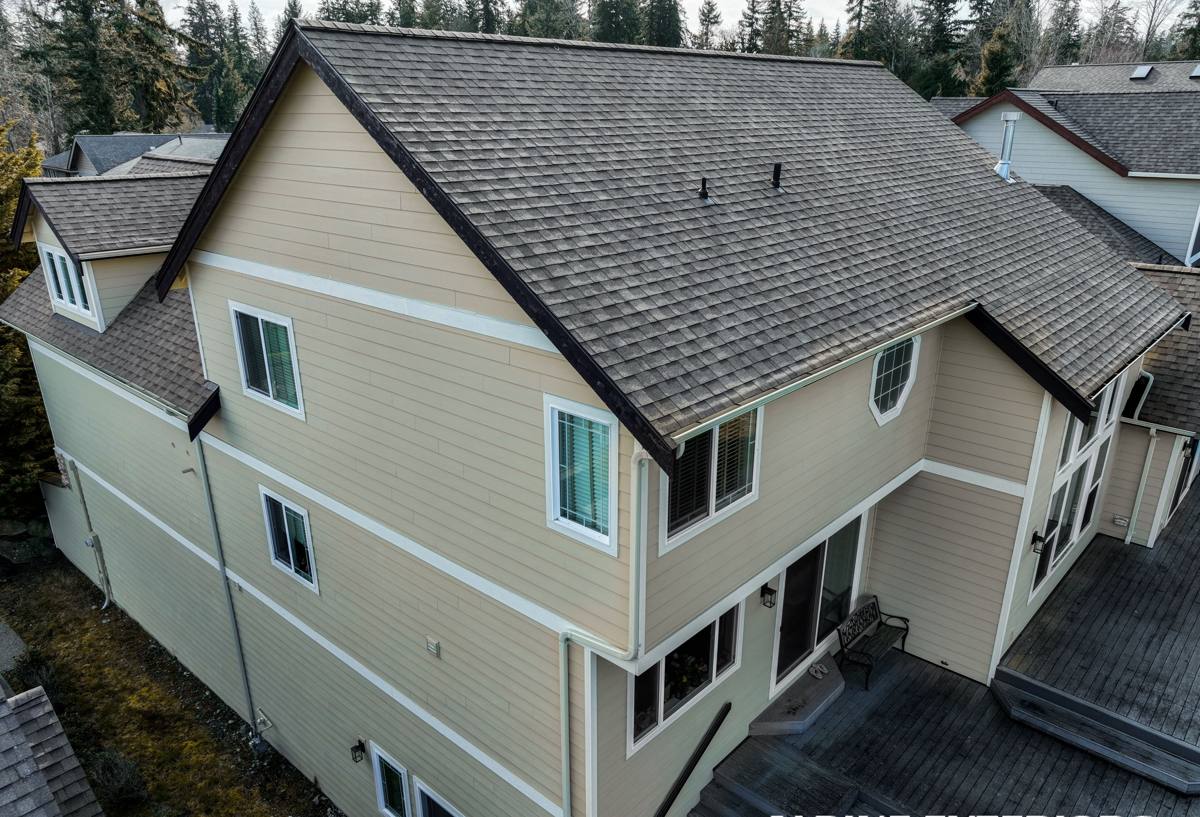
What Bellingham's Climate Does to a Deck
Three things drive almost every deck problem we see in this area: moisture, salt air, and moss.
Driving Rain and Standing Moisture
Whatcom County doesn't just get rain — it gets long stretches of steady, wind-driven rain that finds its way into every gap, seam, and fastener hole a deck has. Water that gets behind ledger boards, into end grain, or trapped under poorly spaced boards doesn't dry out quickly here, because the drying window between storms is short for much of the year. That's how rot gets started, usually in places you can't see until the damage is advanced.
Salt Air
Bellingham Bay is close enough that salt-laden air reaches well into residential neighborhoods, Columbia included. Salt air accelerates corrosion on fasteners, brackets, and any exposed metal hardware. A deck built with the wrong grade of fasteners can develop rust streaks and weakened connections years before the wood itself is a problem — which is why hardware selection matters as much as lumber selection out here.
Moss and Shade
Many Columbia lots have mature trees and established landscaping, which is part of the neighborhood's character but also means decks often sit in partial shade for much of the day. Combine that with our long wet season and you get ideal conditions for moss and algae growth on deck surfaces. Beyond being a nuisance to clean, moss holds moisture against the wood surface and makes boards slick and dangerously slippery underfoot — a real safety issue on stairs and landings.
What a Correctly Built Deck Looks Like Here
A deck built for this climate isn't fundamentally different in appearance from a deck anywhere else — the difference is in the details that keep water moving away from the structure instead of sitting on it.
- Proper ledger flashing where the deck attaches to the house, with flashing tape and a drainage gap — this is the single most common failure point we find on older decks
- Joist tape or cap protection on top of every joist to stop water from soaking into end grain and top surfaces
- Stainless or coated fasteners and structural hardware rated for coastal/salt-air exposure, not standard interior-grade hardware
- Board spacing that allows for drainage and airflow underneath, reducing the moisture trap that feeds rot and moss
- Post bases that keep wood off grade contact and away from standing water
- A surface material and finish chosen with this specific yard's sun/shade pattern in mind, since a heavily shaded deck needs different maintenance expectations than one in full sun
None of this is exotic. It's standard best practice — but it's exactly the set of details that gets skipped on a rushed or budget build, and it's what separates a deck that needs major repair in eight years from one that's still solid in twenty-five.
Decking Material Options for This Neighborhood
There's no single "right" material for every Columbia property — it depends on budget, how much shade the deck gets, and how much maintenance the homeowner wants to take on.
| Material | How It Handles Our Climate | Maintenance |
|---|---|---|
| Pressure-treated wood | Solid performer if properly sealed and re-sealed; most affordable option | Annual cleaning and periodic sealing, more in shaded/mossy areas |
| Cedar | Naturally rot- and insect-resistant, ages gracefully, but still needs care in a wet climate | Regular cleaning and refinishing to maintain color and protection |
| Composite decking | Excellent moisture resistance, doesn't feed moss growth as readily as bare wood | Low — periodic washing, no staining or sealing |
| PVC/capped polymer | Fully sealed surface, best resistance to moisture and salt air exposure | Lowest — occasional washing only |
We'll walk through the real trade-offs for your specific lot — sun exposure, tree cover, and how the deck will actually be used — rather than pushing one product as a default answer.
Why We Frame and Fasten the Way We Do
We don't cut corners on structural hardware in this climate, and we won't install a deck without proper ledger flashing regardless of what the original structure had. That's not about upselling — it's about not putting our name on a deck that we know will develop hidden rot within a few wet seasons. We use fasteners and connectors rated for exterior, coastal-adjacent exposure because the cost difference between standard and corrosion-resistant hardware is small compared to the cost of pulling up a deck surface to replace corroded structural brackets a decade from now.
The same goes for footings and post bases. Whatcom County soil holds moisture, and a deck built on undersized or poorly set footings will show movement over time — doors that used to shut flush against the ledger start binding, or the deck surface develops a noticeable slope. We size and set footings for the actual load and soil conditions on your property, not a generic minimum.
Our Process for a Columbia Deck Project
1. On-Site Assessment
We walk the property, look at sun/shade exposure, drainage patterns, and — if it's a replacement — assess what condition the existing structure is in and why it's failing. This tells us what the new deck actually needs to handle.
2. Design and Material Selection
We talk through layout, size, and material options based on your budget and how you'll use the space, along with an honest read on maintenance expectations for each option given your yard's specific light and moisture conditions.
3. Permitting
Deck projects in Bellingham typically require a permit depending on size and height. We handle that process so you're not left guessing about code requirements.
4. Construction
Proper flashing, joist protection, corrosion-resistant hardware, and correctly set footings — every step built to hold up through Whatcom County winters, not just to look finished on install day.
5. Final Walkthrough
We go over the finished deck with you, including basic maintenance guidance specific to your property's exposure — what to expect if it's shaded, what cleaning schedule makes sense, and what to watch for over the first year.
Maintenance Realities for a Columbia Deck
Even a well-built deck needs some seasonal attention in this climate. Here's a practical checklist we give homeowners:
- Clear leaves and debris from board gaps regularly, especially in fall — trapped debris holds moisture against the wood
- Sweep or power-wash moss and algae buildup before it gets thick enough to become slippery, particularly on stairs
- Check and re-seal wood decking on the schedule appropriate to the product — more often in shaded areas than sunny ones
- Inspect ledger flashing and the house/deck attachment point annually for any signs of water intrusion
- Keep gutters and downspouts near the deck clear so runoff isn't dumping extra water onto or under the structure
- Trim back overhanging branches where practical to reduce shade-driven moss growth and debris
Repair, Replace, or Rebuild?
Not every aging deck in Columbia needs to be torn out completely. If the structural framing and footings are sound and the damage is limited to surface boards or railings, targeted repair or a resurfacing can make sense and cost significantly less than a full rebuild. But if we find rot at the ledger connection, compromised joists, or footings that have shifted, patching the surface just hides a structural problem that will keep getting worse. Part of our job on the initial assessment is giving you a straight answer on which category your deck falls into, with the reasoning behind it, so you're not guessing or paying for more — or less — work than the deck actually needs.
Why Local Experience Matters for This Job
A deck built by a crew that hasn't worked in Whatcom County's specific conditions can look identical to one built by a crew that has — until a few wet winters go by. The difference shows up in the flashing details you can't see once the deck is finished, the hardware grade actually specified versus what's on the invoice, and whether the footings were sized for our soil and rainfall rather than a generic textbook minimum. We've worked on homes throughout Bellingham, including in Columbia, and we bring that same standard to every deck regardless of the neighborhood's age or the house style it's attached to.
If you're planning a new deck or looking at repairing or replacing one that's showing its age, we're happy to come take a look and give you a straightforward, no-pressure estimate. Fill out the form below and we'll get in touch to schedule a time that works for you.