 Bellingham Exterior
 Storm Damage Roof Repair for Blaine's Coastal Climate
Blaine sits at the far northern edge of Whatcom County, right where Semiahmoo Bay and Drayton Harbor meet the open water, and that position puts local roofs through more than most. Storms coming off the water bring driving rain that hits roofs sideways instead of straight down, salt-laden air that works on exposed metal year-round, and a moss season that barely lets up between wet spells. When a storm does damage to a roof here, it's rarely an isolated, simple fix — the same conditions that caused the damage tend to make the repair more sensitive to get right.
This page covers what storm damage repair actually involves for a Blaine home: what to look for after a storm, what a correct repair does versus what a quick patch does, and how our process works from the first call to the final walkthrough. The goal is a repair that holds up through the next storm, not just one that looks fixed on a dry day.
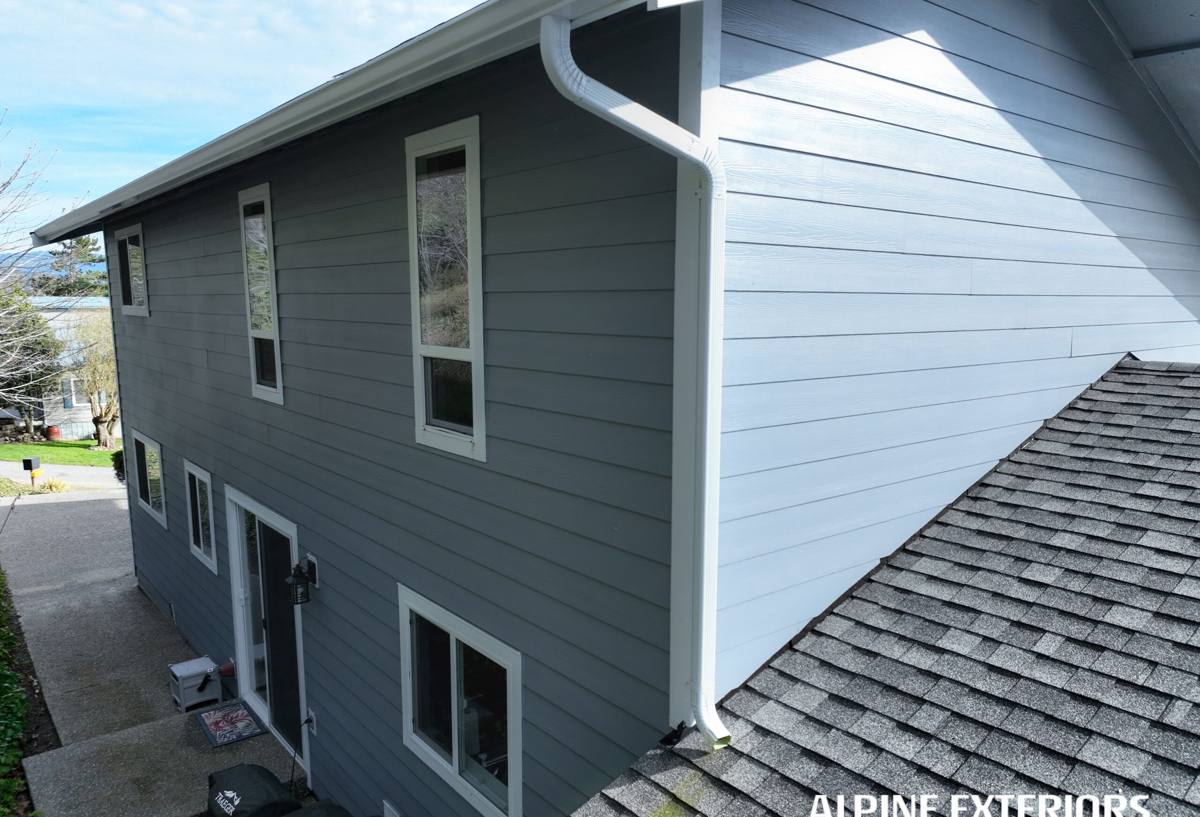
What Blaine's Climate Does to a Roof During and After a Storm
Salt Air Off the Bay and Harbor
Homes close to Semiahmoo Bay and Drayton Harbor take a steady dose of salt-laden air, and that accelerates corrosion on anything metal on a roof — flashing, fasteners, vent stacks, gutter hardware. A storm that loosens a piece of flashing or exposes a fastener head doesn't just leave a gap; it leaves corroding metal that keeps weakening after the storm has passed. That's part of why a repair rushed through with whatever hardware is on the truck can fail again faster here than it would further inland.
Driving Rain and Wind-Driven Damage
Storms coming ashore in Blaine push rain sideways, not just down, and wind of that kind finds gaps a straight-down rain never would — lifted shingle edges, loosened flashing at valleys and roof-to-wall transitions, and seams that were sealed for calmer conditions. Wind can also physically pull shingles or panels loose, tear off ridge caps, or drive debris into a roof surface. The damage from one storm event is often a combination of both: material torn or lifted by wind, then water forced underneath by rain riding the same wind.
A Moss Season That Runs Most of the Year
Mild, damp conditions keep moss and algae active on Blaine roofs for most of the year, and moss doesn't wait politely for a storm to pass. It holds moisture against roofing material, works its way under lifted or damaged shingles faster than it would on a clean surface, and can mask storm damage from the ground until it's already let water through. A storm-damaged section of roof with moss cover on it is usually worse underneath than it looks from the yard.
Recognizing Storm Damage Before It Gets Worse
Some storm damage is obvious — missing shingles, a visibly torn section, debris punched through the roof surface. A lot of it isn't, and the less obvious damage is often what turns into a real problem if it sits through another storm before anyone catches it. After any significant wind or rain event, it's worth checking for:
- Shingles that are lifted, curled back, cracked, or missing, even in small isolated patches
- Granules collecting in gutters or at downspout outlets in noticeably higher amounts than usual
- Flashing that looks bent, lifted, or separated at valleys, chimneys, or roof-to-wall transitions
- Dented or creased metal on vent caps, flashing, or gutters
- New or worsening moss growth concentrated in one section, which can mean water is sitting there longer than it should
- Water stains, discoloration, or soft spots on ceilings or in the attic after a storm, even if the roof looks fine from the ground
- Debris — branches, siding pieces, anything wind-carried — still resting on the roof surface
- Sagging or an uneven roofline in any section, which points to deck or structural damage, not just surface material
None of these on their own always mean a major problem, but any of them are worth a look sooner rather than later. A small gap left through one more storm is how a repairable spot turns into a deck replacement.
What a Correct Storm Damage Repair Involves
Different types of storm damage call for different repair approaches, and the right approach depends on how much of the roof system is actually affected, not just what's visible on top.
| Type of Damage | What It Usually Looks Like | Repair Approach |
|---|---|---|
| Isolated shingle loss or lifting | A handful of shingles missing, cracked, or lifted in one area | Remove and replace the affected shingles and underlayment, matched to the existing roof where possible |
| Flashing failure | Leaks at valleys, chimneys, skylights, or roof-to-wall joints after wind-driven rain | Re-flash the affected area with corrosion-resistant material rated for coastal exposure, not a caulk-only patch |
| Wind uplift damage | Torn ridge caps, lifted sections along roof edges or high-exposure slopes | Replace damaged material and reinforce fastening pattern in that section to match the actual wind exposure |
| Impact damage | Punctures or dents from wind-carried debris or falling branches | Repair or replace the deck and roofing material at the impact point, checking surrounding area for hidden cracking |
| Widespread or repeat damage | Multiple damaged areas across an older roof, or damage recurring after prior patch repairs | Full assessment to determine whether targeted repair still makes sense or replacement is the more honest recommendation |
A repair done right starts underneath the visible surface. That means checking the roof deck itself for soft spots or water intrusion, not just replacing what's missing on top, and using underlayment and flashing that's rated for the salt air and wind-driven rain this location actually sees rather than whatever's fastest to install.
Repair or Replace? Weighing the Factors Honestly
Not every storm-damaged roof needs replacing, and not every damaged roof is a good candidate for another patch. A few honest factors go into that call:
- Age and condition of the roof overall. Storm damage on a roof already near the end of its service life is a different conversation than the same damage on a roof with years of life left.
- How much of the roof is affected. A single damaged section on an otherwise sound roof usually repairs cleanly. Damage spread across multiple sections, or damage that keeps recurring in the same spots, points toward a bigger underlying issue.
- What's happening underneath. Surface damage with a dry, solid deck underneath is a straightforward repair. Damage that's let water into the deck or insulation changes the scope, sometimes significantly.
- History of prior repairs. A roof with several past patch jobs in different spots is often telling you it's due for a bigger conversation, even if the current damage looks minor.
We'll tell you honestly which situation you're in rather than defaulting to whichever answer is more work. Plenty of storm damage repairs are genuinely just that — a repair, done right, that gets years more life out of the roof you already have.
How Our Storm Damage Repair Process Works
We start with an on-roof inspection, not just a look from the ground, because the damage that matters most for how the repair holds up is often not the damage that's easiest to see. That includes checking the deck condition around any damaged area, not just the surface material. If the roof needs temporary protection before a full repair can be scheduled — a tarp over an exposed section, for example — we can get that in place quickly so the interior of the home isn't taking on more water while the repair is planned.
From there we go over what we found, what repair approach fits it, and what it involves before any work starts, including straightforward talk about whether a targeted repair or something larger makes more sense for your roof specifically. Once the work is scoped, the repair itself follows the same standards we'd use on new roofing work in this area — corrosion-resistant fasteners and flashing rated for salt air exposure, underlayment and sealing details built for wind-driven rain, and attention to how the repaired section will shed water and resist moss going forward, not just how it looks when the crew leaves. We finish with a walkthrough of what was done and what, if anything, is worth keeping an eye on afterward.
Documentation for Insurance
If you're planning to file a claim, we document the damage we find with photos and a written description of the repair scope, which is generally useful supporting information for a claim regardless of your specific insurance carrier or policy. We're not adjusters and don't represent that we can speak for what your policy covers — that's a conversation between you and your insurer — but we can give you an honest, detailed account of the damage and what repairing it correctly requires.
Preventing the Next Storm From Doing the Same Damage
A correctly done repair addresses the damage that's already happened, but a few ongoing habits reduce how much the next storm can do:
- Keep gutters and downspouts clear so wind-driven rain has somewhere to go instead of backing up under roof edges
- Trim back tree limbs that could come down on the roof in high wind, especially anything already overhanging
- Address moss growth before it spreads, since a moss-covered roof holds more moisture during a storm and hides damage more easily
- Have flashing and fastener condition checked periodically, particularly heading into the fall and winter storm months
- Get any small leak or lifted shingle looked at promptly rather than waiting for it to become obvious from inside the house
Why It Matters That We Already Work Blaine
A crew that mostly works further inland in Whatcom County can still do competent repair work, but a Blaine roof has variables that come up more often here than elsewhere — corrosion-grade flashing and fastener needs from sustained salt exposure, wind-driven rain patterns tied to how exposed a given roof is to the bay and harbor, and a moss season long enough to complicate repairs that would be simple in a drier climate. Working this area regularly means those factors are part of how we plan a repair from the start, not something we're figuring out on your roof for the first time. We've seen which flashing details hold up against Blaine's specific combination of salt air and wind-driven rain, and which repair shortcuts tend to come back as a second storm claim within a year or two.
That local familiarity also means a straighter answer about what your roof actually needs — whether that's a targeted repair, a larger section replaced, or an honest recommendation that a full roof replacement is the better long-term move given its age and condition.
Get a Straight Answer About Your Roof
If a recent storm has left your roof with missing shingles, a leak, or damage you're not sure how to size up, we're glad to take a look and walk you through what we find in plain terms. Reach out below for a free, no-pressure estimate.