 Bellingham Exterior
 Blaine's Climate Asks More of Your Siding Than Most Places
Blaine sits right on the water at the northern edge of Whatcom County, and that location shapes what happens to a house's exterior over time. Homes here deal with a combination that inland neighborhoods don't face in the same way: salt-laden air blowing off the bay, driving rain that comes in sideways during winter storms, and a long damp season that gives moss and algae months to establish themselves on north-facing walls and anything shaded by trees. Any one of these on its own is manageable. Together, over years, they accelerate the failure of siding that wasn't built or installed with this environment in mind.
Salt air is corrosive to exposed metal fasteners and trim, and it holds moisture against surfaces longer than dry inland air does. Driving rain doesn't just wet the face of a wall — wind pressure pushes water sideways and upward, testing every seam, lap, and penetration in the siding system. And moss doesn't just look bad; where it takes hold, it holds water against the wall assembly and can work into gaps, joints, and fastener heads. A siding replacement done for a Blaine home needs to account for all three, not just look right when it's freshly installed.
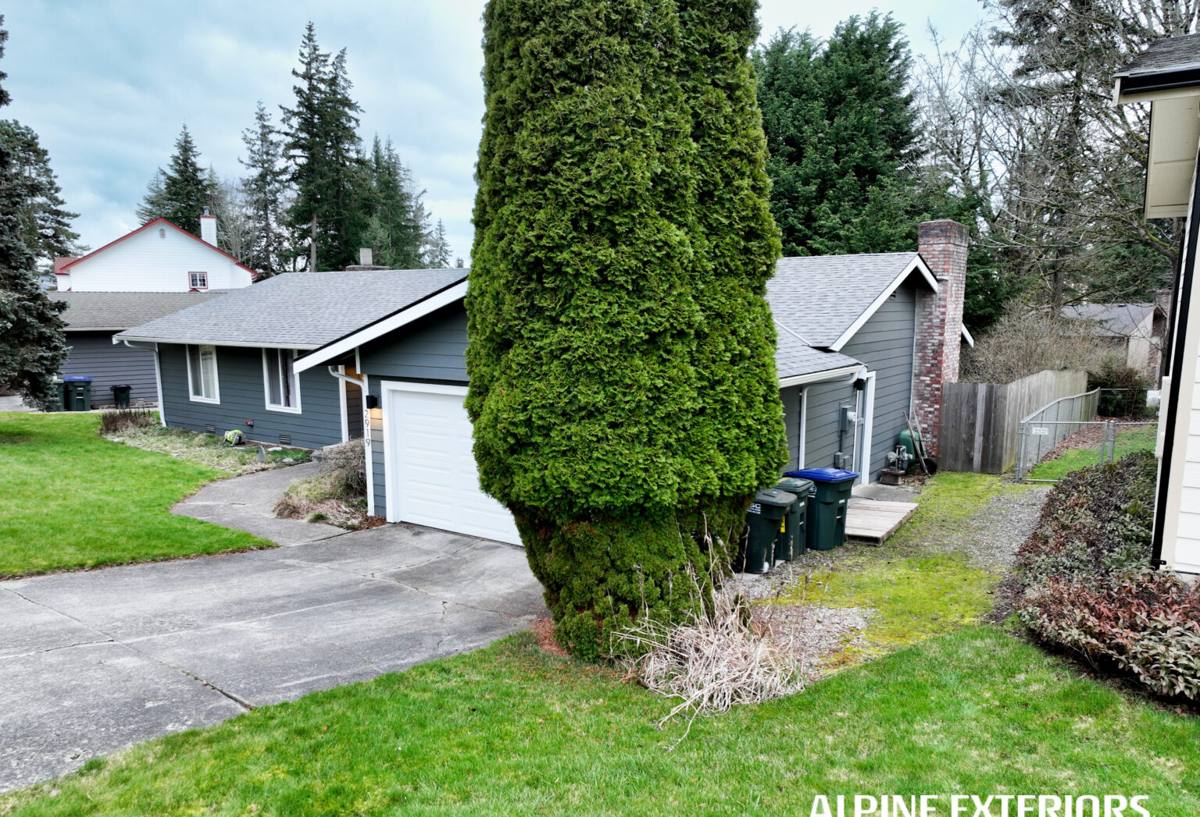
Signs a Blaine Home Needs Siding Replaced, Not Just Repaired
Not every issue means a full tear-off. But when several of the following show up together, patching stops making sense and replacement becomes the more honest recommendation:
- Soft or spongy spots when you press on the siding, especially near the bottom courses and around window and door trim
- Paint that won't hold — repeated peeling or bubbling in the same areas within a couple of years of repainting
- Persistent moss or algae growth that comes back quickly after cleaning, especially on shaded or north-facing walls
- Visible warping, cupping, or separation at seams, particularly on walls that take the brunt of winter storms
- Rust streaking from fasteners, or fastener heads that have backed out or corroded
- A musty smell or visible staining on interior walls that share an exterior with problem siding
If you're seeing two or three of these at once, it's usually a sign that moisture has been getting behind the siding for a while, not just sitting on the surface.
What a Correct Siding Replacement Actually Involves
Tear-Off and Inspection
Replacement starts with removing the old siding down to the sheathing, not overlaying new material on top of a wall we haven't inspected. This is the point where we find out what's really going on — soft sheathing, failed flashing, compromised framing near windows or roof intersections. In a coastal climate like Blaine's, this step matters more than it does inland, because water damage from years of driving rain often doesn't show on the surface until the old siding comes off.
Water Management Comes First
Before any new siding goes up, the wall needs a properly lapped weather-resistive barrier, correctly integrated flashing at every window, door, and roofline, and attention to how water is meant to drain out from behind the cladding rather than get trapped against it. This layer is what actually keeps a home dry — the siding on top of it is the finish, not the primary defense. A wall assembly with good water management underneath will outperform a nicer-looking product installed over a compromised barrier every time.
Installation Details That Matter Here
Correct fastener placement, spacing, and clearance from grade all affect how well siding stands up to sustained wind-driven rain. Butt joints and corners need to be flashed and caulked properly, not just butted together. In a salt-air environment, corrosion-resistant fasteners aren't optional — using the wrong hardware is one of the more common shortcuts that leads to staining and premature failure years down the road.
Why We Install Only James Hardie Fiber Cement
We standardized on James Hardie fiber cement siding and don't install vinyl, LP SmartSide, Cemplank, Allura, primed spruce, or cedar. That's not a marketing position — it's a practical one, built around what actually holds up in a climate like this one.
How the Alternatives Hold Up in Coastal Conditions
Vinyl siding is affordable and low-maintenance in a lot of markets, but it's a petroleum-based product that can warp or become brittle over time, and its seams and panels give wind-driven rain more opportunities to find a way behind the cladding. LP SmartSide and other engineered wood products perform reasonably well when installation and maintenance are perfect, but they're wood-based at the core, and wood-based siding is inherently more vulnerable to the kind of sustained moisture exposure a bay-side location deals with — especially at cut edges and butt joints if they aren't sealed and maintained on schedule. Primed spruce and cedar are traditional, attractive choices, but raw or lightly finished wood needs disciplined, recurring maintenance to keep moisture out, and that maintenance burden only grows in a climate with this much rain and humidity.
Why Hardie Fits This Environment
James Hardie fiber cement is non-combustible, dimensionally stable, and engineered specifically for wet climates through its HZ5 product line, which is built for the Pacific Northwest's moisture and temperature patterns. The factory-applied ColorPlus finish resists fading and holds up to UV and moisture exposure far better than field-applied paint, which matters when a wall is getting hit with salt air and driving rain for months at a stretch. It also carries a strong transferable warranty when installed to Hardie's specifications — which is exactly why correct installation, not just correct product selection, is the whole job.
Cost Factors for a Blaine Siding Replacement
Every home is different, but the factors below are what actually move the price on a project like this. We give firm numbers after walking the property, not before.
| Factor | Why It Matters in Blaine |
|---|---|
| Extent of hidden water damage | Sheathing or framing repair adds cost and is more common on homes with a history of driving rain exposure |
| Wall exposure to wind and salt air | Bay-facing and upper-story walls often need more attention to flashing and fastener detail |
| Existing moss or algae buildup | Heavily colonized siding can mean underlying moisture issues that need to be addressed, not just cleaned |
| Trim, window, and door detailing | More cuts and transitions mean more flashing and sealing work to get right |
| Home size and wall complexity | Multiple stories, dormers, and varied rooflines add labor time and material |
| Product selection within the Hardie line | Lap, shingle, and panel profiles vary in material and labor cost |
Our Process From Estimate to Cleanup
We start with a walk-around of the home to look at exposure, drainage, existing damage, and the details that will drive the estimate. From there we put together a written scope covering tear-off, any sheathing or framing repair we expect to find, the water management approach, product selection, and a realistic timeline. Once the work starts, tear-off and inspection happen first so any surprises get addressed before new siding goes up, not after. We manage flashing and weather barrier work carefully since that's the layer that actually keeps water out, then install the Hardie siding to manufacturer specification, including fastener type and spacing suited to a coastal environment. Daily site cleanup and a final walkthrough close out the job — we want you to be able to point at anything and get a straight answer about why it was done that way.
Why Hiring a Crew That Already Works in Blaine Matters
Siding installation isn't identical everywhere, and a crew that mostly works drier, more sheltered areas can miss details that matter on a home exposed to bay winds and salt air. Knowing how weather actually behaves along this stretch of coastline — where driving rain tends to hit hardest, which orientations hold moss longest, how salt air affects hardware choices — comes from doing the work here repeatedly, not from a general checklist. It shows up in small decisions: extra attention to a west-facing wall, corrosion-resistant fasteners as the default rather than an upsell, flashing details sized for wind-driven rain rather than a light drizzle. Those choices are what separate siding that looks good on installation day from siding that still looks good and performs well a decade later.
Keeping Your New Siding Performing Long-Term
James Hardie siding installed correctly needs very little upkeep, but a few habits go a long way in a climate like Blaine's:
- Rinse the exterior periodically with a garden hose to keep salt residue and organic buildup from accumulating, especially on bay-facing walls
- Trim back trees and shrubs that shade walls and keep them damp longer than they need to be
- Check caulking at trim, windows, and joints every year or two and have any cracked or missing sealant redone
- Have gutters and downspouts checked regularly so water is actually being carried away from the siding, not running down it
- Address any moss or algae early with a gentle cleaning rather than letting it establish and spread
None of this requires repainting or refinishing the way wood-based siding does — it's maintenance, not restoration.
Get a Straight Answer About Your Siding
If your Blaine home is showing signs of wear from years of salt air, driving rain, and moss, we're happy to take a look and give you an honest read on whether you're looking at repair or replacement. Request a free, no-pressure estimate using the form below and we'll walk you through exactly what we find and what it would take to do the job right.