 Bellingham Exterior
 Why Blaine's Coastal Climate Is Hard on Windows
Blaine sits close enough to the water that salt-laden air is part of daily life, not an occasional nuisance. That salt air works on window hardware, aluminum components, and exposed fasteners year-round, and it doesn't take a storm to do it — a steady onshore breeze is enough. Add in Whatcom County's long stretch of driving rain each fall and winter, followed by a moss season that coats north-facing siding and window trim in green, and you have a climate that punishes windows that weren't built or installed for it.
This isn't a climate where a window just has to look good on installation day. It has to keep performing after five winters of wind-driven rain testing every seal, and after salt air has had years to work on hinges, latches, and cladding. A lot of window problems we see in Blaine homes aren't due to bad products — they're due to windows and installation details that were never matched to this specific environment.
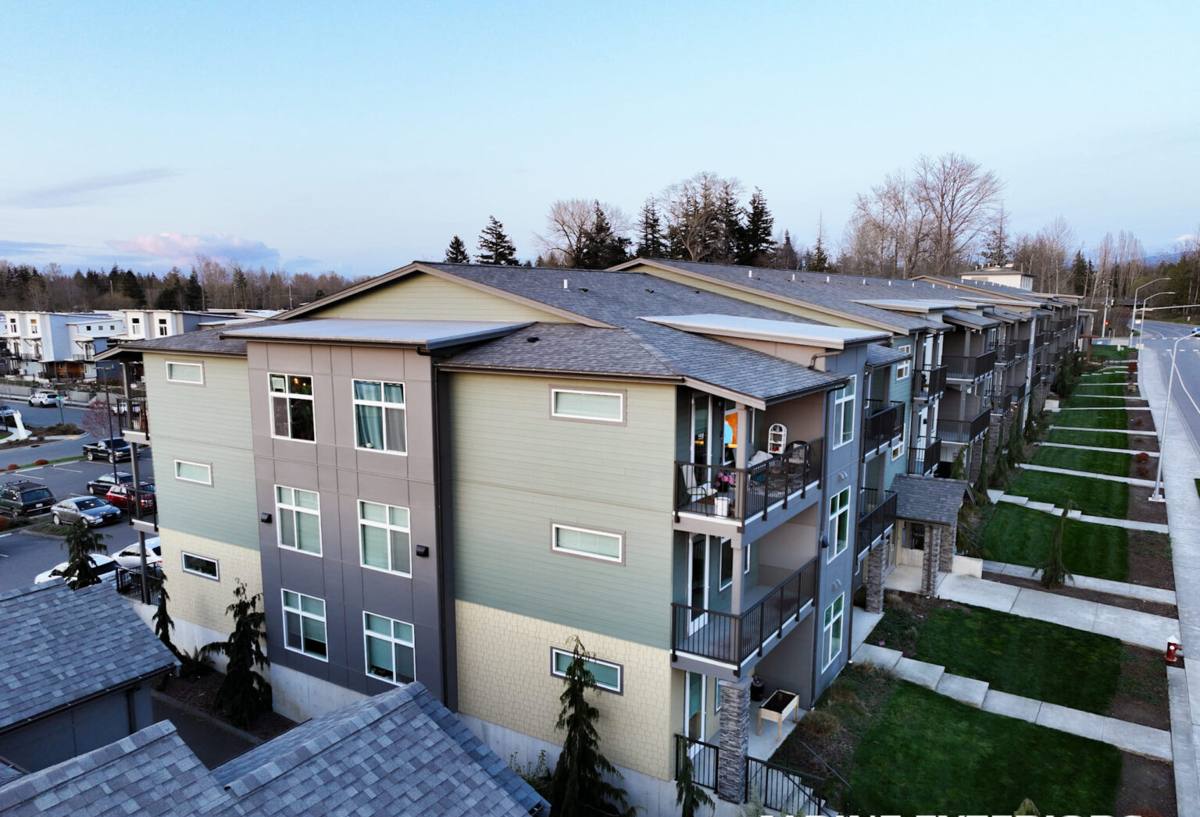
What "Custom" Actually Means for a Blaine Home
Custom doesn't mean expensive or unusual shapes. For most Blaine homes it means the window is built to the actual opening, the actual wall assembly, and the actual exposure of that specific elevation — not pulled off a shelf in a standard size and shimmed to fit.
- Exact opening measurements, not nominal "standard" sizes that leave gaps to pack with extra caulk or foam
- Frame material and hardware matched to sun, wind, and salt exposure on that side of the house
- Glass package chosen for the room — a west-facing living room window has different needs than a shaded north bedroom
- Flashing and water management details designed around the wall assembly behind the window, not a one-size install
On a coastal property, the exposure difference between the water-facing side of a house and the sheltered side can be significant. A custom approach lets us spec differently window by window instead of installing the same product everywhere and hoping it holds up equally on both sides.
When Custom Sizing Matters Most
Older Blaine and Whatcom County homes — especially anything built before standardized window sizing became common — often have openings that don't match modern stock dimensions. Trying to force a standard-size replacement into a non-standard opening usually means extra trim work, filler pieces, or compromises in the water seal. Custom sizing avoids all of that by building to what's actually there.
Signs Your Current Windows Are Losing the Fight
Coastal window failure is usually gradual, so homeowners often live with early warning signs for a season or two before deciding to act. Worth checking for:
- Fogging or a hazy film between panes — a sign the seal has failed and the insulating gas has escaped
- Hardware that's stiff, corroded, or won't latch fully closed anymore
- Soft or discolored wood trim around the frame, especially on the weather side
- Drafts you can feel with a hand near the frame on a windy day
- Moss or persistent green growth building up in the frame corners or sill
- Condensation on the inside of the glass that wasn't there a few years ago
Any one of these on its own isn't an emergency. Several of them together, especially on the same window, usually means the seal or frame has actually failed rather than just needing a cleaning.
Materials and Glass That Hold Up Near Salt Water
There's no single "best" window material — there's a best choice for a given exposure, budget, and how much upkeep a homeowner wants to take on. For salt-air environments like Blaine, the trade-offs are worth being direct about.
| Frame Material | How It Handles Salt Air & Rain | Upkeep |
|---|---|---|
| Vinyl | Won't corrode or rot; performs consistently in salt air | Low — occasional cleaning |
| Fiberglass | Very stable in temperature swings and moisture; strong long-term option near water | Low |
| Aluminum-clad wood | Good exterior protection, but exposed hardware and cut edges are still vulnerable to salt corrosion over time | Moderate |
| Solid wood | Best appearance option for some homes, but needs consistent painting or sealing to resist coastal rot and moss | High |
On glass, dual-pane with a low-E coating is the practical baseline for this region — it cuts heat loss and reduces condensation risk on cold, damp mornings. For rooms with heavier weather exposure or road noise, triple-pane or upgraded gas fill (argon or krypton) is worth the added cost. We'll walk through what actually makes sense for each window rather than defaulting to the most expensive option across the board.
How We Install to Actually Keep the Water Out
In a climate with this much driving rain, the window product matters less than the installation details around it. Most leaks we're called to diagnose in older installs trace back to flashing and sealing shortcuts, not the window itself.
What a correct install includes
- Removing old flashing and building paper back far enough to tie the new flashing in properly, not just caulking over the old layer
- Sloped sill pans that direct any water that gets past the glass back outside instead of into the wall cavity
- Proper head flashing that overlaps the housewrap above the window so water sheds down and over, not behind
- Backer rod and compatible sealant at the right joints — not a bead of caulk expected to do all the work alone
- Shimming and squaring the frame before fastening, so the window operates correctly and the seal isn't stressed from day one
None of this is visible once the trim goes back on, which is exactly why it matters who's doing it. A window that looks identical from the curb can perform completely differently in a wind-driven storm depending on what happened at the flashing layer.
Our Process, Start to Finish
- Walkthrough and assessment — we look at each window's exposure, current condition, and the wall assembly behind it, not just the glass.
- Honest recommendation — we tell you which windows genuinely need replacement, which could be repaired, and why, without pushing a whole-house job if it's not needed.
- Custom measurement and ordering — exact sizing per opening, materials matched to exposure.
- Removal and prep — old flashing and sealant fully removed, wall assembly inspected for hidden moisture damage before anything new goes in.
- Installation — sill pan, flashing, shimming, and sealing done in the correct order, every time.
- Final check and cleanup — operation tested on every window, site cleaned, and a walkthrough so you know what was done and why.
What Affects Cost
Every Blaine job is priced on the actual openings and scope, but the main cost drivers are consistent across most homes:
| Factor | Why It Matters |
|---|---|
| Number of windows & sizes | Larger or non-standard openings cost more to build and install |
| Frame material | Vinyl and fiberglass typically cost less than aluminum-clad or solid wood |
| Glass package | Triple-pane and upgraded coatings add cost but pay off on exposed elevations |
| Condition behind the old window | Hidden rot or moisture damage found during removal adds repair scope |
| Trim and finish work | Matching existing interior or exterior trim profiles takes more labor than a basic install |
We give a written estimate before any work starts, and we flag likely hidden-damage risk during the initial walkthrough so cost surprises are rare, not routine.
Keeping New Windows Performing in This Climate
A well-installed window in Blaine still benefits from basic seasonal upkeep, especially with moss season and heavy rain both part of the yearly cycle:
- Rinse frames and tracks periodically to clear salt residue before it builds up on hardware
- Clear debris and moss from sills and weep holes so water can drain as designed
- Check that weep holes on the exterior sill aren't blocked by paint, caulk, or dirt
- Lubricate locks and hinges annually — salt air accelerates stiffness and corrosion
- Inspect exterior caulking each fall before the heavy rain sets in, and touch up any cracked or shrunk beads
Why a Crew That Already Works Blaine Matters
Window installation looks similar everywhere on paper, but the details that actually matter — how much flashing overlap a given exposure needs, which sills are already showing coastal wear patterns, how much moss buildup is normal versus a drainage problem — are learned by working this specific area, not from a general installation manual. A crew that regularly works Whatcom County's coastal properties already knows what driving rain and salt air do to a window over five, ten, and twenty years, and builds the install around that instead of finding out the hard way.
If you're weighing whether your current windows need replacing or just some attention, or you're ready to plan a project, we're happy to take a look and give you a straight answer — no pressure, no upsell. Request a free estimate using the form below and we'll set up a time to walk through your home.