 Bellingham Exterior
 Why Birchwood's Climate Is Hard on Siding
Birchwood sits within Bellingham's marine climate zone, which means siding here deals with a different set of stresses than siding in a drier inland town. Salt-tinged air off Bellingham Bay accelerates corrosion on fasteners and metal trim. Driving rain, pushed sideways by wind off the water, gets forced into seams and laps that would stay dry in a calmer climate. And a long, damp moss season — often running from fall through spring — keeps north-facing and shaded wall sections wet for extended stretches, which is exactly the condition moss, algae, and rot organisms need to take hold.
None of this means Birchwood homes need something exotic. It means they need siding that's engineered for moisture, installed with real attention to water management, and maintained on a schedule that matches the neighborhood's actual weather pattern rather than a generic homeowner checklist written for a different climate. That's the lens we bring to every siding replacement quote in this part of Whatcom County.
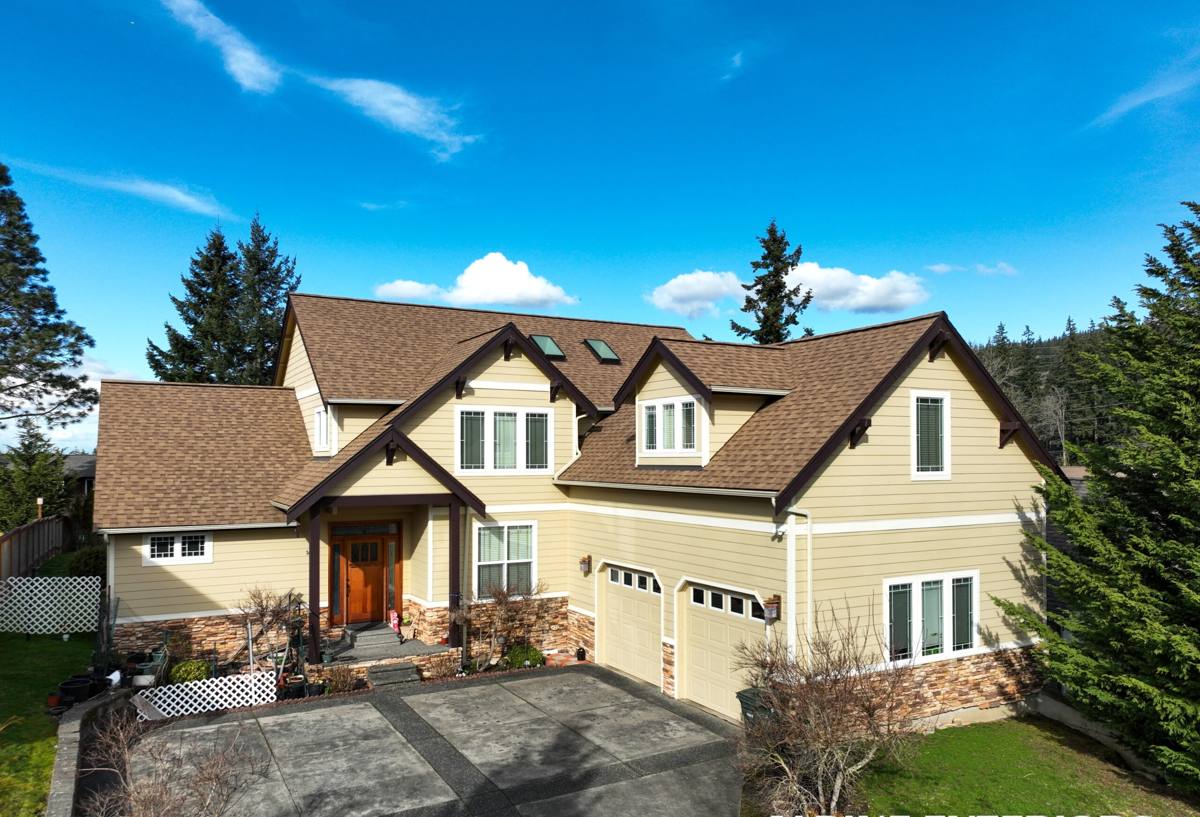
Signs a Birchwood Home Needs Replacement, Not Repair
Not every siding problem calls for a full tear-off. But in a wet climate, small issues left alone tend to compound quickly because trapped moisture doesn't just sit — it spreads along studs, sheathing, and insulation before it ever shows on the surface. Here's what tells us a house has crossed the line from "repairable" to "replace it":
- Soft or spongy spots when you press on the wall, especially near the bottom courses or under windows
- Paint that keeps failing within a year or two of repainting, even with quality products
- Persistent moss or algae growth that returns within weeks of cleaning
- Visible cupping, buckling, or separation at the seams of lap siding
- A musty smell in interior rooms along an exterior wall
- Siding that's original to a home built before the 1990s and has never been replaced
- Multiple layers of siding stacked on top of each other from past patch jobs
If you're only seeing one or two isolated problem boards on an otherwise sound wall, targeted repair can make sense. Once moisture damage shows up in more than one area, or the underlying water barrier is compromised, patching becomes a short-term fix that costs more in the long run than doing the job right once.
What a Correct Siding Replacement Job Actually Involves
Siding replacement is often sold as a cosmetic upgrade, but the part that actually protects a Birchwood home is almost entirely hidden once the job is done. A correct replacement includes:
Full Tear-Off and Substrate Inspection
We remove the old siding completely rather than siding over it, because covering existing damage just hides it behind a new layer. This is also when we find out whether there's rot in the sheathing or framing that needs to be addressed before anything new goes up.
Weather-Resistant Barrier
A properly lapped and sealed water-resistive barrier goes on the sheathing before any siding. In a climate with sideways-driving rain, how this barrier is installed — lap direction, seam taping, integration with window and door openings — matters as much as the siding itself.
Flashing at Every Penetration
Windows, doors, hose bibs, light fixtures, and vents are all places where water can find its way behind siding if flashing is skipped or done carelessly. This is one of the most common corner-cutting points in low-bid siding work, and it's usually invisible until years later when the damage is already done.
Manufacturer-Spec Fastening and Clearances
Fastener type, spacing, and the gap left at the bottom of the wall and around trim all affect how well siding sheds water and how long it lasts. James Hardie publishes specific installation requirements for exactly this reason — siding that looks identical on the surface can perform very differently depending on how closely those specs were followed.
Why We Install Only James Hardie Fiber Cement
We standardized on James Hardie siding and don't install vinyl, LP SmartSide, or other fiber cement brands. That's a deliberate decision based on how these products actually perform over time in a wet, salt-air climate like Bellingham's — not a knock on every homeowner who has one of these products already on their home.
| Consideration | James Hardie Fiber Cement | Common Alternatives |
|---|---|---|
| Combustibility | Non-combustible material | Vinyl and wood-based products are combustible |
| Moisture behavior | Engineered for wet climates (HZ5 zone) | Wood-based siding can swell or delaminate if moisture reaches the substrate |
| Finish | Factory-applied ColorPlus finish, baked on | Field-applied paint or factory coatings with shorter repaint cycles |
| Dimensional stability | Low expansion/contraction | Vinyl expands/contracts more with temperature swings; can warp |
| Warranty | Long-term, transferable product warranty | Varies by manufacturer and product line |
James Hardie's HZ5 product line is specifically engineered for the Pacific Northwest's moisture exposure, which is the same category of climate Birchwood sits in. Combined with a factory-applied ColorPlus finish that resists the fading and peeling that repainted siding is prone to here, it's the product we're willing to put our name behind on every job.
Our Process, Start to Finish
- Free on-site estimate — we walk the exterior with you, look at existing damage, and talk through siding profile and color options.
- Written scope and quote — a clear breakdown of tear-off, repairs, materials, and labor, with no vague allowances.
- Scheduling — we plan around Bellingham's wetter months where possible, since siding installation goes best in dry conditions.
- Tear-off and substrate repair — old siding removed, sheathing and framing inspected and repaired as needed.
- Weather barrier and flashing installation — the part of the job that determines how the house performs for the next several decades.
- Hardie siding installation — installed to manufacturer spec for fastening, clearances, and joint treatment.
- Final walkthrough — we review the finished job with you before calling it done.
What Affects the Cost of Siding Replacement
Every Birchwood home is different, so we won't quote a number without seeing the house, but these are the main factors that move a project up or down in cost:
| Factor | Why It Matters |
|---|---|
| Home size and wall complexity | More square footage and more corners, gables, and dormers mean more material and labor |
| Existing damage | Rot found in sheathing or framing during tear-off requires repair before new siding goes on |
| Number of existing siding layers | Older homes sometimes have more than one layer of past siding to remove |
| Siding profile and trim detail | Lap width, board-and-batten sections, and trim complexity affect labor time |
| Access | Tight lot lines, steep grades, or limited scaffolding access add time |
| Color and finish selection | Factory ColorPlus finishes vs. field-applied finishes affect material pricing |
We'd rather walk your property and give you real numbers than throw out a broad range that doesn't reflect your specific house.
Why It Matters to Hire a Crew That Already Works in Birchwood
Siding installation isn't one-size-fits-all across Whatcom County. A crew that regularly works Birchwood and the surrounding Bellingham neighborhoods already understands how local wind exposure, tree cover, and moisture patterns tend to show up on these homes — which walls take the worst weather, where moss establishes fastest, and what kind of substrate damage is common in homes of a certain age in this area. That local pattern recognition shows up in better flashing decisions, smarter sequencing around our wet season, and fewer surprises once tear-off starts.
It also matters for accountability. A local crew is answerable to local homeowners — we're not passing through Whatcom County on a regional contract, we're working in it long-term.
Caring for Your New Siding After Installation
James Hardie siding installed correctly is low-maintenance, but "low-maintenance" isn't "no-maintenance," especially in a climate that grows moss on almost anything that stays shaded and damp. A simple annual routine keeps it performing the way it's designed to:
- Rinse siding with a garden hose once or twice a year, focusing on shaded, north-facing walls where moss and algae take hold fastest
- Keep gutters clean so overflow doesn't run down the wall face
- Trim back shrubs and trees so siding gets airflow and isn't in constant contact with wet foliage
- Check caulking at trim and penetrations annually and touch up as needed
- Address any impact damage promptly rather than letting it sit through a wet season
If you're seeing early signs of wear on your current siding, or you're just ready to stop patching a system that keeps failing, we're happy to take a look. We offer free, no-pressure estimates for Birchwood homeowners — fill out the form below and we'll get in touch to schedule a time to walk your property.