 Bellingham Exterior
 Building a Deck That Can Actually Handle Birchwood's Weather
Birchwood is a quiet, established residential pocket of Bellingham, and like most of Whatcom County it sits inside a marine climate that's tough on outdoor wood structures. Homeowners here aren't dealing with extreme heat or drought stress — they're dealing with the opposite problem: months of damp air, driving rain that comes in sideways off the water, salt-laden coastal wind, and a moss season that can run from late fall through spring. A deck built the way it would be built in a drier climate simply doesn't hold up the same way here. The framing, the fasteners, the decking material, and even the gap spacing all need to account for the fact that this structure is going to be wet, or at least damp, for a large part of the year.
This page is specifically about deck building for homes in Birchwood — not a general overview of decks everywhere. The building code baseline is the same across Bellingham, but the practical decisions that make a deck last are shaped by this specific climate and by the kind of lots common to this neighborhood: mature trees, partial shade, and yards that don't dry out quickly after a storm.
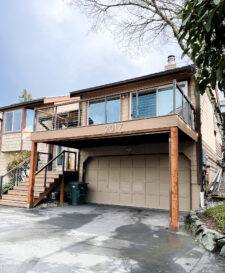
What Birchwood's Climate Actually Does to a Deck
Salt Air and Fastener Corrosion
Bellingham's proximity to the water means salt-laden air travels farther inland than people expect, especially during winter storms. Salt air accelerates corrosion in any exposed metal — nails, screws, joist hangers, post bases, and railing hardware. A fastener that would last decades in an inland, dry climate can start rusting and staining decking within a few seasons here if it isn't rated for the exposure. This is one of the most common reasons an otherwise solid-looking deck starts failing from the inside: the wood looks fine, but the hardware holding it together doesn't.
Shade, Moisture, and Moss
Many Birchwood lots have real tree cover, which is part of what makes the neighborhood pleasant to live in — but shade also means a deck surface stays damp longer after rain, gets less direct sun to dry it out, and becomes a much better environment for moss and algae to take hold. Moss isn't just a cosmetic issue. It holds moisture against the decking surface, and on wood decking it can accelerate rot in the boards themselves. On any decking material, a mossy surface gets slick fast, which is a real slip hazard on stairs and ramps.
Driving Rain and the Ledger Board
The ledger board — the framing member that attaches the deck to the house — is the single most important waterproofing detail on the whole structure, and it's the part most likely to be done wrong on older or lower-bid builds. Driving rain pushes water sideways and upward into gaps that would stay dry in a calmer climate. If the ledger flashing isn't installed correctly, water works its way behind the siding and into the house's structural framing, often for years, before anyone notices a problem. We treat ledger flashing as a non-negotiable detail, not an optional upgrade.
What a Correctly Built Deck Includes Here
Footings and Framing
Footings need to be sized and set to the depth required by local code, on undisturbed soil, with post bases that keep the wood post off the concrete so it doesn't wick up moisture. Joist spacing and beam sizing should be set for the actual decking material and span, not just "what we usually do" — composite and PVC decking often have tighter span requirements than wood, and ignoring that leads to bounce and premature sagging.
Flashing and Water Management
Beyond the ledger, this means flashing at any point the deck meets the house, proper slope away from the house on the decking surface, and gapping between boards that allows water to actually drain instead of pooling. In a climate that gets steady rain for months at a time, drainage isn't a finishing touch — it's structural protection.
Fasteners and Hardware
Given the salt air issue described above, hardware matters as much as lumber choice. Stainless steel or heavy hot-dip galvanized fasteners rated for ground contact and coastal exposure cost more up front than standard-grade hardware, but replacing rusted-out joist hangers a few years into a deck's life costs far more than the difference would have.
Decking Material Choices for a Damp, Shaded Lot
There's no single "best" decking material for every yard — it depends on how much sun and shade a given deck gets, how much upkeep a homeowner wants to do, and budget. Here's how the common options actually perform under Birchwood's conditions:
| Material | Moss & Mildew Behavior | Maintenance Needed | Typical Lifespan |
|---|---|---|---|
| Pressure-treated wood | Prone to surface moss in shaded spots; needs cleaning to stop it taking hold | Annual cleaning, periodic sealing/staining | 10-15 years with upkeep |
| Cedar | Naturally more rot-resistant, but still grows moss in constant shade if untreated | Regular cleaning, occasional oil or sealer | 15-20 years with upkeep |
| Composite decking | Won't rot, but moss and algae can still grow on the surface film in deep shade | Periodic washing; no sealing or staining required | 20-30 years |
| PVC / capped composite | Most resistant to moisture absorption; surface growth still needs occasional cleaning | Lowest ongoing maintenance | 25+ years |
Our general guidance: on a Birchwood lot with heavy shade, composite or capped decking earns back its higher upfront cost through far less maintenance and a much lower risk of rot underneath. On a sunnier, more open lot, a well-built cedar deck with a good annual cleaning routine can still perform well and gives a different look and feel that some homeowners prefer.
Railings, Stairs, and Code Requirements
Railing height, baluster spacing, and stair guard requirements are set by building code and don't change based on neighborhood — but in this climate, the material and hardware choices for railings matter just as much as they do for decking. A railing post that isn't flashed where it penetrates the decking surface becomes a direct path for water into the framing below. Stairs deserve extra attention to slip resistance given how often surfaces stay damp here for days after a storm.
Our Process for a Birchwood Deck Build
- Site visit and assessment — we look at sun exposure, tree cover, drainage patterns, and how the deck will tie into the house before recommending a design or material.
- Design and material selection — sized to the actual use (dining, grilling, lounging) with a decking and railing material matched to the shade and exposure of the specific lot.
- Permitting — we handle the permit application and inspections required for the project so the homeowner isn't stuck navigating that process alone.
- Framing and flashing — footings, framing, and ledger flashing done to hold up under sustained rain, not just pass a dry-day inspection.
- Decking, railing, and finish work — installed with attention to drainage gaps, fastener placement, and a clean, level finish.
- Final walkthrough — we go over the finished deck with the homeowner, including what maintenance it will need going forward.
Keeping Moss and Mildew From Taking Over
Even a well-built deck needs some seasonal attention in this climate. A simple annual routine goes a long way toward protecting the investment:
- Sweep debris off the deck regularly in fall — wet leaves trapped between boards hold moisture against the surface and feed moss growth.
- Wash the surface at least once a year with a deck-safe cleaner, focusing on shaded areas and anywhere moss has started to form.
- Check that drainage gaps between boards haven't filled with dirt or debris, which stops water from draining properly.
- Inspect railing posts and stair stringers for any soft spots or discoloration, which can signal water getting trapped behind hardware.
- For wood decking, plan on resealing or restaining on the schedule recommended for the specific product — skipping this is the most common reason wood decks fail early here.
What Affects the Cost of a Deck Build in Birchwood
| Factor | Why It Matters Locally |
|---|---|
| Decking material | Composite and PVC cost more upfront but reduce maintenance in shaded, damp conditions |
| Height and stairs | Elevated decks need engineered railings and stair stringers, adding framing and labor |
| Ledger and flashing work | Correct flashing takes more time than a shortcut approach, but it's what prevents hidden water damage |
| Fastener and hardware grade | Coastal-rated stainless or galvanized hardware costs more than standard grade but resists salt-air corrosion |
| Permitting and inspections | Required by code; factored into the timeline and project cost |
| Site access and grading | Sloped or tree-covered lots can add site prep work before framing even starts |
Why It Matters to Hire a Crew That Already Works in Birchwood
A deck builder who mostly works in drier parts of the country will default to details that make sense there — lighter fasteners, less attention to ledger flashing, decking gaps sized for a climate that doesn't see steady weeks of rain. A crew that regularly builds and repairs decks in Bellingham and around Whatcom County has already seen which shortcuts fail here and which details actually matter. That shows up in fastener selection, in how flashing is detailed, and in honest guidance about which decking material fits a specific yard's sun and shade pattern — not just whatever is easiest to install.
It also matters for the practical side of a project: familiarity with the local permitting process, realistic expectations about weather delays during a build, and being reachable afterward if a question comes up about maintenance or a warranty item.
Questions Worth Asking Before You Hire
- What grade of fasteners and hardware do you use, and are they rated for coastal exposure?
- How do you flash the ledger board where the deck meets the house?
- What decking material do you recommend for a shaded yard, and why?
- Do you pull the required permit and handle inspections, or is that left to the homeowner?
- What maintenance will this deck need in year one, year five, and beyond?
- Can you walk me through drainage and slope on the finished deck surface?
If you're planning a new deck or replacing an aging one in Birchwood, we're glad to come take a look at the site, talk through material options for your specific yard, and put together a free, no-pressure estimate. There's a form below to get that started.