 Bellingham Exterior
 Siding Repair in Barkley: What Bellingham's Climate Does to Your Siding
Barkley is one of Bellingham's more established planned neighborhoods, with a mix of single-family homes and townhomes built out over the past few decades. Whatever the age of your siding, it's living through the same Whatcom County weather as every other house in the area: salt-laden air drifting up from Bellingham Bay, long stretches of driving rain off the Sound, and a moss season that can run from fall clean through spring. None of that is dramatic on any single day. It's the accumulation that causes problems — moisture that never fully dries out between storms, salt air that slowly degrades unprotected wood and metal fasteners, and moss and algae that hold water against the siding surface for months at a time.
Siding repair in this climate is rarely just cosmetic. A cracked board, a gap at a trim joint, or a soft spot near ground level is usually a sign that water has already found a way in and started working on the layers underneath. Repairing it properly means addressing why it failed, not just patching what's visible.
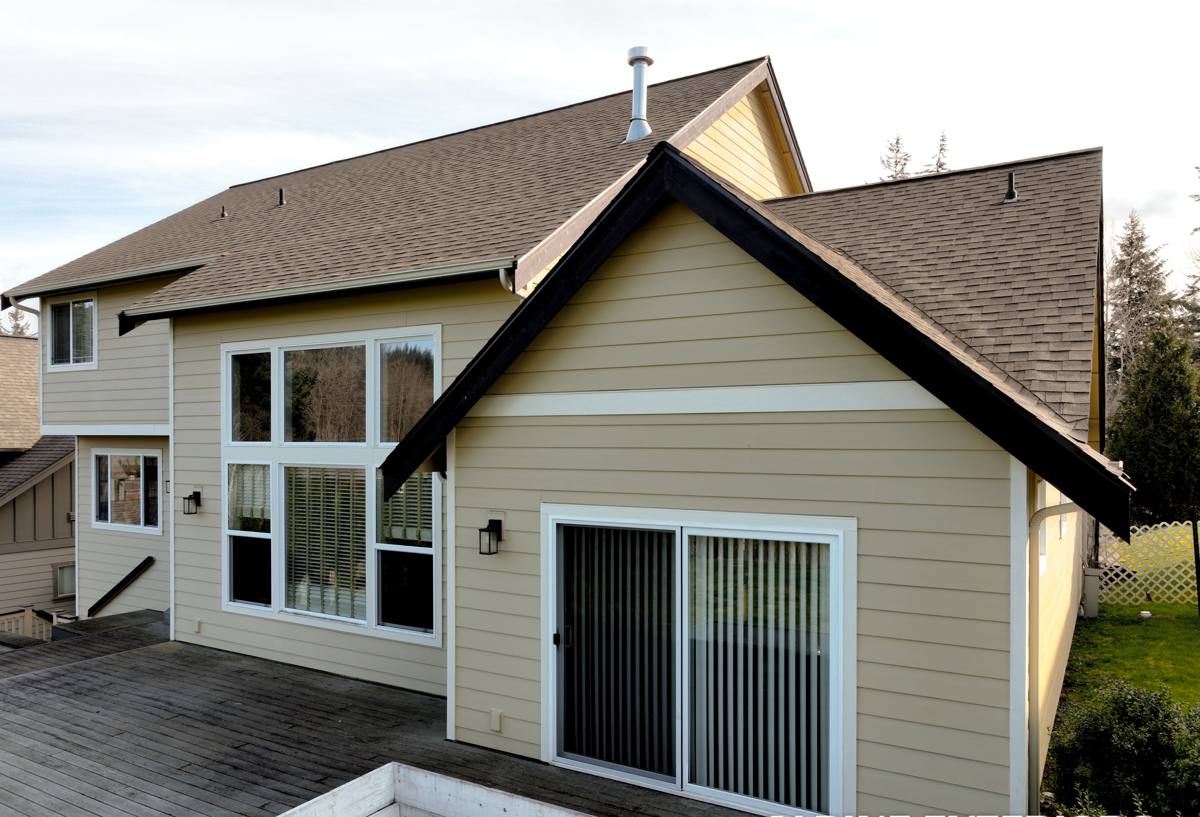
Signs Your Barkley Home Needs Siding Repair
Most siding problems we see in this neighborhood show up in predictable spots: low corners near sprinkler zones or planting beds, areas under roof valleys where runoff concentrates, and north-facing walls that stay damp and shaded longest. A walk around your home's exterior, especially after a stretch of wet weather, will usually tell you what's going on.
- Soft, spongy, or crumbling siding when pressed, especially near the bottom courses
- Visible cracking, splitting, or buckling in individual boards or panels
- Paint that's peeling, bubbling, or failing faster than the rest of the house
- Dark streaking, green or black growth, or persistent damp patches that don't dry between rains
- Gaps opening up at seams, corner trim, or window and door casings
- Interior clues — musty smells, discolored drywall, or peeling interior paint on an exterior wall
- Warping or separation where siding meets the foundation or a deck ledger
Any one of these on its own might be minor. Several together, or a problem that keeps coming back in the same spot, usually means there's a water management issue behind the siding that needs to be traced back to its source.
What a Correct Siding Repair Actually Involves
Diagnosing the Real Problem, Not Just the Symptom
Replacing a damaged board without figuring out why it failed is the most common shortcut in siding repair, and it's why the same spot so often fails again a year or two later. A correct repair starts by pulling back the damaged material and checking the condition of the water-resistive barrier, the flashing at any penetrations or trim, and the framing underneath. If there's rot in the sheathing or studs, that has to be addressed before new siding goes back on — otherwise you're covering up a problem instead of fixing it.
Matching Profile, Texture, and Color
Siding repair only looks like a repair if the patch doesn't stand out. That means matching the exposure, texture, and profile of the existing siding, and — where the product allows — matching the factory finish so the repaired section weathers the same way as the rest of the wall. On older homes, this sometimes means sourcing a discontinued profile is not possible, and a larger section needs to be redone to keep the transition clean rather than leaving an obvious patch.
Flashing and Water Management Come First
Every repair in a climate like Bellingham's has to treat flashing and drainage as the real fix, with the siding itself as the visible finish layer. Proper head flashing above windows and trim, correctly lapped house wrap, and a drainage gap where called for matter more to long-term performance than the siding material itself. Skipping this step is the single biggest reason repairs fail early in wet, marine climates.
Repair or Replace? How We Help You Decide
Not every damaged area needs a full re-side, and we don't push replacement when a targeted repair will genuinely hold up. The right call depends on how much of the wall is affected, what's causing the damage, and how old and how sound the rest of the siding is.
| Factor | Repair usually makes sense | Replacement usually makes sense |
|---|---|---|
| Extent of damage | Isolated to one or two areas | Recurring across multiple walls |
| Cause | Identifiable, fixable source (flashing, sprinkler spray, one bad seam) | Systemic moisture intrusion or failed original installation |
| Siding age and condition | Rest of the siding is sound and not near end of service life | Siding is old, brittle, or already showing widespread wear |
| Material availability | Matching material or profile is available | Product discontinued or heavily weathered color mismatch |
| Underlying structure | Sheathing and framing test dry and sound | Rot found in sheathing, framing, or water barrier |
We'll always tell you honestly which category your home falls into, including when a repair is the right, less expensive answer.
Why We Repair (and Install) Only James Hardie Fiber Cement
When a repair calls for new siding material, or when the damage is extensive enough that replacement is the honest recommendation, we work exclusively in James Hardie fiber cement. We don't stock or install vinyl, LP SmartSide, Cemplank, Allura, or wood siding, and that's a deliberate standard, not a limitation of what we can do. In a climate that combines salt air, sustained rain, and long damp seasons, we've found that fiber cement's dimensional stability and moisture resistance outperform wood-based and vinyl alternatives over the long run, with far less maintenance burden on the homeowner. Hardie's factory-applied ColorPlus finish also means a repaired section can be color-matched to a documented finish rather than guessing at a field-mixed paint match, and the HZ5 product line is engineered specifically for climates like ours — freeze-thaw cycling, sustained moisture, and coastal air. It's also non-combustible, which matters more each year as wildfire smoke and dry summer stretches become part of the Pacific Northwest's weather pattern.
Practically, this means that when we repair a Hardie-clad home, we're working with material we know inside and out — how it cuts, how it takes fasteners, how the factory finish weathers over time. When we're asked to repair or replace a different siding product, we'll say so plainly and explain what we'd recommend instead going forward.
Our Siding Repair Process for Barkley Homes
Inspection and Diagnosis
We start with a full walk-around, not just a look at the spot you called about. Siding problems in this climate rarely stay isolated, so we check drainage paths, flashing details, and any areas of the home that share the same exposure as the damaged section.
Scope and Quote
You get a clear, written scope: what's being repaired, what's being replaced outright, and why. If we find a moisture or flashing issue that needs addressing beyond the visible damage, we'll explain it and price it separately so you're not surprised mid-job.
Repair Day
Damaged material comes off, the substrate gets checked and dried or replaced as needed, flashing and water-resistive barrier details get corrected, and new material goes in matched as closely as possible to what's already on the wall.
Final Walkthrough
We walk the repair with you before we consider the job done, so you can see exactly what was fixed and why, and ask questions about anything you noticed during the process.
Why a Bellingham Crew That Already Works Barkley Matters
A neighborhood like Barkley has its own patterns — how homes here sit relative to prevailing wind and rain direction, which trim details and siding generations are common in the area, and what tends to go wrong first. A crew that regularly works this part of Bellingham has already seen the recurring failure points on homes similar to yours, which means less time spent diagnosing from scratch and a repair plan that accounts for what actually causes problems locally, not just textbook siding failure modes. Whatcom County's building conditions aren't the same as a drier inland market, and a repair approach built for a different climate can fall short here.
Keeping Your Siding in Good Shape After the Repair
A good repair buys you years, but a little upkeep afterward keeps it that way, especially through a Bellingham winter and moss season.
- Keep gutters clear so runoff doesn't sheet down the siding face
- Trim back plants and shrubs so air can circulate and siding can dry after rain
- Redirect sprinkler heads away from the wall line
- Check caulking at trim and penetrations annually, and reseal as it wears
- Rinse off moss and algae buildup before it has a chance to hold moisture against the surface
- Walk the exterior once or twice a year, especially after wind storms, and catch small issues early
If you're seeing damage, soft spots, or recurring moisture issues on your Barkley home's siding, we're happy to take a look and give you a straight answer on what it actually needs. Reach out for a free, no-pressure estimate using the form below.