 Bellingham Exterior
 Window Installation for York, One of Bellingham's Older In-Town Neighborhoods
York sits close enough to Bellingham Bay and downtown that its homes take on the full weight of what this region's weather does to a house year after year. Whether your place is an older original or a newer infill build, the windows are one of the first things to show wear — and one of the most expensive things to get wrong. This page is about doing window installation correctly for this specific neighborhood, not a generic swap-and-go job.
We treat window installation as building-envelope work, not just a glass-and-frame swap. That distinction matters most in a place like Bellingham, where the climate doesn't give a window many easy days.
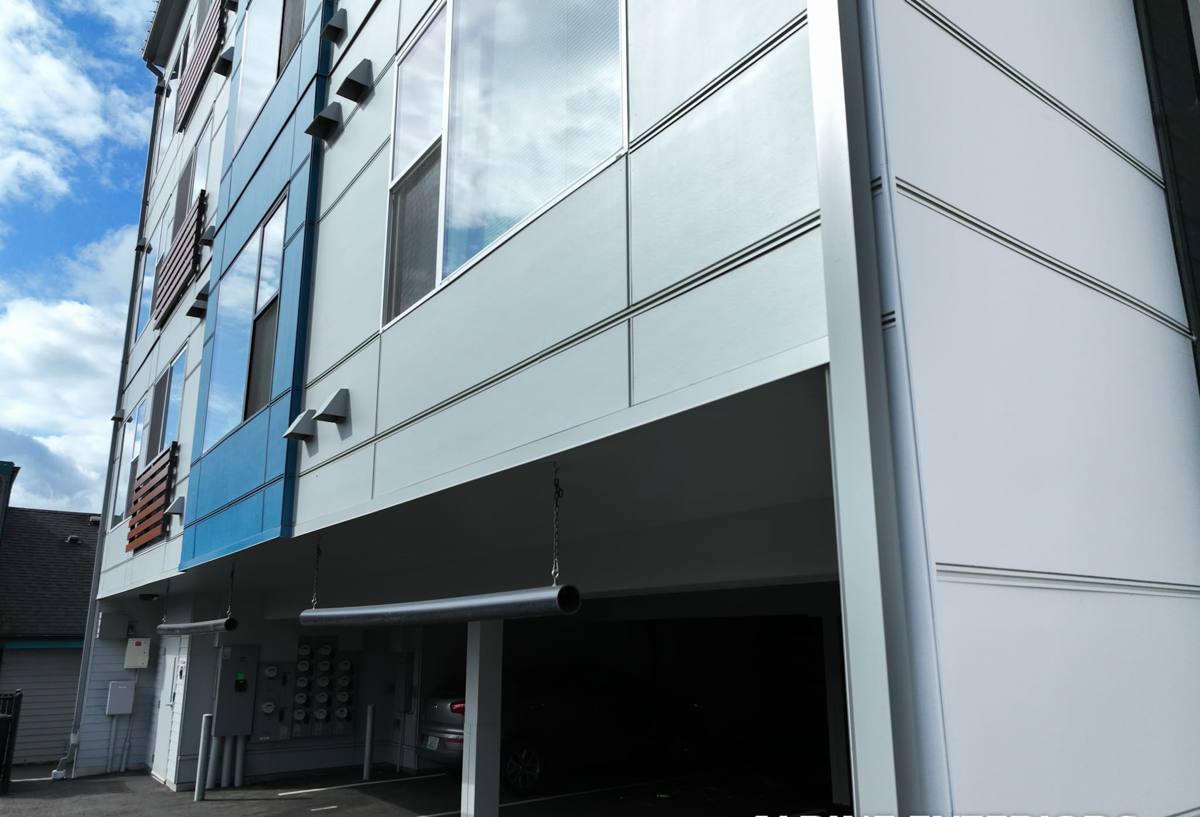
What Bellingham's Climate Actually Does to a Window
Three things work against windows here, and they work together, not one at a time.
Salt Air
Proximity to the bay means airborne salt settles on exterior surfaces, including window hardware, cladding, and fasteners. Over years, salt exposure accelerates corrosion on lower-grade metal components — hinges, cranks, screws, and some aluminum cladding — long before the glass itself fails. It also breaks down certain sealants faster than they'd wear in a drier inland climate.
Driving Rain
Whatcom County storms don't just fall straight down — wind-driven rain hits window assemblies at an angle, which is exactly the condition that exposes bad flashing, poor sealant work, or an undersized sill pan. A window that's watertight in a light shower can still leak during a real Pacific storm if it wasn't installed with wind-driven rain in mind.
A Long Moss Season
Bellingham's damp, shaded conditions keep moss and algae active for most of the year on roofs, siding, and trim. Around windows specifically, that moisture-holding growth on adjacent surfaces keeps water sitting against frames and casings longer than it should, which is a slow but steady path to wood rot and hidden water damage behind trim boards.
None of this means York homes need anything exotic. It means the installation details that get skipped in easier climates can't get skipped here.
Signs a York Home's Windows Are Due
- Visible gaps, soft spots, or discoloration in the wood trim or sill around the window
- Condensation forming between panes (a sign the seal on a double- or triple-pane unit has failed)
- Drafts you can feel with a hand near the frame on a windy day
- Difficulty opening, closing, or locking — often corrosion or swelling, not just age
- Paint that keeps failing on the interior sill no matter how often it's redone
- A noticeable jump in heating costs with no other explanation
- Moss or dark staining building up on the exterior casing or the wall just below the window
Any one of these on its own might not mean full replacement. Several together, especially the condensation and rot signs, usually do.
What a Correct Window Installation Actually Involves
The window unit itself is the easy part to shop for. The installation is where jobs succeed or fail, and it's mostly invisible once the trim goes back on. A correct install includes:
- Removing and inspecting the old frame for rot, hidden water damage, or pest issues before anything new goes in — patching over a compromised opening just seals the problem inside the wall
- A properly sloped sill pan so any water that does get past the window sheds outward instead of pooling
- Correct flashing sequence — housewrap, flashing tape, and the window's nailing fin layered so water sheds down and out, shingle-style, at every layer
- Sealing and insulating the gap between the window frame and the rough opening — not overpacked with expanding foam, which can bow a frame out of square
- Shimming and squaring the unit so it operates smoothly and the seals compress evenly for years, not just on install day
- Exterior sealant compatible with the cladding and rated for the movement and moisture this climate puts it through
Skip the sill pan or get the flashing sequence backward, and a brand-new, expensive window can leak worse than the thirty-year-old one it replaced. This is the step where a crew's experience with wind-driven rain climates like Bellingham's actually shows up.
Choosing a Window Type for a York Home
There's no single "best" window material — there's the right trade-off for your home, your budget, and how much upkeep you want to take on. Here's how the common options stack up for a coastal, wet Pacific Northwest climate:
| Frame Material | Moisture & Salt Air Resistance | Maintenance | Typical Lifespan | Relative Cost |
|---|---|---|---|---|
| Vinyl | Good — won't rot or corrode | Low | 20–30 years | $ |
| Fiberglass | Excellent — very stable in temperature and moisture swings | Low | 30–40+ years | $$$ |
| Aluminum | Fair — can corrode near salt air without quality cladding/hardware | Moderate | 20–30 years | $$ |
| Wood | Requires diligent upkeep in wet climates | High | Varies widely with maintenance | $$$ |
| Wood-clad (exterior-protected) | Good on the exterior face; interior still wood | Moderate | 25–35 years | $$$ |
For most York homes, we steer clients toward vinyl or fiberglass for the exterior-facing performance in this climate, and reserve solid wood recommendations for homes where matching an original architectural look is the priority — with a clear conversation about the maintenance commitment that comes with it. We're not going to tell you a product is bad; we'll tell you honestly what it costs in upkeep versus what it saves you in appearance, and let you decide.
Glass Package Matters Too
Double-pane with a low-E coating and argon gas fill is the practical baseline for this region's mix of cool, wet winters and warmer summers. Triple-pane adds cost and weight and is worth it mainly on north-facing or particularly exposed walls where extra insulation value pays off faster.
Our Process, Start to Finish
- On-site assessment — we look at every window being considered, not just the ones you've flagged, since failures aren't always where they're most visible
- Honest scope and estimate — what needs replacing now, what can wait, and why
- Product selection — matched to your home's exposure, style, and budget, not a one-size push toward the priciest option
- Removal and inspection of the existing opening for hidden damage before installation begins
- Installation following the full flashing and sealing sequence above
- Trim and finish work to match your home's existing exterior detailing
- Final walkthrough — every window operated, checked, and explained before we consider the job done
Older Homes vs. Newer Builds in York
York's mix of older, established properties and newer construction means we run into two different problems on the same street. Older homes more often need attention to what's happening behind the trim — old flashing details (or none at all), settled framing, and rough openings that are no longer perfectly square. Newer builds are more likely to have a straightforward opening but may have been fitted with builder-grade windows that are already showing seal failure well before they should. Either way, we assess the actual condition in front of us rather than assuming based on the home's age.
For older homes with distinct trim profiles or divided-light patterns, we can match new units to the existing exterior character instead of defaulting to a generic modern look — worth raising during the estimate if keeping that character matters to you.
Why a Crew That Already Works in York Matters
Window installation quality comes down to details that don't show up in a sales brochure: how the flashing gets sequenced, how the sill pan is built, whether the crew slows down for wind-driven rain conditions instead of installing to a sunny-day standard. A crew that regularly works Bellingham's neighborhoods, including York, has already seen how salt air ages hardware, how moss holds moisture against trim, and how a storm off the bay tests a window installation that looked fine the day it went in. That's not a marketing point — it's the difference between a window that performs for thirty years and one that needs revisiting in five.
Protecting the Investment After Installation
- Keep gutters and downspouts clear so runoff isn't sheeting past window openings
- Remove moss buildup on roofing, siding, or trim near windows before it holds moisture against the frame
- Rinse salt residue off exterior hardware and frames periodically if your home is closer to the bay
- Repaint or reseal exposed wood trim promptly if you notice paint failure — it's cheaper than replacing rotted trim later
- Have caulking and exterior sealant inspected every few years, since sealant is the first line of defense and the first thing to wear out
If your York home's windows are drafty, fogging, sticking, or just old enough that you're wondering, we're happy to take a look and give you a straightforward, no-pressure estimate — what actually needs doing, what it involves, and what it costs. Use the form below to get started.