 Bellingham Exterior
 Board & Batten in a Place Where the Weather Doesn't Let Up
Ferndale sits close enough to Bellingham Bay and the Strait of Georgia that salt-laden air is a regular part of the weather, not an occasional event. Add Whatcom County's long wet season, driving rain that comes in sideways off the water, and the shade and moisture that keep moss growing on roofs and siding for much of the year, and you have a climate that is genuinely hard on exterior materials. Board and batten siding — with its bold vertical lines and crisp shadow lines — is one of the most popular looks we install in this area, but the look only holds up if the material underneath it is built for what Ferndale throws at it.
This page is about that one combination specifically: board and batten siding, installed correctly, on homes in and around Ferndale. Not a generic overview of the style, and not a national product brochure — what actually matters here, on this stretch of Whatcom County coastline.
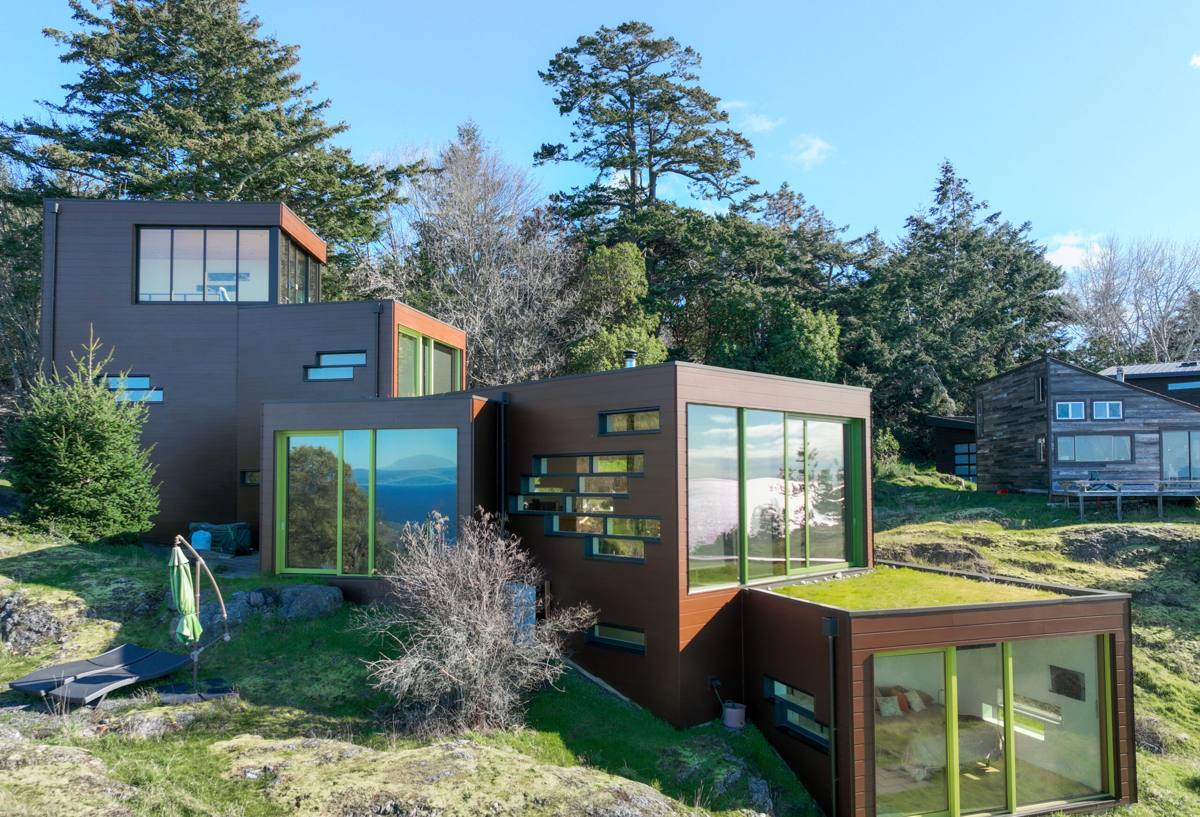
What Ferndale's Climate Does to Siding Over Time
Three things define the exterior environment around Ferndale, and each one interacts with siding differently:
Salt Air
Proximity to Bellingham Bay and Puget Sound means airborne salt gets carried inland on wind and fog. Salt is corrosive to metal fasteners and trim, and it accelerates the breakdown of finishes that aren't formulated to resist it. Paint film on wood or engineered wood siding tends to chalk and fail faster in coastal air than it would further inland.
Driving Rain
Storms coming off the water don't just fall straight down — wind-driven rain pushes water sideways into seams, laps, and butt joints. Any siding system that relies on caulk alone to keep water out of those joints is fighting a losing battle here. What matters more is how the siding sheds water and how it's flashed and fastened at every seam.
Moss and Shade
Ferndale's tree cover and long wet season keep north-facing walls and shaded elevations damp for weeks at a time. Moss and algae take hold on porous or absorbent surfaces and hold moisture against the wall, which is exactly the condition that causes rot in wood-based products and finish failure in painted ones.
None of this means board and batten siding is a bad choice for a Ferndale home — the vertical profile actually sheds water well by design. It means the material and the installation details have to be right, because this climate finds every weak point eventually.
Why We Install Board & Batten Only in James Hardie Fiber Cement
We install James Hardie exclusively, and board and batten is one of the styles where that decision matters most. The batten strips and panel joints in this profile create a lot of seam length compared to standard lap siding — more places for water to test the assembly. Fiber cement handles that exposure in ways wood, engineered wood, and vinyl products don't:
- Fiber cement doesn't absorb water the way wood-based sidings do, so it isn't prone to swelling, cupping, or rot at the panel edges and batten joints.
- It's non-combustible, which matters increasingly to insurers and homeowners in the Pacific Northwest.
- James Hardie's ColorPlus factory finish is baked on and warranted against peeling and chipping — a real advantage in an area where salt air is hard on field-applied paint.
- Hardie's HZ5 product formulation is engineered for climates with freeze-thaw cycling and sustained moisture exposure, which describes a typical Whatcom County winter.
We don't install LP SmartSide, vinyl, or cedar board and batten, and we're upfront about why: each of those products asks a homeowner to accept a maintenance burden or a moisture vulnerability that we don't think holds up well against this specific climate over the long run. That's a professional standard we hold to on every job, not a knock on any one brand.
What "Correct" Board & Batten Installation Actually Involves
Board and batten looks simple from the curb — vertical boards, battens over the seams — but the assembly behind it is where a job either holds up for decades or starts failing in five years. A correct installation includes:
Drainage Plane and Rainscreen
A weather-resistant barrier goes on the wall sheathing first, and in most Ferndale installations we build in a rainscreen gap behind the siding. That gap lets any moisture that does get past the cladding drain and dry out instead of sitting against the wall — important given how long shaded walls here stay damp.
Flashing at Every Penetration
Windows, doors, hose bibs, light fixtures, and vents all need proper flashing integrated with the water-resistive barrier, not just caulked around after the fact. Driving rain will find any gap in this system eventually.
Batten Placement and Fastening
Battens need to land over structural framing or blocking, with fastener spacing and edge distances that match Hardie's published installation instructions. Battens that are only nailed to the panel and not to the framing behind it will loosen over time.
Clearances
Correct ground clearance, roof-to-wall clearance, and gaps at horizontal trim keep the bottom edge of the siding from sitting in standing water or trapped moisture — a common failure point we see on older installations in wetter parts of the county.
Caulking and Sealant Strategy
Sealant is a backup layer, not the primary defense. Correct flashing and lap details mean the caulk joints aren't doing all the work, which matters because sealant is the first thing to fail under repeated wet-dry cycling.
Skipping any one of these doesn't fail immediately — it fails two, five, or ten years down the road, usually in the form of rot, moss buildup, or a stained wall that traces back to a seam that was never properly flashed.
Our Process for a Ferndale Board & Batten Project
- On-site assessment. We look at the home's exposure — which walls face prevailing wind and rain, how much shade and moss pressure each elevation gets, and the condition of the existing siding, sheathing, and trim.
- Scope and product selection. We confirm panel width, batten spacing, and color, and walk through James Hardie's ColorPlus options versus field-painted trim.
- Prep and moisture check. Before any siding comes off, we check for existing rot or water damage behind the current cladding so it gets addressed, not covered up.
- Weather barrier and rainscreen installation. This is the step that determines how the whole system performs, and it happens before a single board goes up.
- Siding and batten installation to manufacturer spec. Fastener pattern, clearances, and flashing details follow James Hardie's published requirements — not shortcuts.
- Final inspection and walkthrough. We review the finished work with the homeowner before calling the job done.
Board & Batten Compared to Other Siding Profiles
| Factor | Board & Batten (Fiber Cement) | Standard Lap Siding (Fiber Cement) | Vinyl Board & Batten |
|---|---|---|---|
| Look | Bold vertical lines, strong shadow detail | Traditional horizontal shadow lines | Vertical profile, but visibly lighter-gauge material |
| Seam exposure | More vertical seams and batten joints | Fewer seams, simpler drainage path | Similar seam count to fiber cement version |
| Moisture behavior | Excellent when flashed and rainscreened correctly | Excellent, slightly more forgiving of minor detailing gaps | Sheds bulk water but can trap condensation behind panels |
| Salt air durability | Strong — factory finish resists coastal exposure | Strong — same finish system | Fair — can chalk and become brittle over time |
| Fire rating | Non-combustible | Non-combustible | Combustible |
What to Expect After Installation
A correctly installed James Hardie board and batten system is genuinely low-maintenance, but "low-maintenance" doesn't mean "no attention needed." Here's a realistic checklist for Ferndale homeowners:
- Rinse siding annually, especially shaded and north-facing walls, to keep moss and algae from establishing.
- Keep gutters clear so overflow doesn't run directly down the wall face during heavy storms.
- Trim back vegetation and tree limbs that keep any wall in constant shade — airflow is one of the best defenses against moss.
- Inspect caulk joints at trim and penetrations every couple of years and have any cracked sealant redone.
- Watch for any hairline staining at the base of the wall, which can indicate a clearance or drainage issue worth checking early.
Cost Factors for a Ferndale Board & Batten Project
| Factor | Why It Moves the Price |
|---|---|
| Home size and wall complexity | More corners, gables, and dormers mean more cuts, more battens, and more flashing detail work |
| Existing wall condition | Rot or water damage found behind old siding adds repair scope before new siding goes on |
| Rainscreen assembly | Adding a drainage gap behind the siding is additional labor and material, and it's the detail we recommend for this climate |
| Trim and finish level | Factory ColorPlus finish versus field-painted trim changes both material cost and long-term maintenance |
| Access and site conditions | Tight lots, multi-story walls, or landscaping that limits staging can affect labor time |
We don't publish a flat per-square-foot number because these factors genuinely change the scope from one Ferndale home to the next. A walk-through gives you an accurate, honest number instead of a placeholder estimate that changes once work starts.
Why Hiring a Crew That Already Works in Ferndale Matters
Board and batten installation isn't forgiving of guesswork, and a crew that hasn't worked this specific stretch of Whatcom County coastline is guessing at exposure conditions a local crew already knows firsthand. Wind direction relative to the water, which elevations hold moss longest, how far inland salt exposure actually reaches, and how local wall assemblies typically perform through a wet winter — that's knowledge built from doing the work here repeatedly, not from a manufacturer's general installation manual alone. It shows up in details like where we add extra flashing attention, which walls get prioritized for rainscreen detailing, and how we sequence work around the region's rain patterns.
If you're considering board and batten siding for a home in Ferndale, we're happy to walk the property, look at your current siding and trim condition, and give you a straight assessment of what the job actually involves — no pressure, no inflated scope. Reach out for a free estimate and we'll put it in writing.