 Bellingham Exterior
 Why Puget-Area Roofs Take a Different Kind of Beating
The Puget area of Bellingham sits close enough to the water and the weather patterns rolling off it that roofs here age differently than roofs even a few miles inland. It isn't one dramatic event that does the damage — it's the combination. Salt-laden air off the Sound accelerates corrosion on fasteners, flashing, and any exposed metal. Driving rain, pushed sideways by wind instead of falling straight down, finds its way into laps and seams that would stay dry in a calmer climate. And Whatcom County's long, wet moss season keeps roof surfaces damp for months at a stretch, which both feeds moss growth and slows the drying that roofing materials need to hold up over time.
Storm damage repair in this kind of environment isn't just about patching what a single windstorm tore loose. It's about recognizing that the storm usually exposed a weak point that was already being worked on by moisture and salt air, and repairing it in a way that holds up to the next round of Puget Sound weather — not just the last one.
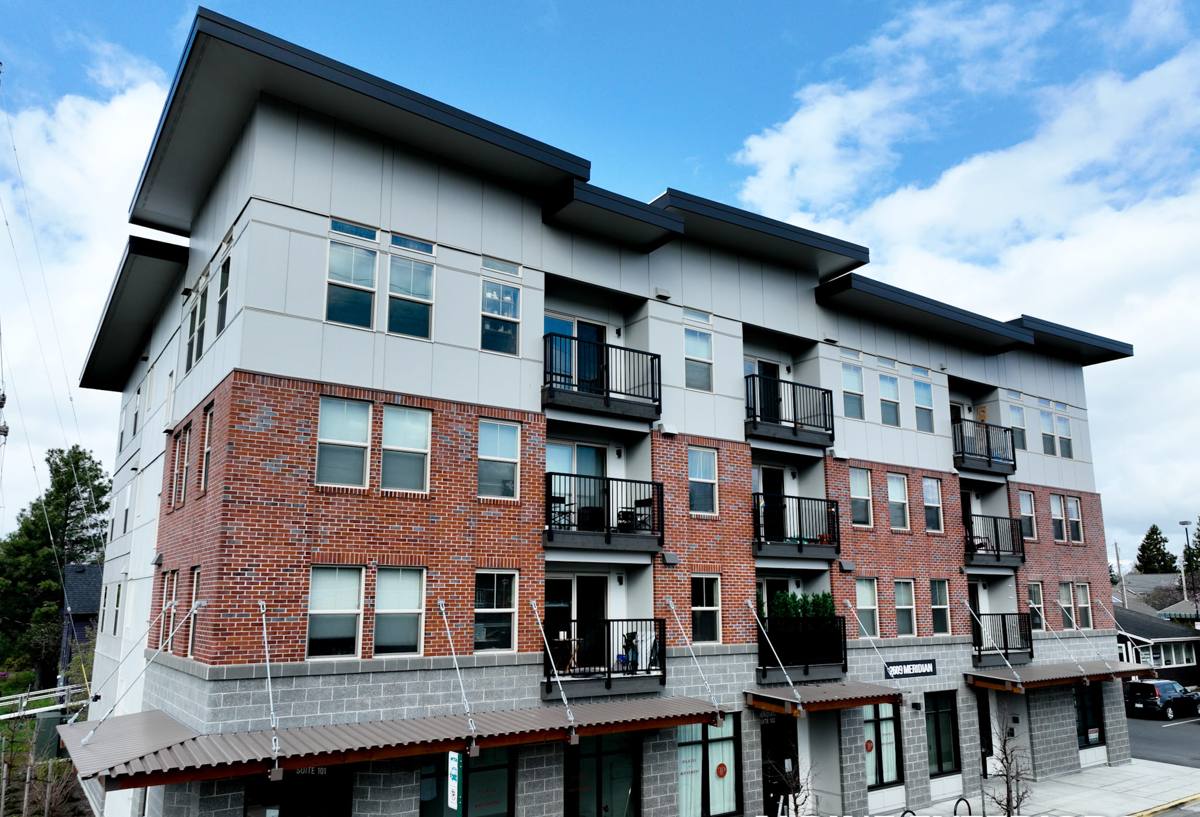
What Storm Damage Actually Looks Like on a Puget Roof
Homeowners often expect storm damage to be obvious — a missing shingle, a visible hole. Some of it is. But a lot of what we find after a windstorm or heavy rain event on a Puget-area home is subtler, and it's the subtler damage that causes the most expensive problems if it sits unaddressed through a full wet season.
Wind and impact damage
- Shingles or panels lifted, creased, or torn loose at ridges, edges, and valleys — the areas with the least fastening margin
- Flashing bent or pulled away from chimneys, skylights, and wall intersections
- Debris strikes from branches or blown material that crack or puncture the roofing surface
- Gutters and downspouts torn loose or crushed, which redirects water onto siding and fascia
Moisture and moss-related damage
- Moss mats that have lifted shingle edges over time, creating channels for wind-driven rain to get underneath
- Rot in fascia boards or roof decking where moss has held moisture against the wood for an extended period
- Granule loss on composition shingles from the abrasive freeze-thaw and wet-dry cycling common to our winters
- Corroded or failing fasteners and flashing, especially on roofs with any age on them near the water
Storm damage repair done right treats both categories together. A roof that gets patched for wind damage but still has moss undermining the shingles nearby is going to fail again — often in the same spot — within a season or two.
Why Acting Quickly After a Storm Matters Here
A roof breach that would be a minor inconvenience in a dry climate is a bigger problem in Bellingham, because the next rain is rarely more than a few days away. Once water finds a path under the roofing material, it doesn't stop at the first layer — it tracks along the decking, follows framing members downhill, and can show up as a stain on a ceiling or wall well away from the actual opening. That lag between the damage and the visible sign of it is one of the most common ways storm damage turns into a larger repair than it needed to be.
We treat storm response as two separate jobs: stopping active water intrusion first, then doing the correct permanent repair once the roof is dry and we can see the full extent of what needs to be addressed. Trying to do both in one rushed pass, especially in the middle of a storm system, usually means missing something.
Temporary protection versus permanent repair
If a storm has left an active leak or an open section of roof, the priority is a secure temporary cover — tarping, sealing exposed edges, and making sure water is directed away from the opening rather than pooling against it. This buys time to do the permanent repair correctly instead of under pressure, and it limits how much interior damage accumulates while materials or scheduling come together.
Our Storm Damage Assessment Process
Every storm repair starts with a full assessment, not just a look at the spot the homeowner points out. Wind and rain damage is frequently worse, or different, in places that aren't visible from the ground.
Exterior roof inspection
We walk the roof surface where it's safe to do so, checking every plane, valley, ridge, and penetration — not just the area near the reported damage. We're looking at fastener condition, flashing integrity, shingle or panel lift, and how moss and debris buildup may have contributed to the failure point.
Interior and attic check
Where access allows, we check the attic or roof cavity for water staining, damp insulation, or decking that's soft or discolored. This is often where we find the real extent of a leak that looked minor from outside — water can travel several feet from the entry point before it shows up as a stain.
Written findings before any work begins
We document what we find with photos and a plain-language explanation of what's damaged, what's causing it, and what we recommend — including when a smaller, targeted repair is genuinely the right call instead of upselling a bigger job. If the damage is tied to an insurance claim, this documentation is built to support that process.
What a Correct Storm Repair Involves
Not all storm damage calls for the same scope of work, and part of doing this honestly is matching the repair to what the roof actually needs — not defaulting to the largest possible job. The table below outlines how we think through that decision.
| Repair Scope | When It's the Right Call | What's Involved |
|---|---|---|
| Spot repair | Isolated wind or impact damage on an otherwise sound roof | Remove and replace damaged shingles or panels, re-secure or replace flashing, reseal penetrations |
| Section replacement | Damage concentrated in one area, often where moss or age has already weakened that section | Strip the affected section to decking, repair or replace damaged sheathing, install new underlayment and roofing material, tie in flashing to match existing roof |
| Full re-roof | Storm damage on a roof already near the end of its service life, or with widespread moss and moisture damage | Full tear-off, decking repair as needed, new underlayment, new roofing system, updated flashing and ventilation details |
Matching materials and finish
On a spot or section repair, matching the existing roofing material — color, profile, and where possible age-weathering — matters more than people expect. A mismatched patch isn't just a cosmetic issue; it can also mean mismatched drainage behavior at the seams, which is exactly the kind of detail that causes a "repaired" roof to leak again in the next storm.
Flashing gets rebuilt, not just resealed
A lot of storm-related leaks trace back to flashing that was bent, lifted, or corroded rather than the roofing material itself. Our standard is to replace compromised flashing rather than just caulking over it — sealant is a short-term fix on a long-term problem, and in a climate with this much sustained rain, it doesn't hold.
Addressing the moss, not just the leak
If moss contributed to the damage, the repair includes dealing with the moss itself — removal, and where appropriate, a treatment approach that slows regrowth — rather than repairing the roof and leaving the same conditions in place to cause the same failure again.
Storm Damage and Insurance Claims
Many storm repairs in this area involve an insurance claim, and how the roof is documented matters for how smoothly that process goes. We provide clear photo documentation and a written scope of damage that homeowners can use when filing or discussing a claim with their adjuster. We're not a public adjuster and don't represent the insurance side of the process, but we can walk the roof alongside an adjuster if that's helpful, and explain what we found in plain terms.
One thing worth knowing going in: insurance typically covers sudden, storm-caused damage — a tree limb through a roof, wind-torn shingles — but does not cover damage from long-term neglect, like a roof that failed because moss had been left to build up for years. Part of our assessment is being straightforward about which category the damage falls into, since that affects both the repair approach and how a claim is likely to be handled.
Preventing the Next Storm From Doing the Same Damage
A storm repair is a good moment to address the conditions that made the roof vulnerable in the first place, since the roof is already open and being worked on. For most Puget-area homes, that comes down to a short list of maintenance items that make a real difference given our climate.
- Keep gutters and downspouts clear so wind-driven rain has somewhere to go instead of backing up under roof edges
- Address moss buildup before it lifts shingles, not after — once shingles have been lifted, the damage is already done even if the moss is later removed
- Check flashing around chimneys, skylights, and vents periodically, since these are the first points to fail in sustained wind and rain
- Trim back branches that overhang the roof, both to reduce debris and impact risk and to cut down on the shade that keeps roof surfaces damp longer
- Have the roof looked at after any significant windstorm, even if nothing looks obviously wrong from the ground
None of this eliminates storm risk in a marine climate — it isn't possible to weatherproof a roof against everything the Sound throws at it. But a roof that's been maintained with these conditions in mind sustains less damage in a given storm, and what damage it does take is easier and less expensive to repair correctly.
Why a Crew That Already Works in Puget Matters
Storm damage repair isn't a generic service — the right approach depends on knowing how a specific area's weather behaves and how local roofs typically fail. A crew that regularly works in and around Puget has already seen how salt air affects fasteners on homes at this proximity to the water, how the local moss season progresses through the wet months, and which roof details tend to be the weak points on the housing stock common to this part of Bellingham.
That local familiarity also means a faster, more accurate assessment. We're not guessing at how Whatcom County's weather patterns interact with a given roof design — we're applying what we've already seen work and fail on similar homes nearby. And when storm response time matters, being an established local crew rather than a traveling storm-chasing outfit means we're still here to stand behind the repair long after the storm has passed.
What to expect when you call us after a storm
We'll ask enough questions upfront to understand whether you have an active leak that needs immediate temporary protection, or storm damage that's contained and can be assessed on a normal schedule. Either way, you'll get a clear explanation of what we find, an honest recommendation on scope, and a straightforward estimate before any repair work begins.
If a recent storm has left damage on your roof — or you're not sure whether what you're seeing is storm-related or the result of ongoing moss and moisture wear — we're glad to take a look. Request a free, no-pressure estimate using the form below and we'll walk you through what we find and what it would take to fix it right.