 Bellingham Exterior
 Siding Installation for York-Area Homes
York is one of Bellingham's established in-town neighborhoods, with a mix of older character homes and newer infill sitting close together under a mature tree canopy that's typical of Bellingham's inner residential blocks. That combination, older exterior materials, tree cover, and a tight in-town lot layout, means siding on a York home is usually dealing with more sustained moisture exposure than a similar house would see out on a more open, sun-exposed lot. Add in Whatcom County's baseline climate of salt air drifting in off the water, driving rain that comes in sideways more often than it falls straight down, and a moss season that runs long into the year, and it's easy to see why siding here wears differently than siding in a drier part of the state.
This page is specifically about siding installation for York homes: what the local conditions actually do to a wall, what a correct installation involves, how our process works from first look to finished job, and why a crew that already works this neighborhood catches details an outside crew tends to miss.
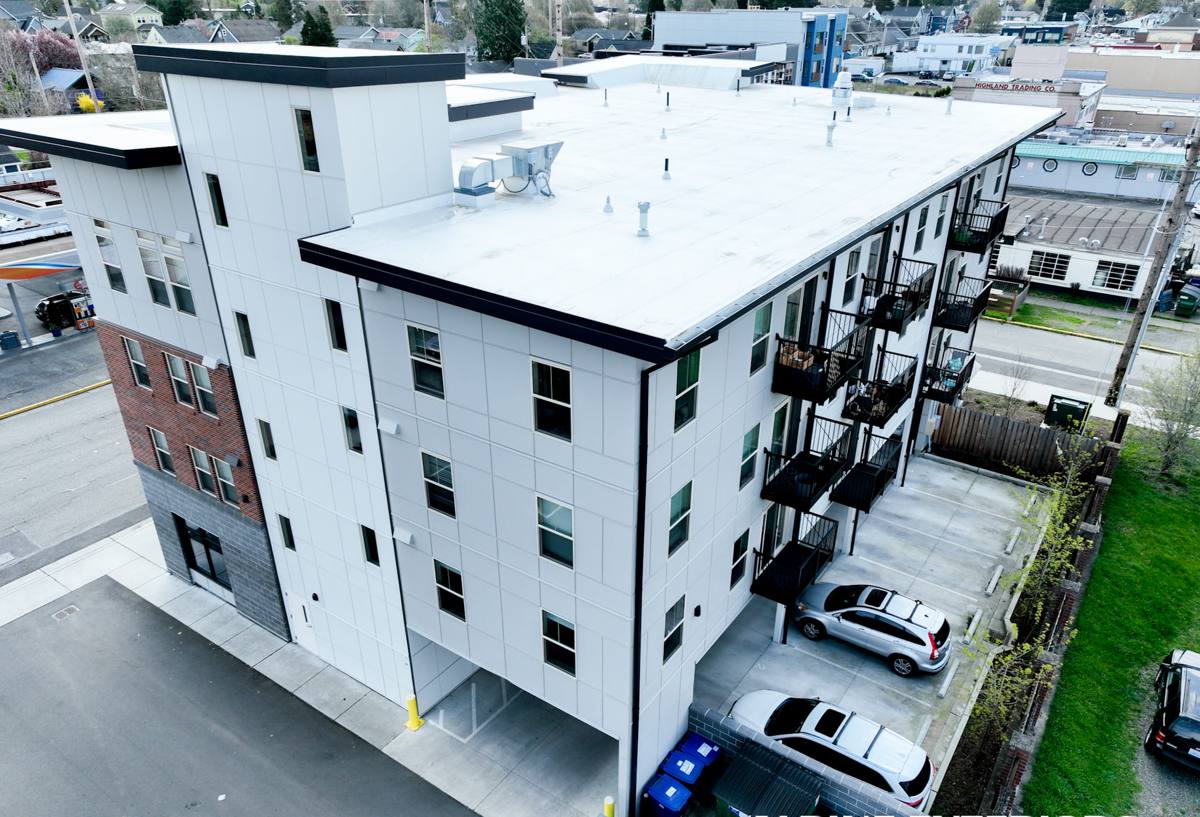
What York's Setting Does to Siding
Shade and Tree Cover
An in-town neighborhood with established landscaping keeps a lot of exterior walls in partial shade for much of the day, especially on north-facing sides and anywhere a mature tree sits close to the house. Shaded siding dries slower after every rain event, and in a climate that already sees a lot of rain, that slower drying time is exactly the condition moss and mildew need to take hold. It's rarely the sunniest wall on a York home that shows the first signs of trouble.
Older Housing Stock and Older Siding
Neighborhoods with a mix of older homes often carry original or once-replaced siding that's reaching, or has already passed, the end of its practical service life, sometimes wood lap siding, sometimes an aging composite or engineered wood product installed decades ago under different building standards. Tear-off work on these homes frequently uncovers sheathing or trim that's absorbed moisture behind the old siding for years without an obvious exterior sign, which is one more reason a proper installation starts with a real inspection rather than a straight material swap.
Close Lot Spacing and Airflow
Homes set closer together, as they often are in walkable in-town blocks, get less direct airflow across each wall than a house on a wide, open lot. Less airflow means slower drying, and slower drying compounds every other moisture issue on the list. It's a small factor on its own, but it adds up over a full wet season.
Salt Air, Driving Rain, and Moss: The County-Wide Baseline
Underneath York's specific local conditions is the same regional climate every Whatcom County home contends with. Salt-laden air moving inland from the water accelerates corrosion on exposed fasteners and hardware and keeps painted or coated surfaces damp longer than they'd stay in a drier climate. Driving rain gets pushed by wind into laps, seams, and fastener points that a fair-weather installation wouldn't need to plan for as carefully. And a moss season that stretches well beyond a typical summer means any siding material with real surface porosity, or a maintenance schedule that lapses even for a season, becomes a growth surface faster here than it would somewhere drier. None of these forces are dramatic on any single day. They're a slow, cumulative load, and siding installed without them in mind tends to show it within a decade instead of holding up for the three or four decades it should.
Why We Install Only James Hardie Fiber Cement
We don't install vinyl siding, LP SmartSide, Cemplank, Allura, primed spruce, or cedar. That's a professional standard, not a limitation on what we're capable of doing. Every one of those products has legitimate uses, and plenty of contractors install them well. But in a climate this consistently wet and salt-exposed, we've made the call to stand behind one system we trust completely rather than offer a lower-cost option that tends to shift maintenance and moisture risk back onto the homeowner within a decade or two.
James Hardie fiber cement is engineered for exactly this kind of exposure. It's non-combustible, it doesn't swell, cup, or feed rot the way wood-based products can, and its ColorPlus finish is baked on at the factory under controlled conditions rather than brushed on at the job site, which gives it real resistance to the fading and chalking that constant moisture and UV cycling cause over time. Hardie also builds climate-specific HZ formulations instead of one generic national product, which matters in a region that stays this damp for this much of the year. Paired with a strong transferable warranty and an installation done to spec, it's the system that holds up through a full Whatcom County year on a York home, not just on install day.
What That Means for Older Siding Replacement
When we're replacing older siding on a York home, fiber cement also solves a problem that's easy to overlook: it doesn't depend on the same ongoing paint and caulk maintenance that wood-based products need to keep water out. On a home where the previous siding likely failed in part because that maintenance schedule slipped over the years, that's a meaningful, practical advantage, not just a marketing point.
Comparing Siding Materials for a York Home
| Material | Moisture Behavior in This Climate | Typical Long-Term Maintenance |
|---|---|---|
| James Hardie fiber cement | Non-combustible; doesn't absorb moisture or feed rot the way wood-based products can | Low, factory finish holds up well against sustained damp and salt exposure |
| Vinyl | Doesn't rot, but can warp or crack under temperature swings and wind-driven rain over time | Low upfront cost, but replacement rather than repair when panels fail |
| LP SmartSide / engineered wood | Wood-based core is more sensitive to moisture at cut edges and seams than fiber cement | Moderate, edge sealing and coating upkeep matter more in sustained damp conditions |
| Primed spruce or cedar | Natural wood absorbs moisture readily and is a preferred surface for moss growth | Highest, regular repainting, caulking, and moss treatment needed to hold up |
This isn't a claim that every alternative fails on every home. It's why our own standard, for the climate we work in every day, is fiber cement installed correctly rather than a material that trades a lower sticker price for a heavier maintenance load down the road.
What a Correct Installation Involves
James Hardie only performs the way it's engineered to when it's installed to the manufacturer's specification, and cutting corners on any of the steps below can undercut the material's real-world performance no matter how good the product itself is.
- Full removal of failing siding and inspection of the sheathing and framing underneath before anything new goes up
- Repair of any water-damaged sheathing, trim, or framing found during tear-off, not siding installed over an existing problem
- A correctly lapped and sealed weather-resistive barrier as the water-management layer behind the siding
- Flashing detailed at every window, door, and penetration so wind-driven rain is directed out and away instead of trapped behind the wall
- Manufacturer-specified fastener type, length, and spacing, driven correctly rather than over- or under-driven
- Correct clearance between siding and grade, roofline, decks, and hardscape so lower courses don't sit in standing moisture
- Attention to which walls get the most shade and direct rain exposure, and adjusting ventilation and trim details accordingly
We also factor in the specific position of the house on its lot: how much shade it gets from nearby trees or neighboring structures, which walls take the brunt of wind-driven rain, and how close the siding sits to grade given how consistently damp in-town, tree-shaded lots stay through the wet season.
Our Installation Process
1. On-Site Assessment
We start by walking the property and looking at the existing siding condition, trim, flashing, and any visible signs of moisture damage. We'll tell you honestly whether you're looking at a full replacement, a targeted repair, or something in between, rather than defaulting to the most expensive answer.
2. Scope and Estimate
Once we know what we're dealing with, we put together a clear, written estimate covering material, labor, and any substrate repair we can reasonably anticipate, along with a straightforward explanation of what could change that scope once tear-off is underway.
3. Tear-Off and Inspection
Old siding comes off and we inspect the sheathing and framing underneath before anything new goes up. This is the point where hidden moisture damage, if there is any, actually gets found and addressed, rather than sealed behind a new wall.
4. Weather Barrier and Flashing
House wrap and flashing go in as one integrated system, lapped and sealed so water is directed out at every window, door, and penetration rather than finding its way behind the cladding.
5. Hardie Installation
Siding goes up to manufacturer spec: correct fastening, correct clearance, correctly lapped joints, and trim work matched to the home. We finish with a walkthrough so you know exactly what was done and what, if anything, the finished siding needs from you going forward.
Signs a York Home May Need New Siding
- Visible moss or green staining, especially on shaded or north-facing walls
- Paint that keeps failing or peeling no matter how often it's redone
- Soft spots or slight give when pressing near a window, door, or corner trim
- Siding that's cupping, warping, or separating at seams and laps
- Rust streaks below fasteners or hardware
- A musty smell near an exterior wall, which can point to moisture trapped behind the siding
- Siding that's original to an older home and hasn't been replaced in decades
Any single item on that list doesn't automatically mean a full replacement. But in a climate where moisture-related damage compounds rather than stays static, it's worth having a professional actually look rather than assuming it'll resolve on its own.
Why a Crew That Already Works York Matters
A lot of what determines how well siding performs on a York home comes down to details a crew unfamiliar with the neighborhood tends to miss: how much shade a given lot actually gets through the day, how close nearby homes and mature trees sit and what that means for drying time, how existing sheathing on an older home is likely to have held up, and how flashing needs to be layered so it sheds water through an entire wet season rather than just passing a dry-day inspection. A crew that works in-town Bellingham neighborhoods regularly starts to recognize these patterns from one property to the next, and that familiarity shows up in the small, on-site decisions that homeowners rarely notice directly but absolutely feel in how the siding performs over the following decades.
If your York-area home needs new siding, a repair, or simply an honest second opinion on what's happening behind an aging wall, we're glad to take a look. Reach out using the form below to schedule a free, no-pressure estimate.