 Bellingham Exterior
 Building New in York Means Getting Windows Right the First Time
York is one of Bellingham's older, established residential neighborhoods, and like most of the city's in-town areas, it's seeing a steady mix of infill construction, additions, and full rebuilds alongside its existing housing stock. Whether you're framing a new home from the ground up or adding a room that needs its own window openings, new-construction window work is fundamentally different from swapping out an old window in an existing wall. There's no old frame to reference, no existing flashing to inspect, and no second chances once the siding goes on. The window opening, the water management behind it, and the unit itself all have to work together correctly the first time, because in Whatcom County's climate, a mistake at this stage doesn't show up as a drafty room — it shows up years later as rot inside the wall cavity.
We install new-construction windows for homeowners, builders, and general contractors working in York and the surrounding Bellingham neighborhoods. Our focus on this page is specifically new construction: windows going into framed openings that haven't been weathered yet, installed with nailing-fin flanges and full flashing systems rather than the insert method used for replacements.
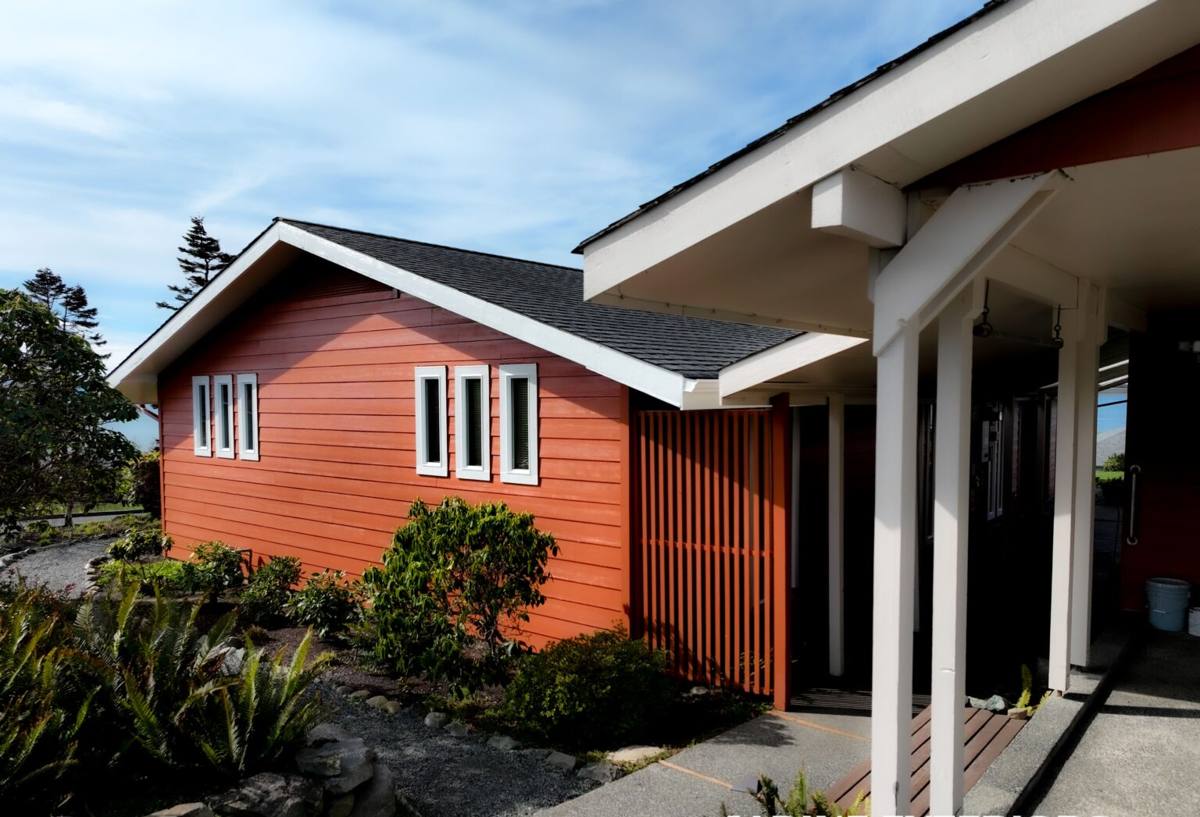
What Bellingham's Climate Asks of New-Construction Windows
Whatcom County sits where Pacific storm systems meet Bellingham Bay, and that combination shapes almost every decision we make on a new-construction window job.
Salt Air and Coastal Exposure
Homes in and around York are close enough to the bay that airborne salt is a real factor on hardware, fasteners, and exposed metal flashing. Salt-laden air accelerates corrosion on lower-grade fasteners and cheaper cladding, which is why we pay attention to the corrosion resistance of screws, flashing tape, and hardware finishes even on window models that look identical on a spec sheet.
Driving Rain and Wind-Driven Wet Walls
Storms here rarely come straight down. Wind-driven rain hits walls at an angle and finds its way into any gap in the water-resistive barrier (WRB) or flashing sequence around a window opening. A new-construction window is only as good as the flashing detail around it — the unit itself can be flawless and the wall will still leak if the sill pan, jamb flashing, and head flashing aren't lapped correctly.
Moss Season and Prolonged Moisture Exposure
Whatcom County's long, damp fall-through-spring stretch keeps north-facing and shaded walls wet for extended periods, which is exactly the environment moss and mildew thrive in. On new construction, that means we're thinking about drainage paths behind the cladding and around the window flange long before the siding crew ever shows up, since anything trapped against the frame during that wet season has months to do damage before it dries out.
New-Construction vs. Replacement: Why the Install Method Matters
New-construction windows use a nailing fin (also called a flange) around the perimeter of the frame that gets fastened directly to the sheathing and integrated into the WRB before siding goes on. This is a completely different sequence than a replacement window, which gets inserted into an existing, already-flashed opening. Getting the new-construction sequence right involves several steps that have to happen in order:
- Rough opening is checked for square, level, and correct size — not just "close enough."
- A sloped sill pan is installed at the bottom of the opening so any water that does get past the window has somewhere to go besides into the wall framing.
- Self-adhered flashing tape is applied at the jambs first, then over the nailing fin, then the head flashing last — this shingle-lap order is what keeps water moving down and out rather than behind the tape.
- The window is set, checked for plumb and square, and fastened per the manufacturer's schedule (not just wherever it's convenient).
- The WRB (house wrap) is integrated back over the head flashing to complete the drainage plane before siding is installed.
Skipping or reordering any of these steps is the single biggest cause of window-related water damage in new builds — and once the siding is on, it's invisible until there's a problem inside the wall.
Choosing the Right Frame and Glass Package
For new construction, you're not limited by an existing opening size, so frame material and glass package become a real decision rather than a constraint. Here's how the common options stack up for a Bellingham-area build:
| Frame Material | Performance in Salt Air / Driving Rain | Maintenance | Typical Fit |
|---|---|---|---|
| Vinyl | Good — won't corrode or rot; seams are the main watch point | Low; occasional cleaning | Most cost-conscious new builds and additions |
| Fiberglass | Very good — dimensionally stable, holds paint and finishes well in wet, salty conditions | Low to moderate | Higher-end builds, larger openings, painted exteriors |
| Wood-clad (aluminum or fiberglass exterior) | Good on the exterior face, but interior wood and any exposed end-grain need careful detailing near moisture | Moderate; interior finish upkeep | Homes prioritizing interior wood appearance |
| Aluminum | Fair — prone to condensation and corrosion over time without thermal breaks and coastal-grade finishes | Moderate | Contemporary designs where thin sightlines matter |
Glass and Rating Numbers Worth Asking About
Whatever frame material you choose, the glass package does most of the work for comfort and energy performance. For our climate, a Low-E coating with argon gas fill is standard practice, not an upgrade. When comparing window quotes, ask for the NFRC label numbers rather than marketing terms:
- U-factor — lower is better for keeping heat inside during our cool, wet winters.
- SHGC (Solar Heat Gain Coefficient) — matters most on south- and west-facing glass.
- Air leakage rating — directly tied to how well the unit resists wind-driven rain and drafts.
How We Install New-Construction Windows in York
Our process on a new build or addition in York follows the same sequence every time, because consistency is what prevents callbacks:
- Review rough openings against window schedule and manufacturer specs before units arrive on site.
- Confirm flashing tape and sill pan materials are compatible with the WRB the builder has already installed.
- Install sill pans, jamb flashing, windows, and head flashing in the correct shingle-lap order.
- Photograph flashing details at each opening before they're covered by siding, for the builder's and homeowner's records.
- Final check for plumb, square, smooth operation, and weatherstripping contact on every unit.
Coordination with Builders, GCs, and Inspections
Most new-construction window work in York happens as one piece of a larger building project, so we work directly with the general contractor or builder's schedule rather than as a standalone appointment. That means fitting into the framing-to-siding sequence at the right moment, coordinating with the WRB installer so flashing laps go in the correct order, and being ready for the building inspections Whatcom County and the City of Bellingham require at framing and weather-barrier stages. Showing up out of sequence, or having to redo flashing because a different trade got there first, is one of the more common ways new-construction window jobs go sideways — good scheduling coordination prevents it.
What Affects the Cost
New-construction window pricing varies more than replacement pricing does, because there's more room to choose materials and configurations. The broad factors that move the price:
| Factor | Why It Changes the Price |
|---|---|
| Frame material | Fiberglass and wood-clad run higher than vinyl; aluminum varies by finish quality |
| Number and size of openings | Large picture windows and multi-unit combinations cost more per opening than standard sizes |
| Glass package | Higher-performance Low-E coatings and gas fills add cost but reduce long-term energy loss |
| Site access and building stage | Ground-level openings in an open frame are faster than upper-floor units on scaffolding |
| Custom shapes or sizes | Anything outside standard manufacturer sizing requires special ordering and lead time |
We provide itemized estimates so you can see exactly where the cost is going, rather than a single lump-sum number.
A Checklist Before Install Day
If you're a homeowner or GC coordinating a new build in York, these are worth confirming before windows show up on site:
- Rough openings match the approved window schedule, including any tempered-glass requirements near doors or low sills.
- WRB (house wrap) is installed and inspected before window crews arrive.
- Flashing tape and sill pan materials are confirmed compatible with the WRB brand in use.
- Window units on site match the ordered sizes, grille patterns, and hardware finishes.
- A plan is in place for who documents flashing details before siding covers them.
- Weather forecast allows for a dry install window, since flashing tape needs a clean, dry surface to adhere properly.
Why a Crew That Already Works York Matters
New-construction window installation depends on getting a sequence of small details right in the correct order, under real Whatcom County weather, on someone else's construction schedule. A crew that regularly works in York and the surrounding Bellingham neighborhoods already understands the moisture and salt-air conditions the wall assembly has to stand up to, knows how to coordinate with other trades on a job site without disrupting the schedule, and has been through the local permitting and inspection process enough times to know what inspectors are looking for at each stage. That familiarity shows up as fewer surprises, fewer redos, and a window installation that's still performing correctly ten and twenty years after the siding goes up.
If you're planning a new build or addition in York and want to talk through window options, glass packages, or how we'd fit into your construction timeline, we're happy to put together a free, no-pressure estimate — just fill out the form below.