 Bellingham Exterior
 Decking Built for Edgemoor's Setting, Not a Generic Backyard
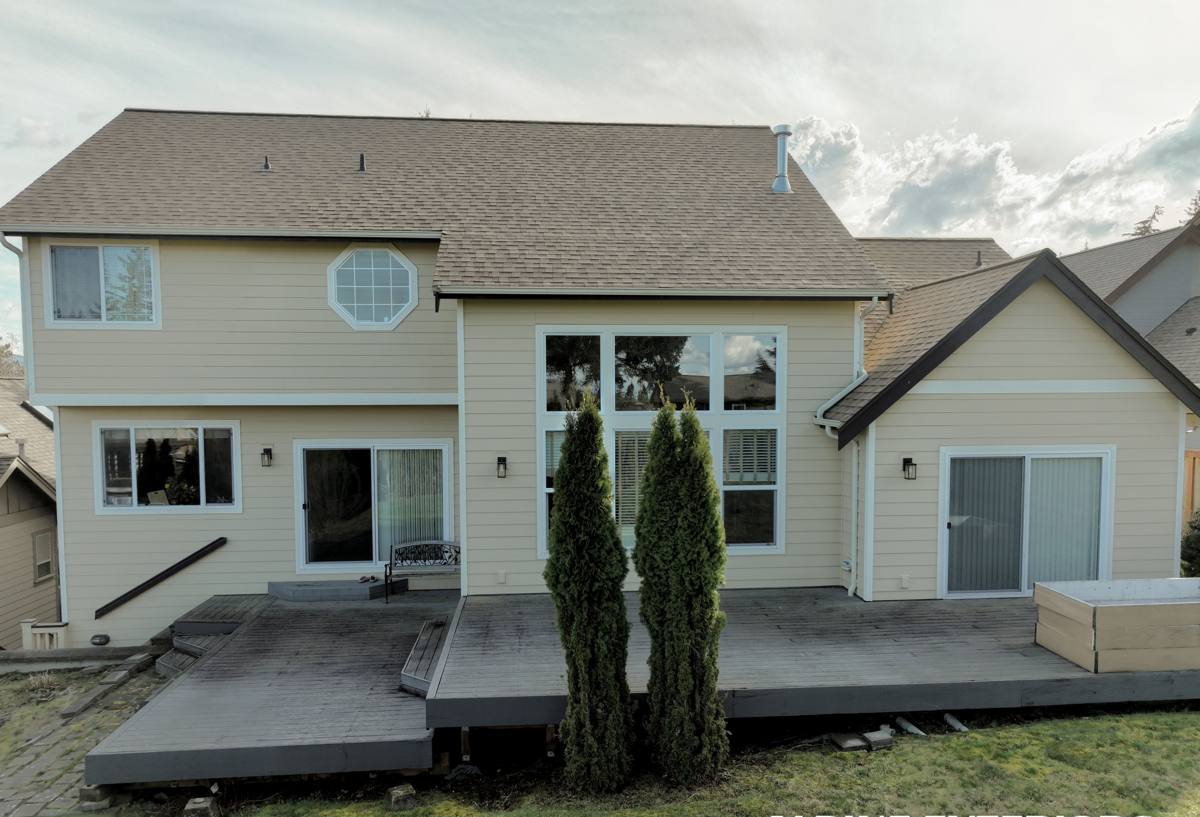
Edgemoor sits above Bellingham Bay on wooded, elevated lots, and that setting shapes what a deck needs to do. Homes here often sit close to mature tree cover, catch wind and moisture off the water, and were built at a time when a simple wood deck was the default choice. Decades later, many of those original decks are tired, soft in places, or covered in a green film that never fully goes away. A composite deck built for this neighborhood has to account for salt-laden air, shade patterns from the tree canopy, and drainage that actually moves water off the structure instead of trapping it underneath.
This page focuses on one job: composite decking for Edgemoor properties. Not a general decking overview, not a citywide pitch — what a correct composite install looks like for this specific setting, and why the details matter more here than they would on a dry, open lot.
What Bellingham's Climate Actually Does to a Deck
Whatcom County's marine climate is mild, but it's relentless. That's the part homeowners underestimate — it's rarely one big weather event that damages a deck, it's years of steady, low-grade exposure.
Salt Air and Metal Hardware
Proximity to the bay means airborne salt reaches fasteners, flashing, and any exposed metal connectors. Standard hardware corrodes faster near the water than it would inland, and corroded fasteners are one of the more common hidden failure points we find on older decks — the boards look fine, but the connections holding them down don't.
Driving Rain and the Ledger Board
The ledger board — where the deck attaches to the house — is the single most important structural detail on almost any deck, and it's also the part most exposed to wind-driven rain in this region. Water that gets behind a poorly flashed ledger doesn't just rot the ledger; it can work its way into the house framing and sheathing behind it.
Moss, Shade, and Slip Risk
Bellingham's long moss season is real, and shaded, tree-covered lots like many in Edgemoor see it worse than open ones. Moss on wood decking isn't just cosmetic — it holds moisture against the board and turns a deck slick within a season or two of neglect. Composite doesn't stop moss from landing on the surface, but it changes how much damage that moss can do underneath.
Why Composite Makes Sense for This Neighborhood
We're not going to tell you wood decking is a bad product — used correctly and maintained on schedule, it holds up fine. Our professional standard for Edgemoor projects leans toward composite for a specific reason: the maintenance burden. A wood deck in this climate needs regular cleaning, moss treatment, and refinishing to keep moisture out of the fibers. Miss a year or two — which happens easily with a busy household — and you're often looking at soft boards, splitting, or fastener pull-through sooner than the wood's real lifespan should allow.
Composite boards, particularly capped composite, resist moisture absorption at the board level, which matters directly for the salt air and rain load this area sees. That doesn't make composite maintenance-free — we'll cover what it still needs below — but it shifts the burden from "refinish every year or two" to "clean it a couple times a year."
What a Correct Composite Deck Installation Involves
Framing and Structure First
Composite decking is only as good as what's underneath it. We inspect and, where needed, upgrade the joists, beams, and posts before a single composite board goes down. Composite is heavier than wood per board and behaves differently under load and temperature swings, so joist spacing has to match the manufacturer's engineering specs for the specific product — not just whatever spacing the old wood deck used.
Ledger Attachment and Flashing
Given how much damage a bad ledger connection causes in wind-driven rain, we treat this as a non-negotiable step: proper flashing, correct fastener type and spacing, and a water-shedding detail that keeps moisture moving away from the house rather than pooling against it.
Fastening and Board Spacing
Composite boards expand and contract with temperature more than wood does. Gapping and fastening have to account for that movement, or you end up with buckled boards or fasteners backing out within a few seasons. We use hidden fastening systems on most projects for a cleaner look and fewer exposed metal points for salt air to attack.
Drainage and Under-Deck Airflow
On shaded, wooded lots, what happens under the deck matters as much as the surface. Standing moisture and poor airflow underneath a low deck create the conditions for rot in the framing and a persistent damp, mossy smell. We grade and detail the substructure so water actually leaves the area instead of sitting under the boards.
Composite Decking: How the Options Compare
| Decking Type | Moisture Resistance | Maintenance Needed | Typical Lifespan |
|---|---|---|---|
| Pressure-treated wood | Moderate — depends on sealing schedule | Annual cleaning and periodic refinishing | 10–15 years with upkeep |
| Uncapped composite | Good, but boards can absorb some moisture at cut edges | Periodic cleaning, edge sealing at cuts | 15–25 years |
| Capped composite / PVC | Very good — outer shell resists moisture and staining | Routine washing only | 25+ years, manufacturer-warranted |
For Edgemoor's combination of salt exposure, rain, and shade-driven moss, we most often recommend capped composite. It's a higher material cost up front than wood, but it's the option best matched to what this specific climate does to a deck over time. We'll walk through real product options and current pricing for your project during the estimate — we don't quote board pricing in the abstract because product costs shift and your square footage, framing condition, and layout all affect the total.
Our Process on Edgemoor Projects
- On-site assessment of the existing deck or build area, including framing, ledger condition, and drainage
- Honest evaluation of whether repair, resurfacing, or full rebuild makes sense for your structure
- Written estimate with the composite product options that fit your budget and how the site sits relative to sun, shade, and wind
- Permit handling through the appropriate Whatcom County or City of Bellingham process before work starts
- Structural work first — framing, ledger, flashing — inspected before decking goes down
- Composite installation with manufacturer-specified fastening and spacing
- Final walkthrough covering care instructions specific to the product installed
Permits and Local Requirements
Most deck construction and significant deck replacement in Bellingham and unincorporated Whatcom County requires a building permit, particularly for anything attached to the house or built above a certain height. Requirements vary by jurisdiction and by the specifics of the project, so we handle the permit process as part of the job rather than leaving it for the homeowner to sort out. Any contractor working on your home should also be registered and bonded with Washington L&I — that's a state requirement, not an optional credential.
Maintenance in a Marine Climate
Composite cuts down on maintenance, but "low maintenance" isn't "no maintenance," especially this close to the water.
- Rinse or sweep debris off the surface regularly, especially under tree cover where organic buildup collects
- Wash the deck a couple of times a year with a mild soap and soft-bristle brush to keep moss and mildew from taking hold
- Check under-deck drainage and clear any debris that's blocking water from moving away from the structure
- Inspect fastener points and railings annually for any early corrosion, particularly on hardware closest to the bay-facing side
- Avoid pressure-washing at high pressure directly into board seams, which can drive water where it doesn't belong
What to Ask Before You Hire a Deck Contractor Here
- Are you registered and bonded with Washington L&I?
- Have you built decks on wooded, shaded, or bluff-top lots in this area before?
- Will you pull the required permit, or is that left to me?
- What's your plan for ledger flashing and under-deck drainage specifically?
- Do you carry manufacturer certification for the composite product you're recommending?
- What does your written estimate include — materials, labor, permit, cleanup?
A crew that already works in Edgemoor and the surrounding Bellingham neighborhoods has seen how the salt air, rain, and tree cover here actually play out on real decks over years, not just at installation. That's the difference between a deck that looks good on day one and one that's still solid a decade later.
If you're weighing repair versus replacement, or just want a straight answer on what composite decking would take for your property, we're happy to take a look and put together a free, no-pressure estimate — use the form below to get started.