 Bellingham Exterior
 Composite Decking Built for York's Marine Climate
Homes in York and the surrounding Bellingham area sit close enough to the water and under enough tree cover that decks take a beating most homeowners inland never deal with. Salt-tinged air, driving rain off the Sound, and a moss season that can stretch from October through May put real stress on outdoor structures. A deck that looks fine on installation day can start showing problems within a couple of seasons if it wasn't built with this specific climate in mind.
Composite decking has become a common answer to that problem, but "composite decking" covers a wide range of products and an even wider range of installation quality. This page is about what actually matters when you're putting composite decking on a home in this part of Whatcom County — not the generic pitch you'll find on a manufacturer's website.
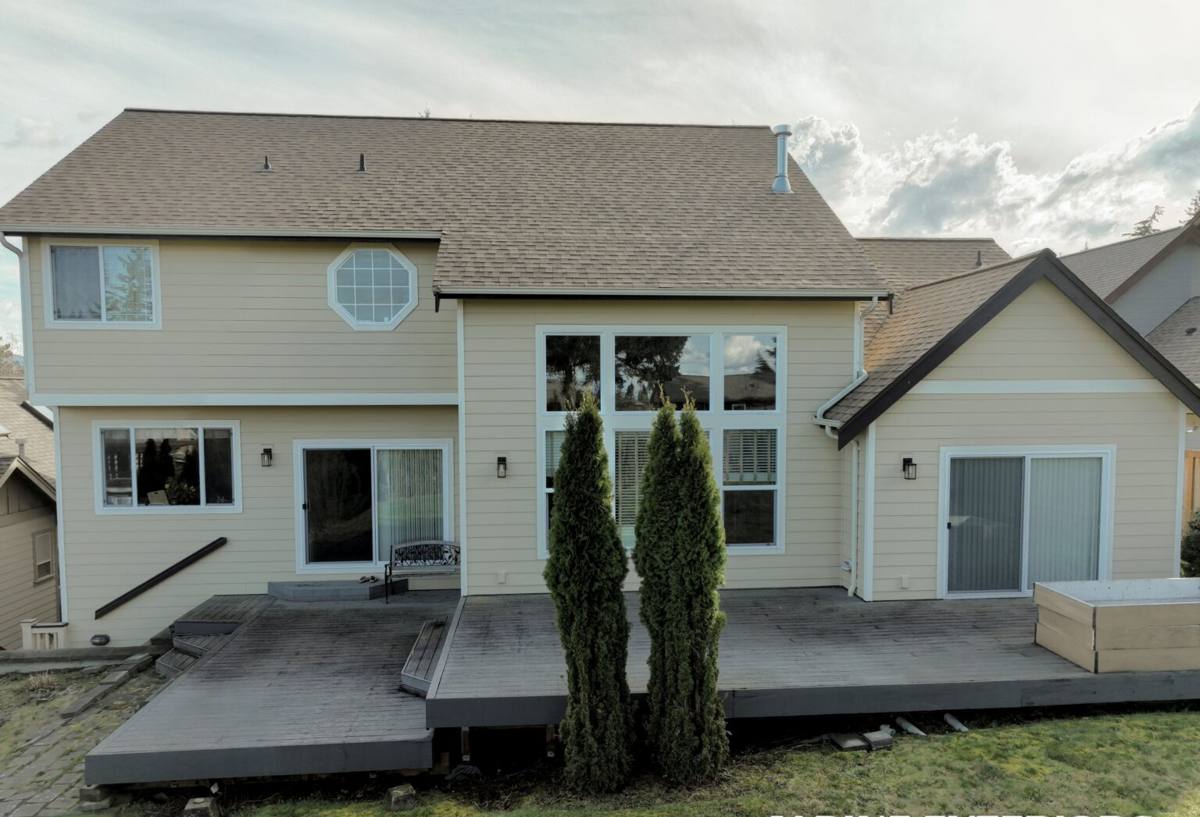
What Bellingham's Weather Actually Does to a Deck
Before talking about materials, it helps to understand the specific stresses at play here:
Moisture That Never Fully Lets Up
Bellingham gets a lot of rain, but it's the pattern more than the volume that causes damage — long stretches of damp, overcast days where surfaces never fully dry out between storms. Wood decking swells and contracts with that cycle, and joints, fasteners, and finishes take the brunt of it over time. Composite boards don't absorb water the way wood does, which is a big part of why they hold up better here.
Moss and Algae Growth
Shaded yards, damp air, and mild winters are exactly the conditions moss and algae need to establish themselves. Any deck surface with texture, grain, or porosity gives moss something to grip. Left unaddressed, moss holds moisture against the board surface and turns walking surfaces slick — a real slip hazard on stairs and ramps, not just a cosmetic issue.
Salt Air and Coastal Exposure
Properties nearer the water deal with airborne salt that accelerates corrosion on fasteners, brackets, and any exposed metal hardware. This doesn't affect the composite boards themselves much, but it's a major factor in how a deck's substructure and connectors need to be specified.
Why Composite Makes Sense for This Area
Composite decking isn't automatically the right call for every project, but for York-area homes dealing with sustained moisture and moss pressure, it solves problems that wood decking struggles with long-term.
| Factor | Wood Decking | Composite Decking |
|---|---|---|
| Moisture absorption | Swells, cups, and checks with repeated wet/dry cycles | Minimal absorption; dimensionally stable in damp climates |
| Moss/algae resistance | Porous surface gives moss more to grip; needs regular treatment | Denser surface is harder for moss to anchor into, though not immune |
| Refinishing needs | Periodic sanding, staining, or sealing | No staining or sealing required |
| Upfront cost | Generally lower material cost | Higher material cost, offset by lower upkeep over time |
| Splintering/cracking | Can splinter or crack as wood ages and dries | Doesn't splinter; some products can scratch or scuff |
That said, composite isn't maintenance-free — it's lower maintenance. It still needs periodic cleaning, and board quality varies a lot between manufacturers and product lines, which is where a lot of composite deck problems actually originate.
What a Correct Composite Deck Installation Involves
Most composite deck failures we get called to look at aren't a material problem — they're an installation problem. The board itself is usually fine; the substructure or detailing underneath it wasn't built for this climate.
Substructure and Framing
The joists, beams, and posts underneath composite decking still need to be treated lumber or another moisture-resistant material, properly spaced, and graded to shed water rather than pool it. Composite boards are heavier than wood in some product lines, which affects joist spacing requirements — manufacturer spec sheets vary and need to be followed, not assumed.
Ventilation and Airflow
Trapped moisture under a deck is one of the fastest ways to rot a substructure even when the surface boards themselves are composite. Proper clearance between the deck framing and the ground, along with airflow paths, matters more here than in drier climates.
Fasteners and Hardware
Given salt air exposure closer to the water and the general moisture load everywhere in the area, hardware needs to be rated for coastal or wet-climate use — stainless steel or coated fasteners designed to resist corrosion, not standard-grade hardware that will streak or fail early.
Flashing and Ledger Connections
Where a deck attaches to the house, proper flashing is what keeps water from working its way behind siding and into the wall structure. This is one of the most common places we find corners cut on older installations, and it's not something you can fix without pulling the deck board back.
Drainage and Slope
Composite deck surfaces need a slight slope away from the house so water doesn't sit on the boards or pool at the base. On uneven York-area lots, this sometimes means additional grading or drainage work before the deck framing even starts.
Board Selection for This Climate
Not all composite boards perform the same way once you factor in Bellingham's specific conditions.
- Capped composite — a protective outer shell resists moisture and staining better than uncapped boards, which matters in a climate this wet
- Surface texture — a lightly textured, streaked finish tends to show moss and grime less than smooth or deeply grooved profiles
- Color — darker boards absorb more heat on sunny days but also tend to show water spotting and pollen less than very light colors
- Grip and slip resistance — stairs and any deck near a shaded, damp area benefit from boards rated for slip resistance, not just appearance
We'll walk through actual product options and samples during a site visit rather than pushing one line — the right board depends on how shaded your lot is, how close you are to open water, and what look you're going for.
Our Process for York-Area Composite Decking
The work generally follows the same sequence on every job, adjusted for the specifics of your lot and existing structure:
1. Site Assessment
We look at sun/shade exposure, existing drainage, ground moisture, and proximity to trees or water, since those factors drive both the substructure design and board selection.
2. Design and Permitting
Deck size, attachment method, railing style, and stair layout get finalized before we pull permits. Whatcom County and City of Bellingham permitting requirements apply depending on your deck's size and height — we handle that process rather than leaving it on the homeowner.
3. Demolition and Substructure Work
If we're replacing an existing deck, we inspect the framing underneath once the old surface is off — this is often where hidden rot or corrosion turns up, and it needs to be addressed before new decking goes down, not covered over.
4. Installation
Framing, fastening, board installation, and railing go in following manufacturer spec for spacing, gapping (composite boards expand and contract with temperature, just less dramatically than wood), and fastener placement.
5. Final Walkthrough
We go over the finished deck with you, including basic care guidance specific to the board you chose and your property's exposure.
Maintaining a Composite Deck in a Moss-Prone Climate
Composite decking cuts down on maintenance significantly, but "low maintenance" isn't "no maintenance" here — the moss and moisture pressure in this region means a bit of seasonal attention goes a long way.
- Sweep off leaves, needles, and debris regularly, especially in shaded areas where they trap moisture against the board surface
- Rinse the deck and railing a few times a year to prevent pollen, grime, and early moss growth from setting in
- Check stairs and shaded sections for early moss or algae buildup, and clean it off before it spreads
- Keep gutters and downspouts near the deck clear so runoff isn't draining directly onto the deck surface
- Inspect fasteners, railing connections, and ledger flashing annually for corrosion or movement, particularly if you're closer to the water
- Trim back overhanging branches to reduce shade and debris buildup on the deck surface
Why Hiring a Crew That Already Works in York Matters
A deck built to a generic national spec sheet doesn't always hold up the same way in a marine, moss-heavy climate as it would somewhere drier. A crew that regularly works in York and the surrounding Bellingham neighborhoods has already seen how local moisture, shade patterns, and salt exposure affect different composite products and fastener choices over multiple seasons — not just in a showroom or a manufacturer's testing lab. That local track record shows up in details like joist spacing, hardware grade, flashing, and drainage that don't always make it into a standard installation manual.
It also means we're familiar with Whatcom County and City of Bellingham permitting requirements, so that part of the project doesn't become a delay or a surprise partway through.
Get an Estimate
If you're weighing composite decking for a home in York or elsewhere in the Bellingham area, we're happy to take a look at your property, talk through board options that fit your site's sun and moisture exposure, and give you a straightforward estimate. There's no pressure and no obligation — just an honest read on what your deck actually needs.