 Bellingham Exterior
 Why South Hill Decks Wear Out Faster Than Homeowners Expect
South Hill sits up on a slope above downtown Bellingham, and that elevation comes with a trade-off. The same exposure that gives many homes here a good outlook also means decks take the brunt of weather rolling in off Bellingham Bay — wind-driven rain, salt-laden air, and long stretches of gray, damp weather that never quite lets wood dry out. Add in the mature tree canopy that shades a lot of South Hill's older lots, and you get the two biggest enemies of an exterior deck working against each other at the same time: constant moisture and constant shade.
We've replaced enough decks in this part of Bellingham to know the failure pattern by heart. It's rarely a dramatic collapse. It's slow — a soft board here, a rusted fastener there, moss creeping across the boards until the surface stays wet for days after every rain. By the time it's visibly bad, the framing underneath has usually been compromised for a year or two already.
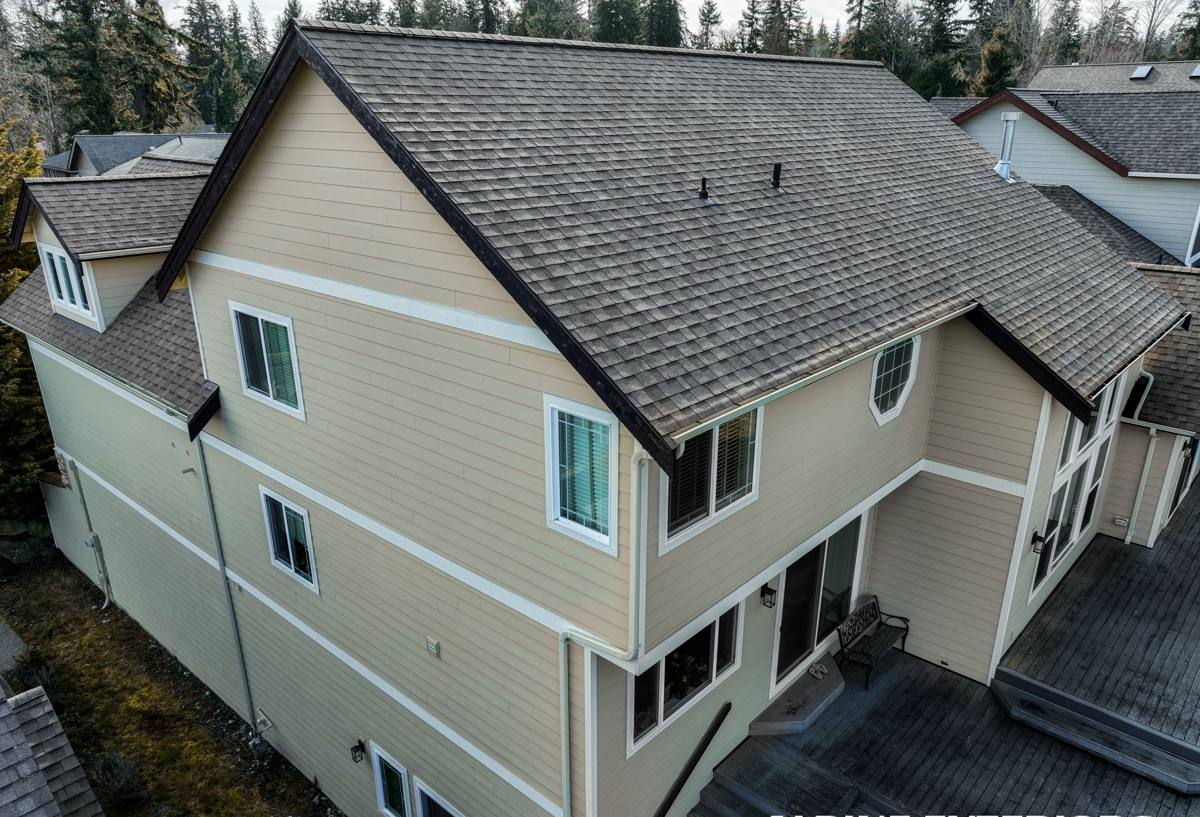
Signs a South Hill Deck Needs Replacement, Not Repair
Repair makes sense when the damage is isolated. Replacement makes sense when the problems are systemic — which, on older decks in this climate, they usually are by the time a homeowner calls us. Here's what tells us which category a deck falls into:
- Soft, spongy, or spring-feeling boards in more than one area of the deck
- Persistent green or black staining that comes back within weeks of cleaning
- Visible gaps, splitting, or checking along most of the decking, not just a board or two
- Rust streaks below fasteners or joist hangers — a sign the metal itself is corroding
- A ledger board (where the deck attaches to the house) that feels damp or shows staining on the siding above it
- Railings that flex or wobble when leaned on
- Footings or posts that have shifted, settled, or show rot at the base
- A deck that's more than 20-25 years old and has never had the substructure inspected
One or two of these, especially isolated ones, can often be repaired. Several at once — particularly anything touching the ledger, framing, or footings — means the structure is compromised, and boarding over rotten framing just hides the problem for the next owner to find.
The Climate Factors We Design Around
Salt Air and Metal Corrosion
Being close to Bellingham Bay means the air here carries more salt than an inland site would. Salt accelerates corrosion in fasteners, joist hangers, and railing hardware — even galvanized steel breaks down faster near the water than most manufacturers' ratings assume. We spec stainless or heavy-duty coated hardware rated for coastal exposure, not the standard-grade fasteners that are fine forty miles inland but fail early here.
Driving Rain and Water Intrusion
Bellingham doesn't just get rain — it gets rain that comes in sideways off the water, pushed by wind. That matters most at the ledger board, where the deck ties into the house. A poorly flashed ledger lets water track behind the siding and into the rim joist, which is how you end up with hidden rot that isn't visible until the deck starts to sag. Correct flashing detail at this joint is the single most important thing separating a deck that lasts decades from one that fails from the inside out in ten years.
Moss, Shade, and the Long Wet Season
Whatcom County's moss season runs long — often eight or nine months of the year on shaded surfaces. South Hill's tree cover means a lot of decks here sit in partial or full shade for large parts of the day, which keeps boards damp and gives moss and algae the conditions they need to take hold. Beyond looking bad, a mossy deck surface is a slip hazard and holds moisture against the wood far longer than an open, sun-exposed deck would. Board spacing, surface drainage, and material choice all affect how much of a problem this becomes over time.
Choosing the Right Decking Material for This Site
There's no single "best" decking material — the right choice depends on how much maintenance a homeowner actually wants to do, budget, and how shaded or exposed the site is. Here's how the common options compare for a South Hill setting specifically:
| Material | Moisture & Moss Resistance | Maintenance | Typical Lifespan | Relative Cost |
|---|---|---|---|---|
| Pressure-treated lumber | Fair — needs sealing to perform well | Annual cleaning and re-sealing recommended | 15-20 years | Lowest |
| Western red cedar | Good naturally, but still needs upkeep in shade | Periodic cleaning, staining/sealing every few years | 20-25 years | Mid-range |
| Composite / capped composite | Very good — doesn't absorb water like wood | Occasional washing; no sealing or staining | 25-30+ years | Higher upfront |
In shaded, damp South Hill yards, we often steer homeowners toward composite for the decking surface specifically, since it doesn't give moss the same foothold that raw wood grain does and it won't soften from repeated wetting. That said, plenty of homeowners prefer the look and feel of real wood and are willing to keep up with sealing — that's a legitimate choice too, as long as the maintenance schedule actually gets followed. We'll walk through the honest trade-offs for your specific site rather than push one product across the board.
What a Correct Deck Replacement Actually Involves
A deck replacement is a structural project, not a cosmetic one, even when it looks like we're "just" swapping boards. The parts that determine whether a deck lasts are almost all things you won't see once it's finished:
- Ledger flashing — proper metal flashing and a water-resistant barrier where the deck meets the house, so rain can't track behind the siding
- Joist hangers and fasteners — corrosion-resistant hardware rated for coastal, wet-climate exposure
- Framing spacing and sizing — engineered to current code for the deck's actual size and load, not just matched to what was there before
- Footings — checked or replaced if settled, undersized, or showing rot; this is foundational and not worth cutting corners on
- Drainage and airflow underneath — enough clearance and slope that water and moisture don't sit trapped under the deck
- Railing and stair compliance — height, baluster spacing, and guard requirements built to current code, especially important if the old deck predates current standards
When we tear out an old deck, the framing underneath tells us the real story of how it failed. That inspection is part of every replacement quote — we're not guessing at what's under there.
Permits in Bellingham and Whatcom County
Most deck replacements that involve structural changes — new footings, a different size or height, or attachment to the house — require a building permit, whether the property is inside Bellingham city limits or in unincorporated Whatcom County. Requirements and review timelines differ depending on jurisdiction and the scope of work. We handle the permit process as part of the job so homeowners aren't left navigating it alone, and so the finished deck is actually documented and code-compliant — which matters at resale.
Our Process, Start to Finish
- On-site assessment — we inspect the existing deck, ledger connection, framing, and footings to see what's actually failing versus what's cosmetic
- Honest scope and options — we walk you through material choices and what each involves for cost and upkeep, specific to your site's sun exposure and drainage
- Permitting — we pull the required permits and schedule inspections where applicable
- Demolition — full removal of the old deck, checking framing and posts as we go
- Framing and structural work — ledger flashing, joists, hangers, and footings built or verified to current code
- Decking, railing, and stairs — installed to the material spec you chose, with attention to fastening and spacing that accounts for our wet season
- Final walkthrough — we go over the finished deck with you, including what maintenance (if any) the material needs going forward
Keeping a New Deck Looking Good in This Climate
Even a well-built deck needs a little seasonal attention here. A short annual routine goes a long way toward protecting the investment:
- Sweep debris and fallen leaves off the surface regularly, especially in fall — trapped organic matter is what feeds moss
- Rinse or wash the deck surface once or twice a year to knock back algae and moss growth before it takes hold
- For wood decking, plan on re-sealing or staining every 2-3 years depending on sun exposure
- Check railings and stair connections annually for any looseness
- Keep gutters and downspouts near the deck clear so runoff isn't dumping extra water onto or under it
- Trim back overhanging branches where practical to reduce shade and debris buildup
Why Hiring a Crew That Already Works South Hill Matters
A lot of deck problems in this neighborhood trace back to work that was done by someone unfamiliar with how Bellingham's weather actually behaves — hardware that wasn't rated for salt air, flashing details that work fine in a drier climate but fail here, or decking chosen without accounting for how much shade the lot actually gets. We work this area regularly, which means we're not guessing at what South Hill's climate does to a deck over time — we've seen it, and we build accordingly from the first framing decision onward.
If your deck is showing its age, or you just want an honest read on whether it's a repair or a replacement, we're happy to take a look. Reach out for a free, no-pressure estimate using the form below.