 Bellingham Exterior
 Storm Damage Roofing in Sudden Valley: A Different Set of Problems
Sudden Valley sits in one of the more wooded, lake-adjacent pockets of Whatcom County, and that setting shapes what "storm damage" actually means for roofs out here. In a lot of Bellingham neighborhoods, a windstorm mostly means shingle lift and gutter overflow. In Sudden Valley, you're also dealing with tall conifers pressing in close to rooflines, shaded valleys that never fully dry out, and wind that funnels differently around the lake and the surrounding ridgelines than it does closer to the water in town. Add in the salt-laden air that moves inland off Bellingham Bay during winter storms and the long stretches of overcast, moss-friendly weather typical of this part of the Pacific Northwest, and you get a roof that ages and fails differently than a roof on an open, sunny lot.
This page is specifically about storm damage repair for homes in and around Sudden Valley — not a general roofing overview. If a windstorm, heavy rain event, or falling branch has left your roof compromised, here's what that actually involves, how we approach it, and what to expect.
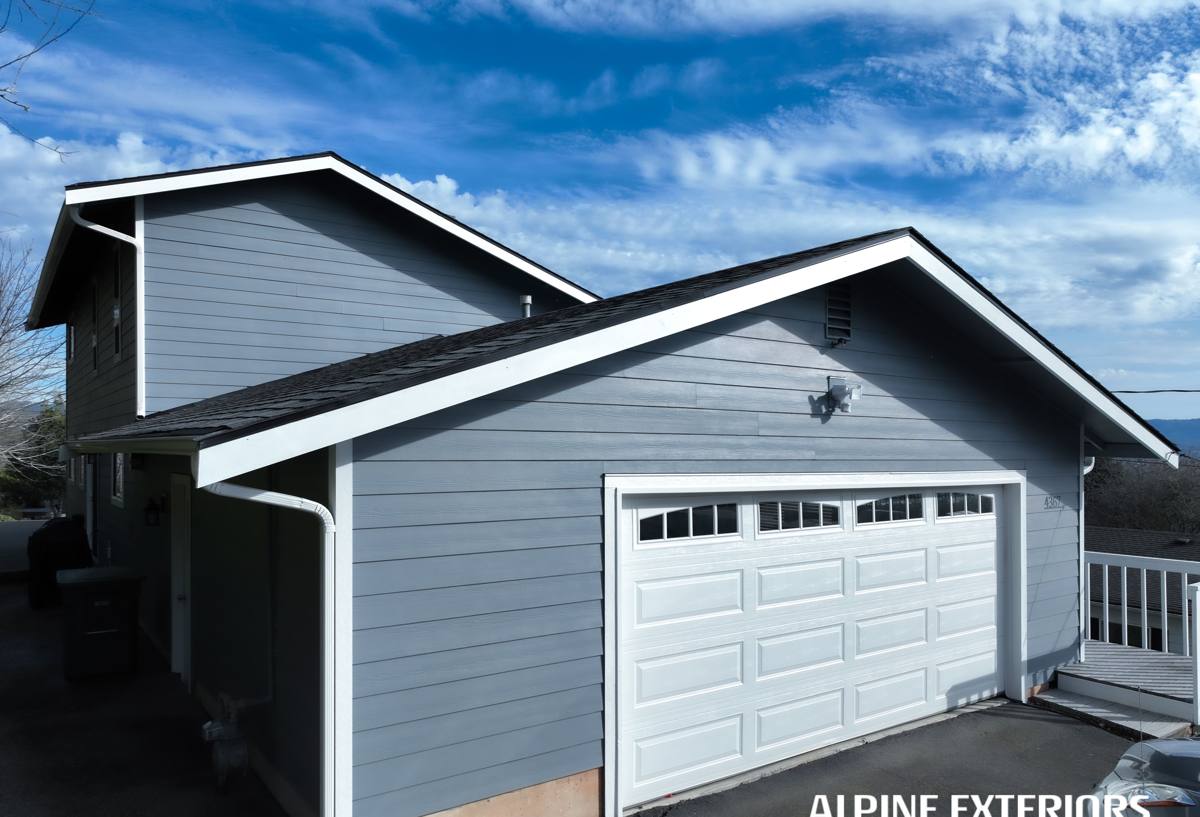
What Storm Damage Looks Like on a Sudden Valley Roof
Wind and Rain Damage
Whatcom County storms typically bring sideways, driving rain rather than just heavy downpour. On a roof that's already got a few years on it, wind-driven rain finds every weak seam — lifted shingle tabs, aged flashing, nail pops, and gaps around vents or chimneys. You often won't see obvious missing shingles from the ground. The damage shows up as a slow leak weeks later, which is why a post-storm inspection matters even when nothing looks visibly wrong.
Falling Debris
With mature Douglas fir, cedar, and hemlock common on Sudden Valley lots, storms bring down limbs and debris more often than in more open parts of the city. Impact damage ranges from a few cracked or punctured shingles to bent flashing, damaged vents, or in more serious cases, structural sheathing damage from a larger limb. Even small impacts can crack a shingle in a way that isn't obvious until it leaks during the next heavy rain.
Moss and Trapped Moisture Compounding Storm Damage
Heavy tree cover means shade, and shade means moss. A roof already carrying a moss load holds more moisture against the shingle surface, which softens the mat underneath and makes that section far more vulnerable to wind lift and impact damage than a clean roof would be. We regularly find that the section of roof that failed in a storm was the same section that had the heaviest moss growth — the moss didn't cause the storm damage directly, but it weakened the roof exactly where the storm hit hardest.
Common Storm Damage Types and How We Address Them
| Damage Type | Typical Cause Locally | Repair Approach |
|---|---|---|
| Lifted or torn shingle tabs | Wind gusts funneling around tree lines and terrain | Re-secure or replace individual shingles, reseal tabs |
| Punctured or cracked shingles | Falling limbs and debris from surrounding trees | Cut out and replace affected shingles and underlayment |
| Bent or separated flashing | Wind uplift at chimneys, vents, and roof-to-wall joints | Remove, reform or replace flashing, reseal with proper laps |
| Soft or leaking valleys | Moss and debris buildup under shaded tree canopy | Clear debris, inspect valley material, replace as needed |
| Sheathing damage | Larger branch or tree impact | Remove and replace damaged decking before re-covering |
Why Fast Action Matters After a Storm
A roof that's been compromised by a storm rarely fails all at once. What usually happens is a small entry point — a lifted shingle, a cracked flashing seam, a puncture — lets water in gradually. On a shaded Sudden Valley lot where things dry out slowly between rain events, that moisture doesn't evaporate the way it would on a sunnier property. It sits in the attic insulation, works into the sheathing, and can lead to rot, mold, or ceiling damage well before a homeowner notices a drip inside.
Getting a roof inspected within a few days of a significant wind or rain event, even when there's no visible leak, is the single best way to avoid turning a simple repair into a much larger one. It also matters for insurance: most policies have documentation expectations tied to when the damage occurred, and a prompt inspection creates a clear record.
Our Storm Damage Repair Process
- Inspection. We walk the roof (not just look from the ground) and check attic space where accessible, focusing on impact points, flashing, and valleys shaded by nearby trees.
- Documentation. We photograph and note all damage found, dated and organized in a way that's usable for an insurance claim if you're filing one.
- Temporary protection. If there's an active leak or exposed decking, we tarp or seal it the same visit so the problem doesn't get worse while repairs are scheduled.
- Scope and estimate. We explain what needs to happen — targeted repair versus a larger section replacement — and why, in plain terms.
- Repair. Matching materials as closely as possible, replacing compromised shingles, underlayment, flashing, or sheathing, and re-sealing every penetration point that was disturbed.
- Final check. We confirm drainage through valleys and gutters is clear and functioning before we consider the job done.
Insurance Claims: What We Can and Can't Do
We're not adjusters and we don't represent your insurance company, but we can give you an honest, detailed inspection report and photo documentation that supports your claim. Most homeowners in Whatcom County dealing with wind or falling-limb damage go through their homeowner's policy, and having a contractor who's already inspected the damage and can speak to what's storm-related versus what's ongoing wear (like moss deterioration) tends to make that process smoother. We'll always tell you plainly which category damage falls into rather than shading it one way to make a claim easier — that's not a service worth much if it isn't accurate.
Repair or Replace? How We Make That Call
| Factor | Favors Repair | Favors Replacement |
|---|---|---|
| Age of roof | Under 10-12 years | Nearing or past expected lifespan |
| Extent of damage | Isolated area (single slope, one valley) | Multiple areas or widespread wind lift |
| Underlying condition | Rest of roof is sound, minimal moss history | Heavy moss, granule loss, or prior leak history |
| Sheathing condition | Decking is dry and solid | Rot or soft spots found during repair |
| Material match | Shingle still available/close match | Discontinued product, mismatched patch would stand out |
Most storm calls in Sudden Valley end up being straightforward repairs. Replacement only makes sense when the damage is extensive, the roof was already near the end of its service life, or repair would mean patching a roof that's going to need full replacement again within a couple of years anyway. We'll walk you through which situation you're actually in before quoting anything.
Why a Crew That Knows Sudden Valley Matters
Roofing in a wooded, lake-proximity neighborhood isn't identical to roofing on an open subdivision lot closer to downtown Bellingham. Access can be tighter with trees close to the house, drainage patterns depend heavily on which slopes get shade versus sun, and knowing which materials hold up under the combination of moss pressure, salt-tinged coastal air, and wind exposure specific to this part of Whatcom County makes a real difference in repair quality and how long it lasts. A crew that's worked other roofs in the area already understands these patterns instead of treating every job as a blank slate.
What to Ask Before Hiring Anyone for Storm Repair
- Are you licensed and insured in Washington State, and can you provide proof?
- Will you provide written, dated documentation of the damage for insurance purposes?
- Will you inspect the attic or interior, not just the exterior of the roof?
- Do you offer temporary protection (tarping/sealing) if repairs can't happen immediately?
- What's your plan if you find sheathing damage once the roofing material is pulled back?
- Do you use materials that match or closely match what's already on the roof?
Get an Honest Look at the Damage
If a recent storm has left you with a leak, visible debris impact, or you just want a roof checked after high winds came through Sudden Valley, we're glad to take a look. The estimate is free, there's no pressure to move forward, and if the damage turns out to be minor, we'll tell you that too. Fill out the form below to get a repair estimate scheduled.