 Bellingham Exterior
 South Hill's Climate Puts Real Stress on Windows
South Hill sits up on elevated terrain with open exposure toward Bellingham Bay, which means homes here take wind-driven rain and salt-laden air more directly than houses tucked into lower, more sheltered parts of town. That combination is hard on windows in ways that aren't always obvious until something goes wrong. Salt air accelerates corrosion on hardware, fasteners, and lower-quality metal components. Driving rain pushes water sideways into gaps that would stay dry in a calmer climate, testing flashing and sealant details that a fair-weather installation might get away with. And Whatcom County's long wet season means moss and algae get a head start on any surface that stays shaded or damp — including window sills, frames, and the trim around them.
None of this means windows in South Hill need to be exotic or overbuilt. It means they need to be installed correctly, with materials matched to what the site actually experiences, rather than whatever happens to be cheapest or fastest to source.
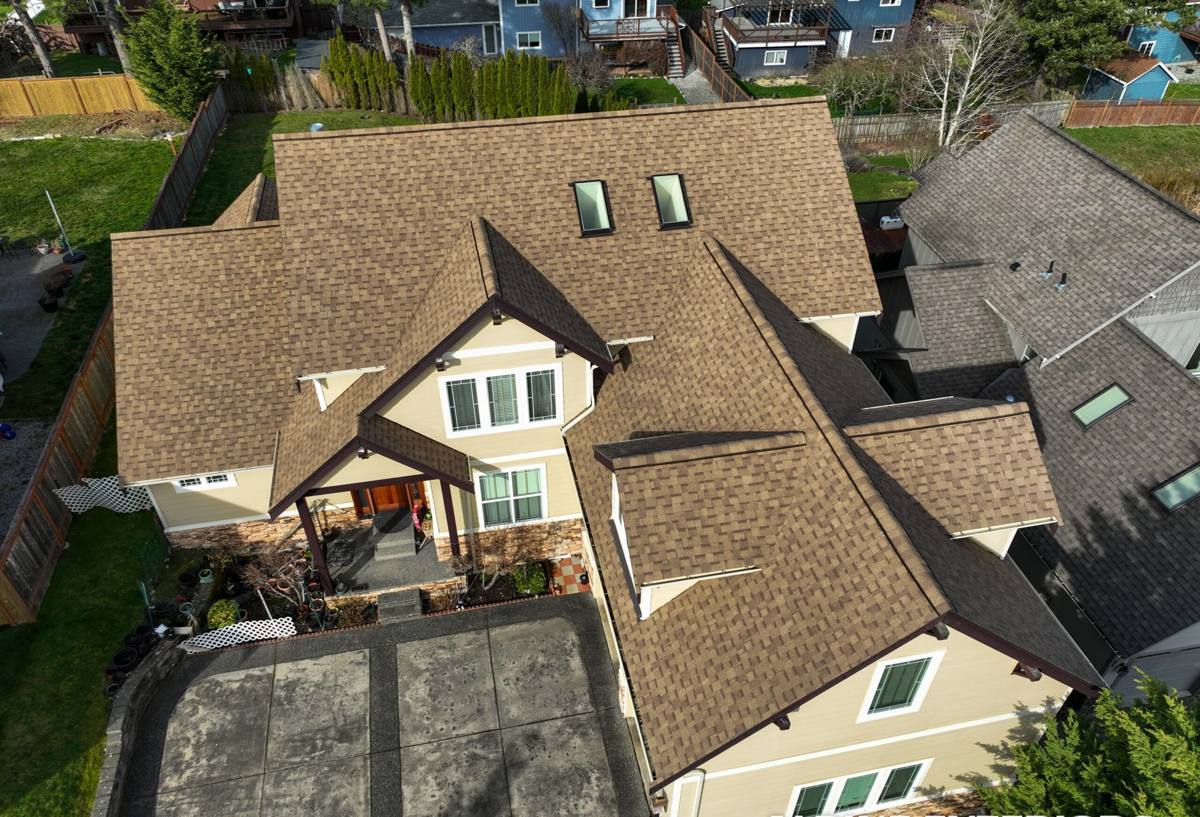
What "Custom" Actually Means for a Window Job
"Custom" gets used loosely in this trade, so it's worth being specific. For us, a custom window job means the window is built or selected to fit the actual rough opening, the actual wall assembly, and the actual exposure of that specific elevation — not forced into a stock size with shims and extra caulk to make up the difference. It also means matching sightlines, grid patterns, and trim profiles to the rest of the house, which matters a lot on the older and architecturally distinct homes scattered through South Hill.
Custom sizing and detailing matter more here than in a new subdivision with uniform stock openings. Older homes settle, framing shifts slightly over decades, and additions or past remodels often introduce openings that don't match any standard size on a shelf. Measuring and detailing for the opening you actually have — instead of the opening a catalog assumes you have — is the difference between a window that performs for twenty years and one that starts leaking air and water within a few seasons.
Signs Your Current Windows Are Losing the Battle
Homeowners usually notice a problem long before they can name it. A few patterns we see often enough in this area to call out directly:
- Fogging or moisture between panes — the seal on the insulated glass unit has failed and the argon or air gap is compromised
- Soft or discolored wood at the sill or lower corners of the frame, often the first visible sign of water getting behind the exterior cladding
- Black or green growth on the sill, frame, or nearby trim that keeps coming back no matter how often it's cleaned
- Noticeable draft or cold spot near the window even with it fully latched
- Hardware that's stiff, corroded, or won't lock flush anymore
- Visible gaps or cracked caulk lines around the exterior perimeter of the frame
Any one of these on its own isn't necessarily an emergency. But on a South Hill exposure, water intrusion problems tend to compound quietly behind the wall before they show up inside, so it's worth having them looked at rather than waiting for a bigger sign.
Frame and Glass Options: What Actually Fits This Site
There isn't one "best" window for every house — the right choice depends on exposure, budget, and how the home is built. Here's how the common options stack up for a climate like this one:
| Frame Material | Moisture Resistance | Maintenance | Best Fit |
|---|---|---|---|
| Vinyl | Very good — won't rot or corrode | Low; occasional cleaning | Budget-conscious replacements, rear/side elevations |
| Fiberglass | Excellent — dimensionally stable, resists warping | Low | High-exposure walls, long-term durability priority |
| Wood, unclad | Poor without diligent upkeep in a wet climate | High — periodic refinishing required | Historic-look interiors where appearance outweighs upkeep |
| Wood-clad (aluminum or fiberglass exterior) | Good — exterior shell protects the wood core | Moderate | Homes wanting a wood interior look with real weather protection outside |
Glass packages matter just as much as frame material. Double-pane with a low-E coating is the standard baseline and performs well for most South Hill homes. Triple-pane adds real value on north-facing or wind-exposed walls, and it also cuts down on street or neighborhood noise, which some homeowners on busier South Hill streets specifically ask about. We'll walk through what makes sense elevation by elevation rather than specifying the same glass package for the whole house by default.
A Note on Corrosion-Resistant Hardware
Given the salt air off the bay, we pay particular attention to hinge, lock, and roller hardware finishes. Cheaper hardware can start pitting or seizing within a few years in this environment. It's a small line item that has an outsized effect on how a window feels to operate five or ten years down the road.
How We Approach an Installation
The window unit itself is only part of a correct installation. Most leaks and failures we get called out to fix trace back to flashing and sealing details, not the window product itself. Our process on South Hill jobs generally includes:
- Removing the old unit carefully and inspecting the rough opening and surrounding sheathing for hidden rot or moisture damage before anything new goes in
- Repairing or replacing any compromised framing or sheathing found during that inspection — this is not optional, even if it adds a step
- Installing a proper drainage plane and flashing sequence so water is directed out and away from the opening, not trapped behind the new window
- Setting the window plumb, level, and square, then sealing per manufacturer specification rather than relying on caulk alone to do the job
- Finishing interior and exterior trim to match the home, and testing operation and seal before we consider the job complete
This sequence takes longer than simply popping a new window into an old opening, but skipping steps is exactly how water intrusion problems get built into a wall for the next decade.
Permits and Energy Code in Bellingham
Window replacement and installation work in Bellingham and Whatcom County is subject to local building code, including energy performance requirements and, in bedrooms, egress sizing rules if the opening or window type is changing. Straight like-for-like replacements sometimes fall outside permit requirements, but anything that changes the opening size, alters egress, or is part of a larger remodel typically needs one. We handle the determination and, when required, the permit process, so you're not left guessing whether your project needs a sign-off from the city or county.
Keeping New Windows Performing for the Long Haul
A correctly installed window still needs a small amount of ongoing attention in this climate — mostly to stay ahead of the moss and moisture South Hill's tree cover and rainfall tend to encourage.
- Rinse sills and frames a couple of times a year to keep moss and algae from establishing, especially on shaded north-facing windows
- Check exterior caulk lines annually for cracking or separation and have any gaps resealed promptly
- Keep weep holes on vinyl and fiberglass frames clear of debris so water can drain as designed
- Operate locks and hardware periodically even on windows you don't open often, so hardware doesn't seize
- Have a professional look at any window showing fogging, soft wood, or persistent drafts rather than waiting for it to worsen
None of this is a heavy maintenance burden — it's a few minutes, a couple of times a year — but it's the difference between windows that look and perform well for their full service life and ones that start showing their age early.
Why Local Installation Experience Matters
A crew that's already worked on South Hill homes has seen how this specific pocket of Bellingham behaves — which elevations take the worst of the wind-driven rain, which older framing types are common in the neighborhood, and what the moss and moisture patterns typically look like on a given exposure. That experience shows up in small decisions during the job: which flashing detail to use on a tricky elevation, when an opening needs extra framing repair before a new window goes in, and where it's worth upgrading glass or hardware versus where standard options are perfectly sufficient. It's the difference between a contractor following a generic checklist and one who's actually accounting for the conditions your specific house sits in.
If you're weighing a window replacement or a custom installation for a South Hill home, we're happy to take a look and talk through what your home actually needs — no pressure, no upsell script. Reach out using the form below for a free estimate.