 Bellingham Exterior
 Roof Replacement Built for Silver Beach's Waterfront Climate
Silver Beach sits close enough to Bellingham Bay that its roofs deal with a combination most inland Whatcom County neighborhoods don't: salty marine air, wind-driven rain coming off the water, and heavy tree cover that keeps everything damp longer than it should be. A roof replacement here isn't just swapping old shingles for new ones — it's an opportunity to correct whatever the original roof got wrong and build in the details that actually hold up against this specific combination of conditions.
We've replaced roofs throughout Bellingham and Whatcom County long enough to know that a roofing system that performs fine in a dry inland subdivision can fail early in a shaded, salt-exposed neighborhood like Silver Beach. This page covers what that means for your roof, what a correct replacement looks like, and how we handle the job from first inspection to final cleanup.
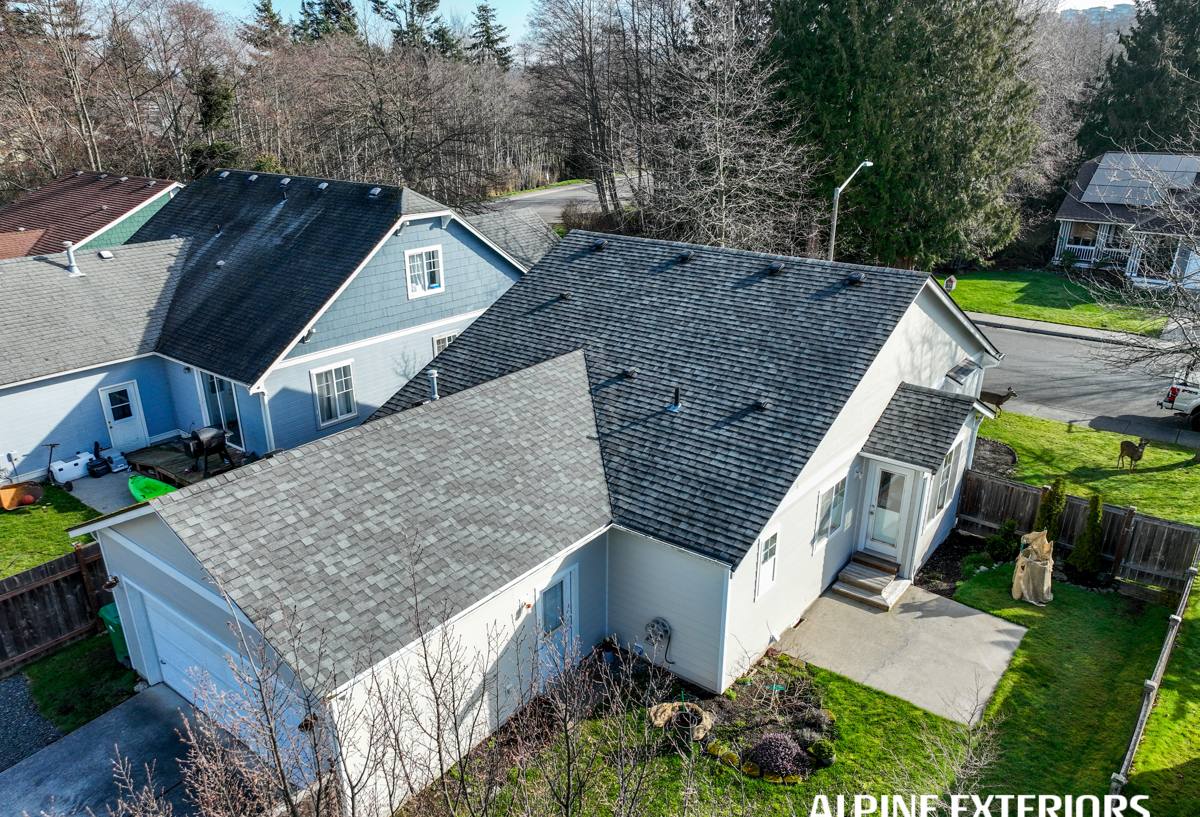
What Bellingham Bay's Air and Rain Do to a Roof Over Time
Salt Air and Fastener Corrosion
Homes closer to the water take on a fine layer of salt-laden moisture, even on days without visible spray. Over years, that salt air accelerates corrosion on exposed metal — nails, flashing, gutter hardware, and any fastener that isn't rated for coastal exposure. When a roof was originally installed with standard-grade fasteners or flashing, corrosion often shows up first at the edges and penetrations, long before the shingles themselves look worn.
Driving Rain and Wind-Driven Water
Storms coming off the bay don't always fall straight down. Wind-driven rain gets pushed sideways and upward under roof edges, around chimneys, and into any gap in flashing or underlayment that a calmer climate could get away with ignoring. This is the difference between a roof that just needs to shed water and one that needs to resist water being pushed into places it normally wouldn't reach.
Moss, Shade, and Tree Cover
Silver Beach's tree cover keeps a lot of roof surface in shade for much of the year, and shaded, damp surfaces are exactly what moss needs to establish. Once moss gets a foothold, it holds moisture against the roofing material, lifts shingle edges as it grows, and can work its way under flashing. A moss-covered roof isn't just a cosmetic problem — it's actively shortening the roof's life the longer it's left untreated.
Signs a Silver Beach Roof Needs Full Replacement — Not Another Patch
Not every roof problem calls for a full tear-off. But in a neighborhood with this much moisture exposure, patch repairs on an aging roof often just delay a bigger failure. Here's what tells us a roof has crossed the line from repairable to due for replacement:
- Moss growth that returns within a season or two of cleaning, even after treatment
- Granule loss heavy enough that shingles look patchy or bald in sections
- Soft or spongy decking felt underfoot during inspection, especially near valleys or eaves
- Repeated leaks in different spots rather than one recurring location
- Rusted, lifting, or missing flashing around chimneys, vents, and skylights
- Shingles curling, cracking, or losing their seal in multiple areas
- A roof original to the house and past its expected service life for its material
- Visible sagging along the roofline when viewed from the street
If you're only seeing one or two of these, a repair may still make sense. If several apply at once, replacement is usually the more honest recommendation — and the one that saves money over repeatedly patching a roof that's already failing underneath.
What a Correct Roof Replacement Actually Involves
Tear-Off and Deck Inspection
We remove the existing roofing down to the deck rather than layering over it. That's the only way to see the actual condition of the sheathing — soft spots, rot, or hidden water damage don't show up until the old material is off. Any damaged decking gets replaced before anything new goes down; installing new roofing over a compromised deck just guarantees an early repeat failure.
Underlayment and Water-Shedding Details
Given how much wind-driven rain this neighborhood sees, underlayment choice and installation detail matter more here than in drier parts of the county. We pay particular attention to eaves, valleys, and low-slope transitions — the spots where water is most likely to be pushed uphill by wind rather than simply running off.
Ventilation
Proper intake and exhaust ventilation keeps the attic space at a consistent temperature and moisture level, which does two things for a home like yours: it slows moss regrowth by keeping the roof deck drier, and it prevents the trapped condensation that leads to rot from the inside out. A lot of older Silver Beach roofs we've opened up were under-ventilated for the amount of moisture the site sees.
Flashing and Penetrations
Chimneys, plumbing vents, skylights, and roof-to-wall transitions are where the vast majority of leaks start — not the open field of shingles. We replace flashing rather than reuse it, and we size it for the conditions here, since corroded or undersized flashing is one of the most common failure points we find on tear-offs in this area.
Choosing the Right Roofing Material for This Neighborhood
There's no single "best" roofing material for every home — the right choice depends on your home's exposure, your maintenance appetite, and your budget. Here's how the common options compare for a salt-air, moss-prone, high-rain site like Silver Beach:
| Material | Moss & Moisture Resistance | Coastal/Salt Air Durability | Maintenance | Typical Lifespan |
|---|---|---|---|---|
| Asphalt composition shingle | Good with proper ventilation; needs periodic cleaning | Good with corrosion-resistant fasteners and flashing | Low to moderate | 25–30 years |
| Architectural/laminate shingle | Better than standard 3-tab; sheds debris more effectively | Good with matched-grade hardware | Low to moderate | 30–35 years |
| Standing seam metal | Excellent — sheds moisture quickly, little for moss to grip | Excellent when finished and fastened for coastal use | Low | 40–50+ years |
| Cedar shake | Poor in shaded, damp sites without diligent upkeep | Moderate; salt air accelerates weathering | High | 20–30 years, shorter if neglected |
| Synthetic composite shingle | Good; resists moisture absorption better than wood | Good | Low | 30–50 years depending on product |
We're upfront that we steer homeowners away from cedar shake on heavily shaded, damp lots like much of Silver Beach — not because it's a bad product everywhere, but because the maintenance it needs to avoid moss and rot in this exact microclimate is more than most owners want to keep up with. Metal and quality laminate shingles tend to be the better fit for this neighborhood's conditions and most homeowners' realistic maintenance schedules.
Our Process From Estimate to Cleanup
- On-site inspection of the current roof, attic, and ventilation — including a look at flashing, decking condition where visible, and any signs of moss or moisture damage
- A written estimate that lays out material options, scope of work, and a straightforward price — no vague allowances or surprise add-ons
- Scheduling that accounts for Whatcom County's weather windows, since a roof shouldn't be opened up during an active rain stretch
- Tear-off, deck inspection and repair, and disposal of old materials
- Installation of underlayment, new flashing, ventilation components, and the chosen roofing material
- A final walkthrough with you before we consider the job finished, plus jobsite cleanup including magnetic sweep for stray fasteners
Permits, Codes, and Working Respectfully in Silver Beach
Roof replacements in Bellingham and unincorporated Whatcom County typically require permitting and inspection, and requirements can vary depending on your specific location and the scope of work. We handle that process as part of the job rather than leaving it for you to sort out. We also plan around the practical realities of working in an established residential neighborhood — protecting landscaping, managing material staging and delivery, and keeping the site as contained as a roof tear-off allows.
Why Hiring a Crew That Already Works Silver Beach Matters
A roofing crew that only occasionally works this close to Bellingham Bay may not think twice about standard-grade fasteners or a stock ventilation layout — and on a roof here, those shortcuts show up as problems within a few years, not decades. Working in this neighborhood regularly means we already know where moss tends to establish first, which flashing details tend to fail under wind-driven rain, and which materials hold up honestly against the salt air rather than just on paper. That local pattern recognition is what keeps a replacement from becoming a repeat call five years later.
If your Silver Beach roof is showing moss that keeps coming back, granule loss, or leaks that seem to move around, we're glad to take a look and give you a straightforward assessment. Reach out for a free, no-pressure estimate using the form below — we'll walk the roof, answer your questions, and give you a clear picture of what it actually needs.