 Bellingham Exterior
 Why Happy Valley's Climate Is Hard on Siding
Happy Valley sits close enough to Bellingham Bay that salt-carrying air reaches the neighborhood regularly, especially during winter storms when wind pushes moisture off the water and drives it straight into exposed walls. Add Whatcom County's long wet season, rain that comes in sideways as often as it falls straight down, and the mature tree cover that keeps many north- and east-facing walls shaded for months at a stretch, and you get conditions that are genuinely tough on exterior siding. Moss doesn't need much of an invitation here — a few consistently damp, shaded months is enough for it to take hold on almost any surface, and once it's established it holds even more moisture against whatever it's growing on.
None of this is specific to one lot or one street. It's the baseline exterior condition for this part of Bellingham, and it's exactly why the siding material and the details of how it's installed matter more here than they would in a drier climate.
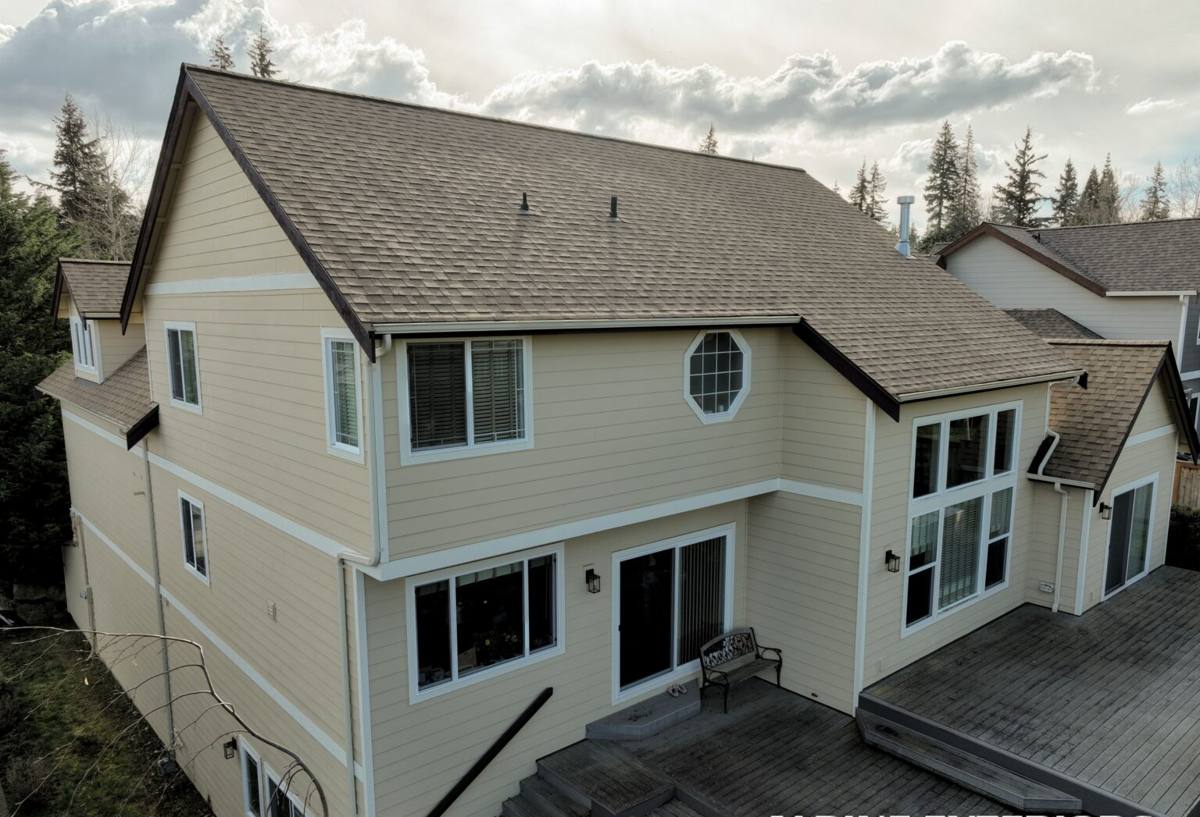
What Salt Air, Rain, and Moss Actually Do to a Wall
Moisture That Never Fully Dries Out
A wall that gets one good soaking and then sits in full sun for a week can shed that moisture without much drama. A shaded Happy Valley wall that stays damp for days between storms doesn't get that chance. Over time, siding materials that absorb water — or that trap water behind them because of poor flashing or a missing drainage gap — stay wet long enough for rot, delamination, or paint failure to set in behind the surface, often before it's visible from the street.
Salt's Slow Corrosion
Salt-laden air is corrosive to exposed metal fasteners, flashing, and trim hardware. It's a slow process, not a dramatic one, but over years it can loosen fastening systems and degrade finishes that weren't specified for a coastal-adjacent environment. This is a detail that's easy to overlook if a contractor doesn't regularly work this close to the water.
Moss as a Moisture Trap
Moss on a roof gets attention because it's visible. Moss on siding is just as much of a problem, and it's often ignored longer. Once moss establishes on a wall surface or in a seam, it holds water against the substrate continuously rather than allowing normal wetting and drying cycles — which is precisely the condition that accelerates rot in wood-based products and breaks down finishes on lower-grade siding.
What a Correct James Hardie Installation Requires Here
James Hardie fiber cement is engineered to resist moisture, insects, and fire far better than wood-based alternatives, but the product only performs to spec if it's installed correctly for the conditions it's going into. In a neighborhood like Happy Valley, that means a few details get extra attention.
Drainage Plane and Rain Screen Gap
A continuous weather-resistive barrier goes on first, with all seams and penetrations properly lapped and sealed so water is directed out and down rather than into the wall assembly. Behind the siding itself, a drainage gap gives any moisture that does get past the surface a path to escape instead of sitting against the sheathing — a detail that matters more on shaded, damp walls than on ones that dry out quickly.
Fastening, Gaps, and Caulking Done to Spec
James Hardie panels and planks need to be fastened at the manufacturer's specified pattern and depth, with the correct gaps left at butt joints and around penetrations so the material can expand and contract without cracking the finish or trapping water. Skipping these gaps — or caulking over places that were never meant to be sealed — is one of the most common ways an otherwise good product fails early.
Flashing at Every Penetration
Every window, door, vent, and light fixture that interrupts the siding is a place water can get behind it if the flashing isn't done right. In a climate with this much wind-driven rain, flashing isn't a formality — it's the difference between siding that lasts decades and one that has a hidden moisture problem within a few years.
Choosing the Right Hardie Product Line for a Wet, Shaded Lot
James Hardie builds its siding in different formulations for different climate zones, and the HZ5 line is engineered specifically for regions like the Pacific Northwest that see sustained moisture and moderate freeze-thaw activity. That climate-specific engineering, paired with the factory-applied ColorPlus finish, is a big part of why we standardized on Hardie rather than working with primed products that rely on a field-applied paint job to hold up against local weather.
Within the Hardie system there are a few profile choices worth understanding for a property like this:
- HardiePlank lap siding — the most common choice, available in several exposure widths and textures, and a strong match for most Happy Valley home styles.
- HardieShingle siding — a shingle profile for homes where a more traditional, textured look is wanted, without the moisture vulnerabilities of actual wood shingles.
- HardiePanel vertical siding — often used as an accent on gables, dormers, or modern-style homes, and useful for breaking up large wall planes.
- HardieTrim boards — matched trim that carries the same fiber-cement durability around windows, corners, and fascia, rather than mixing in wood trim that will weather differently.
How James Hardie Compares in This Climate
| Material | Moisture / Moss Resistance | Salt Air Performance | Typical Maintenance |
|---|---|---|---|
| James Hardie fiber cement | Non-combustible, engineered for wet climates (HZ5), doesn't rot | Factory finish holds up well; correct fasteners resist corrosion | Occasional rinse; factory finish rarely needs repainting |
| Cedar / wood siding | Absorbs moisture; prone to rot and moss growth without diligent upkeep | Finish breaks down faster in salt air | Regular refinishing and moisture monitoring |
| Vinyl siding | Doesn't rot, but can trap moisture behind panels and allow moss on grimy surfaces | Can become brittle or discolor faster near salt air over time | Low, but panels can warp or crack and are hard to color-match if replaced |
| Primed spruce / LP-type products | Relies on field-applied paint and OSB-based substrates; more moisture-sensitive | Coating performance depends heavily on installation and upkeep | Repainting on a shorter cycle; edge-swelling risk if water gets in |
This is why we made James Hardie our standard rather than offering several options: it's the product we're comfortable standing behind for the specific combination of rain, humidity, and salt exposure that Happy Valley homes deal with every year.
Our Process From Estimate to Finished Wall
Every project starts with a walk-around of the home, not just a measurement exercise. We're checking for existing moisture damage, moss buildup, flashing condition around windows and rooflines, and any areas where the current siding has already let water in. That inspection shapes the scope of work — sometimes it's a straightforward re-side, and sometimes there's sheathing repair or additional drainage work needed underneath before new siding goes on.
- On-site inspection and moisture assessment
- Written estimate covering product selection, color, and any substrate repairs identified
- Removal of old siding and inspection of the sheathing and framing underneath
- Installation of the weather-resistive barrier, drainage gap, and flashing at every penetration
- James Hardie installation to manufacturer fastening and gap specifications
- Final walkthrough and warranty registration
We don't cover up a problem behind new siding just to finish faster. If we find rot or a moisture issue during removal, we'll show it to you and talk through the repair before closing the wall back up.
Why a Crew That Already Works Happy Valley Matters
Siding crews that mostly work drier inland areas can do a technically fine install and still get surprised by how this neighborhood's shade patterns, wind exposure, and salt-air proximity affect a wall over time. A crew that regularly works Bellingham's bay-adjacent neighborhoods already knows which elevations tend to hold moisture longest, where moss shows up first, and which flashing details matter most given the wind-driven rain this area sees. That familiarity shows up in fewer callbacks and siding that's still performing well a decade or two after installation, not just on move-out day.
Maintenance Checklist for a Moss-Prone, Salt-Air Property
James Hardie siding installed correctly needs far less upkeep than wood or primed alternatives, but "low maintenance" isn't "no maintenance." A short annual routine keeps it performing the way it's designed to:
- Rinse the siding down once or twice a year with a garden hose and soft brush — avoid high-pressure washing directly at the panels, which can force water behind seams
- Trim back tree limbs and shrubs that keep any wall shaded and damp longer than necessary
- Check caulking at trim joints and penetrations annually and re-caulk where it's cracked or pulled away
- Keep gutters and downspouts clear so roof runoff isn't sheeting down the siding
- Address any moss at the first sign of it rather than letting it establish — a soft wash is usually enough if it's caught early
- Watch for streaking or discoloration near fastener heads, which can signal a hardware issue worth having checked
Warranty and Long-Term Value
James Hardie backs its siding with a strong, transferable product warranty, and the ColorPlus finish carries its own finish warranty separate from the substrate. That matters in a resale market like Bellingham's, where a transferable warranty on siding that's been maintained and correctly installed is a genuine selling point, not just paperwork. Combined with the labor warranty we provide on our own installation work, a Happy Valley homeowner gets coverage on both the material and the workmanship — the two things that actually determine how siding performs over the next twenty or thirty years.
If your current siding is showing moss, staining, soft spots, or paint that won't hold anymore, it's worth having it looked at before those issues spread further into the wall. We're happy to come take a look and put together a free, no-pressure estimate for James Hardie siding built for what this neighborhood's climate actually demands.