 Bellingham Exterior
 Building or Adding On in Silver Beach? Your Windows Have to Work Harder Here
Silver Beach sits close enough to the water that the air itself is different from what you'd find a few miles inland in Bellingham. Salt-laden moisture, wind-driven rain off Bellingham Bay, and a long, damp moss season put real stress on a home's exterior — and windows are one of the first components to show it if they're chosen or installed wrong. New-construction windows are the correct approach for new builds and full-wall additions, because the window is installed into open framing before siding and weather barriers go on, letting us flash it properly from the studs out. That's a very different job from a retrofit replacement window dropped into an existing opening, and it's the right call for most Silver Beach new-construction and addition projects.
This page covers what new-construction windows need to do in this specific neighborhood, what a correct installation actually involves, and why local experience with Silver Beach's exposure matters more here than it does a few blocks away on a more sheltered lot.
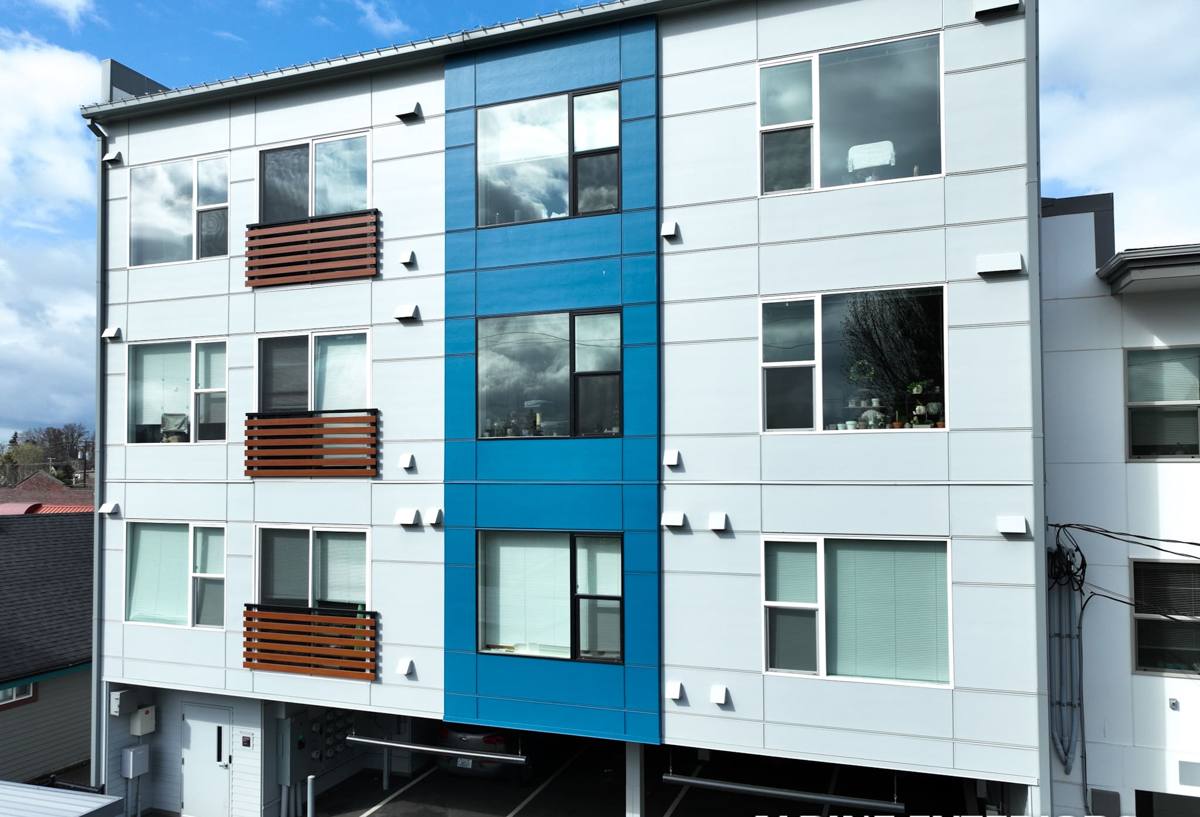
What Silver Beach's Climate Actually Does to a Window Installation
Salt Air
Homes closer to Bellingham Bay deal with airborne salt that accelerates corrosion on unprotected metal — fasteners, flashing, and window hardware included. It doesn't happen overnight, but over years it can pit poor-quality metal components and degrade finishes that weren't rated for a marine-influenced environment. This is a material selection issue as much as an installation one.
Driving Rain
Wind off the water doesn't just drop rain straight down — it pushes it sideways and up under trim, sills, and laps in siding. A window that would perform fine in a calm inland yard can leak in Silver Beach if the flashing details weren't built to shed water uphill and outward, not just downward. This is the single biggest cause of window-related water intrusion we see on wind-exposed Bellingham lots.
Moss and Prolonged Dampness
Whatcom County's wet season runs long, and moss doesn't need much to take hold — a shaded sill, a north-facing wall, or a spot where water sits instead of draining. Moss and algae growth around window trim isn't just cosmetic; trapped moisture underneath it can slowly compromise wood trim, caulk lines, and paint or stain finishes if the original detailing didn't account for drainage and airflow.
None of this means Silver Beach is a hard place to build — it just means the margin for error on window installation is smaller than it is in a lot of the country, and the details that get skipped elsewhere can't get skipped here.
What a Correct New-Construction Window Installation Involves
New-construction windows have a nailing fin that gets integrated directly into the wall's weather-resistive barrier before siding is installed. Done right, this creates a continuous drainage plane that sheds water down and out, away from the framing. The sequence matters as much as the product:
- Rough opening is checked for square, level, and correct sizing before the window ever goes in
- Sill pan flashing is installed first, sloped to drain any water that reaches the sill back to the exterior
- Window is set, shimmed level and plumb, and fastened per the manufacturer's schedule — not just "close enough"
- Nailing fin is integrated with the weather-resistive barrier in the correct shingle-lap sequence: sill, jambs, then head, so upper layers overlap lower ones
- Head flashing is installed above the window to divert water around the top corners, a detail that matters even more under Silver Beach's wind-driven rain
- Interior and exterior gaps are sealed and insulated to control both moisture and air leakage, without over-packing the space with rigid foam or excess sealant
- Exterior trim is set with drainage in mind, not tight against the sill where water and debris — and eventually moss — can collect
Skip or rush any one of these steps and the window itself becomes almost irrelevant — a premium unit installed with poor flashing will leak, and a mid-range unit installed correctly will hold up for decades.
Choosing Window Materials for a Waterfront-Adjacent Lot
We don't push one brand as the only option, because the right material depends on the home's design, budget, and exact exposure. What we do insist on is being honest about trade-offs specific to a salt-air, high-moisture environment like Silver Beach:
| Frame Material | How It Handles This Climate | Maintenance Reality |
|---|---|---|
| Vinyl | Won't rot or corrode from salt air; performs consistently in damp conditions | Low — occasional cleaning, no repainting |
| Fiberglass | Very stable dimensionally, resists moisture and salt exposure well | Low — durable finish, minimal upkeep |
| Aluminum-clad wood | Attractive interior wood look; exterior cladding needs to be genuinely well-sealed at joints to keep moisture off the wood core | Moderate — joint sealant and cladding seams need periodic checks |
| Bare wood exterior | Highest maintenance burden in this environment; prolonged dampness and moss growth accelerate wear on exposed wood | High — regular refinishing and moss control needed |
For most new construction and additions in Silver Beach, we steer homeowners toward vinyl or fiberglass frames, or aluminum-clad wood where the interior wood aesthetic is a priority and the owner understands the added upkeep. We'll walk through the actual trade-offs for your project rather than defaulting to whatever's easiest to install.
Glass Package Considerations
Double-pane, low-E glass with argon fill is standard for new construction in this climate and handles Whatcom County's temperature swings and condensation risk well. On more exposed Silver Beach elevations facing the water and prevailing weather, we'll sometimes discuss upgraded glass packages or impact-resistant options — not because it's required by code, but because it can reduce long-term wear on a window that's taking the brunt of driving rain and wind season after season.
Our Process for Silver Beach New-Construction Projects
- Site and plan review. We look at the home's orientation, elevation relative to the water, and which walls will take the most wind-driven rain, so window and flashing decisions match the actual exposure.
- Product and material selection. We go over frame materials, glass packages, and manufacturer options with honest pros and cons for a salt-air, high-moisture setting — no upselling toward whatever has the best margin.
- Coordination with your builder or GC. New-construction windows have to land at the right point in the build sequence — after sheathing and weather barrier, before siding. We coordinate timing so the install isn't rushed or forced out of sequence.
- Installation. Sill pan, shingle-lap flashing integration, correct fastening, and head flashing — done in the sequence outlined above, on every opening, not just the visible ones.
- Final check. We walk the openings before siding closes them in, because that's the last point where a flashing mistake can be caught and fixed without tearing into finished work later.
Why Local Experience in Silver Beach Specifically Matters
Bellingham has a range of microclimates within just a few miles — a sheltered inland lot and a wind-exposed Silver Beach lot near the bay don't face the same conditions, even though they're both technically "Bellingham weather." A crew that mainly works drier, sheltered subdivisions can get away with shortcuts on flashing and drainage detailing that simply don't hold up on a lot exposed to salt air and driving rain off the water. We work across Whatcom County, but jobs near the water — including Silver Beach — get the same attention to flashing sequence and drainage detailing every time, because that's what the location actually requires, not because it's an upsell.
Knowing the neighborhood also means knowing what tends to go wrong locally: which elevations catch the worst of the wind, where moss takes hold fastest, and which trim details need extra drainage margin. That's the kind of judgment that only comes from doing the work here repeatedly, not from a general new-construction checklist.
Common Mistakes We See on Water-Adjacent Installs
- Flashing installed in the wrong order (head flashing under the weather barrier instead of over the jamb flashing) so water gets directed into the wall instead of away from it
- No sill pan, relying on caulk alone to keep water out of the rough opening — caulk fails over time, a sill pan doesn't rely on adhesion to work
- Trim installed tight to the sill with no drainage gap, creating a spot for standing water and moss
- Fasteners or hardware not rated for coastal exposure, leading to premature corrosion and staining
- Over-sealing the interior gap with expanding foam, which can bow the frame and affect how the sash operates over time
Every one of these is preventable with the right sequence and materials — they're not exotic problems, just ones that require not cutting corners on a job that's easy to rush.
What to Expect for Cost
New-construction window costs depend on window count, size, frame material, glass package, and how many elevations face the weather versus a sheltered side of the home. As a rough starting point, homeowners in this area typically see per-window installed costs ranging from the low hundreds for basic vinyl units up into four figures for larger, higher-performance, or clad-wood windows. Coastal-grade hardware and upgraded flashing details add modestly to material cost but are a fraction of what a water intrusion repair would run later. We'll give you a firm, itemized quote after seeing the plans or the actual openings — not a ballpark that changes once work starts.
Get a Straight Answer for Your Silver Beach Project
If you're building new or adding on in Silver Beach, we're happy to look at your plans, talk through window and material options for your specific exposure, and give you a clear, no-pressure estimate — no obligation, no pushy follow-up. Reach out through the form below and we'll get back to you with next steps.