 Bellingham Exterior
 Why Silver Beach Homes Need a Siding Plan, Not Just a Siding Product
Silver Beach sits close enough to Bellingham Bay that the weather here behaves differently than it does a few miles inland. Homes in this neighborhood take on salt-laden air off the water, get hit by wind-driven rain that doesn't just fall straight down, and sit under a marine layer that keeps north-facing walls and shaded trim damp for months at a time. None of that is unusual for Whatcom County, but it adds up faster here than in a lot of Bellingham's more sheltered neighborhoods. Siding that works fine in a dry inland climate can start failing early in a spot like this if it's the wrong material, or if it's installed without accounting for how water actually moves across this kind of home.
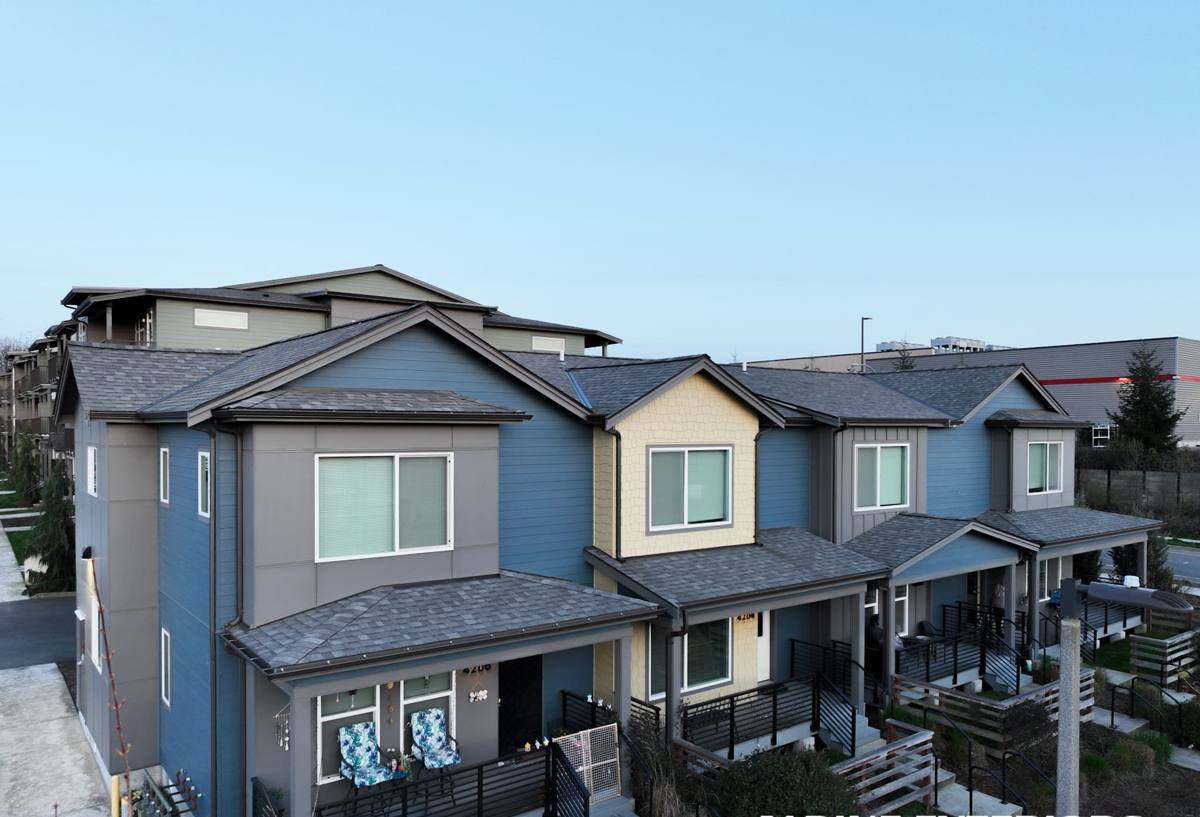
The Three Things Silver Beach's Climate Does to Siding
Salt Air and Corrosion
Airborne salt from the bay settles on exterior surfaces and accelerates corrosion on anything metal — fasteners, flashing, hardware — and it also degrades paint and caulk faster than it does further inland. Over years, homes near the water tend to show chalking, fading, and edge deterioration sooner than homes even a short distance away. This is one of the main reasons material choice and fastener choice matter more here than on the average siding job.
Driving Rain and Wind-Driven Moisture
Storms coming off the water don't just drop rain straight down — wind pushes it sideways and up under laps, around trim, and into any gap that isn't properly flashed or caulked. A siding system built for a calmer climate, with minimal weather-barrier detailing, gets tested constantly in a spot like Silver Beach. The material itself matters less here than the water management behind it, but the material still has to handle repeated wetting without swelling, delaminating, or losing its finish.
The Long Moss Season
Bellingham's wet season runs long, and shaded, north-facing, and tree-covered walls in Silver Beach stay damp for weeks at a stretch. That's exactly the environment moss and algae need to take hold. Once organic growth gets a foothold on siding, it holds moisture against the surface and accelerates whatever degradation is already underway — a bigger problem on materials that absorb water or come with unsealed, field-cut edges than it is on a properly finished, factory-sealed product.
Why We Only Install James Hardie in This Neighborhood
We don't install vinyl, LP SmartSide, Cemplank, Allura, primed spruce, or cedar — not because those products don't have a place somewhere, but because we've made a professional call that James Hardie fiber cement is the material that holds up best to exactly what Silver Beach throws at a house. It's non-combustible, it doesn't rot or delaminate the way wood-based products can when they take on repeated moisture, and its ColorPlus factory finish is baked on and warrantied against fading in a way that field-applied paint isn't. Hardie also builds region-specific HZ5 formulations engineered for the freeze-thaw and moisture patterns of the Pacific Northwest, which matters more here than it would in a drier climate. That's the trade-off we're not willing to make on a home that sits this close to the water.
What a Correct Installation Actually Involves
Hardie siding is only as good as the installation behind it. The product is engineered to perform, but a large share of the siding problems we get called out to inspect in this area trace back to installation shortcuts, not the material itself.
Moisture Management Behind the Cladding
Correct water management starts with a continuous weather-resistive barrier, properly lapped and taped, with flashing integrated at every window, door, and horizontal transition so water is directed out and down instead of behind the siding. On a home exposed to driving rain like Silver Beach sees, this layer matters as much as the siding itself — it's the difference between water that sheds off the wall and water that gets trapped where it can rot sheathing or framing that no one sees until there's a problem.
Fastening and Field-Cutting Specs
Hardie's warranty and performance depend on following the manufacturer's fastening pattern, using corrosion-resistant fasteners — especially important given the salt air here — and maintaining specified gaps and clearances at trim, corners, and the foundation line. Field cuts need to be sealed and primed per Hardie's instructions; an exposed, unsealed cut edge is one of the most common places we see moisture intrusion start on improperly installed jobs.
ColorPlus Finish and Factory-Sealed Edges
Where possible, we detail installations to keep factory-finished, factory-sealed edges exposed rather than relying on field cuts, and we use Hardie's touch-up and caulk systems matched to the ColorPlus finish so color and sheen stay consistent. This keeps the factory warranty intact and keeps the finish performing the way it's designed to in a salt-air environment.
Choosing the Right Hardie Product Line for This Neighborhood
James Hardie makes several siding profiles, and the right one for a Silver Beach home depends on the style of the house and how exposed each elevation is to weather.
| Product | Best Use | Why It Fits Silver Beach |
|---|---|---|
| HardiePlank Lap Siding | Most home styles, primary field siding | Widest color range, proven long-term performance in coastal PNW conditions |
| HardieShingle | Accent areas, gables, craftsman-style homes | Adds texture and curb appeal without sacrificing moisture performance |
| HardiePanel | Modern styles, board-and-batten look | Clean lines, works well with rain screen detailing on exposed elevations |
| HardieTrim | Corners, window and door surrounds, fascia | Matches the cladding's moisture resistance at the most vulnerable transition points |
Most Silver Beach projects use HardiePlank as the primary field material with HardieTrim throughout, sometimes with a shingle or panel accent depending on the home's style. We'll walk through which combination fits your home's specific exposure during the estimate.
How Our Process Works
- On-site assessment. We walk the exterior, note which elevations take the most wind and rain, check existing siding and trim for moisture damage, and look at the condition of the weather barrier where it's accessible.
- Prep and repair. Any damaged sheathing, framing, or flashing gets addressed before new siding goes up — covering over a moisture problem is how small issues turn into expensive ones.
- Weather barrier and flashing installation. This is the layer that actually keeps water out, and we treat it as the most important part of the job, not a formality that gets rushed to hang siding sooner.
- Hardie installation to manufacturer spec. Correct fastening, gaps, clearances, and sealed cut edges throughout, following Hardie's published installation guidelines for our climate zone.
- Final inspection and cleanup. We check caulking, trim, and touch-up work, and walk the finished job with you before we consider it done.
What Affects the Cost of a Silver Beach Hardie Project
| Factor | Why It Matters |
|---|---|
| Home size and elevation count | More square footage and more complex rooflines mean more material and labor |
| Condition of existing sheathing | Water damage found once old siding comes off can require repair before install |
| Siding profile mix | Combining lap siding with shingle accents or panel sections adds labor complexity |
| Trim and detail work | Homes with more windows, corners, and transitions need more precision at each one |
| Access and site conditions | Tight lots, slopes, or limited staging area near the water can affect labor time |
We give every homeowner a written, itemized estimate after the on-site assessment rather than a ballpark number over the phone — Silver Beach lots vary enough in exposure and condition that a phone quote isn't useful.
Maintaining Hardie Siding in This Climate
Fiber cement is low-maintenance compared to wood siding, but "low-maintenance" doesn't mean "no maintenance" in a salt-air, high-moss environment. A little attention goes a long way toward getting the full lifespan out of the material.
- Rinse salt residue and grime off the siding once or twice a year, especially on elevations facing the water
- Keep gutters clear so water doesn't overflow and run down the siding face repeatedly
- Trim back vegetation and tree cover where possible to reduce shaded, damp areas prone to moss
- Gently remove moss or algae buildup before it spreads, rather than pressure-washing aggressively, which can damage the finish
- Inspect caulking at trim and penetrations annually and have any cracked or missing sealant redone promptly
- Address paint or touch-up needs with Hardie-matched products to keep the ColorPlus warranty intact
Why Hiring a Crew That Already Works Silver Beach Matters
A crew that's installed siding throughout this part of Bellingham already knows which elevations on this style of home take the worst weather, how the local moss season behaves, and what water management details actually hold up here versus what looks fine on paper somewhere drier. That local experience shows up in the small decisions — where extra flashing goes, which fastener spec to use given the salt exposure, how tight to detail the trim — that separate a Hardie installation that performs for decades from one that needs rework in a few years. It's also worth working with a crew that installs Hardie exclusively: we're not switching between several different siding systems and applying a one-size-fits-all approach to whichever one a homeowner happens to pick.
If you're considering new siding for a home in Silver Beach, we're happy to take a look and walk you through what your home specifically needs. Request a free, no-pressure estimate below and we'll schedule a time to assess your home's exposure and give you a straight answer on scope and cost.