 Bellingham Exterior
 Why Silver Beach Homes Go Through Siding Faster Than You'd Expect
Homes near the water in the Silver Beach area take a different kind of beating than a house a few miles inland. The air stays damp longer through the day, wind-driven rain finds its way into joints and laps that would stay dry elsewhere, and shaded, moisture-heavy stretches of the year keep moss and algae established on north- and west-facing walls almost year-round. None of that is dramatic on its own. It's the accumulation — season after season of moisture cycling in and out of the wall assembly — that eventually shows up as soft trim, cupped boards, or paint that won't hold no matter how often it's redone.
Siding replacement in this kind of setting isn't just a cosmetic upgrade. Done right, it's a chance to correct whatever let moisture in the first place and put a product on the wall that's actually built for the exposure. Done wrong — same material, same details, just newer — and you're back to the same problems on the same timeline.
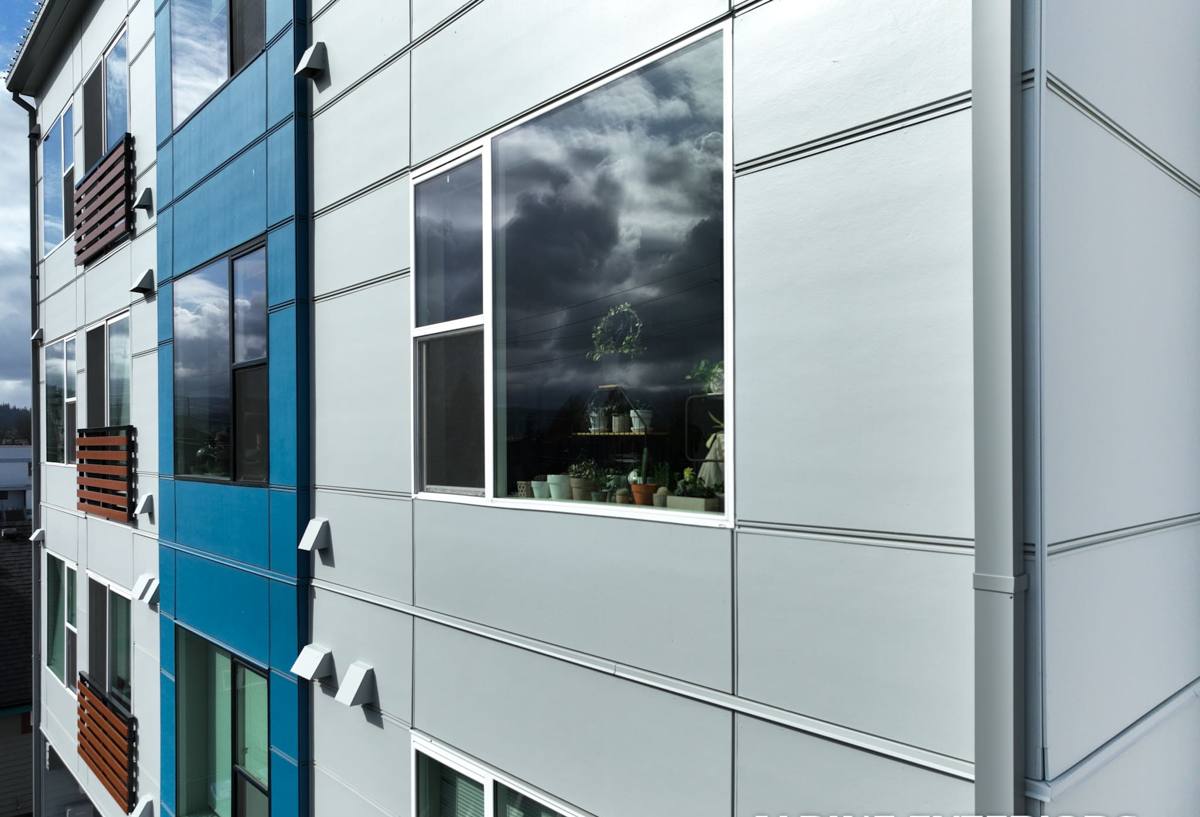
What a Correct Siding Replacement Actually Involves
A siding replacement is only as good as what happens underneath it. Homeowners rarely see this part, which is exactly why it gets shortcut on cheaper jobs. A proper tear-off and reinstall includes:
- Full removal of the old siding and trim, not just an overlay or partial patch
- Inspection of the sheathing for rot, soft spots, or prior water damage, with repairs made before anything new goes up
- A continuous, correctly lapped water-resistive barrier (WRB) — the actual waterproofing layer, which the siding itself is not
- Properly flashed windows, doors, and penetrations, integrated with the WRB so water sheds outward at every layer
- Rainscreen or drainage gap detailing where the wall assembly calls for it, so incidental moisture behind the siding has somewhere to go
- Correct fastening, gapping, and caulking per the manufacturer's installation specs — not "close enough"
Skip any one of those steps and the new siding can look perfect for a year or two while the wall behind it stays exactly as vulnerable as before. This is where a lot of siding jobs quietly fail — not because the material was wrong, but because the install treated the siding as the whole system instead of one layer of it.
James Hardie: What We Install and Why
We install James Hardie fiber cement siding exclusively. We don't offer vinyl, LP SmartSide, Cemplank, Allura, primed spruce, or cedar as alternatives, and that's a deliberate standard, not a limitation of what we're capable of installing. Here's the reasoning, plain:
| Material | How it tends to behave in a wet, low-light coastal climate |
|---|---|
| Vinyl | Doesn't rot, but expands and contracts with temperature swings, can warp or bow over time, and offers no real fire resistance |
| Wood (cedar, primed spruce) | Needs consistent refinishing to stay ahead of moisture; in a climate with this much sustained dampness, upkeep intervals shrink fast |
| LP SmartSide (engineered wood) | Performs well when detailing and maintenance stay on schedule, but as a wood-strand product it's more sensitive to sustained moisture exposure than fiber cement |
| James Hardie fiber cement | Non-combustible, dimensionally stable in swings between damp and dry, holds a factory-baked finish rather than a field-applied paint job |
Hardie's ColorPlus finish is baked on at the factory under controlled conditions, which is a meaningfully different process than painting boards on-site after installation — it's part of why the finish holds up under repeated wet-dry cycling instead of chalking or peeling early. Hardie also builds region-specific product lines (HZ5, HZ10) engineered for different climate zones, so the board itself is matched to the moisture and temperature profile it'll actually face here, not a one-size-fits-all specification. Combined with a strong transferable warranty, that's the combination we're willing to put our name behind.
Signs a Silver Beach Home Is Due for Replacement, Not Another Repair
Not every issue means a full tear-off. But a few signs point clearly toward replacement rather than another round of patching:
- Boards that feel soft, spongy, or crumble at the edges when pressed
- Paint that won't hold for more than a season or two, even after prep and a quality repaint
- Persistent moss or algae growth that returns within weeks of cleaning, especially on shaded walls
- Visible gaps, cupping, or warping at butt joints and corners
- Interior signs — musty smell, staining, or soft drywall near exterior walls — that suggest moisture has already gotten past the siding
- Siding that's original to a home built more than 20–25 years ago, particularly if it's never had the WRB or flashing inspected
If you're only seeing one or two of these in isolated spots, a targeted repair may be enough. If several show up together, especially with any sign of moisture behind the wall, that's usually the point where a full replacement costs less over time than continuing to chase repairs.
How the Process Works, Start to Finish
1. On-site assessment
We walk the exterior, check the condition of the existing siding and trim, and look for early signs of moisture intrusion — not just what's visible from the ground, but at corners, under eaves, and around penetrations where problems usually start.
2. Scope and estimate
You get a clear breakdown of what's being removed, what the underlying wall needs (repairs, WRB, flashing), and which Hardie products and colors fit the home. No pressure, no upsell script — just what the house actually needs.
3. Tear-off and wall inspection
Old siding and trim come off, and the sheathing gets inspected before anything new goes up. Any rot or damage found gets addressed here — this is the step that gets skipped on corner-cut jobs, and it's the one that matters most.
4. Weather barrier and flashing
A continuous WRB goes on with correctly lapped and sealed flashing at every window, door, and penetration. This layer, not the siding, is what actually keeps water out of the wall.
5. Hardie installation to spec
Boards, trim, and accessories go up per James Hardie's published installation guidelines — correct fastener placement, gapping, and caulking — which is also what keeps the manufacturer's warranty intact.
6. Final walkthrough
We go over the finished exterior with you, confirm everything meets spec, and make sure you know what little maintenance the new siding actually needs going forward.
What Drives Cost on a Job Like This
Every home is different, so we won't quote a number without seeing the house — but these are the factors that consistently move a siding replacement estimate up or down:
| Factor | Why it matters |
|---|---|
| Extent of hidden moisture damage | Rotten sheathing or framing found during tear-off has to be repaired before new siding goes up — this is the single biggest variable |
| Home size and story count | More wall area and higher work (scaffolding, lifts) both add labor time |
| Trim and architectural detail | Corner boards, window trim, and dormers all add cutting and fitting time versus a simple flat wall |
| Existing siding type | Some materials come off cleaner and faster than others; multiple layers of old siding add removal time |
| Color and finish selection | Factory ColorPlus finishes and premium color options carry different material costs than standard options |
Why Local Experience in Silver Beach Actually Matters
A crew that already works in and around Silver Beach knows what this exposure does to a wall before the tear-off even starts. That's not a sales point — it changes the estimate. It means we're not guessing at how much hidden moisture damage to expect on a shaded, water-adjacent lot, we're not surprised by how quickly moss reestablishes on north-facing walls, and we spec flashing and drainage details for the exposure this specific area gets rather than a generic Pacific Northwest average. Bellingham and Whatcom County both see plenty of rain, but a lake-adjacent or waterfront lot with more shade and slower drying time behaves differently than a home a few blocks inland, and the installation should reflect that difference.
It also means faster, more accurate estimates. When you've assessed dozens of homes in the same conditions, you're not starting from scratch on what to look for.
Maintenance After Installation
One of the practical advantages of switching to Hardie in a climate like this is how little ongoing maintenance it asks for compared to wood or a failing paint job:
- Rinse the exterior periodically to keep moss and algae from establishing, especially on shaded sides
- Keep gutters clear so runoff doesn't sheet down the wall face
- Trim back vegetation and landscaping that keeps siding shaded and slow to dry
- Check caulking at trim joints and penetrations every couple of years and touch up as needed
- Address any impact damage or chipping promptly rather than letting it sit
That's a meaningfully shorter list than what wood siding or a field-painted product asks for, and it's a big part of why the long-term cost of ownership favors Hardie even when the upfront material cost is comparable to alternatives.
Get a Straight Answer on What Your Home Needs
If your siding is showing its age — or you just want an honest read on whether repair or replacement makes more sense for your specific house — we're glad to come take a look. The estimate is free, there's no pressure, and you'll get a clear explanation of what we find and why. Use the form below to get started.