 Bellingham Exterior
 Why Columbia Homes Wear Out Siding Faster Than You'd Expect
Columbia is one of Bellingham's older, established in-city neighborhoods, which means a lot of the homes here were sided decades ago with whatever material was standard at the time — and a lot of that siding is now well past the point of patching. Add in what Whatcom County weather does to a house year after year, and you get a specific, predictable failure pattern that's different from what you'd see in a drier climate.
Three things drive most of the siding damage we see on Columbia homes: salt air rolling in off Bellingham Bay, long stretches of driving rain that push moisture sideways into every seam and joint, and a moss season that can stretch for most of the year on shaded lots. None of these are dramatic events — no single storm causes the damage. It's the slow, cumulative effect of a house sitting in that combination, season after season, for 20 or 30 years.
Salt Air
Being close enough to the bay to catch salt-laden air matters more than most homeowners realize. Salt is hygroscopic — it pulls moisture out of the air and holds it against a surface longer than plain rain would. On old wood or composite siding, that means paint fails faster, fasteners corrode faster, and any exposed edge or end-cut stays damp longer than it should.
Driving Rain
Bellingham doesn't just get a lot of rain — it gets a lot of wind-driven rain, which behaves very differently than a straight-down shower. Driving rain gets forced up and under laps, into nail holes, and behind trim that isn't properly flashed. A siding system that's fine in a light, vertical rain climate can still fail here if it wasn't installed with wind-driven moisture in mind.
Moss Season
Mature tree canopy is common in older Bellingham neighborhoods, and shaded siding stays wet far longer after a rain than siding in full sun. That extended damp window is exactly what moss, algae, and mildew need to establish. On wood-based products, that growth holds moisture against the surface and accelerates rot from the outside in.
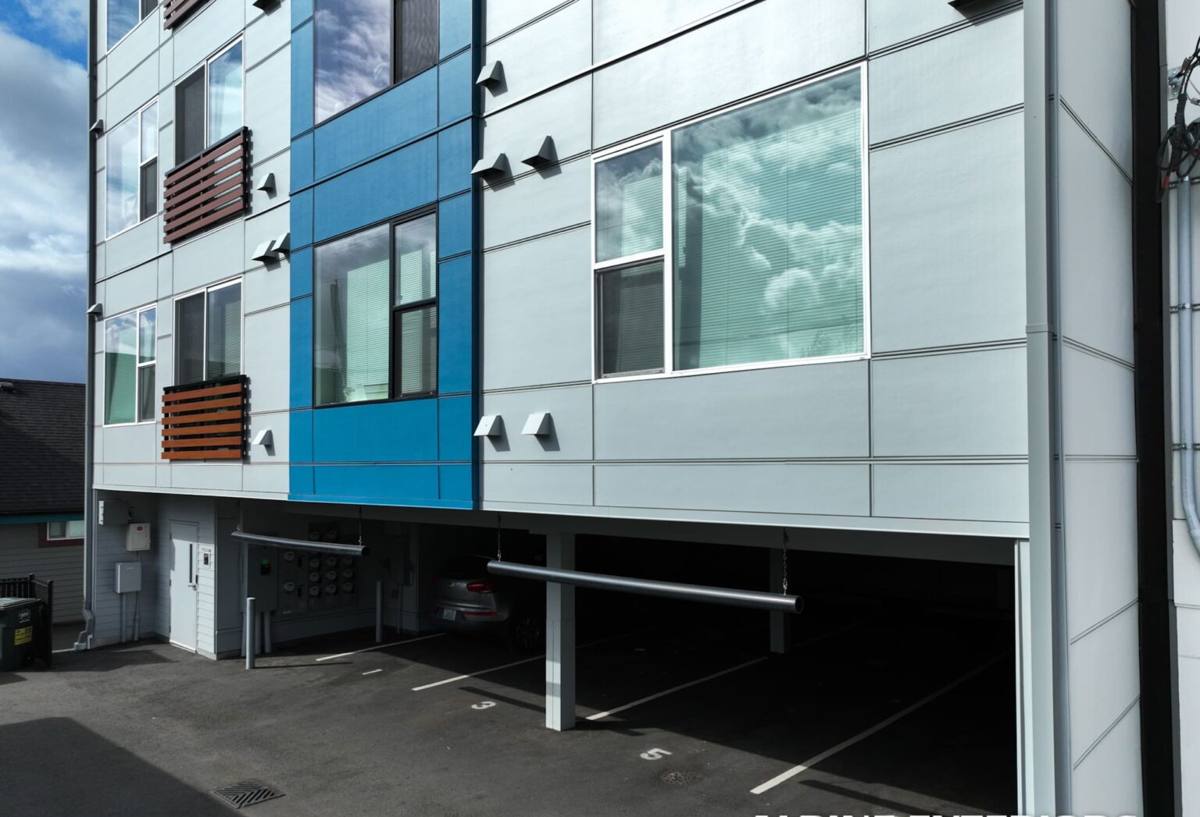
Signs Your Columbia Home Needs Siding Replacement, Not Just Repair
Not every siding problem means a full replacement. But there's a point where patching individual boards or panels stops being cost-effective and starts being a way to delay a bigger bill. Here's what tells us a home is past the repair stage:
- Soft or spongy spots when you press on the siding, especially near the bottom courses and under windows
- Paint that won't hold anymore, even after a fresh coat — a sign moisture is working from underneath
- Visible gaps, warping, or buckling between boards or panels
- Persistent moss or algae growth that comes back within weeks of cleaning
- Siding that's original to a home built before the 2000s and has never been fully replaced
- Interior signs — musty smells, peeling interior paint near exterior walls, or visible staining — that suggest moisture is already getting past the siding
If you're seeing two or more of these, it's worth having someone pull a section and look at the sheathing underneath before deciding what to do next.
What a Correct Siding Replacement Actually Involves
Siding replacement isn't just removing old boards and nailing up new ones. In a climate like Whatcom County's, the work that happens underneath the visible siding matters more than the siding itself.
Tear-Off and Sheathing Inspection
Once the old siding comes off, we inspect the sheathing for rot, soft spots, or existing water damage — which is common on older Columbia homes that have had moisture working behind the siding for years without anyone knowing. Any compromised sheathing gets replaced before anything new goes up. Covering damaged sheathing with new siding just hides a problem that keeps getting worse.
Weather-Resistive Barrier and Flashing
This is the layer that actually keeps a house dry, not the siding itself. A properly lapped weather-resistive barrier, correctly integrated flashing at windows, doors, and roof lines, and proper drainage at the bottom of the wall are what stop wind-driven rain from becoming a rot problem. This step gets rushed on a lot of budget installs, and it's usually the reason a house with "new siding" still has moisture problems five years later.
Siding Installation
Correct fastening, proper gapping for expansion, and manufacturer-specified clearances at grade, roof lines, and butt joints all affect how the siding performs over the following decades — not just how it looks the day it goes up. In a wind-driven rain climate, installation detail at every joint and penetration is what determines whether water actually stays out.
Trim, Caulking, and Finish Work
The last step is finishing the details — trim, corners, and joints — with the right materials and the right sealants for a coastal Pacific Northwest climate. Cutting corners here is where a lot of otherwise decent siding jobs fail early.
Why We Install Only James Hardie Fiber Cement
We don't install vinyl, LP SmartSide, primed spruce, cedar, or other fiber cement brands like Cemplank or Allura. That's a deliberate standard, not a limitation on what we're capable of installing.
Given what Columbia homes are up against — salt air, sustained wind-driven rain, and a long damp season that favors moss and mildew — wood-based and engineered-wood siding products carry a maintenance and moisture-management burden that's hard to justify long-term. Vinyl handles moisture fine on its own but can warp in temperature swings and doesn't hold paint if a homeowner ever wants to change the color. James Hardie fiber cement is non-combustible, doesn't feed moss and mildew the way wood-based products do, and holds its factory-applied ColorPlus finish far longer than field-applied paint on wood siding typically lasts.
Hardie's HZ5 product line is engineered specifically for climates with high moisture exposure — which describes Whatcom County about as well as any product spec can. Paired with a transferable manufacturer warranty and a correct installation, it's the product we're comfortable standing behind on a home that's going to face decades of this weather.
Siding Options Compared for This Climate
| Material | Moisture Behavior in Coastal PNW Climate | Maintenance | Our Position |
|---|---|---|---|
| James Hardie Fiber Cement | Non-combustible, dimensionally stable, resists moisture-driven swelling | Occasional wash; factory finish holds color for years | What we install |
| Vinyl | Sheds water well but can warp or gap with thermal cycling | Low, but limited repair/color options once installed | Not installed by us |
| LP SmartSide / Engineered Wood | Wood-based core is more moisture-sensitive at cut edges and seams | Requires vigilant caulking and paint upkeep | Not installed by us |
| Cedar | Natural material, but absorbs moisture and is a food source for moss/mildew | Regular refinishing and moss treatment needed | Not installed by us |
| Other Fiber Cement (Cemplank, Allura) | Similar base material to Hardie, but we standardize on one system for consistent installation and warranty support | Comparable to Hardie | Not our standard |
Cost Factors for a Columbia Siding Replacement
Every home is different, so we don't quote broad numbers without seeing the house. But these are the factors that actually move the price on a siding replacement in this area:
| Factor | Why It Matters |
|---|---|
| Home size and wall complexity | More corners, gables, and dormers mean more cutting, flashing, and labor |
| Sheathing condition | Rot discovered during tear-off adds material and labor to repair before siding goes back on |
| Existing siding removal | Multiple layers of old siding or hard-to-remove materials add time |
| Trim and detail work | Window and door trim, corner boards, and fascia detail all affect finish-stage labor |
| Access | Tight lots, mature landscaping, or multi-story sections can slow staging and add scaffolding cost |
How Our Process Works
We keep the process straightforward, especially since siding replacement disrupts a home's exterior for a stretch of time and homeowners deserve to know what's happening at each stage.
- A free on-site estimate where we look at the actual condition of your current siding, not just its age
- A written scope that spells out what's being replaced, what sheathing repair (if needed) will involve, and what Hardie product and color you've chosen
- Tear-off and sheathing inspection, with any damage flagged and discussed before we cover it back up
- Weather barrier, flashing, and siding installation to manufacturer spec
- Trim, caulking, and final finish work
- A walkthrough with you before we consider the job done
Why Hiring a Crew That Already Works in This Area Matters
Siding installation isn't a one-size-fits-all trade. A crew that mostly works drier inland climates can do technically fine work and still make choices — on flashing details, gapping, or sealant selection — that don't hold up against sustained coastal wind-driven rain and salt exposure. Working regularly in Bellingham and Whatcom County means we're used to building in the margin this climate actually requires, not the margin a spec sheet assumes for an average U.S. house.
It also means we're not guessing at how a Columbia home ages after the job is done. We see the results of siding work — ours and other people's — years later, on homes with the same exposure your house has. That feedback loop is part of why we standardized on one product system installed correctly, rather than offering every option and hoping it works out.
If your siding is showing its age, or you just want an honest read on whether repair or replacement makes sense for your Columbia home, we're happy to take a look. The estimate is free, there's no pressure, and you'll get a straight answer either way — just fill out the form below to get started.