 Bellingham Exterior
 Siding Repair for Silver Beach Homes
Silver Beach is one of Bellingham's older, tree-shaded residential neighborhoods, and homes here take on a specific kind of weather stress. Whatcom County's marine-influenced climate means moisture-laden air, driving rain that comes in sideways during winter storms, and a moss season that can run most of the year under heavy tree cover. Siding in this environment doesn't fail all at once — it fails in small, quiet ways that add up: a cracked panel here, a soft spot near a downspout there, a section of trim that's been holding water for two winters without anyone noticing. This page covers what siding repair actually involves for a Silver Beach home, what we look for, and why the details matter more here than they would in a drier climate.
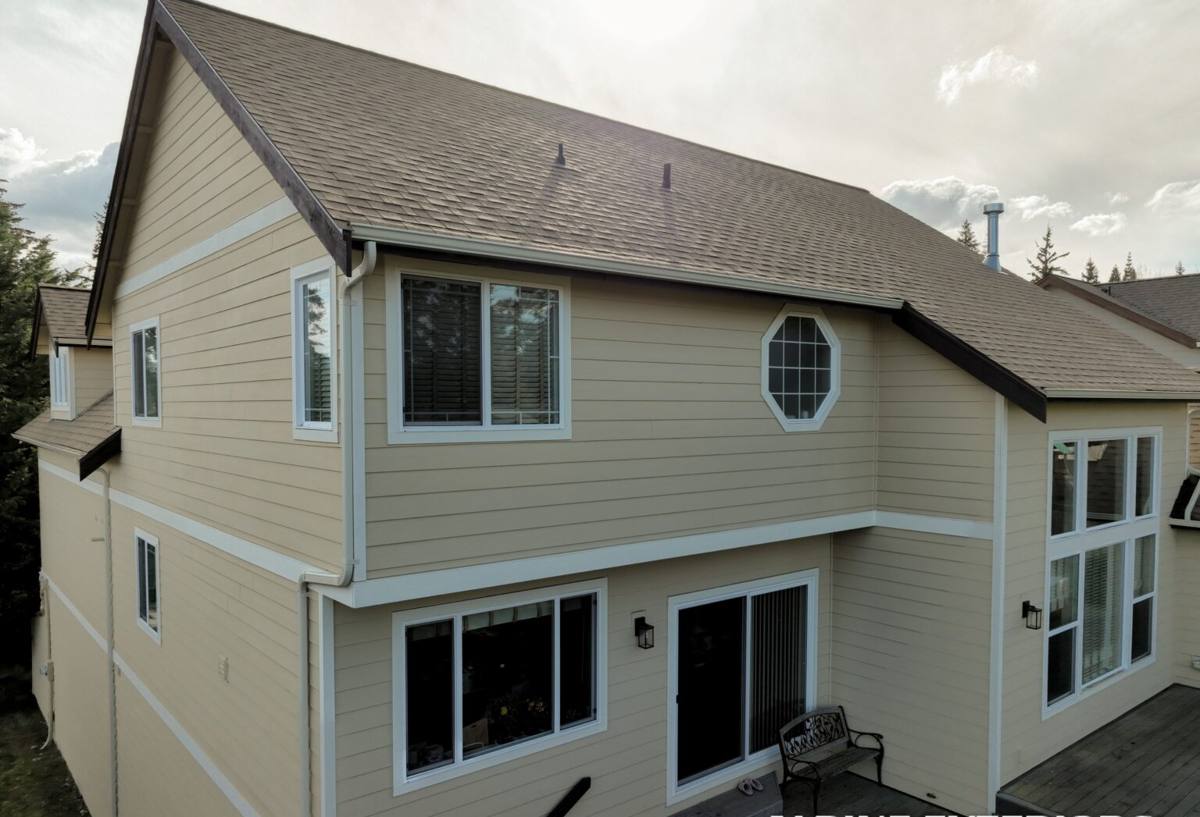
Why This Climate Is Hard on Siding
Bellingham doesn't get extreme weather in the way some parts of the country do, but it gets steady, relentless weather — and steady beats extreme when it comes to siding failure. A few things specific to this area matter more than homeowners usually expect:
Moisture That Never Fully Dries
Between fall and spring, Whatcom County often goes weeks without a real drying stretch. Siding that gets wet during a storm may not fully dry out before the next one arrives. Materials that absorb moisture — or siding installed without proper drainage behind it — stay damp longer than they were ever designed to.
Driving Rain and Wind-Driven Exposure
Storms off the Sound don't just fall straight down. Wind pushes rain sideways into wall assemblies, which puts far more stress on seams, laps, butt joints, and trim transitions than vertical rainfall does. Any gap, any under-caulked joint, any panel that's lost its factory seal becomes an entry point.
Moss, Algae, and Shaded Exposure
Mature trees are part of what makes Silver Beach a nice place to live, but shaded, north-facing walls stay damp longer and grow moss and algae readily. That growth holds moisture against the siding surface and, on softer materials, can accelerate surface breakdown over time.
Salt-Influenced Marine Air
Homes throughout Bellingham's neighborhoods sit within a marine air influence off the Sound — a mix of humidity and salt-tinged air that's harder on fasteners, trim, and unprotected wood than a dry inland climate would be. It's a slow effect, but it's constant.
What Actually Fails on Bellingham Siding
When we inspect a repair call in this area, the damage almost always traces back to one of a handful of causes:
- Caulk and sealant joints that have shrunk, cracked, or pulled away, letting wind-driven rain behind the siding
- Flashing at windows, doors, and rooflines that was installed short, missing, or improperly lapped
- Panel butt joints that weren't properly backed or sealed, creating a direct water path
- Siding installed too close to grade or a deck surface, wicking ground moisture
- Fastener failure — nails or screws that have corroded, backed out, or were placed incorrectly
- Impact damage from storm debris or falling branches, common under mature tree canopy
- Trim and corner boards that trap water at end grain because they were never sealed on all sides
Most of these are not dramatic. They're the kind of thing a homeowner notices as a stain, a slightly soft spot when pressed, or a section that looks discolored compared to the rest of the wall. Caught early, they're a repair. Left alone through another wet season, they can become sheathing damage, which is a much bigger job.
Signs Your Siding Needs a Repair Call
A quick self-check homeowners in Silver Beach can do a couple of times a year, especially before and after the wet season:
- Panels that feel soft, spongy, or flex when pressed near the bottom edge
- Visible cracking, splitting, or buckling in individual boards or panels
- Persistent dark streaking, staining, or moss buildup that doesn't wash off easily
- Paint or finish that's peeling, bubbling, or chalking heavily in one area but not others
- Gaps opening up at seams, corners, or where siding meets trim, windows, or doors
- A musty smell or visible moisture inside near an exterior wall
- Missing, cracked, or visibly deteriorated caulking around penetrations
None of these automatically mean a full re-side. They mean it's time for someone to look closely and tell you honestly what's actually happening behind the surface.
Repair or Replace? What Actually Drives That Decision
Homeowners often assume any visible damage means full replacement, or the opposite — that a patch will handle anything. Neither is reliably true. The right call depends on scope, cause, and what's underneath.
| Factor | Points Toward Repair | Points Toward Replacement |
|---|---|---|
| Extent of damage | Isolated to one wall or a few panels | Spread across multiple elevations |
| Underlying sheathing | Dry, solid when probed | Soft, discolored, or rotted |
| Age of existing siding | Still well within expected service life | Near or past end of expected life |
| Cause of damage | One-time event (impact, isolated flashing failure) | Systemic issue (widespread moisture intrusion, product-wide failure) |
| Material availability | Matching material/profile still obtainable | Discontinued or badly weathered mismatch with new material |
That last row matters more than people expect. If your home has an older siding product that's faded or been discontinued, a patch can end up looking like exactly what it is — a patch. Sometimes the more honest answer for a homeowner's long-term satisfaction is a phased replacement of the affected elevation rather than a repair that will always stand out.
What a Correct Repair Actually Involves
A repair that's done right isn't just "replace the bad board." It addresses why the board failed in the first place, or the same failure shows up again in a year or two.
Diagnose Before Cutting
We start by finding out how water got in, not just where it's showing up. Damage often appears several feet from its actual entry point, especially where water has traveled down behind the siding before finding a gap to show through.
Check What's Underneath
Once affected panels are pulled, we check the water-resistive barrier and sheathing. If the barrier is intact and the sheathing is dry, it's a straightforward repair. If there's rot or compromised sheathing, that gets addressed before any new siding goes back on — covering damaged sheathing with new siding just hides a problem that keeps growing.
Correct the Root Cause
This is the step that's easy to skip and shouldn't be. If a flashing detail was wrong, it gets rebuilt correctly. If a joint was under-sealed, it's resealed to spec. If grade or a deck surface is holding moisture against the wall, that gets flagged for the homeowner even if it's outside the siding scope itself.
Match and Finish Properly
New material gets fastened, sealed, and finished to match the surrounding siding as closely as the existing product allows, with attention to how the new section will weather over time relative to the old.
Why We Only Work With James Hardie
When a repair calls for new siding material — whether it's a patch, a partial elevation, or a full re-side — we install James Hardie fiber cement exclusively. We don't install vinyl, LP SmartSide, cedar, primed spruce, or other fiber cement brands, and that's a deliberate standard, not a limitation we're stuck with.
Fiber cement doesn't feed moss the way wood-based products can, and it doesn't absorb and hold water the way some engineered wood siding does when a seal fails. Hardie's ColorPlus factory finish is baked on rather than field-applied, which matters directly for repair work: a factory finish holds color and weathers more predictably than a repair section that was painted on-site, so patched areas blend in better over time instead of standing out. Hardie also offers HZ5 products engineered for the kind of wind-driven rain and moisture exposure common in the Pacific Northwest, plus a strong transferable warranty when the product is installed to Hardie's specifications — which matters to a future buyer if you sell the home.
None of that means fiber cement is maintenance-free or immune to installation mistakes. It still needs correct flashing, proper clearances, and sealed joints. But it gives a Silver Beach home a material that's built for the climate it's actually sitting in, rather than one that's fighting it.
Our Process for Silver Beach Repair Calls
- Inspection. We look at the visible damage and everything around it — trim, flashing, grade, adjacent walls — because siding problems rarely stay contained to where they first show up.
- Honest scope. We tell you plainly whether this is a repair, a partial re-side, or something bigger, and why — including what we found once we could see behind the surface.
- Root-cause correction. Flashing, sealant, and drainage details get fixed as part of the job, not left for the next repair call.
- Clean execution. Matching or replacement material installed to spec, with attention to how it will hold up through the next several wet seasons, not just how it looks the day we finish.
Why a Crew That Already Works This Neighborhood Matters
Silver Beach homes span a range of ages and siding types, and a lot of the damage we see traces back to details that were done wrong the first time — often years before the homeowner ever called anyone. A crew that regularly works in Bellingham neighborhoods like this one has already seen how the local combination of driving rain, shaded moisture, and long wet stretches plays out on real houses, not in a manual. That matters for diagnosis as much as for the repair itself: knowing where water actually tends to get in on homes like yours means less guesswork and fewer repeat visits.
It also means honest scoping. We're not incentivized to turn a manageable repair into a full re-side, and we're not going to patch over a rot problem to make a quick fix look cheaper than it is. We tell you what we find and what it actually takes to fix it correctly.
If you've got a section of siding in Silver Beach that's staining, softening, or just doesn't look right anymore, we're happy to take a look and give you a straight answer — no pressure, no obligation. Reach out for a free estimate using the form below.