 Bellingham Exterior
 Why Edgemoor's Setting Is Hard on Siding
Edgemoor sits along Bellingham Bay on wooded, often sloped lots, and that combination creates a tougher environment for exterior siding than a lot of homeowners realize. The bay puts salt-laden air on the west- and south-facing walls of many homes, which accelerates corrosion on fasteners, trim, and any siding product that isn't built to handle it. The mature tree canopy that gives the neighborhood its character also means shade, damp leaf litter against foundations, and slower drying times after our long Pacific Northwest rainy stretches.
Put those two things together — salt air plus shade — and you get a textbook setup for moss, algae growth, and moisture that lingers on siding surfaces far longer than it would on an open lot. Whatcom County's wet season runs long, and homes tucked under trees near the water often stay damp well after the rain stops elsewhere in Bellingham. Siding that can't shed water fast or resist that kind of biological growth ages badly here, regardless of what the manufacturer's brochure claims.
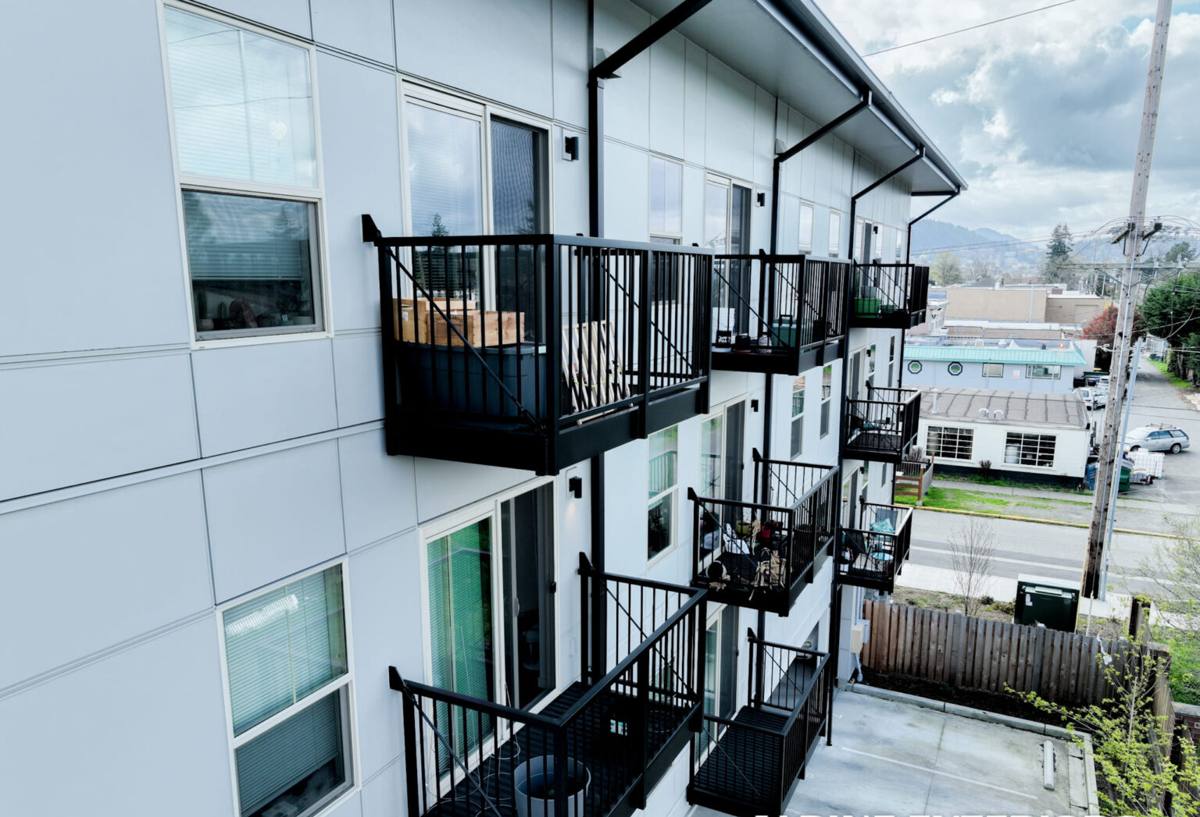
What "Correct" Siding Installation Actually Means
Siding installation isn't just nailing boards to a wall. On a home exposed to driving rain and salt air, the parts you don't see matter more than the parts you do. A correct installation manages water at every layer — behind the siding, around every penetration, and at every horizontal surface where water wants to collect.
The Layers Behind the Siding
Underneath any new siding, there needs to be a continuous weather-resistive barrier, properly lapped and taped, with flashing integrated at every window, door, deck ledger, and roof-to-wall intersection. On older Edgemoor homes we often find this layer missing, deteriorated, or installed with gaps that let water track behind the cladding for years without any visible sign on the outside.
Fastening and Clearance
Fastener type, spacing, and depth all affect how siding performs over time, especially in a salt-air environment where the wrong fastener corrodes and stains the face of the siding. Ground clearance and clearance from roofs, decks, and patios also matter — siding installed too close to grade or to a horizontal surface stays wet longer and is one of the most common failure points we find on wooded, shaded lots like the ones common in Edgemoor.
Why We Install Only James Hardie Fiber Cement
We made the decision years ago to install James Hardie fiber cement siding exclusively, and a neighborhood like Edgemoor is a good example of why. Vinyl siding softens, warps, and can crack in temperature swings, and it doesn't hold paint if a homeowner ever wants to change the color down the road. LP SmartSide and other engineered wood products perform reasonably well when detailing is perfect, but they're wood-based, which means they're more sensitive to the exact kind of prolonged moisture exposure that shaded, waterside lots produce. Primed spruce and raw cedar require more maintenance than most homeowners want to keep up with, and both are more vulnerable to moisture and pests over time.
James Hardie fiber cement is non-combustible, doesn't swell or rot the way wood-based products can, and holds its factory-applied ColorPlus finish far longer than field-applied paint. Hardie's HZ5 product line is engineered specifically for climates with higher moisture exposure, which is exactly the profile of a bay-adjacent, tree-shaded neighborhood. That durability, combined with a strong transferable warranty, is why it's the only product we put on homes — including our own.
Our Siding Installation Process in Edgemoor
- Site and wall assessment — We evaluate sun exposure, tree cover, drainage patterns, and existing wall condition specific to your lot, since shaded and open sections of the same house can age very differently.
- Tear-off and sheathing inspection — Old siding comes off and we inspect the sheathing underneath for rot, soft spots, or prior water damage before anything new goes up.
- Weather barrier and flashing — A new weather-resistive barrier is installed with correct laps, and flashing is integrated at every window, door, and penetration.
- Hardie installation to manufacturer spec — Panels or lap siding are installed with the correct fasteners, spacing, and clearances called for in James Hardie's installation instructions.
- Trim, caulking, and final detail work — Trim is fitted, joints are sealed with the right sealant, and every penetration is checked before we consider the job finished.
What We Commonly Find on Edgemoor Homes During Tear-Off
Because we work in this neighborhood regularly, we've seen the patterns that repeat on wooded, bay-adjacent lots. It's worth knowing about these before you assume your siding just needs a refresh:
- Moss and algae staining concentrated on north- and shade-facing walls, often signaling prolonged moisture rather than just cosmetic buildup
- Corroded fasteners on walls with direct or partial bay exposure, sometimes bleeding rust streaks down the siding face
- Soft or delaminating sheathing near ground level, especially where landscaping or mulch beds sit close to the foundation
- Missing or failed flashing above windows and at deck ledgers, invisible until the old siding comes off
- Paint failure or swelling on wood-based siding in shaded sections, even where sun-exposed walls on the same house look fine
Choosing Colors and Profiles for a Wooded, Waterside Lot
Edgemoor's tree cover and water views influence how a home reads from the street and from the bay side, so color and profile choices matter more here than on a flat, open lot. Darker ColorPlus finishes can look striking against green tree cover but show pollen, dust, and moss growth differently than lighter tones in a shaded setting. Lighter, more traditional colors tend to hide the gradual dust and pollen that settle on siding under a heavy tree canopy, which is worth factoring in if low maintenance is a priority.
Profile matters too — a traditional lap siding reads differently under mature trees than a smoother panel product, and homeowners with visible bay-side elevations often want a different look on the water-facing side than on the street-facing side. We walk through these options on-site, against your actual lot, rather than from a swatch in an office.
Cost Factors for Edgemoor Siding Projects
Every Edgemoor home is different, but the factors that drive a siding installation quote tend to be consistent. Understanding them helps you compare estimates apples-to-apples.
| Factor | Why It Matters |
|---|---|
| Home size and story count | More wall area and taller elevations mean more material, more labor, and more scaffolding or lift access |
| Sheathing condition | Rot or moisture damage found during tear-off adds repair scope before new siding can go on |
| Site access | Sloped, wooded lots common in Edgemoor can limit staging area and require more careful material handling |
| Trim and detail complexity | Multiple gables, dormers, or custom trim work add labor time beyond flat wall installation |
| Existing siding removal | Some materials come off cleanly; others (like old stucco or multiple layers) take longer and cost more to remove and dispose of |
| Color and profile selection | Standard ColorPlus colors versus premium finishes or custom trim details affect material cost |
What to Expect Before Signing a Contract
A siding installation is a significant investment, and a contractor who knows the neighborhood should be able to walk you through specifics, not generalities. Before you commit, confirm the following:
- A written scope that specifies weather-resistive barrier, flashing details, and fastener type — not just "new siding installed"
- An on-site walkthrough of your actual walls, including shaded and water-exposed sections
- Clarity on how sheathing repairs (if found) will be handled and priced
- Manufacturer installation instructions being followed for warranty eligibility
- A realistic timeline that accounts for Whatcom County's wet-season scheduling
Why a Crew That Already Works Edgemoor Matters
Siding installation done right depends on understanding the specific conditions a home faces, not just following a generic checklist. A crew that has already worked on Edgemoor's wooded, bay-adjacent lots knows where moisture tends to collect, which walls take the brunt of the salt air, and how tree cover changes drying time between rains. That local knowledge shows up in the details — flashing choices, fastener selection, and where extra attention goes during installation — in ways that a one-size-fits-all approach misses.
If you're planning a siding project for your Edgemoor home, we're happy to walk the property with you, look at what your walls are dealing with, and talk through what a correct James Hardie installation would look like for your specific lot. Reach out for a free, no-pressure estimate using the form below.