 Bellingham Exterior
 Edgemoor Decks Deal With More Than Most Bellingham Backyards
Edgemoor sits close to the water, with a lot of mature tree canopy and lots that slope toward the bay. That combination is beautiful to live with and hard on a deck. Homes here get more salt-laden air off the water, more shaded, damp ground under the deck from the tree cover, and a long stretch of the year where surfaces just don't fully dry out between storms. A deck built to a generic spec — the kind that would hold up fine in a drier, more open part of Whatcom County — often shows problems in Edgemoor years before it should.
None of that means a deck can't last here. It means the material choices, the fasteners, the framing details, and the drainage plan all need to account for salt air, driving rain, and a moss season that can run from fall through spring. That's the difference between a deck that needs real work in year six and one that's still solid at twenty.
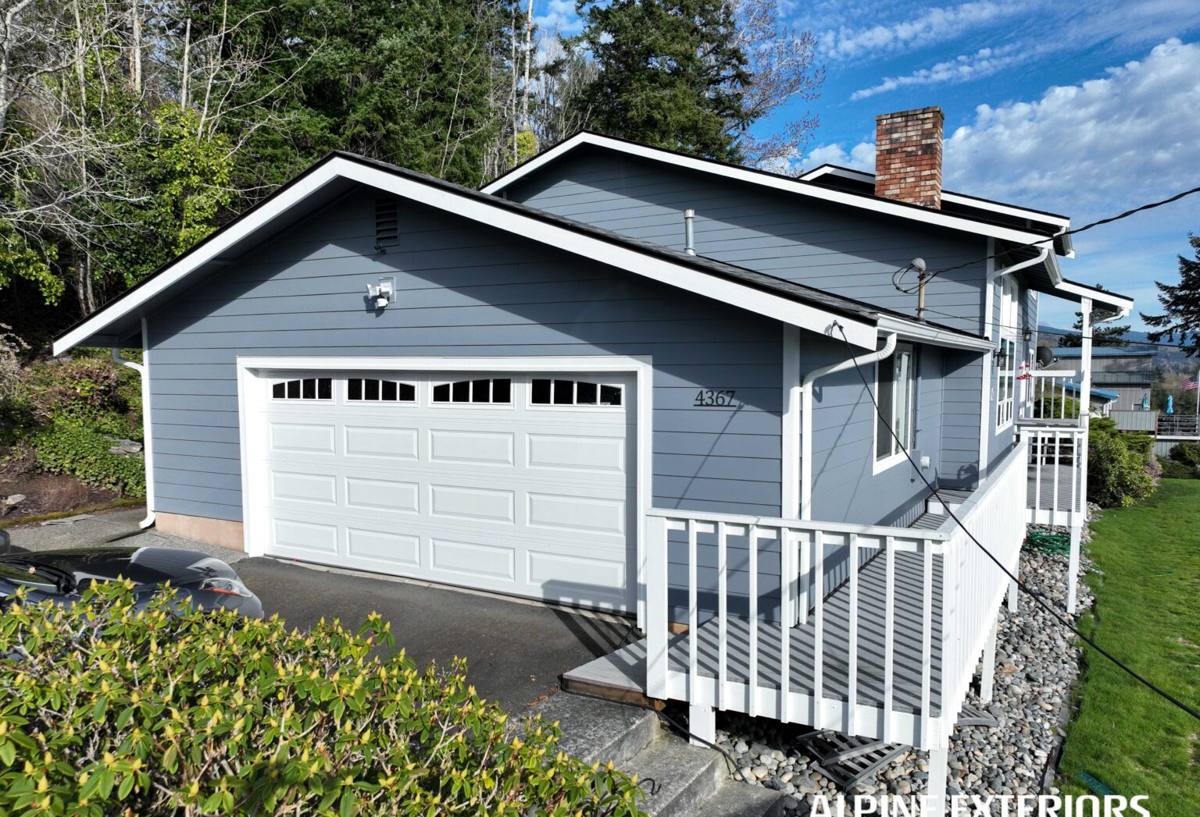
What Salt Air, Rain, and Moss Actually Do to a Deck
It helps to know the specific failure modes we're designing against, because they're not the same everywhere:
- Salt air corrosion: Ordinary carbon-steel screws, nails, and joist hangers pit and rust faster near the water, which weakens connections long before the wood itself fails.
- Driving rain intrusion: Wind-driven rain gets pushed sideways into ledger boards, post bases, and any gap in flashing — this is where rot usually starts, not on the open surface of the deck.
- Moss and algae growth: Shaded, damp decking grows a moss and algae film that holds moisture against the wood and turns boards slippery, especially on stairs and north-facing sections.
- Slow drying cycles: Under tree cover, decks get less sun and airflow to dry out between rain events, so any moisture that gets trapped tends to stay trapped.
Each of these is manageable with the right materials and details — but only if the crew building the deck is actually planning for them, not just following a standard build sheet.
Choosing Decking Material for an Edgemoor Site
There's no single "best" decking material — there's a best material for your site, your budget, and how much upkeep you want to do. In a shaded, damp, salt-air setting like Edgemoor, the trade-offs shift compared to a sunnier, drier lot.
| Material | How it handles our climate | Maintenance | General cost range |
|---|---|---|---|
| Pressure-treated wood | Affordable and strong, but needs a real finish schedule to resist moss and rot in shade | Annual cleaning, re-stain/seal every 1-2 years | Lowest upfront cost |
| Cedar | Naturally rot-resistant and handles moisture well, but greys and can host moss if left unfinished in shade | Cleaning plus periodic oil or stain | Mid-range |
| Composite decking | Resists rot and doesn't need finishing, but can still grow surface algae/moss film in deep shade and needs occasional cleaning | Periodic wash, no staining | Mid to upper range |
| PVC/capped decking | Best moisture resistance of the boards we install; handles constant damp shade the best | Low — occasional rinse | Highest upfront cost |
We'll walk you through this trade-off honestly based on how much shade and moisture your specific spot actually gets, not just a general recommendation. A deck tucked under trees on the shaded side of an Edgemoor lot has different needs than one that gets afternoon sun.
Why We're Selective About Certain Products
Some lower-grade composite and treated lumber products are more sensitive to installation errors — tight board spacing, poor ventilation underneath, or skipped end-cap sealing — and those errors show up faster in a wet, shaded climate than they would somewhere drier. Our standard is to install every product, including budget-friendly ones, with the spacing, sealing, and airflow it actually needs to perform, rather than cutting those steps to save time.
Framing and Fasteners: Where Coastal Decks Actually Fail
Most deck failures aren't in the decking boards — they're in the framing and connections underneath, where nobody looks until there's a problem. In a salt-air, high-moisture environment, we treat this part of the job differently:
- Ledger boards get proper flashing and a water-resistive barrier at the house connection, since this is the single most common spot for hidden rot to start.
- Fasteners and structural hardware are stainless steel or hot-dip galvanized rated for ground contact and coastal exposure — not the standard-coated hardware that's fine inland but corrodes faster here.
- Joist tape or a comparable protective layer covers the tops of joists and beams so standing water doesn't sit directly on cut or drilled wood.
- Post bases are set above grade and detailed to shed water away from the post end grain, which is a common rot point on older Edgemoor decks we've seen.
None of this is visible once the deck is finished, which is exactly why it's worth asking a contractor about before the build starts, not after.
Drainage, Airflow, and Keeping Moss Under Control
Moss doesn't grow because a deck is "old" — it grows because moisture has somewhere to sit. On a sloped, shaded Edgemoor lot, that means we pay attention to a few things during the build:
- Proper slope away from the house so water sheds instead of pooling near the ledger.
- Board gapping sized for our rainfall and humidity, so boards can dry rather than trap water between them.
- Under-deck ventilation, especially on low-clearance decks, so the ground below can actually dry out between storms.
- Keeping nearby branches and overhanging growth trimmed back where it's practical, since constant leaf litter and shade are what feed moss and algae the fastest.
A well-drained, well-ventilated deck still gets rained on constantly through a Whatcom County winter — it just doesn't hold that water against the structure.
Permitting and Site Considerations Near the Water
Decks in Edgemoor sometimes fall under additional review depending on how close the site is to the shoreline, the slope of the lot, and the height of the structure. Bellingham's permitting process accounts for shoreline proximity and grading on sloped waterfront-adjacent lots, and elevated or waterfront-adjacent decks can require engineering review beyond a standard permit. We handle the permit application and any required documentation as part of the job, so you're not stuck figuring out city requirements on your own.
Our Process for an Edgemoor Deck Build
- Site visit: We look at sun exposure, tree cover, slope, and how close the structure will sit to the house and grade, since these details drive the material and framing plan.
- Material and design conversation: We walk through the material trade-offs above based on your specific site, not a generic pitch.
- Permitting: We handle the city permit application, including any additional review triggered by slope or shoreline proximity.
- Construction: Ledger flashing, corrosion-rated hardware, proper drainage slope, and decking installed to the manufacturer's spec for our climate.
- Final walkthrough: We go over basic care for your specific material so the deck actually gets the lifespan it's built for.
A Maintenance Checklist for Edgemoor Homeowners
Whatever material you choose, a little seasonal attention goes a long way in this climate:
- Sweep leaves and debris off the deck regularly through fall, especially in shaded corners.
- Clean moss and algae film off the surface at least once a year, more often in deep shade.
- Check and re-seal wood decking on the schedule your material calls for — don't wait until it looks grey and dry.
- Look at the ledger board area and post bases once a year for any soft wood or rust staining.
- Keep gutters and downspouts near the deck clear so roof runoff isn't adding extra water to the structure.
Why Local Experience in Edgemoor Matters
A crew that's never worked a shaded, waterfront-adjacent lot in Whatcom County will often build a technically fine deck for the wrong climate — standard hardware, standard board spacing, no real plan for moss or salt air. A crew that already works in Edgemoor knows to ask about shoreline setback rules before design starts, knows which hardware actually holds up this close to the water, and has seen where decks around here typically fail first. That experience shows up in fewer callbacks and a deck that still looks and performs well well past the point a generic build would need major repairs.
If you're planning a new deck or replacing one that's showing its age, we're happy to take a look and talk through what your specific site actually needs. Use the form below to request a free, no-pressure estimate.