 Bellingham Exterior
 Roofing on the Water: Why Blaine Homes Wear Differently
Blaine sits right on the water at the top of Whatcom County, close enough to the Canadian border that the weather pattern barely changes crossing it. That location is part of what makes the town, but it's hard on a roof. Salt-laden air off the water accelerates corrosion on fasteners, flashing, and gutter systems. Wind off open water drives rain sideways instead of straight down, which pushes moisture into laps and seams that a calmer inland roof would never test. And the long gray stretch of fall through spring keeps roof surfaces damp for weeks at a time, which is exactly what moss and algae need to take hold.
None of this means a Blaine roof is doomed to fail early. It means the materials, fasteners, and installation details have to be chosen for this specific exposure, not for a generic Pacific Northwest spec sheet. A roof replacement here is a good time to correct anything the original roof got wrong.
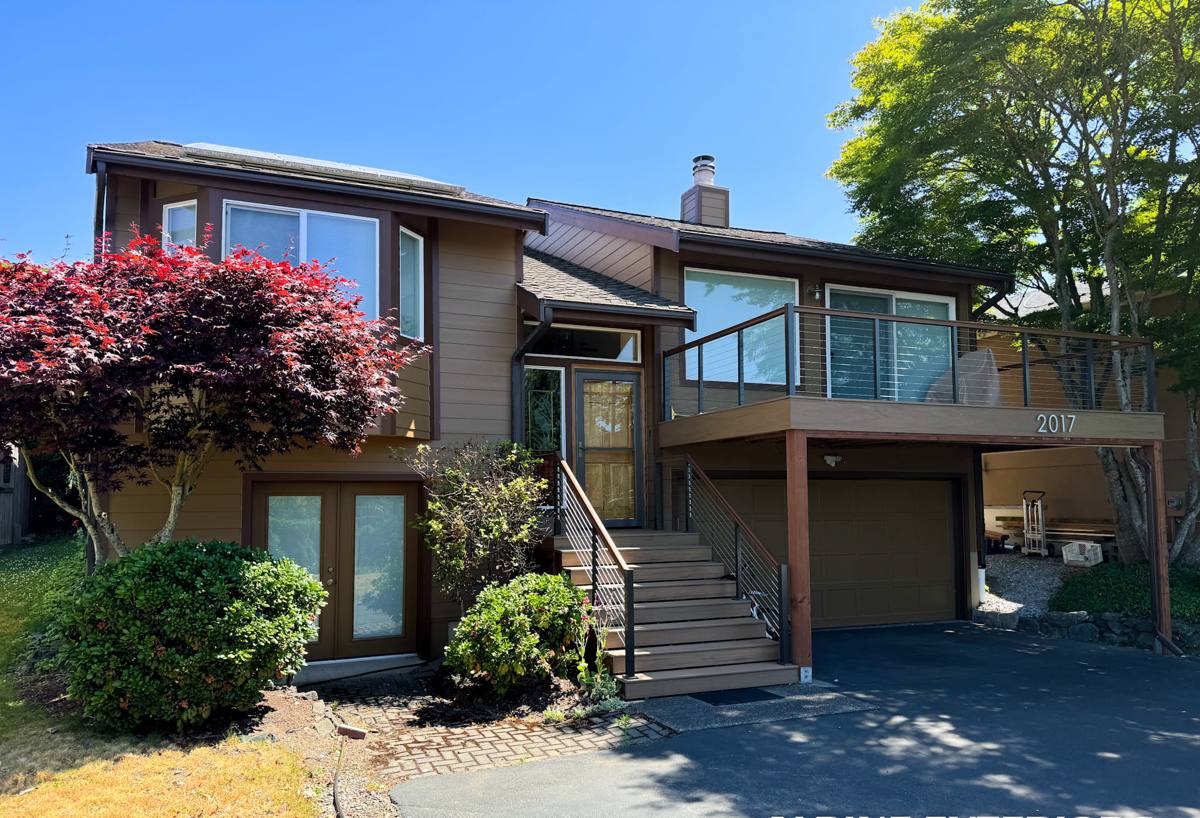
Signs a Blaine Roof Needs Replacement, Not Another Repair
Repair makes sense when the problem is isolated — a cracked pipe boot, a few lifted shingles after a windstorm, a clogged valley. Replacement becomes the honest recommendation when the damage is spread across the whole roof or built into its structure. In our experience working this coastline, the common tipping points are:
- Granule loss heavy enough that you can see bare asphalt mat on multiple slopes, not just one exposed section
- Moss that has worked under the shingle tabs rather than just sitting on the surface — it's already lifting them
- Rusted or pitted flashing at valleys, chimneys, and sidewalls from years of salt exposure
- Soft decking you can feel underfoot, or staining in the attic that spreads season to season
- A roof already past 20-25 years old, since the underlayment and decking have been absorbing moisture cycles the whole time, even if the shingles still look okay from the ground
If you're only seeing one or two of these, a repair or a maintenance visit may be the more honest answer, and we'll tell you that directly rather than push a full tear-off you don't need yet.
What a Correct Roof Replacement Involves
Tear-Off and Deck Inspection
We remove the old roofing down to the deck rather than layering over it. That's the only way to actually see what's underneath — soft or delaminated plywood, old damage around penetrations, or ventilation gaps that have been hidden for years. Any compromised decking gets replaced before anything new goes down; installing new roofing over a soft deck just guarantees a shorter lifespan for the new system.
Underlayment and Water Management
This is where a lot of the real protection against Blaine's driving rain actually happens, long before the visible shingle or panel goes on. Self-adhered ice-and-water membrane at eaves, valleys, and around every penetration; synthetic underlayment across the field for a home exposed to wind-driven moisture; and correctly lapped, sealed transitions everywhere water could get pushed sideways or uphill by wind rather than just running downhill.
Flashing and Fasteners
Standard galvanized fasteners corrode faster this close to salt air. We use corrosion-resistant fastener and flashing options appropriate to the roofing material and budget, and we pay particular attention to chimney counter-flashing, sidewall step flashing, and valley metal — these are the spots that fail quietest and leak worst.
Ventilation
Balanced intake and exhaust ventilation keeps the attic temperature and moisture level in check, which protects the new decking and the shingle warranty from underneath. A roof that looks perfect on top but traps moisture below will still fail early — just from the inside.
Material Options for This Climate
There's no single "best" roofing material for Blaine — the right choice depends on the home's roof pitch, budget, how long you plan to stay in the house, and how much long-term maintenance you want to take on. Here's how the common options actually compare for a coastal Whatcom County home:
| Material | Salt & Moisture Behavior | Moss Resistance | Typical Lifespan | Maintenance |
|---|---|---|---|---|
| Architectural asphalt shingle | Good with proper flashing and fasteners | Moderate — benefits from algae-resistant granules | 25-30 years | Periodic moss/debris removal recommended |
| Standing seam metal | Excellent when properly coated and grounded against galvanic corrosion | High — sheds moisture fast, little surface for moss to grip | 40-50+ years | Low; occasional fastener/sealant checks |
| Synthetic shake/slate | Good, doesn't absorb moisture like wood | Good | 30-50 years | Low to moderate |
| Cedar shake | Requires diligent maintenance in a wet, salty climate | Low without regular treatment | 20-30 years with upkeep | High — this is where we're honest about the trade-off |
On cedar specifically: it can look excellent, but in a climate this consistently damp and this close to salt air, it needs regular cleaning, treatment, and moss control to hit its expected lifespan. That's a real ongoing commitment, not a one-time install decision, and we'll walk through that trade-off honestly rather than oversell or undersell any one material.
Moss and Algae Control Built Into the Job
Blaine's long wet season, plus shade from mature trees on a lot of properties in this part of Whatcom County, gives moss everything it needs. A roof replacement is the right time to build in prevention rather than treat it as an afterthought:
Copper or zinc control strips near the ridge release trace metal ions with every rain, which suppresses moss and algae regrowth across the field of the roof for years. We also make sure valleys and low-slope transitions are detailed so water actually clears instead of sitting — standing moisture is what lets moss establish in the first place. None of this replaces occasional cleaning, but it substantially cuts down how often you need to do it.
Our Process, Start to Finish
- On-site inspection — we look at the roof, the attic, and the ventilation, not just the shingles from the ground
- Honest scope and estimate — a clear written breakdown of material, labor, and what we found underneath, before any work starts
- Tear-off and deck repair — old roofing removed, decking inspected and replaced where needed
- Underlayment, flashing, and ventilation — the parts that determine how the roof performs in a storm, done first
- Final roofing installation — material installed to manufacturer spec, not shortcut spec
- Site cleanup and walkthrough — magnetic sweep for nails, debris hauled off, and a final walk-through so you know exactly what was done
We keep the schedule realistic and communicate delays honestly — weather off the water can push a start date, and we'd rather tell you that upfront than rush a roof into questionable conditions.
Why a Crew That Already Works Blaine Matters
A roofing crew that mainly works drier inland areas will still do competent work, but they're not necessarily thinking about galvanic corrosion between dissimilar metals in salt air, or how much extra ice-and-water membrane a roof exposed to wind-driven rain off the water actually needs. Working this coastline regularly means we've already seen which details hold up here and which ones don't, and we build every replacement around that — not around a generic regional average.
It also means we're familiar with the permitting and inspection expectations for Whatcom County and the City of Blaine specifically, so there are no surprises mid-project.
Cost Factors to Understand Before You Get Quotes
Roofing quotes vary widely, and the sticker price alone doesn't tell you much without context. The real cost drivers on a Blaine home are typically:
- Roof size and number of facets — more valleys, hips, and penetrations mean more labor and material, not just more square footage
- Decking condition discovered at tear-off — this is why a fixed quote before tear-off can't fully account for hidden damage
- Material choice — the table above shows the spread between asphalt, metal, and synthetic options
- Access and pitch — steep or hard-to-access roofs take longer and require more safety setup
- Ventilation and flashing upgrades — correcting old, undersized ventilation adds cost now but prevents problems later
Ask any contractor to break these out separately rather than give you one lump number. It's the only way to compare quotes apples to apples.
Get a Straight Answer on Your Roof
If your roof is showing granule loss, moss under the tabs, or is simply old enough that you're wondering whether it's time, we're glad to take a look. The estimate is free, there's no pressure, and if a repair is the more honest answer than a full replacement, that's what we'll tell you. Use the form below to get a straightforward assessment of your Blaine roof.