 Bellingham Exterior
 Puget's Climate Is Hard on Windows
The Puget area of Bellingham sits close enough to Bellingham Bay and the broader Puget Sound that salt-carried air reaches homes well inland, not just the ones with a water view. Pair that with Whatcom County's long wet season — months of driving rain blowing in off the water, followed by a shaded, low-sun stretch where north and west walls barely dry between storms — and you get conditions that go straight after the weak points in a window system. Frame corners, sill joints, and old caulk lines take the worst of it, year after year.
None of that means windows in Puget fail faster than anywhere else in Bellingham. It means the margin for a sloppy install or a worn-out product is smaller here. A window that's slightly out of level, under-flashed, or sealed with the wrong material might coast along fine in a dry climate. In this one, that same shortcut shows up as a soft sill, a moldy corner, or a foggy sealed unit within a few winters.
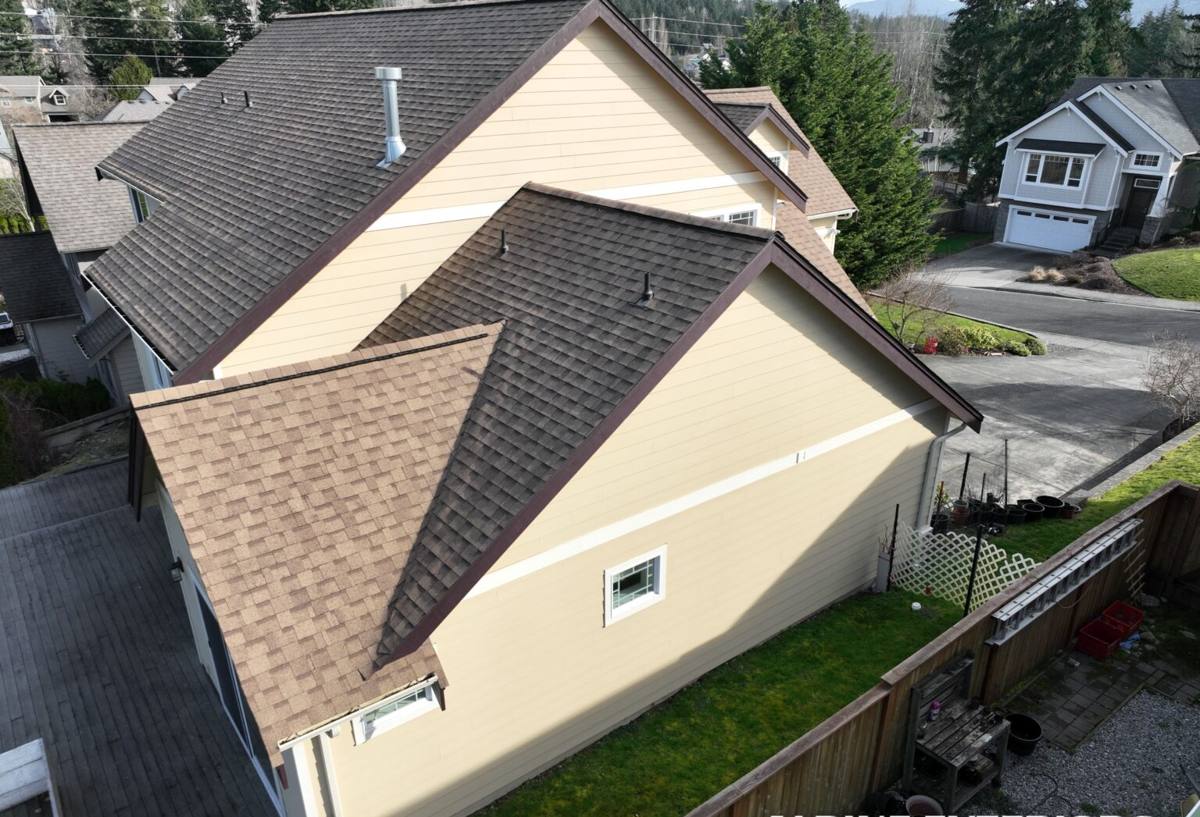
Signs a Puget Home Needs Window Replacement
Most homeowners don't wake up one day and decide to replace windows — they notice a cluster of small annoyances that add up. In this neighborhood, watch for:
- Wood trim or sills that feel soft, spongy, or show dark staining, especially on the sides that face weather off the Sound
- Green or black growth building back within weeks of cleaning it off — a sign moisture is sitting against the frame, not just on the surface
- Fogging or a hazy film between the panes of a double-pane window, meaning the seal has failed and the insulating gas is gone
- Windows that are noticeably harder to open, close, or lock than they used to be, often from swelling or frame movement
- A draft you can feel with your hand along the frame edge during a windy rain event
- Paint that keeps failing on the interior sill no matter how often it's redone
- Rooms near older windows that feel colder or run the heater harder than the rest of the house
Any one of these on its own might be a minor repair. Two or three together, especially on a home that still has its original single- or early double-pane windows, usually means replacement will save more money than another round of patching.
What a Correct Window Replacement Job Actually Involves
Window replacement looks simple from the outside — old unit out, new unit in — but the parts nobody sees are what determine whether the job holds up through a wet Whatcom County winter or starts leaking again in three years.
Removal Without Hidden Damage
Pulling the old window is also the first inspection. This is when we find out whether the framing underneath is solid or whether years of slow leaks have softened the wood. It's far cheaper to catch and repair that now than to seal a new window over a problem and have it resurface later.
Flashing, Sill Pans, and Sealing
This is the step that actually keeps water out, and it's also the step most likely to get rushed. A correct install includes a sloped sill pan so any water that gets past the window drains back out instead of pooling, properly lapped flashing tape that sheds water downward like shingles, and sealant used only where it belongs — sealing the wrong gap can trap moisture inside the wall instead of keeping it out. In a climate with as much driving rain as this one gets, this layer matters more than the window brand does.
We also check that the new unit is set plumb, level, and square before it's fastened and insulated around the perimeter, then finished with exterior trim and caulk that's rated for our weather, not a generic bargain tube.
Choosing Materials and Glass for This Climate
There's no single "best" window — there's a best fit for the exposure, the home's age, and the budget. The table below reflects the trade-offs we walk homeowners through most often for Puget-area homes.
| Frame Material | How It Handles Salt Air & Rain | Maintenance | Typical Fit |
|---|---|---|---|
| Vinyl | Won't corrode or rot; performs well in coastal-influenced air | Low — occasional cleaning | Most Puget homes; best value |
| Fiberglass | Very stable in temperature swings and moisture; strong seal life | Low | Homes wanting a higher-end, longer-life option |
| Wood-clad | Handsome, but the cladding must be detailed carefully or moisture finds the wood core | Higher — watch joints and finish | Historic or architecturally specific homes where the look matters most |
| Aluminum | Conducts cold and can corrode near salt air over time unless properly finished | Moderate | Rarely our first recommendation for this area |
On glass, we default to double-pane with a low-E coating and argon fill for most Puget homes — it's the sweet spot for this climate's mix of cool, wet winters and mild summers. Triple-pane is worth discussing for north-facing rooms or homes right along a windy stretch, where the extra pane cuts down on both heat loss and condensation risk. We're honest when triple-pane isn't worth the added cost for a given room; it isn't automatically the right upgrade everywhere.
Our Window Replacement Process
- Walkthrough and assessment — we look at each window from outside and in, check for existing moisture damage, and talk through which rooms actually need replacement now versus later.
- Honest quote — a written estimate that spells out material, glass package, and what's included in the install itself, not just the window price.
- Scheduling around the weather — we plan installs for dry windows in the forecast where possible, since an open wall cavity in a rainstorm is exactly what causes future problems.
- Removal and framing check — old units come out carefully, and any soft framing or existing damage gets addressed before anything new goes in.
- Flashing, sill pan, and install — the new window is set, flashed, insulated, and sealed correctly the first time.
- Interior and exterior finish — trim, caulk, and paint lines are cleaned up so the job looks finished, not patched.
- Final walkthrough — we test operation and locks with you before calling it done.
Cost Factors for Window Replacement in Puget
Every home is different, but the same handful of factors drive most of the price difference between a straightforward job and a more involved one.
| Factor | Why It Matters |
|---|---|
| Window size and count | Larger openings and full-house replacements have more material and labor per project |
| Frame material | Vinyl typically costs less up front than fiberglass or wood-clad |
| Glass package | Triple-pane and specialty coatings add cost but can lower long-term energy use |
| Condition of existing framing | Rot or moisture damage found during removal adds repair time before the new window can go in |
| Access and site conditions | Second-story, tight side yards, or homes needing extra weather protection during install take more time |
As a rough starting point, most single-window replacements in this area run somewhere in the range of several hundred to a bit over a thousand dollars installed, depending on the factors above — full-house projects scale from there. We'll never quote a firm number without seeing the actual windows and framing first.
Why a Crew That Already Works in Puget Matters
A window contractor who's done work in this specific area already knows what the exposure here typically looks like — which sides of a Puget home tend to take the worst weather, what condition framing tends to be in on homes of a certain age, and how much moss buildup is normal versus a sign of a bigger drainage issue. That's not something you can fully substitute with a generic checklist.
Permits and Local Requirements
Window replacement in the City of Bellingham may require a permit depending on the scope of the work, particularly if framing is altered or the home is in a designated historic area. We handle that conversation up front rather than leaving you to sort it out after the fact.
There's also a practical side to local familiarity: a crew based nearby can respond quickly if weather moves in mid-project, and isn't learning Whatcom County's rain patterns on your home for the first time.
Keeping New Windows Performing Through Moss Season
New windows reduce the maintenance burden, but they aren't maintenance-free in this climate. A little attention keeps them performing for the long run:
- Rinse frames and sills periodically to keep salt residue and organic buildup from accumulating in corners and tracks
- Check exterior caulk lines once a year, typically in early fall before the wet season sets in, and re-seal any spots that look cracked or pulled away
- Keep gutters and nearby drainage clear so water isn't sheeting down across the window head during heavy rain
- Trim back vegetation that keeps a window shaded and damp longer than the rest of the house
- Operate locks and hardware a few times through the year so mechanisms don't seize from disuse
Windows installed correctly the first time, with proper flashing and drainage, need very little of this — but a five-minute check twice a year goes a long way toward getting the full lifespan out of the investment.
If you're noticing drafts, fogged glass, or sticking windows in your Puget-area home, we're happy to take a look and give you a straight, no-pressure assessment of what's actually needed. Use the form below to request a free estimate.