 Bellingham Exterior
 Building Decks for Puget-Area Homes Near Bellingham
Homes in the Puget area carry a specific set of exposures that a deck has to be built to survive, not just installed to look good on day one. You're close enough to the water that salt-laden air reaches fasteners, fittings, and finishes year-round. Rain doesn't just fall here, it drives sideways during winter storms and finds its way into any gap a builder left out of habit rather than intention. And for a good stretch of the year, especially in the shaded and north-facing spots common on Whatcom County lots, moss and algae take hold on any surface that stays damp too long. A deck built without those three things in mind will look fine in the showroom and start failing within a few seasons out here.
This page is specifically about deck building for the Puget neighborhood and the immediate surrounding area — not a general overview of decks everywhere. If you're comparing quotes or trying to understand what "correct" actually means for a deck in this specific pocket of Bellingham, this is written for you.
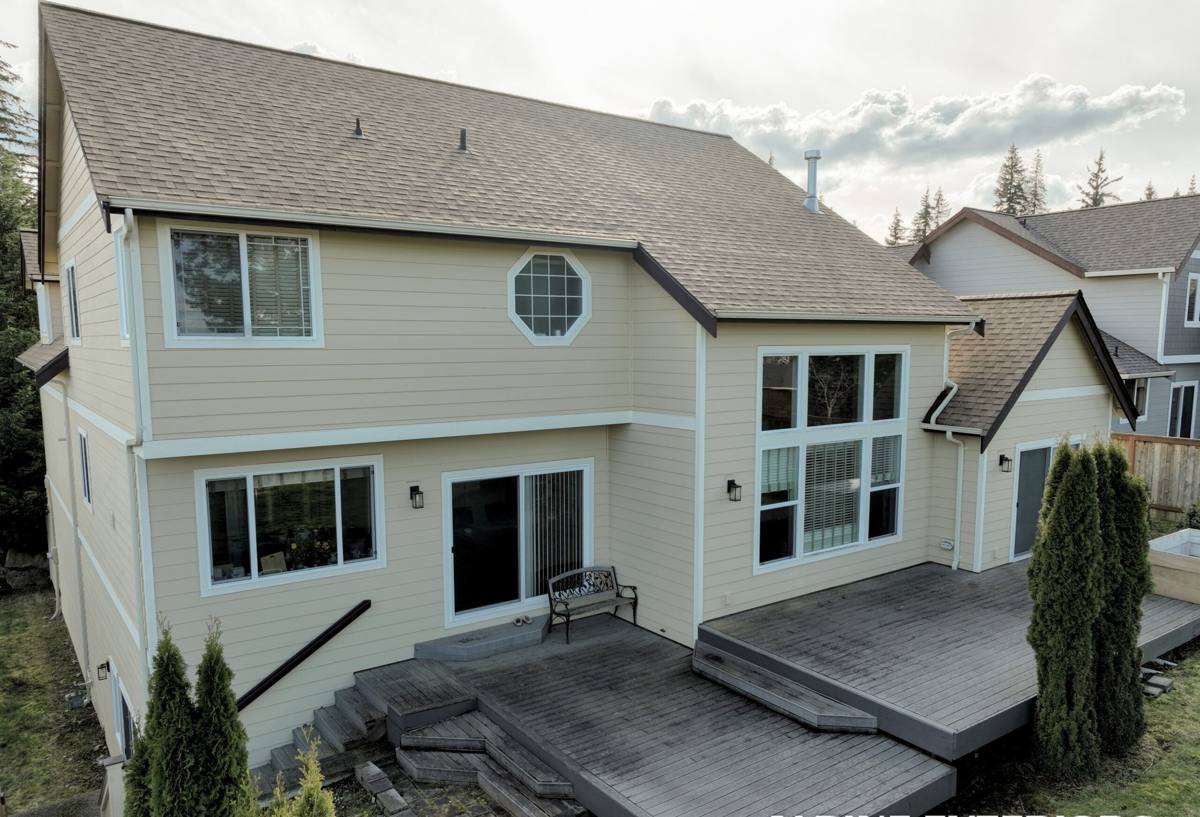
What the Local Climate Actually Does to a Deck
Salt Air and Metal Fatigue
Proximity to Puget Sound means airborne salt is a constant, low-level presence, even on days that feel dry. Salt accelerates corrosion on any exposed metal — fasteners, joist hangers, post bases, railing brackets. A deck built with standard hardware in a salt-exposed setting can show rust streaks and weakened connections years before an inland deck would. This isn't a hypothetical; it's the single biggest difference between building a deck here and building one 20 miles inland.
Driving Rain and Water Intrusion
Bellingham's rain isn't always the gentle, straight-down kind. Winter storms push rain sideways, which means water gets forced into places a fair-weather build would never anticipate — under ledger boards, behind fascia, into end grain that wasn't sealed, around post connections that weren't flashed. Once water gets behind a board or into a connection point, it doesn't dry out quickly in our climate. It sits, and that's where rot starts.
Moss, Algae, and Shade
Many Puget-area lots have mature tree cover or sit in the shadow of neighboring structures for a good part of the day. Combined with our wet season, that shade creates ideal conditions for moss and algae on horizontal wood and composite surfaces. Beyond being a cosmetic issue, a mossy deck surface holds moisture against the board and becomes slick and genuinely dangerous underfoot, especially on stairs.
What a Correctly Built Deck Requires Here
None of the climate challenges above are unusual or unsolvable — they just require specific decisions at the build stage that a generic or rushed installation skips. A correctly built deck for this area includes:
- Stainless steel or coated corrosion-resistant fasteners and structural hardware, not standard galvanized, given the salt exposure
- Proper ledger board flashing where the deck attaches to the house, sealed against wind-driven rain
- Joist tape or butyl flashing on top of every joist to keep water out of the wood beneath the decking
- Adequate slope away from the house (typically a slight pitch) so water sheds instead of pooling
- Gapping between boards sized correctly for the decking material, so water and debris don't get trapped
- Post bases set above grade and away from standing water or soil contact
- Ventilation underneath the deck so the structure can actually dry out between rain events
- Decking material chosen with our shade and moss conditions in mind, not just appearance
Skip any one of these and you're not looking at a hypothetical risk — you're looking at a deck that will need real repair work within five to ten years instead of holding up for two or three decades.
Choosing Decking Material for a Puget-Area Deck
There isn't one universally "right" material — the right choice depends on your budget, how much shade your lot gets, and how much maintenance you're willing to do. Here's how the common options actually perform under our specific conditions:
| Material | Moss/Algae Resistance | Maintenance | Notes for This Area |
|---|---|---|---|
| Pressure-treated wood | Low — needs regular cleaning and sealing | High — annual cleaning, periodic sealing/staining | Lowest upfront cost, but shaded lots here will need moss treatment more than once a year |
| Cedar | Moderate — natural oils help but fade over time | Moderate to high — sealing every 1-2 years | Good look, but end grain and fastener points still need careful detailing against rain intrusion |
| Composite (capped) | High — resists moisture absorption | Low — periodic washing | Best fit for shaded, moss-prone lots; still needs surface cleaning to prevent surface algae film |
| PVC decking | High — non-porous surface | Low | Performs well in wet climates; higher upfront cost, longer expected service life |
For heavily shaded Puget lots, we generally steer homeowners toward capped composite or PVC, simply because the maintenance burden of keeping wood clean and sealed under year-round shade is significant. That said, plenty of homeowners prefer the look and lower upfront cost of real wood and are willing to do the maintenance — that's a legitimate choice too, as long as it's made with eyes open.
Our Deck Building Process
1. On-Site Assessment
We start by walking the actual site — sun exposure, drainage patterns, proximity to trees, and how the ground handles water during a heavy rain. This tells us more about what your deck needs than a generic checklist ever could.
2. Design and Material Selection
We talk through material options honestly, including the maintenance trade-offs of each, so you're choosing based on real information rather than a showroom sample under good lighting.
3. Permitting
Most deck projects in and around Bellingham require a permit, particularly for elevated structures or anything attached to the house. We handle that process as part of the job so you're not left tracking down inspections on your own.
4. Framing and Flashing
This is the stage that determines whether your deck lasts 10 years or 30. Ledger flashing, joist protection, hardware selection, and proper drainage slope all happen here — and it's the part of the job that's invisible once the decking goes down, which is exactly why it matters most.
5. Decking, Railing, and Finish
Once the structure is sound, we install the surface material, railing, and any stairs, finishing with attention to the same water-management details — proper board gapping, sealed cut ends, and correctly fastened connections.
6. Final Walkthrough
We walk the finished deck with you, explain what maintenance (if any) it needs going forward, and make sure everything meets both our standard and yours before we call it done.
Maintenance That Actually Matters Here
Every deck, regardless of material, benefits from a bit of seasonal attention in a climate like ours. The list below isn't exhaustive maintenance advice for every material — it's specifically what matters for decks exposed to our salt air, rain, and shade conditions:
- Clear leaves and debris from between boards before fall rains set in, especially near the house where debris traps moisture against the ledger
- Rinse or gently scrub shaded areas at the start of the wet season to slow moss establishment before it takes hold
- Check fastener heads and visible hardware once a year for early rust, particularly on decks with direct or near-direct water views
- Keep gutters and downspouts near the deck clear so runoff isn't dumping directly onto the structure
- Reseal or restain wood decking on the manufacturer's recommended schedule — don't stretch it, since our wet season punishes gaps in protection
Why a Crew That Already Works in Puget Makes a Difference
A contractor who mostly builds decks in drier, inland climates will often use the same details and hardware they'd use anywhere else — and those details are frequently under-built for salt air and driving rain. A crew that regularly works the Puget area and greater Bellingham has already seen which fastener choices hold up, which flashing details actually stop wind-driven rain, and which decking materials handle heavy shade without turning into a maintenance chore. That's not a marketing point, it's just the practical benefit of local, repeated experience with these specific conditions rather than generic best practices applied everywhere.
We also know the local permitting process, which keeps projects moving instead of stalling on paperwork neither you nor we control.
Get a Free, No-Pressure Estimate
If you're planning a new deck or replacing one that's showing its age, we're happy to come take a look, walk the site, and give you honest options — including the trade-offs of each material and design choice for your specific lot. There's no pressure and no obligation. Fill out the form below to get started.