 Bellingham Exterior
 Why Lynden Roofs Wear on Their Own Timeline
Lynden sits inland from Bellingham's shoreline, out in Whatcom County's farm country, but it doesn't escape the marine climate that defines this corner of Washington. The same weather system that pushes moisture off the Salish Sea and up the Nooksack valley brings Lynden long stretches of steady, driving rain, heavy humidity, and short winter daylight that keeps roof surfaces damp for days at a time. Add mature trees and shaded lots common on Lynden properties, and you get an extended moss season that can run nearly year-round on north-facing slopes.
None of this means Lynden roofs fail faster than roofs anywhere else in the region. It means they fail differently, and a roofing system designed for a drier climate — or installed without this area's moisture load in mind — will show problems here years before it should. Granule loss, soft decking, and moss-driven shingle lift are the most common issues we see on Lynden tear-offs, and almost all of them trace back to ventilation and underlayment choices made at the original install, not the shingle brand itself.
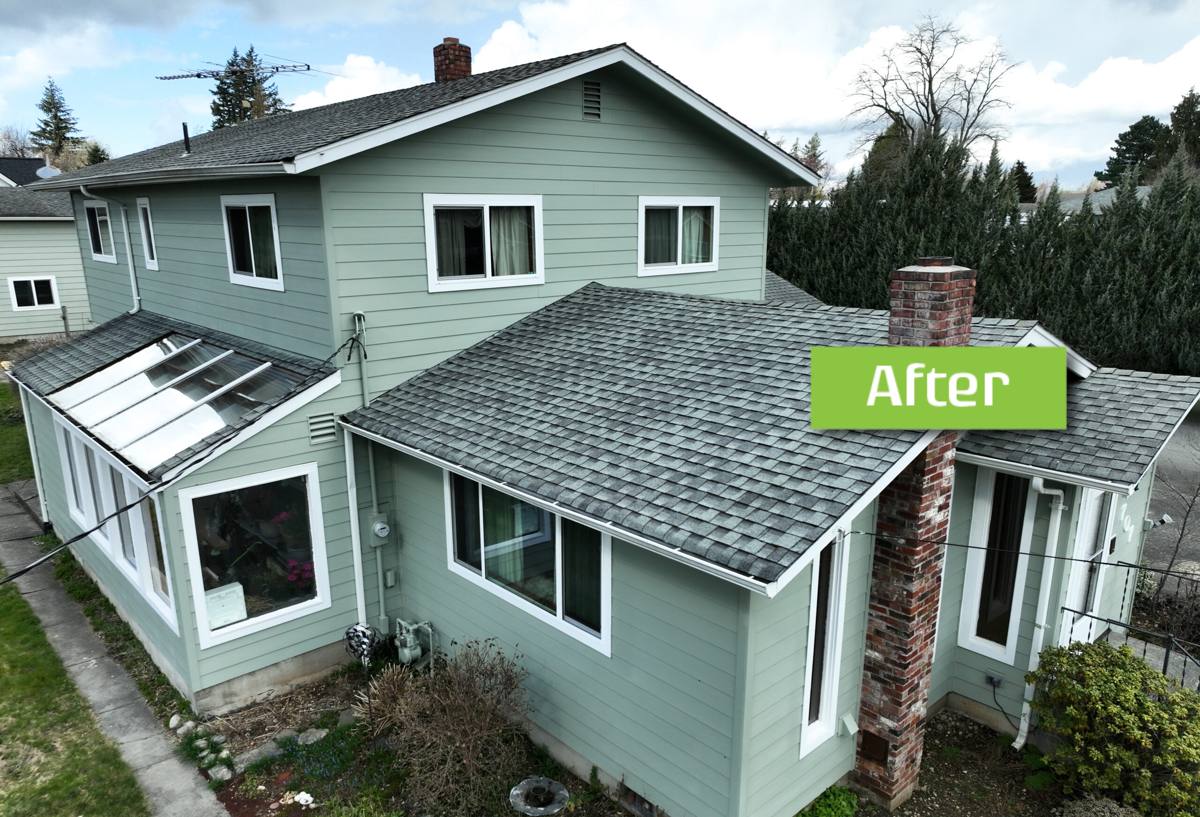
What a Correct New Roof Installation Actually Involves
A new roof is more than shingles nailed to plywood. On a full replacement, every layer matters, and skipping or shortcutting any one of them is where roofs in wet climates start losing years off their service life.
Tear-Off and Deck Inspection
We remove the old roofing down to the deck rather than layering over it. That's the only way to actually see the plywood or OSB underneath — soft spots, delamination, and old leak staining are invisible from above but obvious once the shingles are off. Any damaged decking gets replaced before anything new goes down; installing new roofing over a compromised deck just hides the problem for another owner to find later.
Underlayment
In a climate that sees this much sustained rain, underlayment is not a formality. We use synthetic underlayment across the field for tear and moisture resistance, with self-adhered ice-and-water membrane at eaves, valleys, and around penetrations — the spots where wind-driven rain and ice most often find a way in.
Flashing
Flashing failure, not shingle failure, causes most of the leaks we get called out to repair. Step flashing at walls, counter-flashing at chimneys, and properly lapped valley metal all get replaced as part of a new roof, not reused from the old system.
Ventilation
A balanced intake-and-exhaust system keeps the attic close to outdoor temperature, which reduces condensation on the underside of the deck and slows moss growth on the surface above. We cover this in more depth below because it's the single most overlooked factor in how long a roof actually lasts here.
Choosing the Right Roofing System for a Lynden Property
There's no single "best" roofing material — the right choice depends on the home's roof pitch, how much shade it sits under, and what the homeowner wants out of maintenance and lifespan. Here's how the common options stack up for this climate specifically.
| Material | Moisture & Moss Behavior | Typical Lifespan | Maintenance |
|---|---|---|---|
| Architectural asphalt shingle | Good with proper ventilation; algae-resistant granules help slow staining | 25-30 years | Periodic moss/debris clearing |
| Standing seam metal | Sheds water and moss fastest of any option; minimal surface for organic growth to grip | 40-50+ years | Very low |
| Synthetic/composite shake | Consistent moisture resistance without the maintenance burden of real wood | 30-50 years | Low |
| Cedar shake | Attractive but absorbs moisture readily; needs active upkeep in this climate to resist rot and moss | 20-30 years with upkeep | High |
We install architectural asphalt on the large majority of Lynden re-roofs — it's the right balance of cost, durability, and appearance for most homes here — but we'll walk through metal or composite options with any homeowner who wants lower long-term maintenance or has a low-slope section where asphalt isn't the ideal fit. We frame cedar shake honestly as a higher-upkeep choice in a wet climate rather than talk anyone out of it; it's a legitimate look, it just asks more of the homeowner in this specific environment.
Ventilation and Moisture Control: The Part Homeowners Don't See
Attic ventilation is the difference between a roof that reaches its rated lifespan and one that doesn't, and it's the single most common shortfall we find when we tear off an older Lynden roof. Warm, moist air from the living space rises into the attic; if it can't escape through balanced ridge and soffit venting, it condenses on the underside of the deck. Over years, that moisture cycle rots decking from below while also keeping the shingle surface above cooler and damper than it should be — ideal conditions for moss to take hold and spread.
As part of every new roof install, we assess the existing intake and exhaust venting, correct any imbalance, and add ridge or soffit venting where the attic is starved for airflow. This isn't an upsell — it's the piece of the job that determines whether the shingle warranty actually holds up over its full term.
Our Installation Process
- On-site evaluation. We inspect the current roof, attic ventilation, and any trouble spots the homeowner has noticed, and take measurements for an accurate material estimate.
- Written estimate and material selection. You get a clear scope of work and price before anything is scheduled, with options at different price points if you want them.
- Scheduling around weather. Whatcom County's wet stretches mean we plan tear-offs for windows with the best forecast odds and stage materials so exposed decking is never left open overnight.
- Tear-off and deck repair. Old roofing comes off, the deck is inspected, and any damaged sections are replaced.
- Underlayment, flashing, and ventilation correction. Every layer goes down in the sequence that actually sheds water, not just what's fastest to install.
- New roofing installation. Shingles, panels, or shakes go on per manufacturer specification, which matters for both performance and warranty validity.
- Cleanup and final walkthrough. Magnetic sweep for nails, haul-away of old materials, and a walkthrough so you know exactly what was done.
Signs a Lynden Roof Needs Replacement, Not Another Repair
Not every roofing problem calls for a full replacement, and we'll tell you plainly when a repair is the more honest answer. But certain signs mean patching is just delaying an inevitable, more expensive failure:
- Granules collecting in gutters or at downspout outlets in significant amounts
- Shingles that are curling, cupping, or visibly brittle across large sections
- Soft or spongy decking felt underfoot in the attic, especially near eaves
- Daylight visible through the roof deck from inside the attic
- Moss that returns within months of cleaning, even after treatment
- A roof at or past 20-25 years old with no ventilation upgrades since original install
- Recurring leaks in the same spot despite prior repairs
What Drives the Cost of a New Roof
Every roof is priced individually, but the same handful of factors move the number up or down on most Lynden homes.
| Factor | Why It Matters |
|---|---|
| Roof size and number of facets | More square footage and more valleys/hips mean more material and labor time |
| Roof pitch | Steeper roofs require more safety setup and take longer to work on |
| Deck condition | Rotted plywood or OSB found during tear-off adds material and labor not visible in an initial estimate |
| Layers of existing roofing | Multiple old layers mean more tear-off and disposal work |
| Material choice | Standard architectural asphalt, premium shingle lines, and metal each carry different material costs |
| Ventilation corrections | Adding ridge or soffit venting where none exists is additional scope beyond the roofing itself |
| Access and staging | Steep driveways, tight lot lines, or limited truck access on some Lynden properties affect setup time |
We'd rather give a wider honest range up front and firm it up after a real inspection than quote a number that changes halfway through the job. Most full tear-off-and-replace jobs on a typical single-family home run into the low-to-mid five figures, with the exact number depending heavily on the factors above.
What to Check Before Hiring a Roofer in Lynden
Roofing draws its share of storm-chasing crews who show up after a bad wind event and are gone before any warranty claim ever surfaces. A few checks protect you regardless of who you hire:
- Washington State contractor license number, verifiable through L&I's public lookup
- Active liability insurance and, if they'll have employees on your roof, workers' compensation coverage
- A physical business address and local phone number, not just a mobile number and a truck
- A written estimate that itemizes materials, scope, and payment schedule before work starts
- Manufacturer certification if you're choosing a shingle line with an enhanced warranty tied to certified installers
- References or a work history that shows they've actually installed roofs in this specific climate
- A clear answer on who handles the permit and who's responsible for the disposal/dump fees
A crew that already works Lynden regularly knows the county's permitting process, has a working relationship with local suppliers for faster material turnaround, and isn't guessing at how this climate's moisture and moss behave — they've torn off roofs that proved it firsthand.
Permits, Timeline, and Warranty
Most new roof installations in Whatcom County require a building permit, which we handle as part of the project rather than leaving it to the homeowner. A typical single-family tear-off and replacement takes one to three days on-site once scheduled, weather permitting — Lynden's rain patterns are the main variable, and we build realistic scheduling buffers around that rather than rushing a job into a forecast that isn't cooperating.
New roofs carry two layers of warranty worth understanding: the manufacturer's warranty on the material itself, and our workmanship warranty on the installation. We'll walk through both in plain terms before you sign anything, including what voids each one, so there are no surprises if you ever need to make a claim.
If your roof is showing its age or you're planning ahead rather than reacting to a leak, we're happy to take a look and give you a straight assessment — no pressure, no obligation. Use the form below to request a free estimate for your Lynden property.