 Bellingham Exterior
 Metal Roofing Built for Cordata's Weather
Cordata sits in north Bellingham, close enough to the water and the foothills that it gets the full spread of what Whatcom County weather can do to a roof. Salt-laden air drifts in off Bellingham Bay, driving rain comes in sideways during winter storms, and a long, damp moss season settles in every fall and doesn't fully let go until late spring. A roof here isn't just shedding water for a few wet months — it's dealing with moisture and salt exposure for most of the year.
Metal roofing holds up well against that combination when it's specified and installed correctly. It sheds rain fast, doesn't give moss the organic surface it needs to colonize, and — with the right metal and coating — resists the corrosion that salt air accelerates. The catch is that "metal roofing" covers a wide range of products and installation quality, and not every system or crew is set up to handle a coastal-adjacent climate like this one. This page covers what actually matters for a metal roof in Cordata: the systems that make sense here, what correct installation looks like, and what tends to go wrong when it isn't done right.
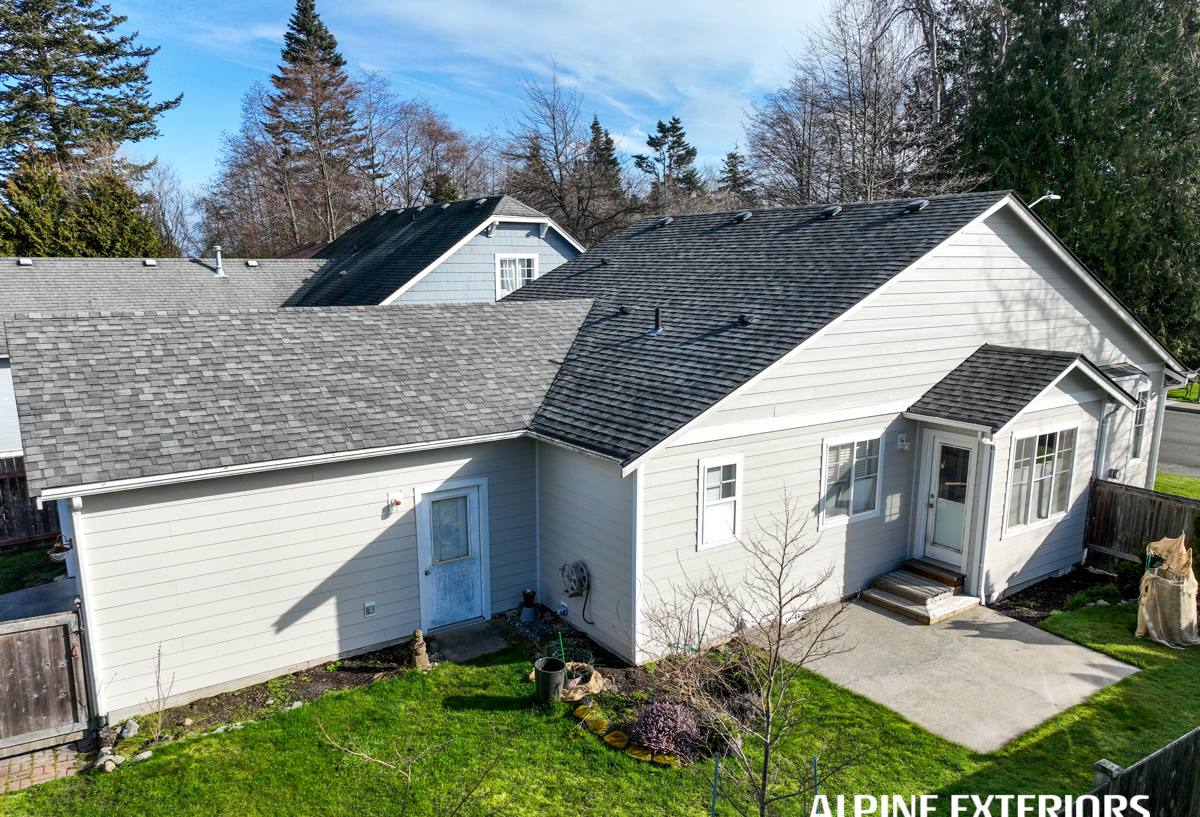
Metal Roofing Systems We Install
We install a few different metal roofing types depending on the home, the budget, and the look the homeowner wants. Cordata has a mix of housing stock — newer construction in planned subdivisions alongside older farmhouses and outbuildings on larger lots — and the right system varies with the roof's age, pitch, and structure.
Standing Seam
Standing seam is the panel system with raised, interlocking seams and no exposed fasteners on the field of the roof. It's the most weathertight option we install and the one we recommend most often for full roof replacements in this area, because the concealed fastener design removes one of the most common failure points on metal roofs near salt air — exposed screws that loosen or corrode over time.
Exposed-Fastener Panels
Corrugated or ribbed panels with exposed screws cost less up front and work fine on outbuildings, shops, and some secondary roof sections. The trade-off is that the fasteners and their rubber washers are wear items — they need periodic inspection and eventual replacement, which is a maintenance commitment worth being honest about before you choose this system for a primary residence roof in a wet, salty climate.
Metal Shingles and Shakes
Stamped metal panels that mimic the look of shingles or cedar shakes give homeowners a more traditional appearance while keeping metal's durability and moss resistance. They cost more than exposed-fastener panels but less than standing seam in most cases, and they're a common middle choice for homeowners who want metal's performance without a modern industrial look.
| System | Fasteners | Typical Use | Relative Cost |
|---|---|---|---|
| Standing Seam | Concealed clips | Primary residence roofs, best weather sealing | Higher |
| Metal Shingles/Shakes | Concealed or partially exposed | Homes wanting a traditional look with metal performance | Mid-range |
| Exposed-Fastener Panels | Exposed screws with washers | Shops, outbuildings, secondary roofs, budget projects | Lower |
What a Correct Installation Actually Involves
Metal panels themselves are durable, but a metal roof is only as good as everything underneath and around them. Most of the problems we get called out to fix on existing metal roofs trace back to shortcuts taken in these details, not to the metal itself.
- Underlayment: A synthetic or high-temp underlayment rated for use under metal, installed as a continuous moisture barrier — not reused or patched over old roofing felt.
- Ice and water shield at vulnerable areas: Self-adhering membrane at eaves, valleys, and around penetrations, where driving rain is most likely to be pushed uphill under panels.
- Fastening pattern: Correct clip or screw spacing for the panel profile and the roof's exposure — panels facing prevailing wind and weather need tighter attachment than a sheltered slope.
- Flashing at every transition: Chimneys, skylights, sidewalls, and roof-to-wall intersections are where leaks actually start on most roofs, metal or otherwise. Flashing has to be formed and layered correctly, not just caulked.
- Ventilation: Metal roofs need proper intake and exhaust airflow in the attic to prevent condensation from forming on the underside of the panels, especially through the humid winter months.
- Dissimilar metal separation: Fasteners, flashing, and trim need to be compatible metals, or properly isolated, to avoid galvanic corrosion where two different metals touch in a wet environment.
Problems We See on Cordata Roofs
Moss and Organic Buildup
Metal sheds moss far better than asphalt shingles, but it isn't immune. Debris that collects in valleys, at the base of chimneys, or in gutters holds moisture against the panel edges and gives moss a foothold even on a metal surface. Left alone through a full moss season, that buildup can hold water against seams and fasteners longer than the roof is designed to tolerate.
Corrosion at Fasteners and Cut Edges
Any point where a panel has been cut, drilled, or fastened exposes raw metal. In a coastal-influenced climate, unprotected cut edges and lower-grade fasteners corrode noticeably faster than the coated panel surface around them. This is one of the most common issues we find on older or poorly installed metal roofs in the area.
Condensation Damage
A metal roof installed without adequate attic ventilation can develop condensation on the underside of the panels during cold, humid stretches. Over time that moisture can affect the underlayment, insulation, and framing — a problem that's invisible from the ground and often gets blamed on a "roof leak" when the real cause is airflow.
Failed Flashing from Older Reroofs
We regularly see homes where metal panels were installed over or against old flashing that was never upgraded to match. Flashing is inexpensive compared to the rest of a roofing job, and skipping it is one of the most common ways a metal roof develops leaks years after installation.
How Our Process Works
- On-site inspection: We walk the existing roof, check the decking and ventilation from the attic side where possible, and assess flashing, valleys, and penetrations.
- Written estimate: A clear breakdown of the system, materials, and scope — no vague allowances.
- Tear-off and deck prep: Removing the old roofing down to sound decking, replacing any damaged sheathing, and confirming ventilation paths before anything new goes down.
- Underlayment and flashing installation: The moisture barrier and all flashing details go in first, since these are what actually keep water out over time.
- Panel installation: Panels or shingles installed to the manufacturer's fastening specification for the roof's pitch and exposure.
- Cleanup and walkthrough: Site cleared of debris and fasteners, and a walkthrough so you understand what was done and what maintenance, if any, the system needs.
What Affects the Cost
Every roof is different, so we don't quote numbers without seeing the job — but these are the main factors that move the price up or down on a metal roofing project in this area.
| Factor | Why It Matters |
|---|---|
| System type | Standing seam costs more than exposed-fastener panels due to labor and material |
| Roof complexity | Valleys, dormers, and multiple planes add flashing work and cutting time |
| Deck condition | Rotted or soft decking found during tear-off needs replacement before installation |
| Existing roof removal | Full tear-off versus roofing over an existing layer, where code and condition allow |
| Ventilation upgrades | Adding or correcting intake/exhaust venting during the project |
| Panel gauge and coating | Heavier gauge metal and higher-grade coatings cost more but resist corrosion and denting longer |
Maintaining a Metal Roof in Whatcom County
Metal roofs need less upkeep than asphalt, but "low maintenance" isn't "no maintenance" — especially with a moss season that runs long here. A short annual routine keeps a correctly installed metal roof performing for decades.
- Clear gutters and valleys of leaves and debris before fall rains set in
- Rinse off accumulated moss, pollen, or organic buildup rather than letting it sit against seams
- Check flashing around chimneys, skylights, and sidewalls for gaps or lifted edges after major storms
- Inspect exposed fasteners on panel roofs for loosening or washer wear every couple of years
- Confirm attic vents stay unobstructed by insulation or debris so moisture can escape
- Address any scratches to the panel coating promptly to prevent localized corrosion
Why a Crew That Already Works Cordata Matters
A metal roof installed to spec in a dry inland climate can still underperform in Cordata if the crew doesn't account for the salt exposure, wind-driven rain, and moss pressure that come with being this close to the water. That means specifying corrosion-resistant fasteners and flashing metals as a default, not an upsell; getting ventilation right the first time instead of troubleshooting condensation later; and detailing valleys and roof-to-wall transitions with the assumption that rain here doesn't always fall straight down. A crew that works this area regularly has already seen how metal roofs age under these exact conditions, and builds accordingly instead of relying on generic installation defaults.
If you're weighing metal roofing for a home in Cordata, we're happy to take a look and walk you through what makes sense for your roof — no pressure, no obligation. Use the form below to request a free estimate.