 Bellingham Exterior
 Why Lynden Homes Need Windows Built for This Climate
Lynden sits in a part of Whatcom County that gets the full range of what Pacific Northwest weather can throw at a house. Winters bring long stretches of driving rain that comes in sideways during a windstorm, not just straight down. Marine air moving inland off Bellingham Bay and the Strait keeps humidity high nearly year-round, and the moss season here doesn't really end — it just slows down. All of that moisture has to go somewhere, and if your windows aren't sealing and draining the way they were designed to, it ends up in your walls, your sills, and your energy bill.
Older windows in this area — especially original aluminum-frame or single-pane units from homes built decades ago — were never designed for this level of sustained moisture exposure combined with the temperature swings between a foggy 38-degree morning and a clear, cold night. Energy-efficient windows aren't just about comfort or a lower utility bill, though both matter. In Lynden, the right window is also your first line of defense against the slow water damage that this climate is very good at causing.
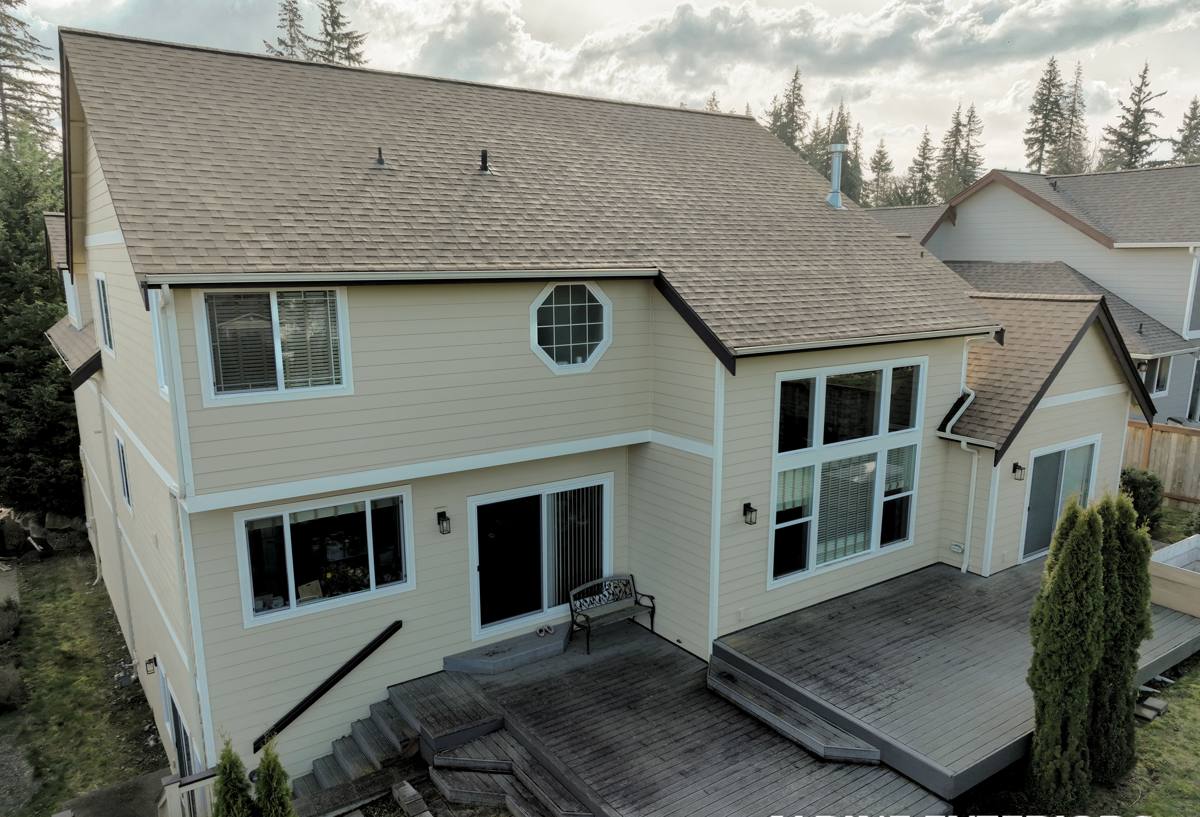
What "Energy-Efficient" Actually Means for a Whatcom County Home
Energy efficiency isn't one feature — it's a combination of glass, frame, and installation working together. For a climate like ours, a few specs matter more than others:
- U-factor — measures how well the window resists heat loss. Lower is better for our cool, damp winters, where the goal is keeping conditioned air in.
- Solar Heat Gain Coefficient (SHGC) — measures how much solar heat passes through the glass. In a climate with as little direct sun as ours, this matters less than it would in a hot, sunny region, but it still affects comfort on south-facing walls.
- Low-E coatings — a microscopically thin coating that reflects heat while still letting light through, improving both winter heat retention and summer comfort.
- Gas-filled sealed units — argon or krypton gas between panes adds insulation value beyond what air alone provides.
- Warm-edge spacers — the material separating the panes at the edge of a sealed unit. A poor spacer creates a cold edge that condensates first, which is a common complaint we hear from Whatcom County homeowners with older double-pane windows.
We look at NFRC-rated performance numbers rather than marketing claims, and we size the glass package to the specific exposure of each wall — a north-facing wall that never dries out needs different consideration than a sheltered south wall.
Common Window Problems We See in Lynden Homes
Fogged or Failed Seals
When the seal on a double-pane unit breaks down, moisture gets between the panes and the glass fogs permanently. In a climate with this much humidity and temperature cycling, seals work harder and fail sooner than they would in a drier region. Once a seal fails, the insulating gas is gone and the unit is no longer doing its job — it needs replacement, not repair.
Wood Rot at Sills and Trim
Driving rain finds any gap in the flashing or caulking around a window and drives water behind the trim. Combined with moss and organic buildup holding moisture against the siding, this is one of the most common structural issues we find when we pull an old window out in this area.
Drafts and Cold Spots
Aluminum frames without a thermal break conduct cold straight through, and older vinyl frames can warp or shrink over time, opening gaps you can feel as a draft on a windy day.
Interior Condensation
If you're wiping moisture off the inside of your glass every morning in the winter, that's a sign the window's insulating value isn't keeping the interior glass surface warm enough — a problem that gets worse, not better, the longer it's ignored, since sustained condensation feeds mold growth on sills and frames.
Choosing the Right Window Frame Material
Frame material has a bigger impact on long-term performance in a wet climate than most homeowners expect. Here's how the common options compare for a home in this region:
| Frame Material | Moisture & Rain Performance | Maintenance | Typical Lifespan |
|---|---|---|---|
| Vinyl | Good — won't rot, resists moisture well when properly installed and flashed | Low — occasional cleaning | 20-30+ years |
| Fiberglass | Excellent — very stable in wet/dry cycling, minimal expansion or contraction | Low | 30-40+ years |
| Wood-Clad | Good on the exterior clad face, but any breach in the cladding exposes wood to rot | Higher — exterior cladding needs periodic inspection at seams and corners | 20-30 years, dependent on cladding integrity |
| Aluminum | Poor thermal performance; prone to condensation without a thermal break | Low, but performance issues persist regardless of upkeep | Varies widely |
We generally steer Lynden homeowners toward vinyl or fiberglass for most applications, not because other materials are bad products, but because they hold up with the least maintenance burden in a climate that gives wood and unclad metal the least forgiving conditions to perform in.
What a Correct Installation Involves
The window itself only accounts for part of how well it performs — installation quality determines whether that performance is actually realized. A correct installation in this climate follows a specific sequence:
- Assess the existing opening for rot, settling, or out-of-square framing before ordering anything.
- Remove the old window carefully to avoid unnecessary damage to siding or trim.
- Inspect and repair any sheathing or framing damage found once the old unit is out — this is often where hidden moisture problems show up.
- Install proper flashing and a weather-resistant barrier detail that directs water out, not into the wall cavity — critical given how much wind-driven rain this area gets.
- Set the new window level, plumb, and square, shimmed correctly so it operates smoothly for years.
- Insulate the gap between the frame and rough opening without overpacking, which can bow the frame.
- Seal the exterior with the right sealant for the siding material and finish interior and exterior trim.
- Test operation and clean up the work area before walking the job with the homeowner.
Skipping or rushing the flashing step is the single most common cause of water intrusion we find behind windows that were replaced by someone in a hurry. It's invisible on installation day and shows up as rot two or three winters later.
Signs It's Time to Replace Your Windows
- Fogging or haze between the panes that won't clean off
- Noticeable drafts near the frame on windy days
- Windows that are difficult to open, close, or lock
- Visible soft or discolored wood at the sill or frame
- Steadily rising heating bills without another clear explanation
- Condensation forming on the interior glass regularly through winter
- Moss, mildew, or dark streaking building up around the frame edges
- Original single-pane or aluminum-frame windows on an older home
What Affects the Cost of Window Replacement
Every home is different, but a few factors consistently drive the price of a window project up or down:
| Factor | Why It Matters |
|---|---|
| Number of windows | Larger projects typically bring a lower per-window cost |
| Frame material | Fiberglass generally costs more upfront than vinyl; both outperform bare aluminum long-term |
| Glass package | Upgraded low-E coatings and gas fills add cost but improve comfort and efficiency |
| Standard vs. custom sizing | Non-standard openings require custom-built units, which cost more than stock sizes |
| Condition of the opening | Rot repair or reframing adds labor beyond the window install itself |
| Accessibility | Second-story or hard-to-reach windows take more time to safely install |
As a broad range, homeowners in this area typically see per-window costs from a few hundred dollars for a straightforward standard-size replacement up to well over a thousand dollars for larger, custom, or higher-performance units. We give you an itemized number for your specific home rather than a generic average, since a rot repair or an oversized picture window can change the math quickly.
Why Hiring a Crew That Already Works in Lynden Matters
Window performance in this climate isn't theoretical — it's about how a specific installation detail holds up against a specific kind of weather, year after year. A crew that regularly works on homes in and around Lynden already knows what the driving rain does to a poorly flashed sill, how long moss season really runs here, and which frame materials hold up without constant upkeep in this level of ambient moisture. That's knowledge you don't get from a crew that mostly works drier inland climates or does one job in the area and moves on.
Familiarity with the housing stock common to this part of Whatcom County — from older farmhouses to newer builds — also means fewer surprises once the old window comes out. We know what we're likely to find behind the trim before we start, and we price and plan accordingly instead of discovering problems mid-job and scrambling.
Get a Free, No-Pressure Estimate
If your windows are fogging, drafting, or just getting harder to open every year, it's worth having someone take a real look before another wet Whatcom County winter sets in. Fill out the form below for a free estimate on energy-efficient window replacement for your Lynden home — no pressure, just an honest assessment of what your windows need.